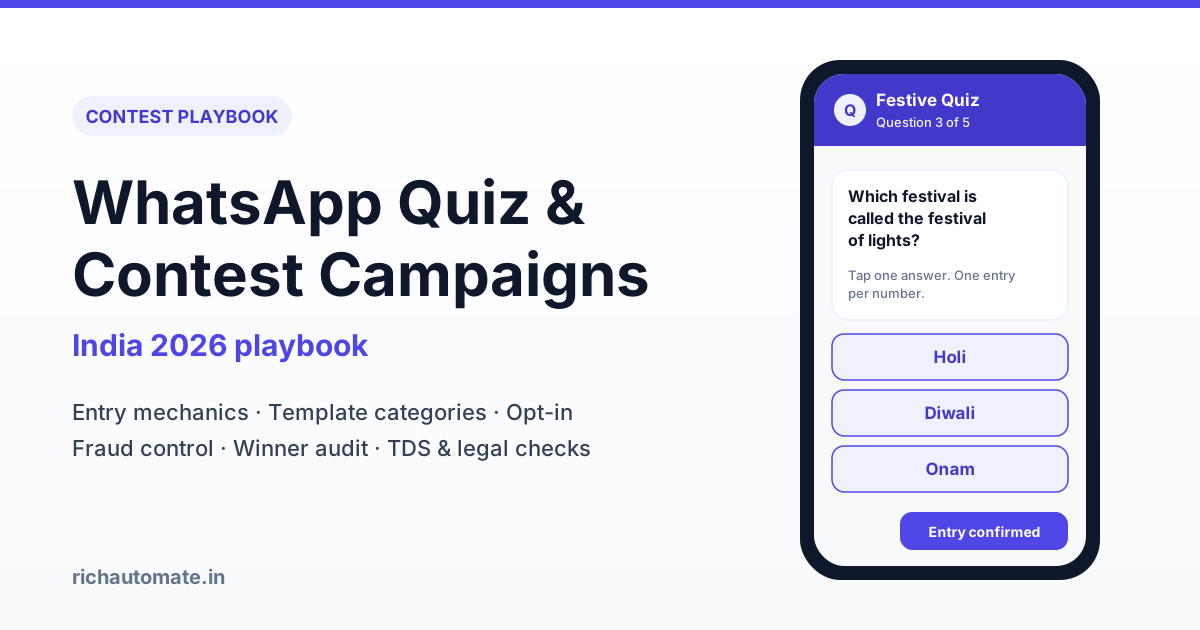
To run a WhatsApp quiz or contest campaign in India, send an approved marketing template only to contacts who opted in, let them enter through a keyword, reply button or WhatsApp Flows form, and confirm every entry with a free-form reply inside the 24-hour customer service window. Keep the contest skill-based with free entry, publish terms and conditions before launch, and pick winners with a method you can prove later.
Most Indian brands trip up in the details: a giveaway that looks harmless on Instagram can turn into a quality-rating drop, a flood of duplicate entries, a TDS liability or a consumer complaint once it moves to WhatsApp, because WhatsApp is a one-to-one channel tied to real phone numbers and real money. This playbook covers the mechanics, the Meta template rules, fraud control, winner selection, measurement and the Indian legal checks you should clear with counsel before you press send.
Why contests work on WhatsApp (and why they go wrong)
A quiz or contest gives people a reason to reply. Every reply opens a 24-hour customer service window in which you can send free-form messages at no Meta charge, which is why contests are one of the cheapest ways to turn a broadcast list into an active conversation list. A daily festive quiz in October or a photo contest around a product launch can also collect first-party data such as city, preferred category or birthday month, which feeds later segmentation.
The same mechanics create the risks. A contest broadcast is still a marketing message, so sending it to cold or stale numbers drives blocks and reports. Prizes attract bots and people entering from ten SIM cards. And because a contest involves prizes, it touches consumer protection, advertising standards, lottery law and income tax at the same time. None of this is a reason to skip contests; it is a reason to run them like a small regulated product launch rather than a quick post.
Seven contest formats and how to build them
Pick the format by what you want to learn or collect, not by what looks most exciting. Each format below can be built with standard WhatsApp Business API features: keyword triggers, interactive reply buttons and list messages, and WhatsApp Flows forms. If you are new to interactive messages, our guide to WhatsApp reply buttons, list messages and Flow templates explains the limits of each (for example, up to three reply buttons and up to ten list rows).
- Keyword entry: the entrant sends a word such as DIWALI or QUIZ to your number. Simplest to promote on packaging, QR codes and ads.
- Reply-button quiz: one question with three answer buttons. Fast, mobile friendly and easy to score automatically.
- List-message quiz: for questions with four to ten options, or for letting people choose a category before the quiz starts.
- Flows form entry: a native WhatsApp form that collects name, city, email or a skill answer in one screen. See WhatsApp Flows for in-chat lead capture forms for build patterns.
- Daily quiz series: one question per day over a fixed period, with a leaderboard or a daily winner. Builds habit but needs careful pacing.
- Spin or scratch reveal: the entrant opens a link or Flow and sees an instant reward. Legally the riskiest format because the outcome is chance.
- UGC photo or caption contest: entrants send a photo or a slogan, judged against published criteria. Strong skill element, heavier moderation work.
- Referral contest: entrants share a personal link and win based on verified referrals. High reach, high fraud risk.
| Format | Entry mechanic | Build effort | Fraud risk | Skill element |
|---|---|---|---|---|
| Keyword entry | Inbound keyword trigger | Low | Medium | None unless paired with a question |
| Reply-button quiz | Interactive buttons (max 3) | Low | Medium | Moderate |
| List-message quiz | List rows (max 10) | Low | Medium | Moderate |
| Flows form | Native form with validation | Medium | Low to medium | Can be strong (open answer) |
| Daily quiz series | Buttons plus scheduled prompts | Medium | Medium | Moderate to strong |
| Spin or scratch | Link or Flow with random reveal | Medium | High | Weak (chance-based) |
| UGC photo contest | Media message plus judging | High | Low | Strong |
| Referral contest | Unique link or code tracking | High | High | Weak to moderate |
Template categories and what each message costs
Meta prices WhatsApp Business API messages per delivered template, and the category is set by purpose. A contest touches three categories in a single campaign, so map them before you draft copy. Our explainer on marketing vs utility WhatsApp message categories covers how Meta classifies wording in detail.
| Message in the contest | Message type or category | Meta charge (India, indicative) |
|---|---|---|
| Contest announcement or reminder broadcast | Marketing template | Charged per delivered message; roughly Rs 0.80 to Rs 0.90 in 2026, check Meta's current rate card |
| Entry confirmation, quiz questions and answers after the user messages you | Free-form (service) inside the 24-hour window | No Meta charge |
| Winner notification sent inside an open window | Free-form or utility template | No Meta charge inside the window |
| Winner notification after the window has closed | Utility template if strictly transactional, otherwise marketing | Utility rate is a fraction of marketing; Meta may reclassify promotional copy |
| Next contest invite to past entrants | Marketing template | Marketing rate |
The practical rule: spend on the announcement, then do everything else inside the window. Design the flow so the entrant replies first and the whole quiz happens in that conversation. Do not put upsell lines like "use code WIN20 on your next order" inside a winner utility template; that is the fastest way to get it recategorised as marketing or rejected.
Opt-in, opt-out and pacing your broadcasts
Only message people who agreed to receive WhatsApp messages from your brand, and make the opt-in specific: "Send me contest updates and offers on WhatsApp" is better than a pre-ticked box buried in checkout. Record when and where each opt-in happened. Entering a contest by messaging you is consent to receive replies about that contest; it is not blanket consent for a year of promotions, so ask separately if you want to keep marketing to entrants.
Every contest broadcast should carry a clear way out. Add a "Stop updates" quick reply or a line such as "Reply STOP to opt out", and honour it immediately across every list and campaign. Our guide to WhatsApp opt-out and STOP keyword handling shows how to wire this so an opt-out in one campaign suppresses all future sends.
Pace the announcement rather than blasting the full list at once. Send to your most engaged segment first, watch read rates, replies and block signals for a few hours, then widen. Split by language and city so the copy fits the audience. Pacing and clean opt-in reduce the risk of quality rating drops and messaging-limit restrictions; nothing can guarantee an account will never be restricted, and anyone promising that is guessing.
Fraud and duplicate entry control
Prizes attract people gaming the system, so build controls into the flow instead of cleaning up afterwards.
Get a 1-minute BSP audit on WhatsApp
Drop your WhatsApp number — we line-item your current invoice against Meta India rates in under 60 seconds. India-hosted, DPDP-compliant.
- One entry per phone number per round. Store the WhatsApp ID of each entrant and reject repeats with a polite reply. For daily quizzes, one entry per number per day.
- Answer locking. Accept only the first answer to each question; later button taps get a "your answer is already recorded" reply.
- Time windows. Close entries at the published time and log the server timestamp of each entry, not the time on the entrant's phone.
- Referral verification. Count a referral only when the referred person opts in and completes a qualifying step. Flag clusters of new numbers entering within seconds of each other.
- Skill answers for tie-breaks. A short open answer ("Tell us in 20 words why you love our chai") is harder to fake at scale than a button tap.
- Identity check at claim stage only. Ask for name, address or PAN only from winners, not from every entrant. This limits data collection and fraud surface at the same time.
Winner selection and the audit trail
Decide the selection method before launch and write it into the terms: first correct answers by timestamp, highest quiz score, jury judging against published criteria, or a documented random draw among correct entries. Then keep evidence. Export the entry log with timestamps, correct-answer flags and duplicate rejections, keep the judging sheet or draw record, and note who ran the selection and when. If a participant or a regulator asks how the winner was chosen, you should be able to show it in minutes.
Notify winners on WhatsApp with a clear claim deadline and a simple claim step, and announce results publicly in the way your terms promised. Deliver prizes as described: same product, same value, same timeline. Substituting a cheaper prize or delaying indefinitely is exactly the kind of conduct consumer law targets.
India legal and compliance checklist
This section is general information, not legal advice. Contest law in India is spread across central and state statutes, and outcomes depend on the exact mechanics. Have a lawyer review your scheme and terms before launch.
Skill versus chance
Indian law broadly treats games and competitions where success depends substantially on skill differently from those that depend on chance. Lotteries are regulated by the Lotteries (Regulation) Act 1998, which permits lotteries organised by state governments, and states have their own gambling and lottery laws. The Prize Competitions Act 1955 regulates certain prize competitions in the states and territories where it applies; the Supreme Court has read it as aimed at competitions that are gambling in nature rather than those involving substantial skill. A lucky draw where anyone who buys a product might win, with no skill element, is closer to a lottery and carries more risk than a quiz judged on correct answers.
| Factor | Skill-based contest | Chance-based draw or lottery |
|---|---|---|
| Outcome depends on | Knowledge, creativity or judgement | Luck or random selection |
| Typical examples | Quiz with scoring, caption or photo contest judged on criteria | Lucky draw, spin-to-win, scratch card with random prizes |
| Legal exposure | Generally lower, subject to fair conduct and consumer law | Higher; may engage state lottery and gambling laws |
| Entry fee or purchase | Keep entry free; purchase-linked entry needs legal review | Paid or purchase-linked entry significantly increases risk |
| Recommended use on WhatsApp | Preferred default for brand contests | Only after counsel review, free entry, clear terms |
Consumer protection and dark patterns
The Consumer Protection Act 2019 treats certain conduct of contests, lotteries and games of chance or skill run to promote sales as an unfair trade practice, particularly where prizes are not given as offered or the scheme misleads consumers. The Central Consumer Protection Authority's Guidelines for Prevention and Regulation of Dark Patterns, 2023 add specific risks for contest journeys: false urgency ("only 5 minutes left" when entries stay open all week), forced action (requiring people to share with contacts or download an app to enter) and bait and switch on prizes. Keep countdowns honest and do not make sharing a condition of entry.
Advertising standards
Contest promotions are advertisements, so the ASCI Code applies: no misleading claims about prize value or odds, material conditions disclosed clearly rather than hidden in small print, and influencer promotion of your contest labelled as advertising.
No paid entry or stakes
The Promotion and Regulation of Online Gaming Act 2025 prohibits online money games, where users pay or deposit money in expectation of winning money or other stakes, and restricts advertising of them. A brand quiz with free entry is a different animal, but do not design WhatsApp contests where people pay to enter, buy extra lives or chances, or stake money or wallet points for a bigger prize. Keep entry free and prizes funded by the brand.
Personal data under the DPDP Act
The Digital Personal Data Protection Act 2023 requires consent that is free, specific, informed and unambiguous, with a clear notice of purpose, and it limits use to that purpose. Collect only what the contest needs, say in the notice how entrant data will be used and for how long, keep contest entry separate from marketing consent, and delete or anonymise entry data once the contest and any dispute period are over. The DPDP Rules notified in 2025 phase in obligations over time, so check the current timelines with counsel.
TDS on prizes
Section 194B of the Income Tax Act requires the person paying winnings from lotteries, crossword puzzles and similar games to deduct TDS, currently 30 percent plus cess, where winnings exceed the prescribed threshold, commonly cited as Rs 10,000. For prizes in kind such as a phone or a scooter, tax is computed on market value, and the brand must ensure the tax is paid before releasing the prize, either by collecting it from the winner or bearing it. Collect PAN from winners of taxable prizes, deposit the TDS and issue the certificate. Verify the current threshold and procedure with your CA before announcing prizes.
Terms and conditions
Publish terms on your website and link them from the first contest message. At minimum include: organiser name, start and end date and time, eligibility (age, residency, employee exclusions), how to enter, entry limits, selection method, prize description and value, number of winners, claim process and deadline, tax treatment, data use, and grievance contact.
Measuring cost per entry and cost per lead
Track three numbers for every contest: cost per valid entry, cost per new opted-in lead, and opt-outs or blocks per thousand sends. Here is illustrative math, not a benchmark, for a 50,000-contact announcement.
- Meta marketing charges: 50,000 x roughly Rs 0.86 = about Rs 43,000 (verify the current rate).
- RichAutomate Client Pay platform fee: 50,000 x Rs 0.10 = Rs 5,000, so about Rs 48,000 in messaging. On SaaS Pay, marketing messages are Rs 1.20 each, so 50,000 x Rs 1.20 = Rs 60,000.
- If 8 percent enter (4,000 valid entries), messaging cost per entry is about Rs 12 on Client Pay or Rs 15 on SaaS Pay. Entry confirmations and quiz replies inside the window add no Meta charge.
- Add a prize pool of Rs 50,000 and total cost per entry becomes roughly Rs 24.5 to Rs 27.5.
- If 1,200 of those entrants are new contacts who also opt in to future updates, cost per new lead is roughly Rs 82 to Rs 92 including prizes.
RichAutomate is usage-only with Rs 0 setup and Rs 0 monthly fee; see RichAutomate pricing for plan details. Compare these numbers with your cost per lead from paid social, and pause the next round if block rates rise after a contest blast.
A two-week launch plan
- Days 1 to 3: choose the format, write terms, get legal and CA review, and decide the selection method and prize budget.
- Days 4 to 6: build the flow (keyword trigger, buttons or Flows form, de-duplication, answer locking, opt-out handling) and submit the marketing template for approval.
- Days 7 to 8: test end to end with internal numbers, including duplicate entries, late entries and STOP replies.
- Days 9 to 12: send to the engaged segment first, monitor, then widen in batches.
- Days 13 to 14: close entries, select winners with a recorded method, notify, deduct TDS where applicable, and publish results.
Ready to run your first compliant WhatsApp contest? Build the keyword trigger, quiz buttons, Flows entry form and opt-out handling in one place. Start free on RichAutomate with no setup fee and no monthly fee, and pay only for the messages you send.