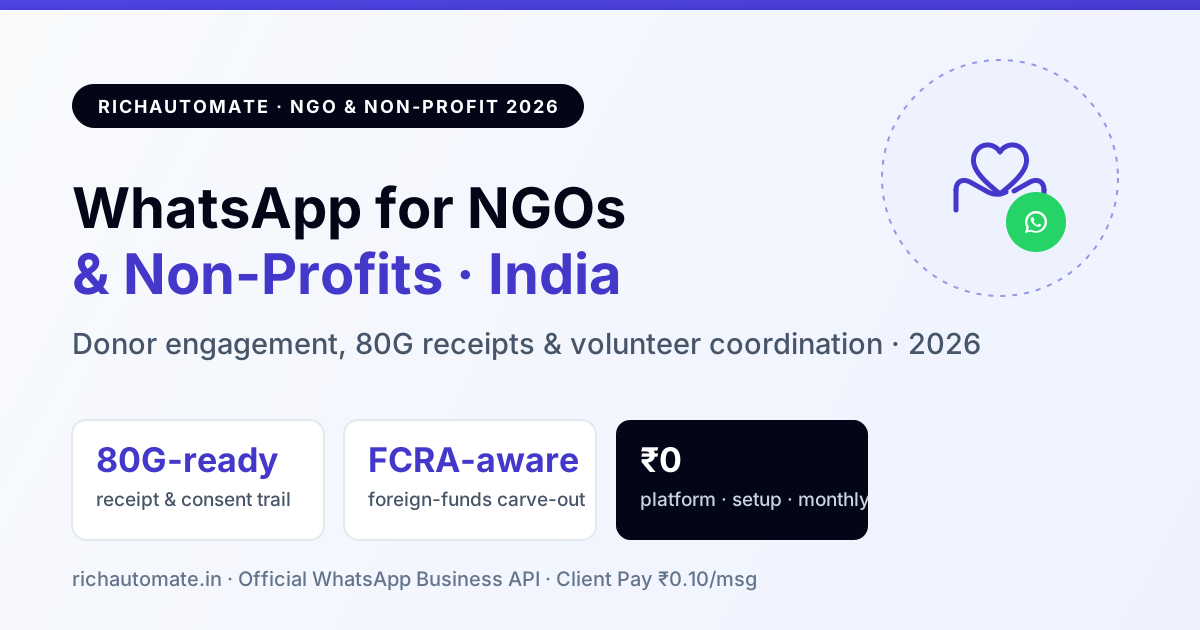
The short answer. Yes — an Indian NGO or non-profit can use WhatsApp in 2026 for domestic donor engagement, 80G donation receipts, volunteer and beneficiary coordination and campaign updates, provided you do it on the official Meta WhatsApp Business API with consent, and provided you keep foreign contributions strictly on the FCRA side of a wall. The channel is a natural fit: almost every Indian donor, volunteer and beneficiary already lives on WhatsApp, open rates are high, and an official-API setup lets you send opted-in thank-you messages, 80G receipts, event reminders and impact updates at scale without touching a personal number. The compliance that actually matters for a non-profit is different from an ordinary business, and it sits on three legs. First, FCRA 2010: foreign contributions must be received and used only through your designated FCRA bank account (the SBI New Delhi Main Branch account for registered NGOs), and you must never solicit or route foreign donations through a domestic collection link or account attached to WhatsApp — domestic and foreign money stay in separate worlds. Second, 80G/12A: if you are registered, a donor who gives can claim a deduction, and your NGO must issue a valid receipt and file the donation statement (Form 10BD) and issue the donor certificate (Form 10BE) — WhatsApp is an excellent way to deliver that receipt, not a substitute for filing it. Third, DPDP Act 2023: donor and beneficiary personal data is protected, so collect consent, state your purpose, and let people opt out. RichAutomate runs on the official Meta WhatsApp Business API with ₹0 platform fee, ₹0 setup and ₹0 monthly — you pay only per message (Client Pay at a flat ₹0.10/message with Meta billed to you, or SaaS Pay all-in at ₹1.20 marketing / ₹0.30 utility-auth), which suits a budget-conscious non-profit. This is general information, not legal, tax or FCRA advice — verify every FCRA, 80G and DPDP point with the FCRA department, a chartered accountant and the live 2026 rules before you act.
Indian non-profits run on trust, and trust in 2026 is built one message at a time on the channel donors already check — WhatsApp. A well-run NGO WhatsApp presence does quiet, high-value work: it thanks a donor the moment a gift lands, delivers the 80G receipt they need for their tax return, reminds volunteers where to show up on Saturday, sends a beneficiary the date of the next medical camp, and shares an honest impact update that turns a one-time giver into a recurring one. Done on a personal phone, that work does not scale and leaves no audit trail; done on the official WhatsApp Business API, it scales cleanly, keeps a record, and stays inside Meta’s rules. But a non-profit is not an ordinary business, and the compliance spine is genuinely different — it is not just consent and template categories, it is the Foreign Contribution (Regulation) Act, your 80G/12A registration and donation-statement filings, and the DPDP Act’s protection of donor data, all at once. This guide is the practical 2026 playbook: why WhatsApp fits Indian NGOs, the FCRA / 80G / 12A / DPDP compliance spine explained in plain language, a mapping of real NGO use-cases to WhatsApp template categories with the compliance note for each, the donor and volunteer lifecycle stage by stage, how to issue 80G receipts over WhatsApp with a clean audit trail, the FCRA foreign-funds carve-out you must not get wrong, how to go live in 24–48 hours, and a five-question FAQ. Every legal and tax point is hedged “verify with the FCRA department, a chartered accountant and the live 2026 rules” because non-profit regulation is exacting and changes; every rupee figure is illustrative. This is general information for non-profit operators, not legal, tax or FCRA advice.
Why WhatsApp fits Indian NGOs
The case for WhatsApp in an Indian non-profit is not hype, it is reach. Your donors, your volunteers and very often your beneficiaries are already on WhatsApp every day, in a way they are not on email or a mobile app, and messages there get opened rather than buried. For a small charity that cannot afford a marketing team, that matters: a single opted-in broadcast can deliver a festival appeal, a disaster-relief update or an annual-report link to your whole donor base at a per-message cost measured in paise, not rupees. The official Business API adds the things a personal WhatsApp number cannot give you — a verified business identity and the green-tick path so donors trust the sender, approved templates so you can send the first message to someone who opted in, broadcasts that do not get your number flagged the way a personal-number blast would, a shared team inbox so several staff or volunteers can answer donor questions without sharing one phone, and a record of what was sent and to whom, which is exactly the audit trail a non-profit needs. It also separates cleanly from the founder’s personal phone, so when a volunteer leaves, the donor relationships and the message history stay with the organisation. None of this replaces your accounting, your FCRA discipline or your 80G filings — it sits on top of them as the communication layer — but for donor engagement, volunteer coordination, beneficiary reminders and transparent impact reporting, WhatsApp on the official API is the most cost-effective, highest-reach channel an Indian NGO has in 2026. For the mechanics of what the official API costs and how per-message billing works, see the WhatsApp Business API cost guide.
The compliance spine — FCRA, 80G/12A, DPDP
What makes a non-profit different from an ordinary WhatsApp sender is the regulatory spine underneath, and it has three legs you must understand before you send a single message. This is a plain-language map, not legal advice — verify each point with the FCRA department, a chartered accountant and the live 2026 rules.
FCRA 2010 — the foreign-funds wall. If your NGO is registered under the Foreign Contribution (Regulation) Act to receive foreign donations, the law is strict: foreign contributions must be received only into your designated FCRA bank account — for current rules that is the FCRA account at the State Bank of India, New Delhi Main Branch — and must be used only for the purposes and through the accounts FCRA permits. The practical consequence for WhatsApp is a hard wall: you must never solicit foreign donations through, or route them to, a domestic collection link, UPI handle or bank account connected to your general WhatsApp outreach. Your WhatsApp donor engagement should be built around domestic giving, with foreign contributions handled entirely on the FCRA side through the designated account and the reporting FCRA requires. Mixing the two — for example sending a single WhatsApp appeal with one donation link that foreign and domestic donors both use into a non-FCRA account — is exactly the kind of error that creates serious FCRA trouble. Keep the two worlds separate and verify your obligations, registration status and any 2026 changes with the FCRA department and your CA.
80G / 12A — the deduction and the receipt. Registration under section 12A (now 12AB) makes your NGO’s income exempt, and an 80G certificate lets a donor claim a deduction on what they give. That deduction is not automatic paperwork the donor invents — your NGO must issue a valid donation receipt and, under the current regime, file a statement of donations (Form 10BD) with the income-tax department and issue each donor a donation certificate (Form 10BE). WhatsApp is an excellent delivery channel for the receipt and the 10BE certificate — a donor gets the document instantly on the app they already use — but sending a WhatsApp message is not a substitute for the filing itself. Get the filing right in your accounts, then use WhatsApp to deliver the confirmation and the certificate to the donor. Verify the current 80G, 12AB, Form 10BD and Form 10BE requirements and deadlines for 2026 with a chartered accountant.
DPDP Act 2023 — donor and beneficiary data. Donor names, phone numbers, PAN (which you need for 80G), giving history and any beneficiary details are personal data, and the Digital Personal Data Protection Act protects them. For WhatsApp that means the same discipline any business owes: collect the person’s consent before messaging, tell them clearly what you will use their number for (receipts, updates, appeals), keep the data secure, honour opt-outs promptly, and be able to delete data on request. A non-profit carries this duty just as a company does — arguably more carefully, because donor trust is your entire asset. For a step-by-step consent and compliance checklist, see the DPDP Act WhatsApp compliance checklist and the guide to WhatsApp opt-in compliance under the DPDP Act.
NGO WhatsApp use-cases mapped to template categories
WhatsApp charges and gates messages by category — marketing, utility and authentication — and getting the category right keeps your quality rating healthy and your costs honest. The table below maps common NGO use-cases to the likely template category and the compliance note that goes with each. Verify Meta’s live 2026 category rules, since Meta refines them over time.
| NGO use-case | Likely template category | Compliance note (verify 2026) |
|---|---|---|
| Thank-you on donation received | Utility (transaction confirmation) | Triggered by a real gift; keep it factual, no fresh appeal inside |
| 80G receipt / Form 10BE delivery | Utility | Deliver the document; the 10BD filing still happens in your accounts |
| Recurring-donation payment reminder | Utility | Only to donors who set up recurring giving and opted in |
| Festival / disaster-relief appeal | Marketing | Opted-in domestic donors only; foreign donors handled on FCRA side |
| Impact update / annual-report link | Marketing (or utility if strictly transactional) | Consented recipients; honest, verifiable claims |
| Volunteer shift reminder / roster | Utility | To enrolled volunteers who opted in to coordination messages |
| Beneficiary camp / service reminder | Utility | Minimise data; consent; handle sensitive details with care under DPDP |
| Event RSVP / fundraiser invite | Marketing | Opted-in list; clear opt-out; no foreign-funds solicitation |
| OTP / login for a donor portal | Authentication | Authentication category only; never mix with an appeal |
The pattern to hold onto: transactional, donor-triggered messages (receipts, reminders, confirmations) are utility and cheaper, while appeals and impact broadcasts are marketing and need a genuinely opted-in list. For a fuller explanation of how the categories work and what falls where, read the WhatsApp template categories guide, and price your real message mix with the WABA cost calculator.
The FCRA carve-out you must not get wrong. This is the single most important line for any FCRA-registered NGO doing WhatsApp outreach: keep foreign and domestic donations in completely separate worlds. Foreign contributions may be received and utilised only through your designated FCRA account (the SBI New Delhi Main Branch account under current rules) and only for FCRA-permitted purposes, with the reporting FCRA requires. Your WhatsApp donor programme — appeals, donation links, receipts — should be built around domestic giving into your ordinary (non-FCRA) account. Never send a single appeal with one donation link that both foreign and domestic donors use into a non-FCRA account, never solicit foreign contributions through a domestic UPI or link attached to your WhatsApp broadcasts, and never route a foreign gift through the domestic side because it arrived via a WhatsApp conversation. If you are not FCRA-registered, you must not accept foreign contributions at all — a donation from a foreign source into a domestic account is itself a breach. This is exactly where non-profits get into serious trouble, and it is not something a messaging platform can manage for you. Treat WhatsApp as a domestic-donor channel by default, wall off anything foreign, and verify your FCRA registration status, the designated-account rules and any 2026 changes with the FCRA department and your chartered accountant before you run any appeal. This is general information, not FCRA or legal advice.
Get the DPDP WhatsApp checklist
A founder-led WhatsApp reply with the DPDP consent + audit-log checklist for WhatsApp Business messaging. India-hosted. No spam.
The donor and volunteer lifecycle on WhatsApp
The value of an official-API WhatsApp setup for a non-profit shows up across the whole relationship, not in a single blast. Walk the lifecycle stage by stage and the fit becomes obvious. Opt-in. A supporter ticks a consent box on your donation page or website, or messages your WhatsApp number first, agreeing to receive receipts, updates and appeals — this consent is the foundation for everything under DPDP, so capture it cleanly and record it. First gift and thank-you. The moment a domestic donation lands, an automated utility message thanks them by name and confirms the amount and purpose — the fastest, warmest acknowledgement a donor can get, and the strongest predictor of whether they give again. Receipt and 80G. Once your accounts issue the receipt and, at filing time, the Form 10BE certificate, WhatsApp delivers the document straight to the donor’s phone, so they have what they need for their tax return without emailing your office. Impact and retention. Periodic, consented impact updates — a short note and a link showing what their money did — keep the relationship alive and turn a one-time giver into a recurring one; honesty here is not just ethics, it is retention. Recurring and re-engagement. Gentle utility reminders for recurring donors and occasional marketing appeals for festivals or emergencies bring lapsed domestic donors back. Volunteers and beneficiaries. The same channel coordinates volunteers — shift rosters, event logistics, quick confirmations through a shared inbox several coordinators can staff — and reaches beneficiaries with camp dates, service reminders and eligibility information, always minimising the personal data you collect and handling anything sensitive with DPDP care. A no-code flow builder lets you automate the repetitive stages (thank-you, receipt delivery, RSVP capture, volunteer reminders) while a human steps in for real conversations, and because it is all on one organisational number rather than a founder’s phone, the donor and volunteer relationships belong to the NGO and survive staff turnover.
Issuing 80G receipts over WhatsApp — done right
Delivering the 80G receipt is one of the highest-value things WhatsApp does for a non-profit, so do it in the right order. The filing comes first and the message second. In your accounts, record the donation with the donor’s details and PAN, issue the donation receipt, and at the prescribed time file your statement of donations (Form 10BD) and generate each donor’s certificate (Form 10BE) as the current 80G regime requires — verify the exact forms, thresholds and deadlines for 2026 with a chartered accountant, because this is where the legal validity of the deduction actually lives. WhatsApp then does the delivery: an automated utility message confirms the gift and attaches or links the receipt, and when the 10BE certificate is ready you send that too, so the donor has both documents on the app they already use, instantly, with a record on your side that it was delivered. Two disciplines keep this clean. First, the audit trail: because everything goes through the official API on your organisational number, you have a record of which donor received which document and when — a genuine benefit at audit time that a personal phone cannot give you. Second, data care: a receipt carries the donor’s name, amount and often PAN, so treat that message flow as sensitive personal data under DPDP, restrict who in your team can see it, and never repurpose a receipt thread into a marketing blast. The rule of thumb is simple — WhatsApp is the delivery van, not the tax filing; get the 10BD/10BE filing right in your accounts, and let the channel carry the confirmation to the donor.
DPDP and donor consent in practice
Consent is not a checkbox you forget after signup, it is an ongoing duty, and for a non-profit whose entire capital is trust it is worth doing better than the legal minimum. In practice that means four habits. Collect consent explicitly at the point you get the number — a clear line on the donation form or website that says you will send receipts, updates and occasional appeals on WhatsApp, with the person actively agreeing, and a record of that agreement kept on file. State the purpose plainly and stick to it — if someone opted in for receipts and impact updates, do not suddenly enrol them in an unrelated campaign. Make opting out effortless and honour it immediately — a reply like STOP should remove them, and an official-API setup can automate that so a request is never missed. And protect the data itself — limit who on your team can see donor PAN and giving history, do not export donor lists to personal devices, and be able to delete a person’s data if they ask. Handled this way, DPDP compliance is not a burden, it is the same discipline that keeps donors giving: people give more, and more often, to an organisation that treats their information with obvious care. For the operational detail, the DPDP WhatsApp compliance checklist lays out the consent, purpose-limitation and opt-out steps you can put in place this week, and verify the DPDP rules and any 2026 notifications with a legal advisor.
How to go live in 24–48 hours
Standing up an official-API WhatsApp presence for your NGO is a clean, self-serve process, and the timing mostly depends on Meta’s own verification rather than the platform. First, start the 14-day free trial and create your account — no card and no sales call, though a GST number is required to go fully live, so have your NGO’s GST and registration details ready (verify the current requirement for non-profits with your CA). Second, connect your organisation’s WhatsApp Business number and complete Meta’s Business verification once, using an organisational number rather than a founder’s personal phone so the donor relationships belong to the NGO. Third, create your templates — write the wording for your thank-you, receipt-delivery, recurring-reminder, volunteer-roster, event-RSVP and appeal messages, and submit them for approval, which is usually quick for utility and authentication categories. Fourth, wire up consent and opt-out — make sure your donation page and website capture WhatsApp consent cleanly and that an opt-out reply removes the person automatically, so DPDP compliance is built in from day one. Fifth, build your core flows in the no-code builder — start with the one or two journeys that carry the most value (donation thank-you plus receipt delivery, and volunteer or event coordination) rather than automating everything at once, and add your staff or coordinators to the shared team inbox. Before you run your first broadcast, double-check the FCRA wall — your appeals and donation links must point at the domestic side only, with anything foreign kept entirely on the FCRA account. Then send a small test broadcast to a consented segment, confirm delivery and receipts land correctly, and scale from there. RichAutomate’s ₹0 platform / ₹0 setup / ₹0 monthly model and per-message rupee pricing suit a non-profit budget — you pay only for the messages you actually send. Verify Meta’s current verification and template-approval rules for 2026, and treat the 24–48 hour window as typical rather than guaranteed.
What WhatsApp does and does not do for your NGO. It is worth being precise so nobody in your organisation mistakes the tool for the compliance. WhatsApp on the official API does give you high-reach, low-cost, consented communication with domestic donors, volunteers and beneficiaries; instant delivery of thank-you messages and 80G receipts; a shared inbox and a record of what was sent; and a channel that belongs to the organisation, not a personal phone. It does not file your Form 10BD or generate a legally valid 80G deduction — that happens in your accounts; it does not manage FCRA compliance or keep foreign and domestic funds separate — that is your banking and reporting discipline; and it does not replace donor consent under DPDP — it helps you honour it. Use WhatsApp as the communication and delivery layer on top of sound accounting, disciplined FCRA banking and genuine consent, and it becomes one of the most valuable, cost-effective tools an Indian non-profit can run. Verify every FCRA, 80G and DPDP obligation with the FCRA department, a chartered accountant and the live 2026 rules.
The honest bottom line
For an Indian NGO in 2026, WhatsApp on the official Meta Business API is the highest-reach, lowest-cost way to run domestic donor engagement, deliver 80G receipts, coordinate volunteers and beneficiaries, and report impact honestly — provided you treat it as a communication layer on top of real compliance, not a replacement for it. The three legs of that compliance are non-negotiable: keep foreign contributions strictly on the FCRA side through your designated account and never solicit or route them through a domestic WhatsApp link; get your 80G/12A filings right in your accounts (Form 10BD statement and Form 10BE certificates) and use WhatsApp only to deliver the confirmation; and honour DPDP by collecting consent, limiting purpose, securing donor data and making opt-out effortless. RichAutomate fits the non-profit budget because it charges ₹0 platform, ₹0 setup and ₹0 monthly and bills only per message in rupees — Client Pay at a flat ₹0.10 per message with Meta billed to you, or SaaS Pay all-in at ₹1.20 marketing / ₹0.30 utility-auth — on the official API with the green-tick path, approved templates, broadcasts, a no-code flow builder and a shared inbox, plus a 14-day free trial with 100 free credits (a GST number is required to go live). No platform can promise a WhatsApp number will never be restricted — Meta controls enforcement — and what keeps a non-profit’s number healthy is the same consented, relevant, well-paced messaging that keeps donors trusting you. This is general information for non-profit operators, not legal, tax or FCRA advice; verify every FCRA, 80G, 12A, Form 10BD/10BE and DPDP point with the FCRA department, a chartered accountant and the live 2026 rules, and treat all rupee figures as illustrative.
Run donor engagement & 80G receipts on WhatsApp — ₹0 platform, pay only per message
If your NGO wants to thank donors the moment they give, deliver 80G receipts and Form 10BE certificates straight to their phone, coordinate volunteers and beneficiaries, and send consented impact updates and appeals — all on the official Meta WhatsApp Business API with the green-tick path, approved templates, broadcasts, a no-code flow builder and a shared team inbox — RichAutomate gets you live, typically within 24–48 hours, on a non-profit-friendly budget. Pricing is flat: ₹0 platform fee, ₹0 setup, ₹0 monthly, with Client Pay at a flat ₹0.10 per message on your own number (Meta’s conversation charge billed to you directly) or SaaS Pay all-in at ₹1.20 marketing / ₹0.30 utility-auth. Start the 14-day free trial with 100 free credits, build your donation thank-you and receipt-delivery flow first, capture WhatsApp consent cleanly on your donation page, and keep foreign contributions strictly on your FCRA account. WhatsApp us at 918160311319 or book a 30-minute walkthrough at https://calendly.com/inrichdaddy/30min. (This is general information for non-profit operators, not legal, tax or FCRA advice. Verify every FCRA, 80G, 12A, Form 10BD/10BE and DPDP obligation with the FCRA department, a chartered accountant and the live 2026 rules; a GST number is required to go live; all rupee figures are illustrative; no vendor can guarantee against a WhatsApp restriction.)
Start your 14-day free trial → · See full pricing · Run the WABA cost calculator