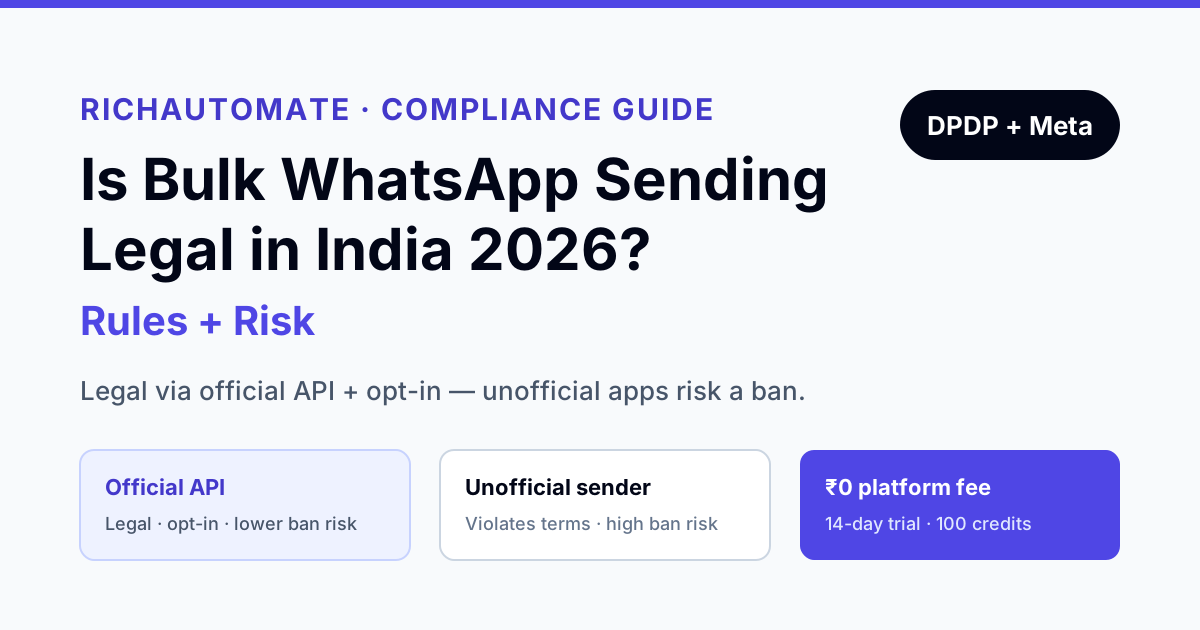
Yes — bulk WhatsApp messaging is legal in India, but only when you send through the official WhatsApp Business API (WABA) to contacts who gave prior opt-in. Unofficial "bulk WhatsApp sender" apps, browser extensions, and modded clients (GB WhatsApp, WhatsApp mods, chip-based blasters) violate Meta's Terms of Service and expose you to a permanent number ban plus potential penalties under India's Digital Personal Data Protection (DPDP) Act, 2023 — so treat every claim below as a starting point and verify the current notified rules before you scale.
This page separates what is actually legal from what marketers are often sold. It covers the opt-in rule that decides legality, an unofficial-tool vs official-API risk table, your data duties under the DPDP Act, and a practical checklist to run compliant bulk campaigns. RichAutomate is a WhatsApp Business API platform with a ₹0 platform, setup, and monthly fee — so the compliant path costs you only the per-message and Meta charges below, not a subscription.
Is bulk WhatsApp sending legal in India? The opt-in rule
Legality hinges on two things: which system you send from and whether the recipient agreed to be contacted. Meta permits business messaging at scale exclusively through the WhatsApp Business API (or the free WhatsApp Business App for tiny volumes). Sending marketing or notification traffic to lists of numbers through anything else — a desktop "sender", an unofficial API reseller running on the consumer app, or an automation that drives WhatsApp Web — breaches Meta's Business Messaging Policy and Commerce Policy.
The opt-in rule is the heart of it. Meta requires that a person actively agreed to receive WhatsApp messages from your business, over any channel (website checkbox, a "message us" click, an IVR consent, a form), and that your business name is clear at the point of consent. There is no legal or platform basis for messaging a scraped or purchased list. Doing so is the single fastest route to a ban, regardless of the tool.
So the honest framing: bulk sending is legal in the same way bulk email is legal — the medium is fine, the consent and the sending infrastructure are what make any given campaign lawful or not. There is no Indian statute that bans WhatsApp broadcasts outright; there are rules (Meta's terms, the DPDP Act, and TRAI-style unsolicited-commercial-communication norms) that govern how you may do it. Always verify the current, notified position with a qualified advisor before a large rollout.
What "official" means in practice
Official bulk sending means: a verified WhatsApp Business Account, a registered sending phone number, message templates approved by Meta for anything sent outside a 24-hour customer-service window, and Meta's own conversation-based pricing applied per message. A compliant platform like RichAutomate sits on top of this — it does not bypass it. If a vendor promises "unlimited sends, no template approval, no ban," they are describing an unofficial tool, and you inherit the ban risk.
Unofficial tool vs official API: the risk table
The table below is the core decision. Note the wording on bans throughout this page: compliance reduces ban risk — no platform, including RichAutomate, can promise "no ban," because enforcement, quality ratings, and user "block/report" behaviour are ultimately Meta's call.
| Factor | Unofficial bulk-sender app / mod | Official WhatsApp Business API |
|---|---|---|
| Legality (Meta terms) | Violates Terms of Service & Business Messaging Policy | Compliant when opt-in + templates are used |
| Ban risk | Very high — number bans are common and often permanent | Lower and manageable; quality-rating driven, not automatic |
| Deliverability | Unstable; aggressive blocks, no delivery guarantees | Stable, with delivery/read receipts and status webhooks |
| Opt-in enforced | No — encourages cold/purchased lists | Yes — required by design |
| DPDP exposure | High — no consent trail, no audit record | Lower — consent and opt-out can be logged |
| Data security | Credentials/chats often routed through third parties | Meta-grade encryption; official infrastructure |
| Business continuity | One ban wipes your number and history | Verified number, recoverable, scalable |
| Cost model | Flat "lifetime" fee hiding the ban cost | Transparent per-conversation Meta pricing + platform fee |
The economics are misleading at first glance. A ₹3,000 "lifetime bulk sender" looks cheaper than per-message pricing — until the banned number takes your brand's chat history, customer trust, and any verification with it. The real comparison is not price per message; it is the expected cost including the probability of losing the number.
Rates differ per market, and the WhatsApp pricing calculator by country shows the current per-conversation cost for each country you message.
DPDP Act 2023: your data duties on bulk WhatsApp
India's Digital Personal Data Protection (DPDP) Act, 2023 governs how you collect and process the phone numbers and personal data you message. The Act is passed; the detailed Rules that operationalise it have been moving through consultation and phased notification, so verify the current notified rules and timelines before you rely on any specific obligation below. In practice, four duties shape a compliant bulk-WhatsApp program:
Get the DPDP WhatsApp checklist
A founder-led WhatsApp reply with the DPDP consent + audit-log checklist for WhatsApp Business messaging. India-hosted. No spam.
- Consent. You need a clear, specific, informed, and freely given consent to process a person's data for messaging. A pre-ticked box or a buried clause is weak. Keep a record of when and how each contact opted in — this doubles as your Meta opt-in evidence.
- Purpose limitation & data minimisation. Collect only what you need to message and serve the customer. Don't hoard fields "just in case." A number opted in for order updates is not automatically opted in for promotions.
- Opt-out / withdrawal. Withdrawing consent must be as easy as giving it. Honour "STOP"/opt-out replies promptly, suppress that contact, and stop sending. This aligns neatly with WhatsApp's own quality signals — people who can't opt out will block and report, which hurts your rating.
- Security & accountability. Protect the data, and be able to show your consent and processing records if asked. This is exactly where unofficial tools fail: they leave no defensible audit trail.
The through-line is that Meta's opt-in rule and the DPDP Act's consent duty point the same direction. A program built the compliant way satisfies both at once; a bulk-sender blast satisfies neither. Non-compliance under the DPDP Act can attract significant financial penalties (the Act provides for penalties running to large sums per instance) — one more reason the "cheap" unofficial route is expensive in expectation. Treat the specifics as subject to the notified Rules and professional advice.
How to send bulk WhatsApp legally: the checklist
Here is the compliant sequence, start to finish. Each step reduces both ban risk and DPDP exposure.
- Get on the official API. Set up a WhatsApp Business Account and register a sending number through a provider. On RichAutomate this carries a ₹0 platform, setup, and monthly fee, plus a 14-day free trial with 100 credits to test before you commit.
- Build a real opt-in list. Collect consent at a clear touchpoint — website, checkout, IVR, a "message us" click — naming your business. Log the timestamp and source. Never import purchased or scraped numbers.
- Get templates approved. Any message sent outside the 24-hour service window must use a Meta-approved template. Write clear, non-spammy copy; avoid "free"-stuffed promo language that fails review or gets flagged.
- Categorise correctly. Use Marketing templates for promotions and Utility templates for transactional notices (orders, OTPs, reminders). Utility is far cheaper and better tolerated — don't dress promos as utility.
- Warm up and respect rate limits. New numbers start at a lower messaging tier and scale as quality stays green. Ramp volume gradually; a cold number blasting thousands on day one is a ban magnet.
- Make opt-out effortless. Offer and honour "STOP." Suppress opt-outs immediately across all future campaigns.
- Watch your quality rating. Monitor blocks, reports, and the green/yellow/red rating in your dashboard. Falling quality is your early warning — slow down, tighten targeting, improve relevance.
What compliant bulk sending costs in India (2026)
On the official API you pay two things: Meta's per-conversation charge, and your platform's per-message fee. Meta's rates were hiked roughly +10% on 1 January 2026 and now sit around ₹0.8631 per marketing conversation and ₹0.115 per utility/authentication conversation (per Meta's India rate card — confirm current figures with Meta). On top of that, platforms price differently:
| Cost component | RichAutomate | Typical BSP subscription tools |
|---|---|---|
| Platform / setup / monthly fee | ₹0 | ~₹1,000–₹3,000+/mo (verify on vendor site 2026) |
| Per-message markup — Client Pay model | ₹0.10/msg + Meta charged directly to you | Bundled markup varies (verify 2026) |
| Per-message — SaaS Pay model | ₹1.50 marketing / ₹0.50 utility (Meta included) | Per-message + platform fee (verify 2026) |
| Free trial | 14 days + 100 credits | Varies (verify 2026) |
Competitor pricing for Wati, AiSensy, Interakt, and Gupshup changes frequently and often adds a monthly platform fee on top of Meta's charges — verify the current numbers on each vendor's site in 2026. For a fuller breakdown see our guides on WhatsApp Business API cost in India and WhatsApp marketing software pricing. The point for this page: the compliant route is not the expensive route. With a ₹0 platform fee, the legal path can undercut the "cheap" bulk-sender once you price in the risk of a lost number.
The bottom line
Bulk WhatsApp in India is legal when it runs on the official WhatsApp Business API, to an opted-in audience, with approved templates and honoured opt-outs — and it aligns with DPDP consent duties by design. Unofficial bulk-sender apps are cheaper on the sticker but violate Meta's terms, carry very high ban risk, and leave you exposed under the DPDP Act. No platform can promise "no ban," but compliance is the only thing that materially reduces that risk while keeping deliverability stable. Verify the current notified DPDP Rules and Meta rate card before you scale — the specifics move.
Want to run compliant broadcasts without a monthly fee? Start a 14-day free trial with 100 credits, or book a 30-minute setup call to map your opt-in flow, templates, and rate-limit ramp before your first campaign. Comparing platforms first? Read AiSensy vs Wati and whether the WhatsApp Business API is free in India.