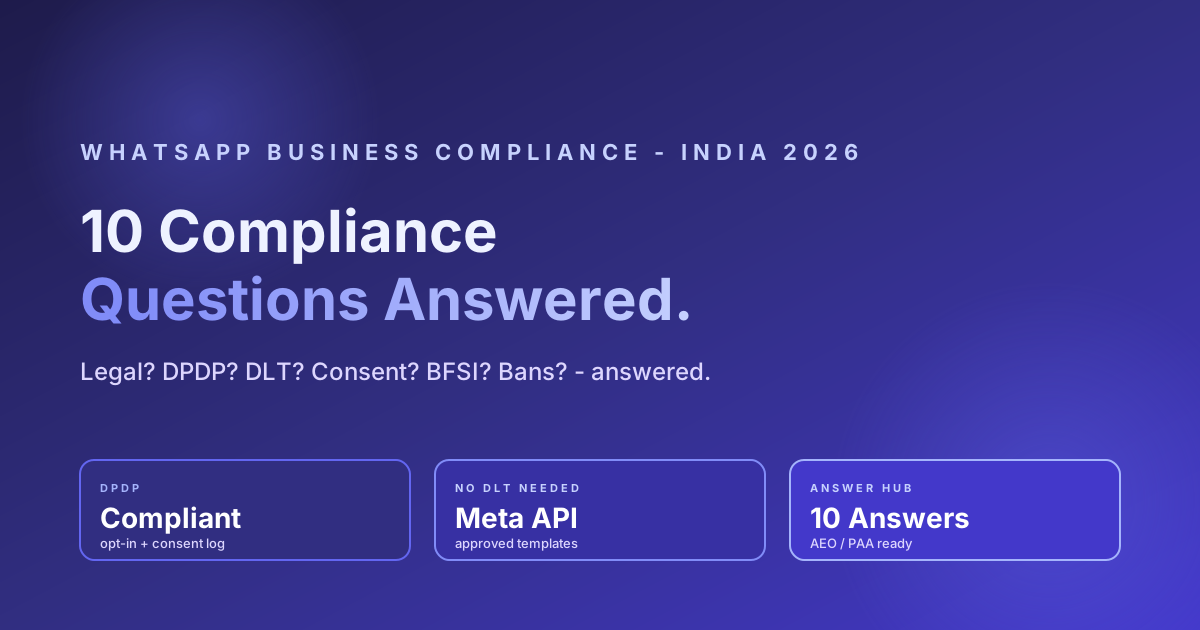
WhatsApp marketing is legal in India when you use the official Meta WhatsApp Business API, message only opted-in contacts, and send Meta-approved templates with easy opt-out. You do not need DLT registration for WhatsApp (that is an SMS rule), but you must hold genuine consent under the DPDP Act 2023 and its 2026 Rules. This answer-hub covers the ten compliance questions Indian businesses ask most. Treat every regulatory specific as a starting point and verify it against the current DPDP, Meta and RBI/IRDAI rules before you rely on it.
Below, each question is answered directly first, then expanded. Regulatory details change; where a rule could shift, we flag it as "verify against current rules" rather than state it as settled fact.
Is WhatsApp marketing legal in India?
Yes. WhatsApp marketing is legal in India when run through the official Meta WhatsApp Business API to contacts who gave verifiable opt-in, using Meta-approved templates, with a clear opt-out. What is illegal and against WhatsApp policy is blasting unsolicited messages to scraped or purchased numbers using grey-market bulk-sender tools.
The legality test is consent, not volume. You can message a very large opted-in audience compliantly; you cannot message even a small unconsented list lawfully. Buying a database or scraping numbers breaches both WhatsApp's terms and the DPDP Act 2023. For the full audit, see our DPDP compliance checklist.
Is WhatsApp Business API DPDP compliant?
The WhatsApp Business API itself is a messaging channel; DPDP compliance depends on how you use it. The API can be used in a fully DPDP-compliant way, but compliance is your responsibility as the data fiduciary: you must collect valid consent, give clear notice, honour opt-out and erasure, and process personal data only for stated purposes.
In other words, no tool is "DPDP compliant" on its own. Compliance is an outcome of your consent records, notice copy, retention limits and security controls layered on top of the API. Verify your specific obligations against the current DPDP Act 2023 and the 2026 Rules, and read our breakdown of what the DPDP Rules 2026 operationally change.
Do I need DLT registration for WhatsApp Business?
No. DLT (Distributed Ledger Technology) registration is a TRAI requirement for SMS and voice traffic on Indian telecom networks. WhatsApp Business runs on Meta's platform, not the telecom SMS rails, so DLT registration does not apply. What WhatsApp requires instead is Meta business verification and Meta-approved message templates.
This is one of the most common points of confusion for businesses migrating from SMS. You drop the DLT template-and-header regime, but you pick up Meta's template-category approval regime plus DPDP consent. The compliance burden does not vanish — it shifts. Always confirm current TRAI and Meta positions, as both update their rules.
Can I send bulk WhatsApp messages legally in India?
Yes, you can send bulk WhatsApp messages legally in India, provided you use the official WhatsApp Business API, message only opted-in contacts, send Meta-approved templates in the correct category outside the 24-hour service window, and offer one-tap unsubscribe. Keep a consent log for every contact. Bulk sending to scraped or purchased lists is illegal and gets your number banned.
The conversation window cost calculator is the quickest way to see what the window rules do to your monthly bill.
"Bulk" is not the problem; "unsolicited" is. A compliant broadcast to fifty thousand opted-in customers is fine. A single message to one person who never consented is not. The line is consent and approved templates, not list size.
What consent do I need to message customers on WhatsApp?
You need clear, informed, opt-in consent before sending business-initiated WhatsApp messages. Acceptable opt-in includes a website checkbox, a checkout consent box, a keyword reply ("send JOIN"), or a Click-to-WhatsApp ad tap. The consent should state who is messaging, why, and how to opt out, and you should log the timestamp and source of every consent.
Under the DPDP Act 2023, consent must be free, specific, informed and unambiguous, and as easy to withdraw as to give. Pre-checked boxes and buried terms do not qualify. For the opt-in mechanics, see our guide on click-to-subscribe lead funnels, and verify consent wording against the current DPDP Rules.
What are Meta's WhatsApp template category rules?
Every business-initiated WhatsApp message must be a pre-approved template in one of three categories: Marketing (promotions, offers, re-engagement), Utility (order updates, reminders, receipts tied to a transaction), and Authentication (one-time passcodes). Meta reviews each template and re-classifies or rejects ones placed in the wrong category. Free-form replies are only allowed inside the 24-hour customer-service window.
Get the DPDP WhatsApp checklist
A founder-led WhatsApp reply with the DPDP consent + audit-log checklist for WhatsApp Business messaging. India-hosted. No spam.
The costliest mistake is slipping promotion into a utility template — for example adding "10% off your next order" to an "order shipped" message. Meta re-bills that as marketing and may reject the template. Keep utility purely transactional and run promotion through dedicated marketing templates. Category definitions evolve, so verify against Meta's current policy.
Is WhatsApp Business API RBI/IRDAI compliant for BFSI?
WhatsApp Business API can be used by banks, NBFCs and insurers, but RBI and IRDAI compliance depends on your processes, not the channel alone. Sector rules on customer communication, data localisation, outsourcing, grievance redressal and recovery conduct still apply to whatever you send on WhatsApp. The channel does not exempt you from any BFSI obligation.
Practically, BFSI senders must map each message type to its regulatory frame: KYC and risk disclosures must follow RBI/IRDAI norms, recovery messages must respect fair-practice and conduct limits, and sensitive financial data must meet localisation and security requirements. This is the area where you should most strictly verify against current RBI and IRDAI circulars and take qualified compliance advice, not rely on general guidance.
What happens if I violate WhatsApp Business policy?
Violations trigger escalating consequences. Meta tracks a per-number quality rating (GREEN, YELLOW, RED); rising blocks and reports push it down. A poor rating leads to lower messaging limits, template pauses, and ultimately number bans. Serious or repeated policy breaches can suspend your WhatsApp Business Account entirely, and unsolicited-messaging breaches can also expose you under the DPDP Act.
The practical warning signs are a slide to YELLOW and rising opt-outs. Treat YELLOW as a stop signal: pause campaigns, clean your list, and reduce send frequency. Auto-pause on RED. For diagnosing delivery and quality problems, see our delivery troubleshooting guide.
How do I make WhatsApp messaging DPDP-consent compliant?
To make WhatsApp messaging DPDP-consent compliant: collect explicit opt-in with a clear purpose notice, log consent with timestamp and source, send only Meta-approved templates to consented contacts, provide one-tap opt-out and honour it immediately, limit data to what you need, set retention periods, and be ready to handle access and erasure requests. Keep auditable records of all of the above.
Think of it as a closed loop: capture consent, prove consent, respect withdrawal. A good WhatsApp CRM stores the consent trail alongside each contact so you can demonstrate lawful basis on demand. See the best WhatsApp CRM in India 2026, and confirm specifics against the current DPDP Rules 2026.
Can I record or store WhatsApp chats under DPDP?
Yes, you can record and store WhatsApp business chats under the DPDP Act, provided you have a lawful basis, tell customers in your notice that conversations are stored and why, limit retention to what the purpose requires, secure the data, and honour erasure requests. Storing chats for service quality, dispute resolution or compliance is generally acceptable when disclosed and time-bound.
What you should not do is retain chat logs indefinitely, repurpose them for unrelated marketing without fresh consent, or leave them unsecured. Set a defined retention clock per data category and delete on expiry or on a valid erasure request. As always, verify your retention and disclosure approach against the current DPDP Act 2023 and 2026 Rules.
The bottom line on WhatsApp Business compliance in India
WhatsApp Business compliance in India rests on three pillars: use the official Meta API, hold genuine DPDP consent, and respect Meta's template-category and quality rules. You skip DLT but inherit Meta's approval regime and India's data-protection law. BFSI senders carry extra RBI/IRDAI duties. None of this is exotic — it is consent, approved templates, opt-out, and sensible retention. Do those four and you are compliant and ban-resistant; skip consent and you are one report away from a banned number. For pricing, see the RichAutomate pricing page. This guide is general information, not legal advice — verify all regulatory specifics against current DPDP, Meta and RBI/IRDAI rules.
Run compliant WhatsApp messaging - Rupee 0 platform fee.
Official Meta Cloud API, DPDP-first consent capture, opt-out handling, Meta-approved templates and quality monitoring built in. No setup fee, no monthly floor, no commitment. Pay only per message: Client Pay Rupee 0.10/msg + Meta direct, or SaaS Pay Rupee 1.50 marketing / Rupee 0.50 utility-auth. 14-day trial + 100 free credits. Talk to us on WhatsApp at 918160311319 or book a 30-minute call.