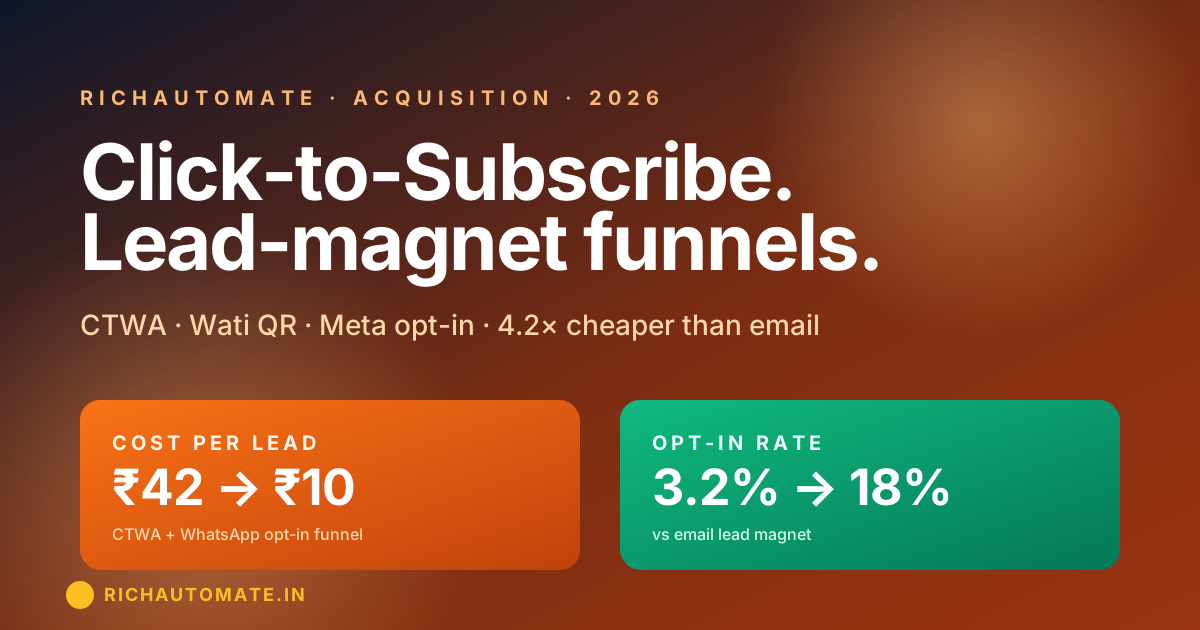
Indian D2C and SaaS brands are still running 2018-vintage email lead magnets — gated PDFs, "free guide" pop-ups, double opt-in confirmations that 70% of subscribers never click. The math has flipped. Cost-per-lead on email lead magnets in India 2026 averages ₹42 with a 3.2% form-completion-to-opt-in rate. The same lead magnet routed through a WhatsApp click-to-subscribe funnel delivers ₹10 cost-per-lead at 18% opt-in. This guide is the 2026 implementation playbook — the four CTWA + QR + link entry vectors, the funnel architecture, real Indian brand benchmarks, and the compliance pattern that keeps Meta quality rating green.
Why Click-to-Subscribe Beats Email Lead Capture
Three structural reasons:
- Zero friction handover. Email forms require typing. WhatsApp click-to-subscribe is one tap on mobile — pre-populates the user's verified phone, lands them in a thread with the brand. Indian mobile-first audiences complete WhatsApp opt-in 5-6× more often than email forms.
- Identity is verified at source. Meta hands you a verified phone number. No bounce rate, no role-account spam, no fake addresses. Lead quality jumps before any nurture.
- Read rate is 88-92% vs email 22-28%. Your nurture sequence actually reaches people. CAC payback period drops 40-60%.
The Four Click-to-Subscribe Entry Vectors
| Vector | Best for | Indian benchmark CAC |
|---|---|---|
| Click-to-WhatsApp Ads (CTWA) on Meta | Cold acquisition, scale | ₹8-22 per opt-in |
| QR code on packaging / print / OOH | Existing customer activation, retail tie-in | ₹2-6 per opt-in (sunk cost) |
| wa.me link on website / blog / social bio | Warm traffic, content readers | ₹0 marginal — depends on traffic source |
| Reference / referral link in WhatsApp | Viral loop, post-purchase share | ₹0 marginal — referral incentive cost only |
Funnel Architecture: The Six Stages
Stage 1: Hook        → CTWA ad / QR / wa.me link with specific value promise
Stage 2: Greeting    → Auto-reply confirms opt-in, sets expectations, asks 1 qualifier
Stage 3: Deliver     → Lead magnet delivered (PDF / video / template / discount code)
Stage 4: Qualify     → Single multi-choice question routes to relevant nurture segment
Stage 5: Nurture     → 3-5 message educational sequence over 7-14 days
Stage 6: Convert     → Offer + 1-tap purchase / demo / call-back trigger
Real Indian D2C Numbers
Skincare D2C, ₹12L/month ad spend
| Metric | Email lead-magnet funnel | WhatsApp click-to-subscribe |
|---|---|---|
| Form completion rate | 3.2% | 18% |
| Cost per opt-in | ₹42 | ₹10 |
| Nurture open rate (avg) | 24% | 89% |
| Opt-in to first purchase | 4.1% | 14% |
| Effective CAC | ₹1,024 | ₹71 |
EdTech, monthly subscription ₹1,499
| Metric | Without WhatsApp funnel | With |
|---|---|---|
| Lead magnet downloads | 1,200/month | 4,800/month |
| Trial start rate | 6% | 22% |
| Trial → paid conversion | 11% | 26% |
| Effective CAC | ₹2,847 | ₹540 |
Operating Rule
The single highest-leverage move for any Indian brand running paid acquisition is routing CTWA traffic into a WhatsApp lead magnet funnel instead of a landing page form. Same ad creative, same targeting, same budget — switching the destination from form to WhatsApp delivers 4-6× the opt-in volume and 8-15× the conversion. Build this first; layer multi-channel attribution after.
The India marketing budget allocator splits a monthly budget across WhatsApp, ads and retention so you can sanity-check the mix.
Get a 1-minute BSP audit on WhatsApp
Drop your WhatsApp number — we line-item your current invoice against Meta India rates in under 60 seconds. India-hosted, DPDP-compliant.
The Five Lead Magnet Formats That Convert on WhatsApp
- Discount code. 10-15% first-purchase code. Best for D2C consumer brands. Average opt-in rate 22-28%.
- Personalised assessment. 3-5 question quiz returns custom recommendation (skin type, fitness goal, course track). Opt-in rate 18-26%, but 3-4× higher purchase intent vs discount.
- Free trial / sample / consultation. Highest intent. Opt-in rate 8-14%, but conversion downstream 25-40%.
- Educational PDF / video / template. B2B, EdTech, finance. Opt-in rate 14-22%.
- Live event / webinar registration. B2B SaaS, education. Opt-in rate 12-18%; 60-70% attendance vs email-only 18-25%.
Compliance Pattern That Protects Quality Rating
- Explicit opt-in copy at entry. "Tap to start a WhatsApp chat with [Brand] — we'll send you [specific value], occasional offers, and order updates. Reply STOP to unsubscribe." Required under DPDP Act 2023 + Meta policy.
- First message is utility, not marketing. Confirmation + lead magnet delivery qualifies as utility (₹0.115/msg) when the user just opted in. Marketing categorisation triggers higher cost + risks quality flag.
- STOP keyword honoured globally. Single STOP suppresses all future sends across templates. Audit-log timestamp + reason.
- 24-hour service window before any marketing template. User-initiated session lasts 24h; switch to marketing template only after window closes (or if previously consented).
- Frequency cap. No more than 3-4 messages in nurture sequence over 14 days. Brands that exceed get reported, quality drops to Yellow → Red within 30 days.
The Five Anti-Patterns That Wreck Click-to-Subscribe Funnels
- Generic auto-reply. "Thanks for reaching out, our team will respond shortly" kills momentum. Deliver value in the first message.
- No qualifier question. Sending the same nurture sequence to every opt-in wastes the segmentation Meta gave you. One multi-choice question routes 80% of segmentation needs.
- Lead magnet behind a form on the website. Defeats the entire point. Deliver the magnet inside WhatsApp itself — PDF, video link, discount code, calendar booking.
- Mixing utility and marketing in stage 2-3. Confirmation + magnet delivery = utility. The moment you say "by the way, here's our hot deal" you've pushed it into marketing categorisation.
- Skipping reactivation. Subscribers who don't convert in 30 days need a structured win-back, not abandonment. 14-22% reactivate with the right re-engagement template.
Trigger + Routing Architecture
CTWA ad / QR / wa.me link → Meta delivers verified phone + UTM params
Webhook → backend stores: phone, source (ctwa_id / qr_code / wa_link), timestamp
Auto-respond utility template: "Welcome — here's your [magnet]. Quick question to personalise..."
Qualifier response → segment tag → routes to nurture flow A/B/C
Nurture cadence: D+0 magnet, D+2 social proof, D+5 case study, D+8 offer, D+12 final
Conversion event → suppression + LTV tracking
30-day no-convert → reactivation flow
STOP keyword → global suppression
Run click-to-subscribe funnels on RichAutomate.
CTWA ad → WhatsApp → magnet delivery → segmented nurture → conversion. UTM-aware routing, per-segment templates, suppression rules built in. Pre-approved utility templates for confirmation + lead magnet delivery. 14-day trial, no card.
New to WhatsApp automation? Start with our complete WhatsApp marketing guide for India for the full picture, then come back to apply it here.
\nRelated reading
- legal bulk WhatsApp messaging in India — the opt-in mechanics that make your subscriber funnel compliant
- WhatsApp broadcast limits and messaging tiers — plan tier growth as your subscriber list compounds
- is the WhatsApp Business API free in India — what nurturing a WhatsApp list actually costs per subscriber