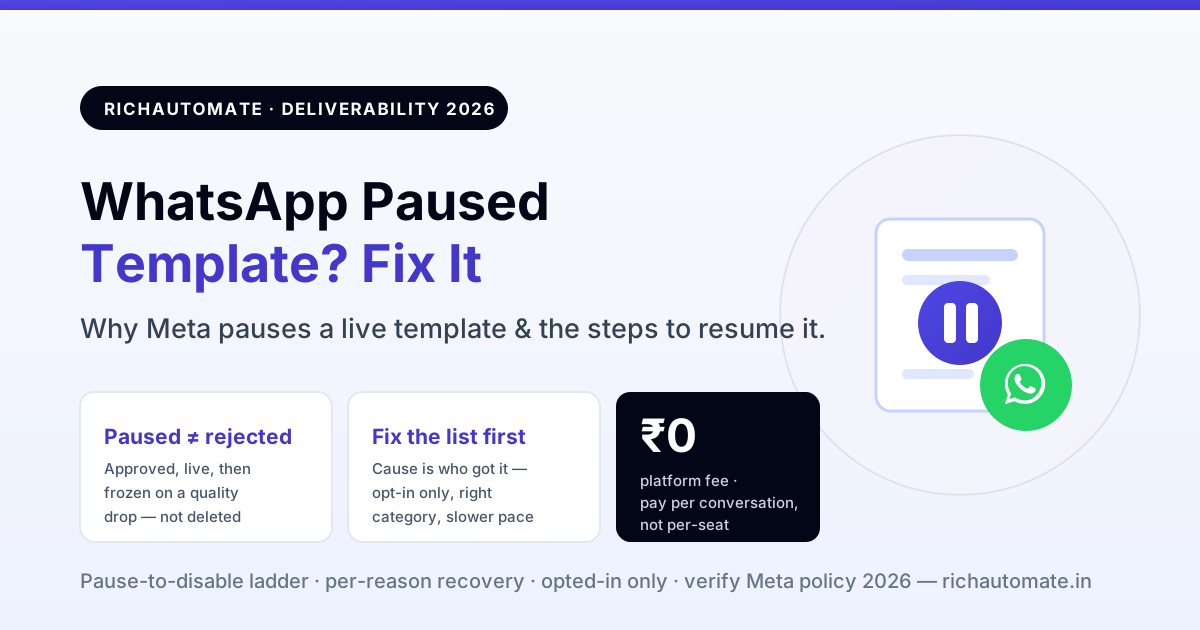
A WhatsApp template gets paused when a message you were already sending live crosses a quality line — too many recipients block it, report it, or leave it unread — and Meta stops that one template from sending for a set window rather than deleting it. A pause is not a rejection: the template was approved and is still in your account, but it is temporarily frozen, and if the quality problem repeats after it resumes, the next step is a longer pause and then a full disable. Here is exactly why Meta pauses a live template, how the pause-to-disable ladder works, and the steps to get it sending again — verify each mechanic against current Meta policy in 2026, because thresholds and durations change.
Paused is not the same as rejected or disabled
Three different template states get muddled, and the fix for each is different. A rejected template never went live — Meta declined it at review, before you ever sent it, usually for content or category reasons (that is a template rejection problem, fixed by editing and resubmitting). A paused template was approved and sending, then got frozen because its live quality dropped. A disabled template is the end of that road — Meta has switched it off, and it will not send again in its current form. Knowing which one you are looking at tells you whether to edit-and-resubmit, wait-and-fix, or rebuild.
| State | When it happens | Can you send it? | What fixes it |
|---|---|---|---|
| Rejected | At review, before first send | No — never went live | Edit content/category, resubmit for approval |
| Paused | After it was live, on a quality drop | No — frozen for a set window | Wait out the pause; fix the underlying quality cause before it resumes |
| Disabled | After repeated pauses / severe quality failure | No — switched off | Rebuild the message properly or replace it; do not just resubmit the same one |
Why Meta pauses a template you were already sending
Every approved template carries its own quality signal that Meta tracks from real recipient behaviour — separate from your number's overall quality rating. When enough of the people who receive a specific template block you, report it as spam, or simply never read it, that template's quality slides. Cross a threshold and Meta pauses that template so the bad experience stops spreading, while leaving the rest of your account untouched. The trigger is almost always the same underlying thing: the message went to people who did not want it, or did not clearly ask for it.
| What recipients do | What it signals to Meta | Why the template drew it |
|---|---|---|
| Block the number after this template | Strong negative — unwanted contact | Sent to a scraped or cold list, or too frequent |
| Report as spam | Strongest negative signal | No real opt-in, or content feels like an ad they never wanted |
| Never open / low read rate | Weak relevance | Wrong audience, wrong timing, or a stale list |
| Marketing sent as utility (or mis-categorised) | Policy mismatch | Category gaming to dodge marketing limits — see reclassification below |
The pause-to-disable ladder
Meta does not jump straight to a permanent switch-off. The escalation is a ladder, and each rung buys you a chance to fix the cause before the next one. Treat the first warning as the real deadline, not the pause itself.
- Quality warning: the template's quality drops to a low state and you get flagged — it is still sending, but this is the moment to act.
- First pause: the template is frozen for a short window. It resumes automatically after the window; nothing is deleted.
- Second pause (longer): if quality is still low when it resumes and the problem repeats, the next pause is longer.
- Disabled: continued failure switches the template off. Now you rebuild or replace it, not resubmit the same message to the same bad list.
The exact durations and thresholds are set by Meta and change — confirm the current numbers in your WhatsApp Manager template quality view rather than trusting a figure you read once. What does not change is the shape: warning, pause, longer pause, disable.
Get a 1-minute BSP audit on WhatsApp
Drop your WhatsApp number — we line-item your current invoice against Meta India rates in under 60 seconds. India-hosted, DPDP-compliant.
What to do the moment a template is paused
A pause is time-boxed, so the instinct to "resubmit and try again" is exactly wrong — resubmitting a duplicate to the same audience just re-triggers the pause and pushes you up the ladder. Use the frozen window to fix the cause.
- Read the reason in WhatsApp Manager. Open the template's quality detail — Meta tells you it was paused for low quality. Do not guess.
- Fix the audience first. Was this sent to people who opted in? Strip anyone who never explicitly agreed, and anyone cold. This one step resolves most pauses.
- Check the category. A marketing message dressed as utility gets punished. If the content is promotional, it belongs in the marketing category — see category reclassification.
- Cut the frequency and the ad-tone. If you were hitting the same list repeatedly, slow down — over-sending is its own trigger, covered in marketing template pacing.
- Let it resume clean. When the window ends, send the fixed template to a properly opted-in segment only. If quality recovers, it stays live; the pause was a warning you answered.
- If it is disabled, rebuild. Write a genuinely useful, correctly categorised message and send it to consenting recipients — do not clone the disabled one.
Stopping the next pause before it happens
Every paused template traces back to a handful of preventable habits. Fix these once and templates stop getting frozen:
- Send only to opted-in contacts. The people who asked to hear from you do not block or report — that is the whole game, and it is also a DPDP Act consent obligation.
- Match category to content. Promotions are marketing; order updates and alerts are utility. Gaming the category to save cost invites a pause.
- Keep an easy opt-out and honour it fast. A quiet unsubscribe beats a loud block every time.
- Do not over-send. Frequency fatigue turns a fine template into a reported one; pace marketing sends.
- Warm new numbers. A brand-new number blasting a big list is the classic day-one pause; ramp up.
- Watch the per-template quality view, not just the number rating. A single template can be sick while the account looks green — catch it at the warning, not the pause.
What it costs to run this properly on RichAutomate
RichAutomate runs on the official WhatsApp Business API (Meta Cloud API) with ₹0 platform fee, ₹0 setup and ₹0 monthly minimum, so keeping templates healthy costs you nothing extra — it is just discipline about opt-in and category. You pay per conversation on Meta's category rates: Client Pay at ₹0.10/message plus Meta's per-conversation rate, or SaaS Pay at ₹1.20/marketing and ₹0.30/utility conversation all-in. Correctly categorising a message is not only a pause-avoidance move — utility conversations are the cheaper rate, so accuracy saves money too. A 14-day trial with 100 free credits and no card lets you test a template to a small opted-in segment before you scale it. Verify current Meta rates, which change periodically. Full breakdown in the WhatsApp Business API cost guide and Client Pay vs SaaS Pay. Going live on the official API in India effectively requires GST for business verification — treat GST as required, not optional.
Bottom line
A paused template is Meta telling you a live message crossed a quality line — usually because it reached people who did not opt in — and freezing that one template while it waits for you to fix the cause. Do not resubmit into the pause; read the reason, clean the audience, correct the category, slow the frequency, and let it resume to a consenting list. Answer the warning at the first rung and the template recovers; ignore it and the ladder ends in a disable you have to rebuild from. Healthy templates are a consent-and-category habit, not a trick — see the platform on features and pricing.
Related: WhatsApp read rate — why messages get delivered but go unread, and how to lift the read rate in India 2026 — the delivered-vs-read-vs-replied split, the six reasons messages go unread, and a symptom-to-fix table.