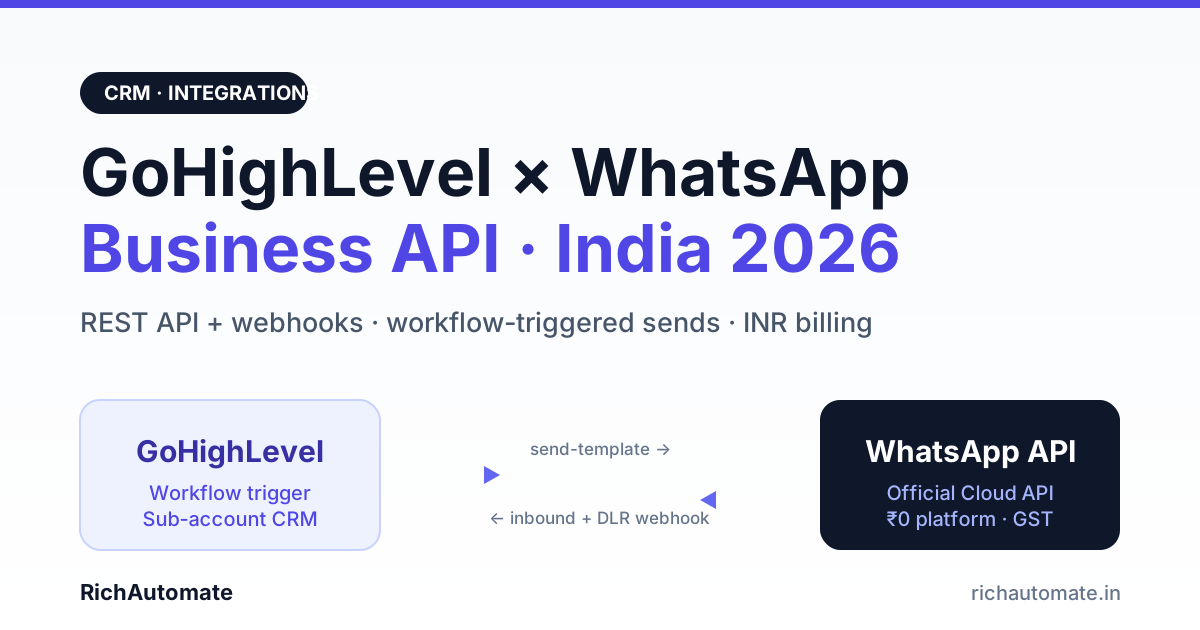
GoHighLevel runs the pipeline; WhatsApp closes it. A GHL agency in India connects the official WhatsApp Business API to its sub-accounts through a REST API and webhooks — a GHL workflow fires the send, inbound replies and delivery status post back into the CRM — so every new lead, appointment and pipeline stage triggers a WhatsApp message automatically, billed in rupees with a GST invoice instead of a marketplace's dollar SMS rates.
Quick answer: There is no official one-click GoHighLevel WhatsApp app, so agencies wire GHL to the WhatsApp Business API through a REST API + webhooks: a GHL workflow's custom-webhook / API action calls the provider's send-template endpoint with a per-sub-account API key, and inbound messages plus delivery receipts webhook back into GHL. On RichAutomate this is ₹0 platform fee, ₹0 setup, pay-per-message in INR — the fit for an agency reselling WhatsApp to many client sub-accounts.
Why GoHighLevel agencies hit a WhatsApp wall in India
GoHighLevel is the agency operating system — CRM, funnels, calendars, pipelines and workflow automation under one white-label roof. Its native messaging leans on LC Phone (Twilio-backed SMS/voice) and email, and its WhatsApp options route through global marketplace providers priced in dollars per conversation. For an Indian agency that is two problems at once: the per-message economics are wrong for the volumes Indian sub-accounts send, and billing arrives in USD with no GST invoice your clients can claim. The answer is not to abandon GHL — it is to keep GHL as the brain and plug the official WhatsApp Business API in as the delivery layer, billed locally in rupees.
How the GoHighLevel → WhatsApp integration actually works
There is no official GHL WhatsApp app to install, and that is fine — GHL is built to talk to any external system through workflows. The connection is a clean API + webhook loop:
| Direction | Mechanism |
|---|---|
| GHL → WhatsApp (outbound) | A GHL workflow adds a custom-webhook / API action that POSTs to the provider's send-template or send-message endpoint, authenticated with that sub-account's API key. Any GHL trigger — new lead, form submit, tag added, appointment booked, pipeline-stage change — fires the WhatsApp send. |
| WhatsApp → GHL (inbound) | Incoming member replies and delivery / read receipts are POSTed back to a GHL inbound webhook, so replies land against the contact and workflows can branch on delivered / read / replied. |
| Per sub-account isolation | Each GHL sub-account (client) gets its own API key and its own WhatsApp number, so sends, billing and conversation history stay cleanly separated across the whole agency book. |
The customer data never leaves GHL — it stays the source of truth and simply drives the WhatsApp sends over the API. No migration, no second CRM to keep in sync. This is the same REST-and-webhook pattern any CRM uses to reach WhatsApp, so if you also run other CRMs alongside GHL the wiring is identical.
What you can automate once GHL drives WhatsApp
Every GHL trigger becomes a WhatsApp touch, and most of them are utility-category (the cheapest tier):
- New-lead instant reply — a form fill or ad lead in GHL fires a WhatsApp welcome within seconds, while intent is hot, instead of an email that waits in a spam folder.
- Appointment reminders — GHL's calendar booking triggers a WhatsApp confirmation and a day-before reminder, cutting no-shows the way SMS used to but at a fraction of the cost.
- Pipeline-stage nudges — moving a deal to "quote sent" or "follow-up" fires the matching WhatsApp template automatically.
- Review and re-engagement — a "won" stage triggers a review-request message; a stale-lead tag triggers a re-engagement broadcast to opted-in contacts.
- Two-way replies in GHL — because inbound webhooks back into the CRM, your team answers WhatsApp from inside GHL's conversation view, not a separate app.
It is the same lead-to-close loop that a real-estate or coaching agency already runs in GHL — WhatsApp just makes each step land where Indian buyers actually read.
Get the India 2026 WhatsApp BSP price comparison
Wati vs AiSensy vs Interakt vs RichAutomate: Meta rates, platform fees and hidden costs, side by side. We send it to your WhatsApp in a minute.
The agency economics: why INR billing changes the resale margin
This is where an Indian GHL agency wins or loses. A marketplace WhatsApp provider billed in dollars leaves almost no markup room and hands your client a USD statement with no GST. Local rupee billing flips it — you buy at Indian per-message rates, mark up per sub-account, and hand each client a GST invoice. Two models fit the GHL reseller shape:
| Item | Client Pay | SaaS Pay |
|---|---|---|
| Platform fee | ₹0 | ₹0 |
| Setup | ₹0 | ₹0 |
| Monthly | ₹0 | ₹0 |
| Per message (platform) | ₹0.10 + Meta direct | Utility ₹0.50 / Marketing ₹1.50 |
| Meta billing | Client's own Meta account + card | Managed for you, no client cards |
| Free trial | 14 days + 100 credits, no card | |
For an agency reselling across many sub-accounts, SaaS Pay is usually the fit — one all-inclusive rupee rate, no per-client Meta-card setup, so you mark it up and bill clients yourself. Where a client wants to own their own Meta billing, flip that sub-account to Client Pay. Size a month across your book with the WABA cost calculator, and compare the wider field in the best WhatsApp Business API providers roundup.
Setup checklist for a GHL agency
- Create a provider account and, for each GHL sub-account, generate a dedicated WhatsApp API key.
- Connect a WhatsApp number per client and get their message templates approved by Meta (utility templates for reminders, marketing for promos).
- In each GHL sub-account workflow, add a custom-webhook / API action → POST to the
send-templateendpoint with that key. The full request format lives at the provider's API docs. - Point inbound + DLR webhooks back to a GHL inbound URL so replies and delivery status flow into the CRM.
- Fire a live test from a real GHL trigger and confirm the WhatsApp message goes out and the reply lands on the contact.
Compliance notes for 2026
Treat these as pointers to verify, not legal advice:
- Opt-in is mandatory. WhatsApp Business API only lets you message contacts who have opted in. Capture that consent in the GHL form or funnel, and keep promotional broadcasts to that consented list — this is also the correct posture under the DPDP Act 2023, since contact numbers are personal data.
- Template approval. Business-initiated messages must use Meta-approved templates. Build them per sub-account; utility templates (reminders, confirmations) are the cheapest tier, marketing templates carry the higher rate.
- GST. Local rupee billing means each client gets a GST invoice they can claim — one of the concrete reasons to leave dollar-billed marketplace providers.
- No "unbannable" promise. No provider — us included — can guarantee a WhatsApp number is unbannable. Quality rating comes from clean opt-ins and welcomed messages (lead replies, reminders, confirmations), not cold blasts from a scraped list.
Plug WhatsApp into your GoHighLevel agency — billed in INR
Per-sub-account API keys, workflow-triggered sends, inbound + delivery webhooks back into GHL, on the official WhatsApp Business API. ₹0 platform, ₹0 setup, ₹0 monthly — pay per message in rupees with a GST invoice.
WhatsApp: 918160311319 · Book a demo: richautomate.in/book/demo · Create account · See pricing