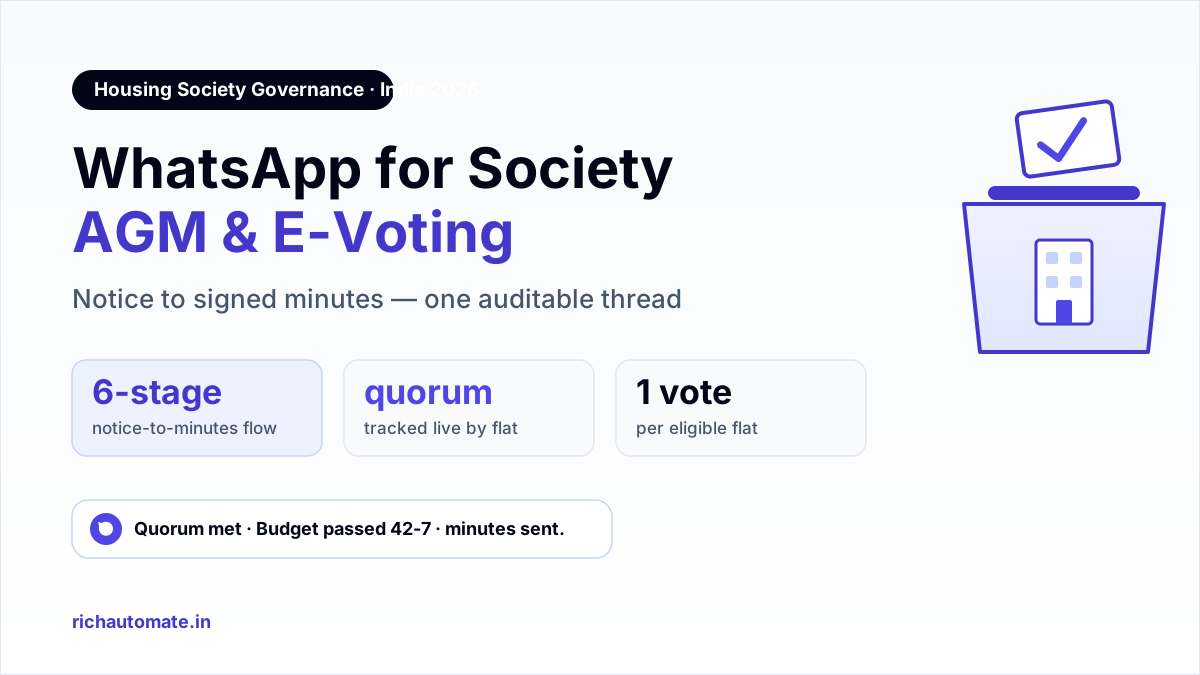
Yes — a co-operative housing society or apartment owners' association can run its entire Annual General Meeting on WhatsApp in India: statutory AGM notice and agenda circulation, RSVP and quorum tracking, proxy and nomination collection, resolution and committee-election voting with a live auditable tally, and signed minutes back to every member — one thread the whole membership already reads. The single highest-value automation is the notice-plus-quorum-plus-vote record, because a resolution or election challenged later stands or falls on proof that proper notice went out on time, that quorum was met, and that each vote was cast by an eligible member — the dated WhatsApp trail is exactly that evidence.
This 2026 guide covers why society AGMs are won on turnout and lost on notice and quorum disputes, the six-stage notice-to-minutes lifecycle on WhatsApp, the automation stack that keeps members voting instead of arguing, and the co-operative-law, e-voting-validity and data-protection discipline that keeps both the committee and its WhatsApp Business account safe. The legal position is directional and varies by state and by how your society is registered — verify the notice period, quorum, proxy and e-voting rules under your own State Co-operative Societies Act, Model Bye-laws, or (for company-registered associations) the Companies Act with your society's legal advisor before relying on any electronic vote; this is general information, not legal advice.
Why AGMs are won on turnout and lost on notice and quorum
An Annual General Meeting is a compliance event with a deadline, not a WhatsApp group chat. Co-operative societies must hold the AGM within the period fixed by their State Act and Model Bye-laws, give members the statutory notice with the agenda attached, and reach quorum before any resolution is valid. Miss the notice period, fall short of quorum, or lose the record of who voted, and a single aggrieved member can have the whole meeting — the budget passed, the committee elected, the maintenance hike approved — set aside by the Registrar or the co-operative court.
The old way — a printed notice slipped under doors, a quorum counted on paper, proxies collected in a scramble, and a show of hands nobody minuted properly — is exactly how a society ends up re-running its AGM. A structured WhatsApp Business API workflow timestamps the notice to every member, tracks RSVPs and live quorum, collects proxies and election nominations as structured data, runs resolution voting with an auditable count, and delivers the signed minutes — turning a disputed meeting into a defensible one, without asking retirees and working owners to install yet another app.
The six-stage notice-to-minutes lifecycle on WhatsApp
1. Statutory AGM notice and agenda circulation
Everything legal starts with proper notice. An approved WhatsApp template sends each member the AGM date, time, venue or video link, and the full agenda with attached accounts and budget — on or before the statutory notice deadline, with a delivered/read timestamp against every flat. That timestamped delivery is the committee's first line of defence if notice is ever challenged, and it reaches working owners and non-resident members that a door-slipped paper notice never does.
2. RSVP and live quorum tracking
A one-tap "Attending / Sending proxy / Not attending" reply turns the notice into a live quorum board. The secretary can see, before the meeting even opens, whether the required quorum will be met — and send a targeted reminder to the flats still silent — instead of discovering a shortfall in the room and adjourning. For hybrid AGMs the same reply routes members to the physical hall or the video link.
3. Proxy and election-nomination collection
A member who cannot attend can appoint a proxy; a member standing for the managing committee must file a nomination. A WhatsApp Flow captures both as structured, dated records — the proxy authorisation naming the flat and the proxy holder, or the candidate's nomination for a committee seat with the proposer and seconder — instead of loose paper slips that go missing or arrive after the cut-off. Everything is filed against the member's flat number with a clean audit trail.
4. Resolution voting and committee elections with a live tally
Each agenda resolution — adopting the accounts, approving the budget, sanctioning a major repair, raising maintenance — and each contested committee seat goes to a vote, with one auditable vote per eligible flat and a running count the secretary can read live. Electronic voting widens participation dramatically for a membership of working owners, NRIs and senior citizens who rarely make it to a Sunday-morning hall. Where your society is registered as a company or a Section 8 body, align the mechanism with the Companies Act e-voting requirements; a co-operative society follows its State Act and election rules — confirm which applies to you.
Get a 1-minute BSP audit on WhatsApp
Drop your WhatsApp number — we line-item your current invoice against Meta India rates in under 60 seconds. India-hosted, DPDP-compliant.
5. Minutes (MoM) and action-item circulation
Within the window your bye-laws require, the signed minutes — resolutions passed, votes recorded, committee elected, action items with owners and dates — go back into the same thread every member already read the notice in. No "we never saw the minutes" dispute, and the action list (the lift AMC, the painting tender, the water audit) has a dated owner instead of dissolving after the meeting.
6. Committee-election result and handover
When the AGM also elects the new managing committee, the declared result and the handover of charge go into the record too — the new office-bearers, their roles, and the date they take over. For a newly-formed association taking over common areas from a builder under RERA, the same structured trail documents the handover of accounts, assets and responsibilities cleanly rather than in a contested scramble.
What "best" means for a housing-society committee
| Committee need | What to look for |
|---|---|
| Defensible notice | Approved template with delivered/read timestamp to every flat before the statutory deadline |
| No quorum surprises | One-tap RSVP feeding a live quorum board with targeted reminders |
| Clean proxies & nominations | Structured Flow capturing proxy authorisations and candidate nominations against flat numbers |
| Auditable voting | One vote per eligible flat, running tally, exportable record for the minutes |
| Wider participation | Remote voting reaching working owners, NRIs and senior members |
| Predictable cost | Flat per-message pricing, not per-seat SaaS that taxes every committee member |
RichAutomate fits this shape: approved-template broadcasts, structured Flows, a shared committee inbox and flat pricing — see the full pricing. A committee already running day-to-day operations can layer this AGM workflow on top of the resident-communication playbook in our apartment society & RWA and RWA society management guides, and coordinate vendors and staff with the facility management and property management playbooks.
The automation stack
- Notice + agenda template — statutory AGM notice with agenda, accounts and budget attached, timestamped to every flat before the deadline.
- RSVP & quorum board — one-tap attending/proxy/absent reply feeding a live quorum count with targeted reminders to silent flats.
- Proxy & nomination Flow — dated, structured proxy authorisations and committee-candidate nominations filed against flat numbers.
- Resolution & election voting — one auditable vote per eligible flat, running tally, exportable result for the minutes.
- Minutes circulation — signed MoM with resolutions, vote record and action items back into the same thread.
- Dues & notice reminders — the same channel carries maintenance-dues and utility reminders between meetings; borrow the cadence from the utility bill & outage playbook.
Co-operative law, e-voting validity and member data
A society AGM carries specific legal weight, so the messaging discipline is not optional:
- Follow your own registration's rules. A co-operative housing society runs under its State Co-operative Societies Act, Model Bye-laws and State election rules; an apartment owners' association registered as a company or Section 8 body follows the Companies Act, including its e-voting provisions. The notice period, quorum, proxy limits and whether electronic voting is currently valid for your resolutions differ by state and by registration — confirm all of it with your society's legal advisor before you rely on a WhatsApp vote for a binding resolution.
- Keep the vote auditable and one-per-eligible-flat. The value of electronic voting is the record — eligible voter, resolution, timestamp, tally. Keep that export ready so a challenged resolution can be defended, and make sure only members in good standing (not defaulters barred under your bye-laws) can vote.
- Notice reaches members, not outsiders. AGM notices and voting links go to the society's own members only — broadcasting to bought or scraped numbers is both a governance breach and the fast way to a WhatsApp Business account strike. No tool can promise "no ban" for unsolicited sends.
- Treat the member register as personal data. Flat-owner names, contact numbers, dues and vote records are personal data under the DPDP Act 2023 — restrict which committee members can open the register (shared-inbox role controls help), use it only for society business, and keep the AGM thread as the dated trail for any governance dispute.
Bottom line
A housing society or apartment owners' association wins its AGM on turnout and defensible process, and loses it on missed notice, short quorum and unrecorded votes — and a WhatsApp Business API workflow fixes all three: timestamped statutory notice and live quorum tracking on one side, structured proxies, auditable voting and signed minutes on the other, one trail that doubles as the committee's compliance record. Start with the notice-plus-RSVP template and the quorum board; layer proxy collection and resolution voting next, once your legal advisor confirms the mechanism for your registration. RichAutomate runs it on flat per-message pricing with no platform fee, so cost scales with your meeting cycle, not with the number of committee members using it.