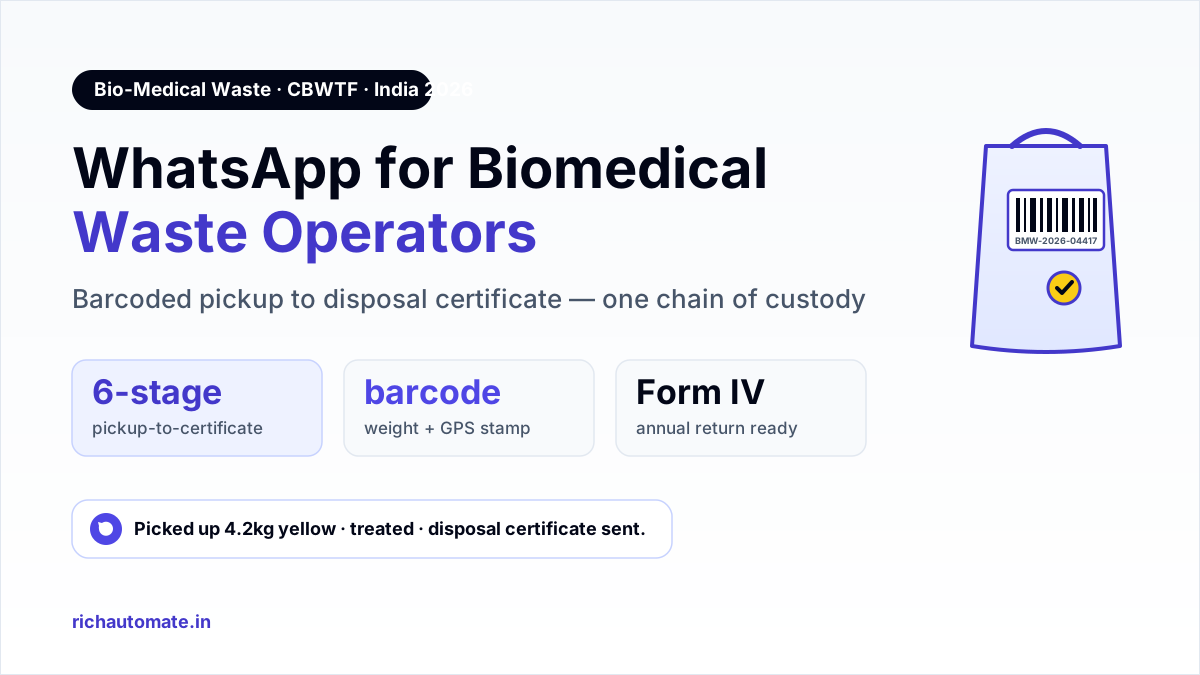
Yes — a Common Bio-Medical Waste Treatment Facility (CBWTF) can run its whole operator-to-generator workflow on WhatsApp in India: scheduled pickup confirmations, barcoded-bag handover receipts with weight and GPS stamp, treatment batch logs, disposal certificates and the annual-return data every hospital, clinic and lab needs for its own audit — one thread that doubles as compliance evidence. The single highest-value automation is the cradle-to-grave barcoded manifest, because a healthcare generator is legally liable if its waste cannot be traced to authorised treatment and disposal — the dated WhatsApp trail of pickup, barcode, weight, treatment and certificate is exactly the evidence that keeps the generator compliant and keeps the generator yours.
This 2026 guide covers why bio-medical waste is a chain-of-custody business, not a garbage-collection one, the six-stage pickup-to-certificate lifecycle on WhatsApp, the automation stack that turns each collection into a retainer, and the Bio-Medical Waste Rules, State Pollution Control Board and data-protection discipline that keep both the facility and its WhatsApp Business account safe. The legal position is directional and changes — verify current authorisation conditions, barcoding, GPS-tracking and annual-return duties under the Bio-Medical Waste Management Rules 2016 and its amendments with your State Pollution Control Board (SPCB) and legal counsel before relying on any workflow; this is general information, not legal advice.
Why bio-medical waste is a chain-of-custody business
A CBWTF does not sell waste collection — it sells defensible traceability. Under the Bio-Medical Waste Management Rules, every gram of infectious waste that leaves a hospital, clinic, laboratory, dialysis centre or blood bank must be segregated by colour code, handed to an authorised facility, treated by the prescribed method and disposed of with a record that survives an SPCB inspection. If a barcoded bag goes missing, if the weight collected does not reconcile, or if a generator cannot produce the disposal trail, it is the generator that faces the notice, the sealing and the liability under the Environment (Protection) Act — and it is the facility that loses the account.
The old way — a paper trip-sheet signed at the gate, a weight scribbled in a register, a certificate posted weeks later — is exactly how a chain of custody breaks. A structured WhatsApp Business API workflow timestamps the pickup, captures the barcode and weight at handover, logs the treatment batch, and returns the disposal certificate to each generator, turning a fragile paper chain into a dated digital one that the generator can hand straight to an inspector — the reason the account renews.
The six-stage pickup-to-certificate lifecycle on WhatsApp
1. Generator onboarding and segregation SOP
Every new hospital, clinic or lab account starts with its authorisation details and the colour-code segregation rules — yellow, red, white-translucent and blue — captured once through a WhatsApp Flow and confirmed back with the agreed pickup frequency and rate. A short segregation SOP and category chart pushed on the same thread cuts the mixed-bag rejections that cause most generator disputes, and gives the facility a dated record of what each generator was told.
2. Scheduled pickup route and slot confirmation
Each generator gets a per-day pickup confirmation — the vehicle, the expected window and the route — with a one-tap reply if quantities are unusually high that day. The facility runs its route from the live confirmations instead of guessing, and a missed or delayed pickup is flagged on the thread before it becomes a storage-time breach at the generator's end.
3. Barcoded handover with weight and GPS stamp
At collection, the barcoded bags are scanned, the weight is recorded, and a collection receipt — barcode IDs, category-wise weight, date, time and GPS location — goes instantly to the generator on WhatsApp. This is the heart of the chain of custody: the generator now holds dated proof that its waste left in authorised bags at a recorded weight, and the facility holds the matching record to reconcile against what arrives for treatment.
4. Treatment batch log
Waste is treated by the prescribed method — incineration, autoclaving with shredding, or the route your authorisation specifies for each category — and the batch is logged against the collection records it contains. A running treatment log keeps the facility's own operating record clean for the SPCB and lets any generator's waste be traced from its barcode to the batch that treated it.
Get a 1-minute BSP audit on WhatsApp
Drop your WhatsApp number — we line-item your current invoice against Meta India rates in under 60 seconds. India-hosted, DPDP-compliant.
5. Disposal certificate and generator-wise manifest
Each generator receives its disposal certificate and a monthly manifest — category-wise weight collected, treated and disposed across the period — back into the same thread it confirmed every pickup in. No "we never got the certificate" gap, and the generator's own compliance file is assembled month by month instead of scrambled together at inspection time.
6. Annual return and authorisation-renewal reminders
Because the monthly manifests already hold category-wise weights per generator, the annual return due to the SPCB is assembled from data the facility captured all year rather than reconstructed under deadline. The same channel carries authorisation-renewal reminders — the facility's own consent to operate, and each generator's authorisation — so nobody operates on a lapsed licence.
What "best" means for a CBWTF operator
| Operator need | What to look for |
|---|---|
| Defensible chain of custody | Barcode + category weight + GPS + timestamp captured at handover and receipted to the generator instantly |
| No pickup breaches | Per-day slot confirmation with delay flags before storage-time limits are crossed |
| Clean treatment record | Batch log tying every barcode to its treatment method for SPCB inspection |
| Generator-ready certificates | Disposal certificate and monthly manifest delivered to each generator's thread |
| Effortless annual return | Category-wise weights per generator assembled year-round, not at deadline |
| Predictable cost | Flat per-message pricing, not per-vehicle or per-generator SaaS seats |
RichAutomate fits this shape: approved-template broadcasts, structured Flows, a shared operations inbox and flat pricing — see the full pricing. The facility's generators are the healthcare businesses whose own WhatsApp playbooks live in our hospitals & clinics, diagnostic labs and dialysis centres guides, and the same chain-of-custody discipline that runs an e-waste EPR recycler or a facility-management operation.
The automation stack
- Generator onboarding Flow — authorisation details, colour-code SOP and agreed pickup frequency captured once and confirmed back.
- Pickup schedule template — per-day slot confirmation with a one-tap high-quantity flag and delay alerts before storage-time breaches.
- Barcode handover receipt — barcode IDs, category-wise weight, GPS and timestamp receipted to the generator at collection.
- Treatment batch log — every barcode tied to its treatment method and batch for inspection.
- Disposal certificate + manifest — certificate and monthly category-wise manifest back into each generator's thread.
- Return & renewal reminders — annual-return data pre-assembled and authorisation-renewal nudges for the facility and every generator.
Bio-medical waste rules, SPCB authorisation and generator data
A CBWTF carries statutory duties on both its own operation and its generators' records, so the messaging discipline is not optional:
- Operate strictly within your authorisation. The Bio-Medical Waste Management Rules 2016 and their amendments, administered by your State Pollution Control Board under CPCB oversight, fix your catchment, treatment methods, barcoding, GPS-tracking and record-keeping duties. A WhatsApp workflow captures the evidence — it does not change the rules; verify your current authorisation conditions and any 2026 updates with your SPCB and legal counsel.
- Keep the chain of custody auditable. The value of the workflow is the record — barcode, category, weight, GPS, timestamp, treatment batch, disposal certificate. Keep those exports ready so a generator's file, and your own annual return, can be reconstructed and defended against an inspection.
- Confirmations reach your generators, not bought lists. Pickup and certificate messages go to the facility's own authorised generators — broadcasting to scraped or purchased numbers is both a compliance breach and the fast way to a WhatsApp Business account strike. No tool can promise "no ban" for unsolicited sends.
- Treat generator and route data as personal data. Generator contacts, site addresses, quantities and vehicle-route information are personal and commercially sensitive data under the DPDP Act 2023 — restrict which operations staff can open the records (shared-inbox role controls help), use them only for waste operations, and keep the thread as the dated trail for any dispute.
Bottom line
A bio-medical waste facility is paid for traceability, and it loses accounts on broken chains of custody — missing barcodes, unreconciled weights, late certificates — and a WhatsApp Business API workflow fixes exactly that: barcoded, weighed, GPS-stamped handover receipts and disposal certificates on one side, pre-assembled annual-return data and renewal reminders on the other, one trail that is both the generator's compliance file and the facility's operating record. Start with the pickup-confirmation template and the barcode handover receipt; layer treatment logs and monthly manifests next. RichAutomate runs it on flat per-message pricing with no platform fee, so cost scales with your collection cycle, not with the number of vehicles or generators on the system.