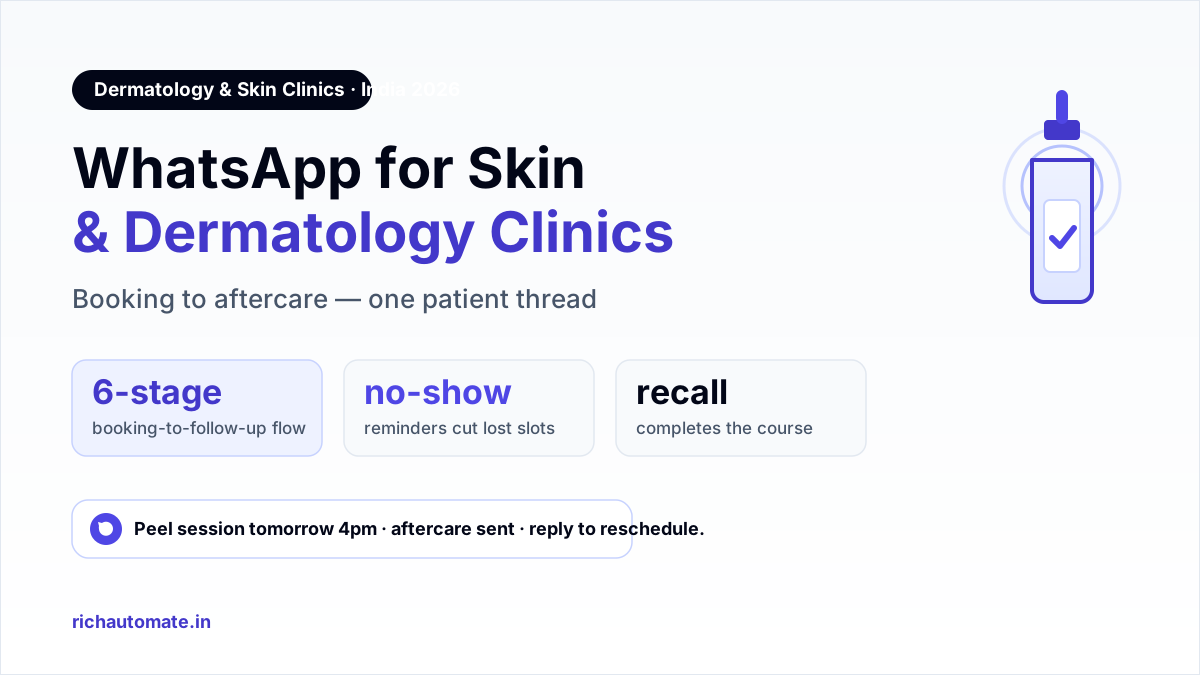
Yes — a dermatology or skin clinic in India can run its whole patient journey on WhatsApp: appointment booking and slot reminders, treatment-package quotes for acne, pigmentation, laser and peels, pre-procedure prep and post-care aftercare, recall follow-ups for maintenance sessions, and structured consent for before/after clinical photos — one thread the patient already reads. The single highest-value automation is the reminder-plus-aftercare loop, because a skin clinic bleeds revenue two ways — no-shows on booked slots and abandoned multi-session courses — and a timed WhatsApp reminder for the next appointment plus clear post-procedure instructions fixes both while cutting the "is this normal?" calls that swamp the front desk.
This 2026 guide covers why skin clinics live or die on recall and no-shows, the six-stage booking-to-follow-up lifecycle on WhatsApp, the automation stack that keeps courses of treatment completing, and the medical-advertising, teleconsult and health-data discipline that keeps both the clinic and its WhatsApp Business account safe. The legal position is directional — cosmetic and skin-treatment advertising in India is tightly restricted, so verify any claim, before/after image or promotional message against the Drugs and Magic Remedies Act, the ASCI code and your professional-council guidance before you send it; this is general information, not legal or medical advice.
Why skin clinics live on recall and die on no-shows
Dermatology is a course-of-treatment business, not a one-visit fix. Acne programmes, pigmentation and melasma, laser hair reduction, chemical peels, PRP and anti-ageing all run over multiple sessions weeks apart — and every gap between sessions is a chance for the patient to drift, forget, or move to the clinic that reminded them. Layer on a no-show rate that quietly burns 15–30% of booked dermatologist slots, and the clinic's real problem is not filling the diary once; it is getting the same patient back for session two, three and four, and holding the slot they booked.
The old way — a receptionist phoning a no-reply list, a WhatsApp typed by hand from a personal number, aftercare explained verbally and forgotten by the car park — leaks patients and floods the desk with avoidable calls. A structured WhatsApp Business API workflow confirms the booking, reminds at the right interval, delivers written aftercare, and pulls the patient back for the next session automatically — turning a leaky diary into a completing course, without the front desk dialling all day.
The six-stage booking-to-follow-up lifecycle on WhatsApp
1. Appointment booking and confirmation
A patient enquiring about acne, a pigmentation patch or a laser package gets a structured WhatsApp Flow that captures the concern, offers real slots, and confirms the booking with the doctor, date, time and clinic address — instead of a DM thread the receptionist reconstructs later. First-touch enquiries from an Instagram ad or the clinic website land in the same thread, qualified before they ever reach the desk. The appointment engine here is the same one behind our clinic appointments playbook.
2. Slot reminders that cut no-shows
An approved reminder template at the right interval — the day before, and again a few hours before — with a one-tap confirm or reschedule is the single biggest lever on clinic revenue. A patient who taps "reschedule" frees the slot for someone on the waitlist; a patient who confirms is far likelier to actually arrive. For high-value laser or procedure slots that block a machine and a nurse, that reminder is the difference between a paid session and a dead hour.
3. Treatment-package quotes and pre-procedure prep
Skin treatments are quoted as packages — six acne sessions, a laser course, a peel series — and the quote plus what it includes goes to the patient as a clean, structured message they can decide on, not a number shouted across a busy reception. Once booked, the pre-procedure prep goes out automatically: avoid sun exposure and retinoids before a peel, no waxing before laser, come with a clean face. A prepared patient means a safe, effective session instead of a wasted, rescheduled one.
4. Post-care aftercare and the "is this normal?" deflector
The highest-value message a skin clinic sends is the one after the procedure. Written, dated post-care instructions — sunscreen every three hours after a peel, expected redness timeline after laser, when mild swelling is normal and when to call the clinic — delivered to the patient's thread deflect the flood of anxious "is this normal?" calls, improve outcomes, and reduce the complications that come from patients guessing. This is where a skin clinic's WhatsApp pays for itself in front-desk time alone.
Get a 1-minute BSP audit on WhatsApp
Drop your WhatsApp number — we line-item your current invoice against Meta India rates in under 60 seconds. India-hosted, DPDP-compliant.
5. Recall and maintenance follow-up
The revenue lever is the recall. A patient whose acne cleared needs a maintenance review; a laser course needs its next session on schedule; a pigmentation patient needs a seasonal top-up. A timed recall template — "your next session is due, here are open slots" — pulls the patient back before they drift, turning a one-off visit into a completed course and a completed course into a returning patient. The same recall discipline drives our physiotherapy & rehab and hair-transplant & cosmetic playbooks.
6. Clinical-photo and before/after consent
Before/after images are how skin clinics prove results — and also where the compliance risk sits. A structured consent step captures the patient's explicit, dated permission for clinical photography and for any use of those images, stored against the patient record, before a single photo is taken. That consent trail protects the clinic if an image is ever questioned, and keeps the before/after firmly inside what the advertising rules permit — never a public "guaranteed cure" post, which is exactly what the law prohibits.
What "best" means for a dermatology practice
| Clinic need | What to look for |
|---|---|
| Fewer no-shows | Approved reminder template with one-tap confirm / reschedule at the right interval before the slot |
| Completing courses | Timed recall for the next session so multi-visit treatments finish, not fade |
| Fewer anxious calls | Automated written pre-prep and post-care aftercare to the patient's thread |
| Clean quotes | Structured Flow for treatment-package quotes patients can decide on privately |
| Compliant photos | Explicit, dated consent capture for clinical and before/after images |
| Predictable cost | Flat per-message pricing, not per-seat SaaS that taxes every doctor and nurse |
RichAutomate fits this shape: approved-template reminders and recalls, structured Flows, a shared clinic inbox and flat pricing — see the full pricing. A skin clinic sits inside a wider medical practice, so this layers naturally on the healthcare clinics playbook and pairs with the salons & spas guide for clinics that also run an aesthetic-services arm — with the medical/advertising line kept firmly between the two.
The automation stack
- Booking Flow — captures the skin concern, offers real slots, confirms doctor, date, time and address in one structured thread.
- No-show reminders — day-before and hours-before templates with one-tap confirm / reschedule to protect high-value procedure slots.
- Package-quote Flow — acne, laser and peel courses quoted as clean structured messages the patient can decide on privately.
- Pre-prep + post-care — automated written prep before and aftercare after every procedure, deflecting the "is this normal?" calls.
- Recall engine — timed next-session recalls that turn one-off visits into completed courses and returning patients.
- Consent capture — explicit, dated permission for clinical and before/after photography, stored against the patient record.
Medical-advertising, teleconsult and health-data discipline
A skin clinic's messaging carries real legal weight, so the discipline is not optional:
- Cosmetic and skin-treatment advertising is tightly restricted. The Drugs and Magic Remedies (Objectionable Advertisements) Act and the ASCI code bar "guaranteed cure" claims and misleading before/after promotion for skin and hair treatments. Keep before/after images inside the private patient conversation with consent, use WhatsApp for booking, reminders and aftercare — not for broadcast promises — and clear any promotional creative against these rules first.
- Teleconsult follows the telemedicine guidelines. If a dermatologist reviews a photo or advises over WhatsApp, that is telemedicine — the registered medical practitioner should identify themselves, exercise professional judgement on what can and cannot be handled remotely, and follow the NMC Telemedicine Practice Guidelines, including the limits on prescribing certain drugs without an in-person consult. WhatsApp is the channel, not a substitute for the clinical standard.
- Prescriptions stay prescriptions. Schedule H and H1 drugs common in dermatology — isotretinoin, topical steroids — cannot be handed out or advertised loosely. Use the thread to remind and follow up, not to bypass a valid prescription and consultation.
- Patient data is sensitive health data. Skin conditions, treatment history and clinical photographs are sensitive personal data under the DPDP Act 2023 — restrict which staff can open the patient record (shared-inbox role controls help), take explicit consent for photos and for messaging, use the data only for the patient's care, and never broadcast to bought or scraped numbers. No tool can promise "no ban" for unsolicited sends, and a health clinic has more to lose than most.
Bottom line
A dermatology or skin clinic wins on completed courses and lost slots recovered, and loses on no-shows and patients who drift after session one — and a WhatsApp Business API workflow fixes both: reminders and recalls that hold the diary and pull patients back, pre-prep and aftercare that improve outcomes and quiet the phones, all inside the advertising and health-data lines the law draws. Start with the booking Flow and the no-show reminder; layer recall and aftercare next, and keep every before/after image consented and private. RichAutomate runs it on flat per-message pricing with no platform fee, so cost scales with your patient volume, not with the number of doctors and nurses on the account.