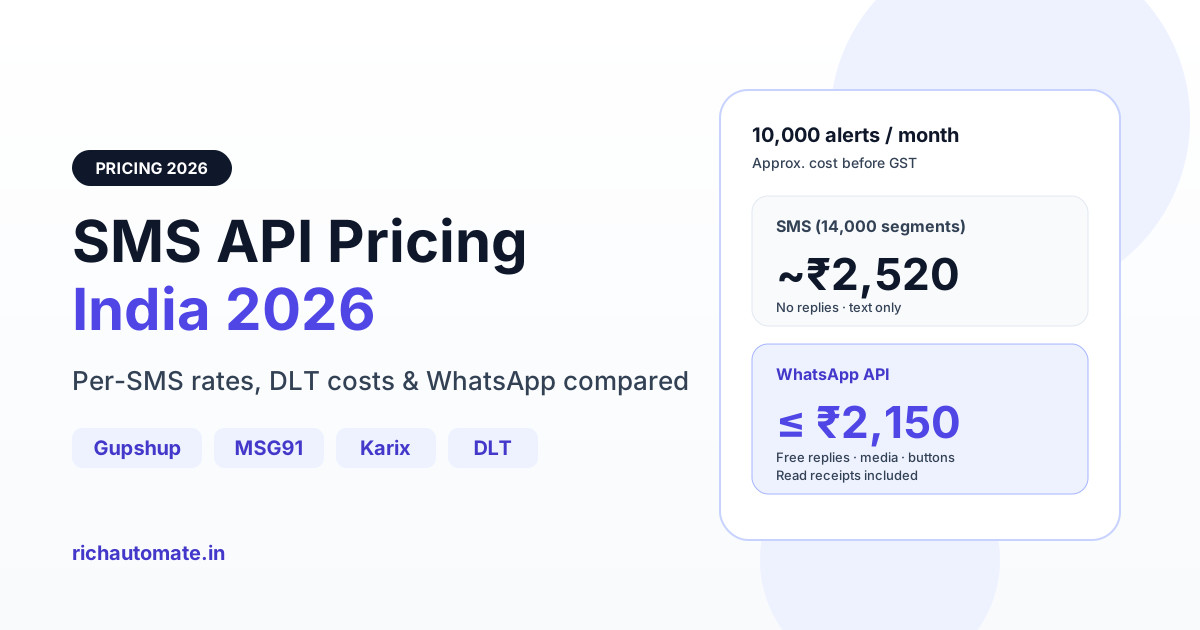
Bulk SMS API pricing in India in 2026 typically runs about ₹0.12–₹0.30 per SMS for transactional and OTP traffic at volume, before GST. The real cost depends on four things: the message category, your monthly volume, DLT scrubbing charges, and how many 160-character segments each message splits into.
Providers such as Gupshup, MSG91, Karix and Kaleyra all sell SMS on the same TRAI DLT rails, so their rates tend to cluster. Most price differences come from volume tiers, minimum commitments and add-on fees, not from the base rate. This guide covers the full cost stack, compares how the major providers price, works through a 10,000-message example, and shows when WhatsApp becomes the cheaper channel. Treat every rupee figure here as a typical quoted range. SMS rates are negotiated, so confirm your own quote with the vendor.
How SMS API pricing works in India
Every business SMS in India is billed per message segment. One segment holds 160 plain-text characters (GSM-7) or 70 characters if the message contains Unicode, such as Hindi, Tamil or emoji. Longer messages split into multiple segments, and each segment is billed.
All commercial SMS runs through TRAI's DLT (Distributed Ledger Technology) framework. Before you send anything you register:
- your business entity on an operator DLT portal (Jio, Airtel, Vi or BSNL),
- your headers, the 6-character sender IDs customers see,
- every content template you plan to send, with variables marked.
Messages that do not match a registered template are blocked by the operator. That keeps spam down, but it also means SMS setup takes days, not minutes.
The four SMS categories
| Category | Used for | Typical price position |
|---|---|---|
| Transactional / OTP | Login codes, bank alerts | Premium routes, higher rate, 24×7 delivery |
| Service – Implicit | Order updates, delivery alerts, reminders to existing customers | Similar to transactional |
| Service – Explicit | Messages to users who gave recorded consent | Mid-range, needs consent records on DLT |
| Promotional | Offers and marketing | Cheapest per SMS, but only 10 AM–9 PM and blocked for DND numbers |
The full SMS cost stack
The per-SMS rate on a quote is only part of the bill. Budget for all of these:
- Per-segment rate. The headline price. Lower at higher monthly volume.
- DLT scrubbing charge. Operators charge a small per-SMS fee (a few paise) for checking every message against DLT records. Some providers include it in their rate, others add it as a separate line. Ask which.
- DLT registration. Some operator portals charge a one-time or annual entity registration fee (commonly around ₹5,000 plus GST). Others are free. You only need one portal.
- Minimum purchase or prepaid packs. Many providers sell credits in packs, and low tiers cost more per SMS.
- Unicode and long messages. A Hindi OTP or a message with an order ID, brand name and tracking link can easily become 2–3 segments.
- GST at 18% on top of everything.
The segment count is the one that surprises most teams. A 180-character order confirmation costs twice as much as a 160-character one.
SMS API pricing by provider (2026)
Here is how the main Indian SMS providers price. The ranges reflect typical quotes for transactional and OTP traffic, not published list prices, because most enterprise SMS pricing is negotiated.
| Provider | How pricing is published | Typical transactional range | Also sells WhatsApp API |
|---|---|---|---|
| MSG91 | Volume tiers listed on its website | About ₹0.15–₹0.25 per SMS | Yes |
| Gupshup | Mostly quote-based for SMS | About ₹0.12–₹0.25 per SMS at volume | Yes |
| Karix (Tanla) | Enterprise, quote-based | Negotiated, similar band at high volume | Yes |
| Kaleyra | Enterprise, quote-based | Negotiated, similar band at high volume | Yes |
| Twilio | Public per-message price in USD | Usually several times domestic aggregator rates for India | Yes |
Three things decide which quote is actually cheapest:
- Is DLT scrubbing included? A lower headline rate plus a separate scrubbing line can cost more than a slightly higher all-in rate.
- What volume does the rate need? The best tier often assumes lakhs of SMS per month.
- Is the OTP route premium? OTP needs fast, reliable delivery. A cheap route that delivers codes in 40 seconds costs you logins.
If you are comparing Gupshup and MSG91 for WhatsApp as well as SMS, our MSG91 vs Gupshup pricing breakdown covers both channels.
Get a 1-minute BSP audit on WhatsApp
Drop your WhatsApp number — we line-item your current invoice against Meta India rates in under 60 seconds. India-hosted, DPDP-compliant.
Worked example: 10,000 transactional messages a month
Take a D2C brand sending 10,000 order confirmations and delivery updates a month. About 40% of those messages run past 160 characters once the order ID and tracking link are added.
| Line item | SMS | WhatsApp Business API (RichAutomate Client Pay) |
|---|---|---|
| Billable units | 14,000 segments (10,000 + 4,000 second segments) | 10,000 messages, no segment limit |
| Rate | ₹0.18 per segment (mid-range quote) | Meta utility rate from ~₹0.115 + ₹0.10 platform |
| Messages inside an open customer service window | Still billed | Utility messages free on Meta's side |
| Customer replies | Not supported, or billed separately | Free, inside the 24-hour window |
| Approx. monthly cost before GST | ~₹2,520 | ~₹2,150 or less, depending on how many messages land inside an open window |
On raw per-message cost the two channels are close. The difference is what you get for it. WhatsApp messages carry the invoice PDF, a product image and a "Track order" button, and the customer can reply in the same thread. On SMS a reply is either impossible or a new billed message. For the full per-category maths, read our WhatsApp Business API vs SMS cost comparison.
When SMS is still the right choice
SMS is not going away, and for some jobs it is the correct tool:
- OTP fallback. If a user has no data or no WhatsApp, SMS still reaches any phone. The standard setup is WhatsApp first, with automatic SMS fallback after a few seconds.
- Feature phones and low connectivity. SMS works on any GSM handset with no internet.
- Regulated alerts where a bank or regulator expects SMS delivery.
Our WhatsApp OTP vs SMS OTP guide covers the fallback setup and cost per verified login.
When WhatsApp is cheaper than SMS
WhatsApp tends to win on cost per result when any of these apply:
- You send several updates per order. Confirmation, dispatch and delivery can all fall inside an open customer service window, where utility messages are free on Meta's side.
- Your messages are long or in Hindi and other Indian languages. SMS bills every 70 Unicode characters. WhatsApp bills per message regardless of length.
- You need a reply. Appointment confirmations, COD verification and feedback all need the customer to answer, and on WhatsApp the first ~1,000 service replies a month are free.
- You want to know if the message was read. WhatsApp reports sent, delivered and read. SMS gives a delivery report at best.
Teams that move alerts from SMS to WhatsApp usually see the payback in reply and conversion rates rather than in the per-message line. Our SMS to WhatsApp migration ROI guide walks through the numbers, and the SMS vs WhatsApp comparison puts the features side by side.
How to cut your messaging bill in 2026
- Trim every SMS template to 160 characters (70 for Unicode). Shorten links and drop repeated brand names.
- Ask for an all-in rate that includes DLT scrubbing, so quotes are comparable.
- Keep SMS for OTP fallback and feature-phone users, and move order updates, reminders and support to WhatsApp.
- Send WhatsApp utility messages while the customer service window is open, for example right after the customer messages you, when they cost nothing on Meta's side.
- Avoid monthly platform fees. A ₹2,500–₹6,000 monthly subscription on a WhatsApp platform can cost more than the messages. Compare providers on total cost with our WhatsApp Business API cost guide.
Move your notifications to WhatsApp
RichAutomate runs on the official Meta WhatsApp Business API with ₹0 platform fee, ₹0 setup and ₹0 monthly. Client Pay is ₹0.10 per message plus Meta's rates billed to you at cost. SaaS Pay is ₹1.50 marketing / ₹0.50 utility per message, all-inclusive on one INR GST invoice. Going live needs a verified business and GST registration. See the full model on our pricing page or start free. For the wider picture on the channel, see our WhatsApp statistics 2026.