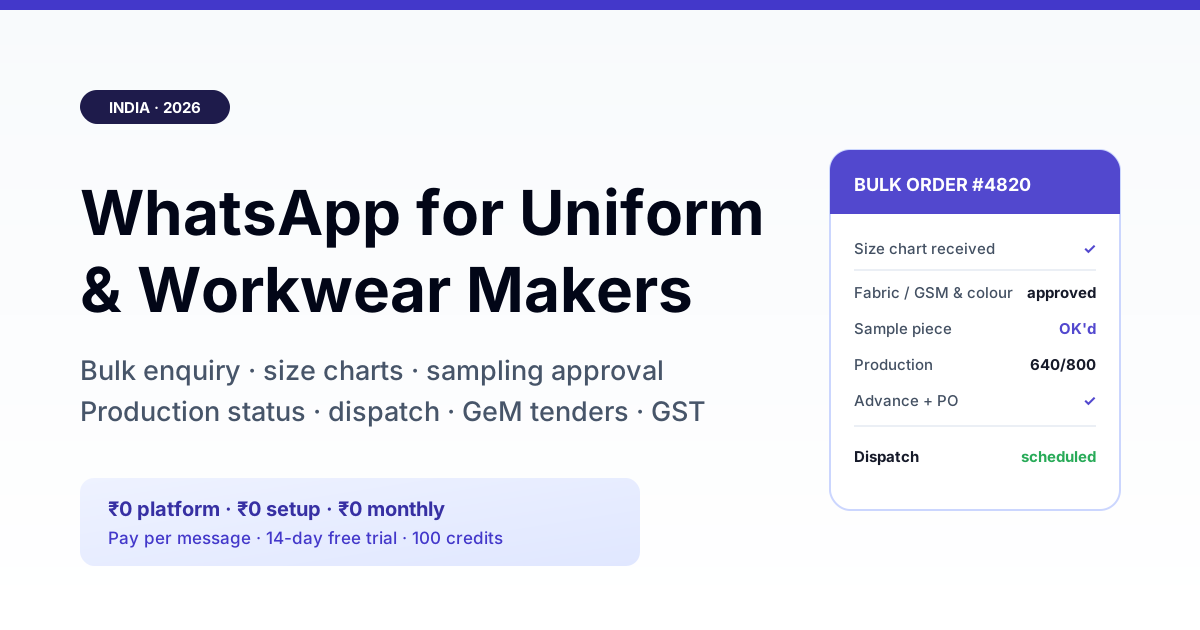
Run a uniform or workwear business in India in 2026 — a garment unit stitching ten thousand school uniforms before the June session, a corporate-apparel supplier fitting out a new hotel's front office and housekeeping, an industrial-safety workwear maker shipping flame-retardant coveralls and hi-vis jackets against a factory's BIS-marked spec, or a security-uniform supplier fulfilling a PSU tender on the Government e-Marketplace — and you already know the business is not really about cloth: it is about getting a bulk order right the first time, at scale, against a size chart that keeps changing and a delivery date that never moves. The school's purchase committee wants a quote and a sample by Friday. The hotel's HR keeps revising the housekeeping headcount and the shirt colour. The factory's safety officer needs the coverall's IS-mark and GSM confirmed before the PO. The tender's technical bid rejects you if one specification line is off. And every one of those buyers judges you on whether the sample matched, the sizes fit, the production ran on time and the dispatch landed before the season — because a uniform delivered late or a batch stitched to the wrong size chart is not a return, it is a lost institutional account you spent two years winning. Uniform and workwear is a business of bulk orders that must be specified exactly, approved before production, tracked through the floor and delivered on the season — and today most of that runs on a salesman's phone calls, a WhatsApp group where the size chart scrolls past the fabric swatch photo, an Excel PO nobody can find, and a sampling round that goes three revisions deep over missed messages. This is the buyer's guide to choosing the best WhatsApp Business API for a uniform and workwear manufacturing or supply business in India in 2026: what "best" actually means for a bulk-order, spec-driven, seasonal operation, the full order lifecycle it has to carry from enquiry to reorder, and how to pick a platform that respects a business where one wrong size chart or one missed tender spec can cost you the account. Treat every commercial and pricing specific below as "verify as of 2026," treat every figure as illustrative, and treat none of this as legal, tax or textile-standards advice — confirm every GST rate, BIS standard and tender rule with a qualified consultant.
Why uniform and workwear is a WhatsApp problem. A bulk uniform order is a chain of short, high-stakes, easily-lost messages: the enquiry where a school, hospital, hotel, factory or security agency describes a requirement; the segment and specification where garment type, fabric, GSM, colour and any BIS safety standard get pinned down; the size-chart collection where hundreds of measurements arrive as photos, lists and forms; the fabric-and-colour approval against a swatch; the sample-piece sign-off before a single bulk piece is cut; the PO and advance; the production-status update as the floor moves; the dispatch and delivery confirmation before the season; and the reorder when the next intake, shift or branch needs the same. Buyers already live on WhatsApp, open messages within minutes, and an institutional buyer is judged internally on whether the uniforms fit, matched the sample and arrived on time — so they judge you on the same. A uniform maker running several institutional orders at once cannot also keep a dozen buyer groups straight — so size charts get lost, samples go three revisions deep, POs sit unconfirmed and a production slip is discovered only at dispatch. WhatsApp is where a uniform and workwear business collects a clean specification, locks the size chart and sample before production, shows the buyer the order moving, and delivers on the season — provided every send is consent-based, lawful and genuinely useful. Verify GST, BIS and DPDP data rules as of 2026; nothing here is legal advice, and no platform guarantees against Meta quality or ban actions.
What "best" actually means for a uniform and workwear maker
The best WhatsApp Business API for a uniform or workwear manufacturer and supplier in India in 2026 is the one that turns bulk-order enquiry, specification, size-chart collection, sample approval, production tracking and dispatch into one auditable WhatsApp thread. For a business judged on whether a bulk order matched the sample, fit the size chart and shipped on the season, that reliability — not feature count or brand — is what "best" means. Before comparing logos, get clear on the criteria that actually decide outcomes for this vertical. The table below is the buyer's checklist — weigh each against your own segment mix, order sizes and season pressure as of 2026.
| What to evaluate | Why it matters for a uniform maker | What good looks like |
|---|---|---|
| Structured spec & size-chart capture | A wrong garment type, GSM, colour or size chart means a whole batch re-cut and a lost season | A guided enquiry that pins segment, fabric, GSM, colour and collects sizes as a clean record |
| Sample-approval sign-off | Bulk cut against an unapproved sample is the single most expensive uniform mistake | Swatch and sample photos on the thread with a clear, logged buyer approval before production |
| Production-status visibility | An institutional buyer chasing "is it ready" by phone is a buyer losing confidence in the season delivery | Stage updates — cutting, stitching, finishing, QC, dispatch — pushed to the buyer's thread |
| Dispatch & delivery on the season | A uniform after the school intake, hotel opening or shift start is worthless; the date never moves | Dispatch and delivery confirmation with tracking, tied to the buyer's deadline |
| Tender & reorder handling | GeM tenders and repeat institutional intakes are the steadiest revenue and the easiest to drop | Bid-spec confirmation and one-tap reorder of a proven size chart for the next intake |
| Transparent, low pricing | Bulk-garment margin is thin; a fat per-seat SaaS fee on every sales login eats it | ₹0 platform fee, pay only per message and Meta's conversation charge |
The reframe most uniform makers eventually make: the platform is not the product — the clean specification, locked sample and on-season delivery it lets you run is. A maker who picks on price-per-message alone but cannot capture a size chart cleanly, lock a sample before cutting, show the order moving or ship before the season has bought a cheaper way to lose institutional accounts. Pick for the order lifecycle, then optimise the cost. For the closely adjacent trade views, the WhatsApp for fabric and textile wholesale traders guide and the apparel exporters playbook share much of the same spec-sample-ship shape.
The end-to-end uniform-and-workwear WhatsApp lifecycle
Here is the full lifecycle a uniform or workwear business can run over WhatsApp, from institutional enquiry through specification, size-chart collection, sample approval, PO, production tracking, dispatch and reorder, mapped to the automation at each stage and the guardrail that keeps it lawful and welcome. Treat the automation column as a reference pattern and verify GST, BIS and data-protection specifics as of 2026 with a qualified consultant.
| Lifecycle stage | WhatsApp automation | Guardrail (verify 2026) |
|---|---|---|
| 1. Enquiry & segment | A buyer sends a requirement; the bot identifies the segment — school, corporate, hospital, hospitality, industrial-safety or security — and captures quantity and deadline | Consent to store; explain purpose; capture only what the quote needs |
| 2. Specification | Garment type, fabric, GSM, colour and any required BIS safety standard are pinned down against a swatch and a spec sheet | Confirm BIS/IS marks where safety workwear is claimed; do not overstate compliance |
| 3. Size-chart collection | Hundreds of measurements arrive as a structured form or list and roll up to one clean size chart per order | Employee/student measurements are personal data; minimise and secure them |
| 4. Sample approval | Swatch and sample-piece photos go to the buyer's thread for a clear, logged sign-off before any bulk cutting | Approval is explicit and recorded; nothing is cut on an assumed yes |
| 5. PO & advance | A quote, PO confirmation and advance-received note are exchanged and logged on the thread | Accurate GST treatment on the invoice; verify current rates 2026 |
| 6. Production tracking | Cutting, stitching, finishing, QC and dispatch-ready stages are pushed to the buyer as the floor moves | Honest stage updates; a human route the moment a slip risks the deadline |
| 7. Dispatch & reorder | Dispatch and delivery confirmation with tracking; a one-tap reorder of the saved size chart for the next intake or shift | Reorder only to opted-in buyers; no unsolicited seasonal spam |
Notice the rhythm: WhatsApp protects a bulk order that phone calls and scrolling groups let drift into wrong sizes, unapproved samples and missed seasons, then compounds the business by turning a clean, on-time institutional delivery into the repeat intake and the reference that wins the next school, hospital or PSU — which is where a uniform maker's real growth lives. For the government-supply adjacency the textile dyeing and processing house guide covers the upstream fabric discipline, and the printing press and print shops playbook shares the same sample-proof-then-bulk pattern for branded and logo work.
The spec-and-sample problem: where uniform margin is won or lost
The two places a uniform business quietly wins or loses money are the specification and the sample, and both are lock-it-before-you-cut problems that WhatsApp handles better than a salesman's memory. The specification is the whole order: garment type, fabric composition, GSM, colour, trims and — for protective workwear — the applicable BIS or IS standard (verify the exact standard and mark for each product as of 2026). Get one line wrong and you either re-cut a whole batch at your own cost or ship a uniform the buyer's audit rejects, and either way the season is gone. A structured enquiry that pins every spec line against a swatch and a written confirmation turns the specification from a remembered conversation into an agreed record. The sample is the second gate: cutting bulk against an unapproved sample is the single most expensive mistake in the trade, because a colour, fit or fabric the buyer did not sign off becomes ten thousand pieces they will not accept. A sample photo on the thread with a clear, logged approval before a single bulk piece is cut protects the order and protects you. Downstream, the same discipline runs the size chart — collected once, cleanly, per order — so the next intake reorders against a proven fit instead of re-measuring from scratch. A WhatsApp system that captures the spec as a record, locks the sample with an explicit approval and saves the size chart for reorder keeps both the order right and the account renewing, without a single re-cut batch. Do it well: consent-based, honest about any safety-standard claim, and always with a human route the moment a spec is unclear or a deadline is at risk.
Get a 1-minute BSP audit on WhatsApp
Drop your WhatsApp number — we line-item your current invoice against Meta India rates in under 60 seconds. India-hosted, DPDP-compliant.
The spec-and-sample engine, in one principle. Treat every bulk order as a spec you can produce and a sample you can prove, not a requirement you hope you remembered. Pin every specification line — garment, fabric, GSM, colour, any BIS/IS safety mark — against a swatch and a written confirmation, lock the sample with an explicit logged buyer approval before a single bulk piece is cut, and save the size chart so the next intake reorders a proven fit. The thread should be an auditable record that protects the buyer's audit, the season deadline and your margin, never a channel that pressures a buyer or ships an unapproved batch. Verify GST, BIS and DPDP rules as of 2026 with a qualified consultant; this is not legal or textile-standards advice, and no platform guarantees against Meta quality or ban actions.
Per-seat SaaS vs a ₹0-platform model: the margin question
A uniform or workwear maker earns a thin margin per garment on bulk institutional orders, competes on price against every other supplier on a school committee's or a GeM tender's list, and carries the season's fabric and labour cost up front — so the maker's own take is a slice of a slice, and a fixed monthly platform fee charged on every salesman login and every team seat is dead weight in the off-season and an arbitrary tax when you are quoting lean to win a tender. Most legacy BSPs charge a per-seat or tiered monthly platform fee on top of Meta's own per-conversation charge; a ₹0-platform model charges only for what you actually send. This comparison is directional — verify current pricing on each vendor as of 2026.
| Dimension | ₹0-platform model (RichAutomate) | Typical per-seat / tiered SaaS BSP |
|---|---|---|
| Platform / setup / monthly fee | ₹0 platform, ₹0 setup, ₹0 monthly | Monthly platform fee, often per seat or per tier |
| What you pay for | Only per message + Meta's conversation charge | Subscription + markup on conversations |
| Fit for a seasonal order book | Costs scale with orders and messages; a quiet off-season month costs little | You pay the subscription through the off-season lull too |
| Margin impact per order | Messaging cost is a few paise against the value of a bulk institutional order | Fixed monthly fee runs whether you win the tender or not |
| Billing transparency | Client Pay: Meta bills you direct at Meta rates | Often a bundled markup you cannot see through |
The conclusion most uniform makers reach: for a business with a seasonal order book, thin per-garment margin and tenders won on price, a model where messaging cost is a few paise against each bulk order beats a fixed monthly tax you pay through every off-season lull. Run your own numbers on the WABA cost calculator and read the Client Pay vs SaaS Pay billing breakdown before committing.
The automation stack that runs it
The good news for a uniform maker is that none of this needs custom engineering. The building blocks map onto a standard WhatsApp Business API automation stack: an enquiry-and-segment flow that identifies the buyer's segment and captures quantity and deadline; a specification module that pins garment type, fabric, GSM, colour and any BIS safety standard against a swatch; a size-chart collector that turns hundreds of measurements into one clean chart per order; a sample-approval step that logs an explicit buyer sign-off before bulk cutting; a chatbot FAQ that answers the predictable buyer questions — minimum order, lead time, fabric options, GST on the invoice, delivery timeline — without a salesman; a production-status module that pushes cutting, stitching, finishing, QC and dispatch stages to the buyer; a dispatch-and-delivery confirmation tied to the season deadline; a reorder trigger that recalls a saved size chart for the next intake or shift; and a human handoff the moment a spec is unclear, a sample is rejected or a deadline is at risk. For the branded-and-logo parallel the printing press and print shops guide is a close adjacent reference. The discipline is to keep the chatbot scoped to enquiry, specification, size charts, sample approval, production status and FAQs, and route every unclear spec, rejected sample or at-risk deadline to a human immediately.
The economics: an illustrative uniform-maker cohort
Criteria and architecture are the floor; the reason to run WhatsApp across the order lifecycle is a clean specification, a locked sample, visible production and on-season delivery that keeps institutional accounts renewing. Consider an illustrative mid-sized uniform and workwear maker running school-intake orders, corporate and hospitality fit-outs, and industrial-safety workwear against BIS-marked specs for a handful of institutional buyers. Every figure below is illustrative — model your own on the calculator.
| Metric (illustrative) | Without WhatsApp lifecycle | With WhatsApp lifecycle |
|---|---|---|
| Spec & size-chart accuracy | Remembered from calls and a scrolling group; wrong batches re-cut | Pinned against a swatch and collected as one clean chart per order |
| Sample-approval revisions | Three rounds deep over missed messages; season time lost | One logged sign-off on the thread before bulk cutting |
| Buyer chasing "is it ready" | Constant calls; confidence in the season delivery erodes | Lower; stage updates pushed as the floor moves |
| On-season delivery | At risk; a slip is found only at dispatch | Tracked to the deadline; slips flagged to a human early |
| WhatsApp messaging cost | ₹0 | Utility confirmations, status and reorders at the cheapest tier |
The asymmetry is the argument: spec confirmations, sample-approval prompts, production-status updates, dispatch notices and reorder nudges are largely utility-category conversations — the cheapest tier — and they directly reduce the most expensive failures in a uniform business, namely a batch cut to the wrong size chart, a bulk run against an unapproved sample, a season missed because a production slip surfaced too late, and an institutional account lost to a supplier the buyer could trust. A single retained school or PSU account dwarfs a year of messaging cost. Run your own figures on the WhatsApp Business API cost guide before committing.
Build the uniform-and-workwear lifecycle on RichAutomate
You can stand up the entire enquiry-to-reorder layer — segment-aware enquiry, specification against a swatch, size-chart collection, logged sample approval, PO and advance confirmation, production-status updates, dispatch-and-delivery confirmation and one-tap reorder — without engineering lift, while your ERP, cutting plan and statutory records stay the source of truth. RichAutomate charges ₹0 platform fee, ₹0 setup, ₹0 monthly. On Client Pay you pay only ₹0.10 per message plus Meta's own per-conversation charge billed to you directly by Meta at Meta's rates; on SaaS Pay it is an all-in ₹1.20 per marketing conversation and ₹0.30 per utility conversation — and spec confirmations, sample prompts, production status and dispatch notices are utility conversations, the cheaper category. There is a 14-day free trial with 100 credits, so you can measure the spec-accuracy, sample-revision and on-season-delivery improvement before committing. Keep WhatsApp as the conversation layer, keep your production and compliance records as the source of truth, and verify GST, BIS and DPDP rules as of 2026 with a qualified consultant. See the full pricing page for details, and compare options in the best WhatsApp Business API providers guide.
Stop letting size charts, samples and seasons leak
A uniform and workwear maker does not have to re-cut a batch because a size chart got lost in a scrolling group, cut bulk against a sample the buyer never signed off, field a week of "is it ready" calls, or discover a production slip only at dispatch when the season has already moved. From segment-aware enquiry, through specification against a swatch, size-chart collection, logged sample approval, PO and advance, production-status updates, to dispatch and one-tap reorder — WhatsApp can be the one auditable order thread, while your ERP and production records stay the source of truth. On illustrative numbers that means accurate specs, one-round samples, visible production and on-season delivery, for a messaging bill that is a few paise against each bulk institutional order. RichAutomate's pricing stays flat through all of it: ₹0 platform fee, ₹0 setup, ₹0 monthly — Client Pay at ₹0.10 per message with Meta conversation charges billed direct by Meta, or SaaS Pay at ₹1.20 marketing / ₹0.30 utility all-in. Start the 14-day free trial with 100 credits, WhatsApp us at 918160311319, or book a 30-minute walkthrough at https://calendly.com/inrichdaddy/30min. (All cohort and order figures here are illustrative — model your own on the calculator — no platform guarantees against Meta quality or ban actions, and GST, BIS and DPDP rules change; verify the current position as of 2026 with a qualified consultant. This is operational guidance, not legal, tax or textile-standards advice.)
Start your 14-day free trial → · See full pricing · Read the fabric & textile trader guide
Related: WhatsApp for footwear manufacturers & suppliers in India (2026) — size-ratio orders, BIS/ISI label sign-off, seasonal catalogues and dispatch in one thread.
Related reading: Best WhatsApp API for Uniform & Workwear Makers 2026 walks through the same WhatsApp setup for a neighbouring use case.