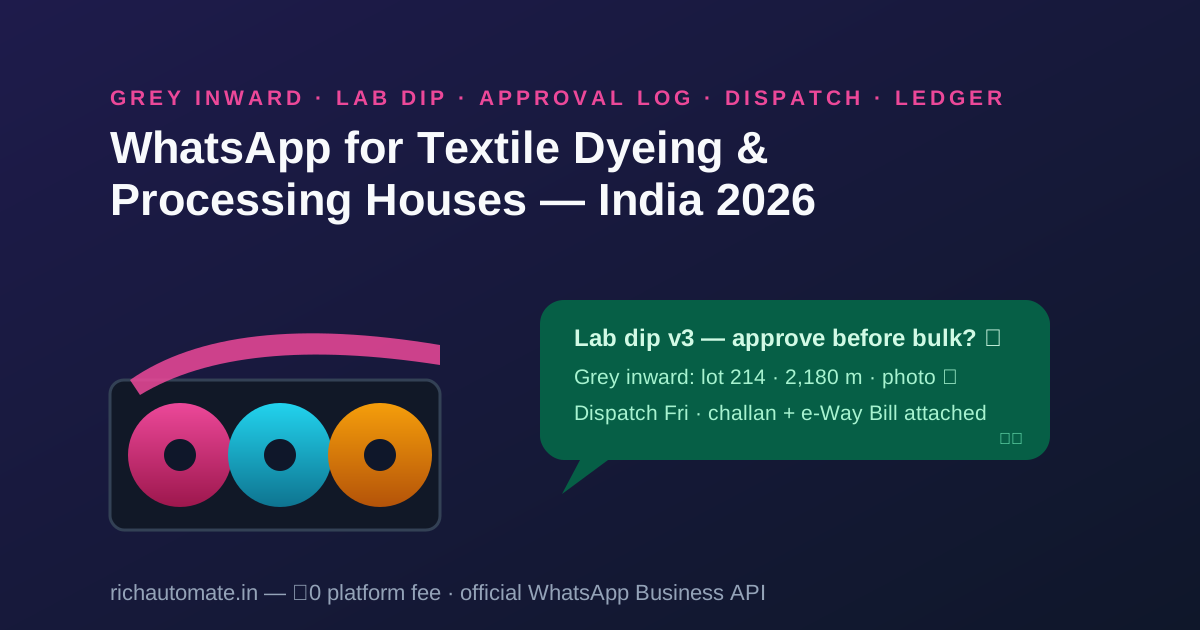
The short answer. A dyeing or processing house lives and dies on two disputes: "this is not the shade I approved" and "you received more fabric than you're billing me for." Both are evidence problems, and WhatsApp on the official Business API fixes them at the gate: a grey-inward message (lot photo + weight/metres into the sender's own thread before the lot moves inside) and a shade-approval thread (lab-dip photo approved with a version log — "you approved dip v3 on 12 May" ends the argument before bulk dyeing starts). Around those two anchors sit job-work challans and e-Way Bills on the record, delivery-date pushes, dispatch PODs, running job-work ledgers with UPI/NEFT reminders, and opt-in rate-revision notices. A processing house running 100-150 trader and garment accounts spends roughly ₹800-1,400 a month on RichAutomate's ₹0-platform model (illustrative math below). Compliance first: dye houses sit under Water Act consents, cluster-specific ZLD mandates and CETP regimes (Tirupur is its own world), plus GST job-work rules — verify current requirements with your SPCB and CA.
Traders forgive a late lot; they never forgive a wrong shade they can't prove they didn't approve. Put the lab dip, the weight slip and the challan into one thread per customer and the disputes end where they start. Leather tanneries and finishers run a parallel effluent-and-restricted-substance thread for their export buyers, mapped in our leather goods and footwear export playbook.
The 6-loop job-work cycle on WhatsApp
| Loop | What happens | WhatsApp job | Category |
|---|---|---|---|
| 1. Grey inward | Grey fabric lot arrives from trader/garment unit | Lot photo + weight/metres + count into the sender's thread before unloading — the short-receipt dispute ender | Utility |
| 2. Lab dip + shade approval | Dip developed against the swatch | Lab-dip photo with version number; approval recorded in-thread ("dip v3 approved") before bulk dyeing | Free (service window) |
| 3. Production status | Lot in process (scouring, dyeing, finishing, stenter) | Delivery-date confirmations + delay alerts (boiler inspection, CETP shutdown) the moment they're known | Utility |
| 4. Dispatch + POD | Finished lot returns | Job-work challan + e-Way Bill + bale photo + POD in the same thread | Utility |
| 5. Ledger + payment | Job-work billing cycle | Running ledger statements + UPI/NEFT payment nudges with challan references | Utility |
| 6. Repeat + rates | Season programs, dye/chemical cost swings | Opt-in rate-revision and capacity broadcasts to active accounts only | Opt-in Marketing |
The shade-approval thread — the money message
Bulk dyeing a 2,000-metre lot against a verbally approved shade is how processing houses lose a month's margin in one claim. The discipline is one thread per customer: lab-dip photo goes in with a version number, the customer replies "approved" in the same thread, and only then does the lot hit the jigger or the soft-flow. When the fabric comes back and the buyer's buyer rejects it, the thread shows exactly which dip was approved and when — the re-dyeing negotiation starts from evidence, not memory. The same thread holds the grey-inward weight photo, so the "you received 2,180 metres, not 2,050" argument dies the same way.
Regulator + compliance spine (state and cluster specific — verify everything)
- Water Act consents (CTE/CTO) + SPCB norms — dyeing is a red-category process in most states; consent conditions, discharge standards and renewal cycles are the licence to operate. Verify your state board's current classification and conditions.
- ZLD and CETP regimes — clusters like Tirupur run under zero-liquid-discharge mandates born of NGT and court orders; elsewhere CETP membership and load norms apply. Cluster rules move — verify locally. Related reading: ETP/STP O&M on WhatsApp.
- GST job-work rules — job-work challans, ITC-04 reporting and e-Way Bill rules for goods sent for and returned from job work have their own rhythm (rates on dyeing/processing services have seen changes — verify current position with your CA).
- Factories Act + boiler — stenters and dye machines run on steam; the boiler carries its own registration, inspection and attendant-certificate calendar. See the boiler/IBR playbook.
- Chemical storage and handling — dyes and auxiliaries carry MSDS, storage and worker-safety obligations under factory rules.
- DPDP Act 2023 — customer contacts, rate cards and design/shade references are business-sensitive data; collect with consent, honour deletion. See the DPDP checklist.
The carve-out — what the bot must never do
The automation records and reminds. It must never approve a shade on the customer's behalf (approval is the customer's reply, not the bot's assumption), never certify effluent compliance or speak for the SPCB, never promise delivery dates through a CETP shutdown or boiler-inspection window it can't see, and never broadcast rates to accounts that haven't opted in. Evidence and coordination — nothing more.
Get a 1-minute BSP audit on WhatsApp
Drop your WhatsApp number — we line-item your current invoice against Meta India rates in under 60 seconds. India-hosted, DPDP-compliant.
If you message outside India, the WhatsApp pricing calculator by country has the per-country rates.
What it costs — illustrative math on RichAutomate
A processing house with 120 active accounts moving ~400 lots a month: ~600 utility messages (inward confirmations, dispatch + challan messages, ledger nudges), most shade-approval chatter riding free inside 24-hour service windows the customer's own replies open, one fortnightly opt-in rate/capacity broadcast (~120 sends). On Client Pay: ₹0 platform + ₹0.10/message with Meta charges billed direct; on SaaS Pay: ₹1.50 marketing / ₹0.50 utility all-in. Monthly ≈ ₹800-1,400. Verify current Meta rates; workings in the cost breakdown and Client Pay vs SaaS Pay. 14-day trial, 100 free credits, ₹0 platform/setup/monthly.
One-week rollout
- Day 1-2: Official API on the office number; import active trader/garment accounts with consent tags.
- Day 3: Grey-inward and dispatch templates (lot no., weight/metres, challan ref) submitted.
- Day 4: Shade-approval SOP for the lab — dip photo + version number in the customer's thread, bulk only after in-thread approval.
- Day 5: Ledger-statement + payment-nudge formats; opt-in flags for rate broadcasts.
- Day 6-7: Pilot on the 10 biggest accounts, then everyone.
Who fits which platform
RichAutomate fits the independent processing house or dyeing unit that wants the inward-to-payment loop at ₹0 platform cost. A plain inbox fits a two-machine job-work shed. Enterprise CPaaS with ERP integration fits composite mills. Related reading: fabric & textile traders, cotton ginning & pressing, manufacturing B2B & distribution, and the best WhatsApp CRM guide.
Standing honesty line: no platform — ours included — can promise a ban-proof WhatsApp number; opt-in discipline protects it the way a valid CTO protects the factory. Put the lab dip on the record. Start the 14-day free trial or see pricing.
Related: in the silk supply chain? Read WhatsApp for sericulture & silk reeling in India 2026.