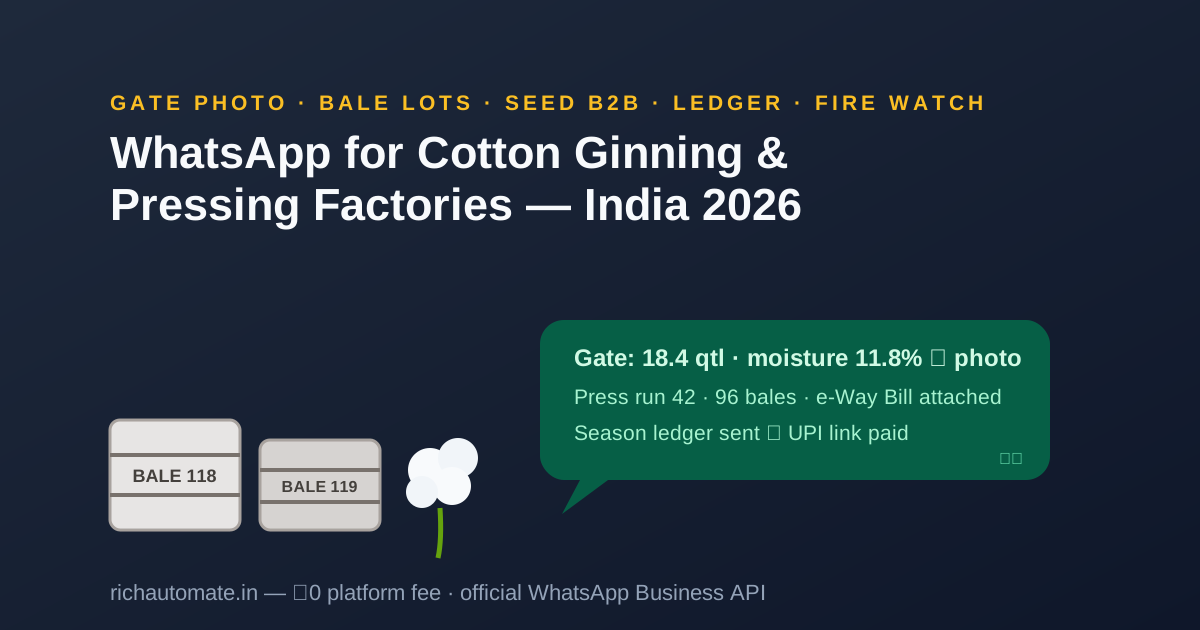
The short answer. A ginning-and-pressing factory lives on a few frantic months of kapas arrivals — and on the arguments that ride in with every trolley: moisture, trash content, weighment, rate. Then the output side starts: lint bales with lot numbers moving to spinning mills and traders, cottonseed moving to oil mills, every load carrying an e-Way Bill and a quality claim. WhatsApp on the official Business API turns this season into threads: weighbridge + moisture/trash reading photographed into the farmer's or agent's own thread before the trolley unloads, heap/lot confirmations, bale-lot dispatch threads (press run number, bale count, e-Way Bill) to buyers, cottonseed B2B threads, season ledgers with UPI, and one-tap breakdown tickets for gins and the press — because an idle press in season is pure loss. A factory handling ~250 farmer/agent and buyer accounts runs the loop for roughly ₹1,000-1,800 in a peak month on RichAutomate's ₹0-platform model (illustrative math below). Compliance first: mandi rules, CCI MSP operations and GST treatment are state- and season-specific — verify current positions before promising anything in a thread.
Cotton is a trust trade wearing a factory uniform: the farmer trusts your moisture meter, the spinning mill trusts your bale, the checkpost trusts your paperwork. Put all three on the record in WhatsApp and the season runs on evidence instead of arguments.
The 6-loop ginning cycle on WhatsApp
| Loop | What happens | WhatsApp job | Category |
|---|---|---|---|
| 1. Arrival gate | Kapas trolleys — weighment, moisture, trash | Weighbridge slip + moisture/trash reading in one timestamped photo into the seller's thread before unload — the deduction argument dies at the gate | Utility |
| 2. Heap + rate | Lot formed, rate settled | Heap/lot confirmation with agreed rate — one message, on the record | Utility |
| 3. Payment + ledger | Farmer/agent settlement | Payment confirmation + season ledger statement + UPI where private trade applies | Utility |
| 4. Bale dispatch | Lint bales to mills/traders; seed to oil mills | Dispatch thread per buyer — press-run/lot number, bale count, weighment, e-Way Bill ref, quality note | Utility |
| 5. Plant upkeep | Gin stands, press, conveyors | One-tap breakdown ticket + spares quote + fix photo; fire-watch reminders | Utility |
| 6. Season close | Reconciliation + next season | Out-turn summary per agent + opt-in pre-season broadcast to registered sellers/buyers | Utility / opt-in Marketing |
The gate photo — where moisture and trash disputes end
The oldest fight in the yard: the farmer's kapas is "8% moisture, clean picking" and the factory's meter says 12% with visible trash. Whoever lacks a record feels cheated by the deduction. One photo — weighbridge display plus moisture-meter reading, timestamped into the seller's own WhatsApp thread before the trolley unloads — and the negotiation happens once, at the gate, with the evidence. The same pattern works on the output side: a bale-lot thread holding press-run number, bale count and e-Way Bill reference makes mill-side quality and short-count conversations shorter and cleaner.
Regulator + trade spine (verify everything — hedged)
- APMC / mandi rules — kapas purchase processes, market fees and agent (adatiya) registrations are state subjects; direct-purchase and private-market rules vary. Verify your state's current position.
- CCI MSP operations — when rates fall to MSP, Cotton Corporation of India procurement runs on its own centre lists, quality specs (moisture caps, staple length) and payment cycles. Attribute MSP terms to CCI — never as the factory's own promise.
- Contamination discipline — buyers pay premiums for contamination-free bales (no plastic, hair, jute twine). A standing opt-in picking-practice note to registered sellers protects your bale reputation.
- Factories Act + fire safety — cotton is highly flammable: fire NOC, hydrants/extinguishers, no-smoking discipline, insurance conditions. Breakdown and fire-watch reminders belong in the maintenance loop.
- Legal Metrology — weighbridge and platform-scale stamping; an unstamped scale loses every argument.
- GST + e-Way Bill — raw cotton, lint, cottonseed and ginning-service treatment each have their own nuances (including reverse-charge history on raw cotton) — verify current treatment with your CA; e-Way Bills on bale and seed lots.
- DPDP Act 2023 — farmer/agent contacts and ledgers are personal data; collect with consent, honour deletion. See the DPDP checklist.
The carve-out — what the bot must never do
The automation documents, confirms and reminds. It must never certify quality (the moisture meter, the grader and the buying mill's inspection own that), never quote MSP or CCI terms as its own promise, never imply a bale grade it cannot evidence, and never broadcast rates to farmer numbers that haven't opted in — procurement-season spam is both a WABA-quality risk and bad trade practice. Evidence and coordination — nothing more.
Get a 1-minute BSP audit on WhatsApp
Drop your WhatsApp number — we line-item your current invoice against Meta India rates in under 60 seconds. India-hosted, DPDP-compliant.
To see what non-compliance would actually cost, the DPDP penalty calculator sizes the exposure against your contact volume.
What it costs — illustrative math on RichAutomate
A factory with 250 farmer/agent and buyer accounts in season: ~450 utility messages/month (gate confirmations, payment notes, bale dispatch threads, breakdown tickets), ~800 riding free inside 24-hour service windows opened by sellers' and buyers' own replies, one weekly opt-in stock/quality broadcast (~180 sends). On Client Pay: ₹0 platform + ₹0.10/message with Meta charges billed direct; on SaaS Pay: ₹1.50 marketing / ₹0.50 utility all-in. Peak month ≈ ₹1,000-1,800; off-season near zero — the shape a seasonal factory wants. Verify current Meta rates; workings in the cost breakdown and Client Pay vs SaaS Pay. 14-day trial, 100 free credits, ₹0 platform/setup/monthly.
One-week rollout (before arrivals start)
- Day 1-2: Official API on the factory's trade number; import farmer/agent + mill/trader lists with consent tags.
- Day 3: Gate SOP: weighbridge + moisture/trash photo into the seller's thread before unload; templates submitted.
- Day 4: Bale-dispatch template (press-run, bale count, e-Way Bill) + cottonseed B2B thread pattern; breakdown-ticket flow.
- Day 5: Opt-in seller/buyer broadcast lists + picking-practice and weekly stock formats.
- Day 6-7: Pilot on one day's arrivals, then full gate; season ledger SOP live.
Who fits which platform
RichAutomate fits the independent ginner or small group that wants the gate-evidence, bale-thread and ledger loop at ₹0 platform cost. A plain inbox fits a single-gin outfit. Enterprise CPaaS with ERP/weighbridge integration fits the corporate ginning chain. Related reading: rice mills & CMR (the sibling agri-processing playbook), agritech, FPO & mandi tickers, cold storage & agri warehousing, and the best WhatsApp CRM guide.
Standing honesty line: no platform — ours included — can promise a ban-proof WhatsApp number; opt-in discipline protects it the way a stamped weighbridge protects a deal. Put the gate on the record. Start the 14-day free trial or see pricing.