Run a saree or textile wholesale business in India in 2026 — a Surat synthetic-saree house shipping fresh designs to five hundred retailers, a Kanchipuram silk supplier holding a WhatsApp group of loyal shopkeepers, a Bhiwandi grey-cloth trader, or an Erode home-furnishing wholesaler — and you already know the entire trade runs on one endless WhatsApp thread: a retailer in a small town wants the new-arrival lot photos before the competition posts them, another asks for the wholesale rate on a design in three colour ways, a third wants to book fifty pieces "hold it for me bhai", a fourth is chasing his LR number for a dispatch that left yesterday, and a dozen regulars have gone quiet with an outstanding balance you are too busy to chase. Wholesale textile is the most WhatsApp-native business in India — the catalogue is a WhatsApp broadcast, the order is a WhatsApp voice note, the rate negotiation is a WhatsApp reply, the payment reminder is a WhatsApp nudge, and the reorder that keeps your looms running starts with a retailer forwarding your new-design album to his own customers. Miss a new-arrival broadcast and the retailer buys the same lot from the wholesaler who posted first. Lose an order in a hundred-message group and the pieces get sold twice. Forget to chase an outstanding and you finance your retailer's shop out of your own working capital. Let a regular retailer drift a season without a new-design nudge and he quietly shifts to another market. This is the buyer's guide to choosing the best WhatsApp Business API for a saree and textile wholesale business in India in 2026: what "best" actually means for a high-volume, credit-heavy, catalogue-driven B2B trade, the full order-to-reorder lifecycle it has to carry, and how to pick a platform that respects a business where margins are thin, volumes are huge, and one dropped message costs a repeat buyer. Treat every commercial and pricing specific below as "verify as of 2026," treat every figure as illustrative, and treat none of this as legal, tax or financial advice.
Why textile wholesale is a WhatsApp problem. A wholesale saree or fabric house sells high volume on thin margins through hundreds of short, time-sensitive messages: the new-arrival lot photos that must reach every retailer the moment they land, the wholesale rate quote in the colours a buyer asks for, the bulk order booked and stock held before it sells twice, the advance and the balance-on-dispatch, the transport LR and dispatch tracking, the outstanding-credit reminder that keeps working capital moving, and the reorder and new-collection broadcast that fills the next lot. Retailers already live on WhatsApp, open messages within minutes, and buy from the wholesaler who shows the freshest designs first and holds stock fastest. A trader running five hundred retailer accounts cannot watch a hundred chats — so new-arrival broadcasts miss buyers, orders get double-sold, and outstandings quietly balloon. WhatsApp is where a textile wholesaler shows fresh stock first, books orders before they slip, tracks dispatch, collects outstandings on time, and earns the reorder that keeps the looms running — provided every send is consent-based, lawful and genuinely useful to a trade contact. Verify advertising and DPDP data rules as of 2026; nothing here is legal advice, and no platform guarantees against Meta quality or ban actions.
What "best" actually means for a saree and textile wholesaler
The "best WhatsApp Business API" for a textile wholesale business is not the one with the most features or the loudest brand — it is the one that fits the specific shape of a high-volume, credit-heavy, catalogue-driven B2B trade where margins are thin, one lot sells to hundreds of retailers, and a single dropped message costs a repeat buyer or double-sells a lot. Before comparing logos, get clear on the criteria that actually decide outcomes for this vertical. The table below is the buyer's checklist — weigh each against your own volume and product mix as of 2026.
| What to evaluate | Why it matters for a textile wholesaler | What good looks like |
|---|---|---|
| New-arrival broadcast reach | The retailer buys the fresh lot from whoever shows it first; a slow or missed post loses the order to a competing wholesaler | Opted-in retailer broadcasts of new-design albums and rate lists, delivered the moment stock lands |
| Catalogue & rate sharing | Wholesale is sold on design photos and per-piece rates in the colours a buyer wants; scattered images lose the sale | Rich media albums, PDFs and catalogues on the thread, tied to the retailer and the lot |
| Bulk order booking & stock hold | A lot sold twice means a cancelled order and a lost retailer; orders must be captured and stock held cleanly | Structured order capture with quantity, design and colour, and a clear hold — not a buried voice note |
| Outstanding-credit reminders | Wholesale runs on credit; unchased outstandings freeze your working capital and fund the retailer's shop | Gentle, scheduled balance reminders on the thread, agreed up front, never harassing |
| Dispatch & LR tracking | Retailers chase transport LR numbers constantly; a lost dispatch detail means a dozen "kaha pahuncha" calls | Automated dispatch and LR / transport updates pushed to the buyer on shipment |
| Transparent, low pricing | Textile margin is razor-thin per piece; a fat per-seat SaaS fee on every login eats a real slice of it | ₹0 platform fee, pay only per message and Meta's conversation charge |
The reframe most wholesalers eventually make: the platform is not the product — the retailer relationships and reorder base it lets you run are. A trader who picks on price-per-message alone but cannot broadcast fresh stock fast, share a rate list, capture an order cleanly, chase an outstanding or track a dispatch has bought a cheaper way to lose retailers and reorders. Pick for the wholesale journey, then optimise the cost. For the retailer side of the same trade, the WhatsApp for boutiques and clothing stores guide and the uniform and workwear manufacturers playbook share much of the same catalogue-to-order shape.
The end-to-end textile-wholesale WhatsApp lifecycle
Here is the full lifecycle a saree or textile wholesaler can run over WhatsApp, from the retailer enquiry through catalogue, rate, bulk order and stock hold, advance and balance, dispatch and LR tracking, outstanding collection, and the reorder and new-collection broadcast, mapped to the automation at each stage and the guardrail that keeps it lawful and welcome. Treat the automation column as a reference pattern and verify advertising and data-protection specifics as of 2026.
| Lifecycle stage | WhatsApp automation | Guardrail (verify 2026) |
|---|---|---|
| 1. Retailer enquiry | A referral, market contact or click-to-WhatsApp ad opens a chat; bot replies instantly, capturing shop name, city and the product category the retailer buys | Capture consent at first contact; honour opt-out; a trade contact, not a cold consumer blast |
| 2. Catalogue & rate | New-design albums, lookbooks and wholesale rate lists sent on the thread, filtered to the buyer's category and colour ask | Share to opted-in retailers only; clear per-piece rates and minimum-order terms |
| 3. Bulk order & stock hold | Structured order capture — design, colour, quantity — with a clean stock hold and a confirmation, so a lot is never sold twice | Confirm quantity and hold clearly; no surprise substitution; honest stock position |
| 4. Advance & balance | Advance-payment link on booking and a balance-on-dispatch reminder as the lot ships | Secure links only; transparent terms agreed up front |
| 5. Dispatch & LR tracking | Automated dispatch confirmation with transport LR / docket number pushed to the retailer on shipment | Accurate, timely dispatch data; a clear record, not a lost group message |
| 6. Outstanding collection | Gentle, scheduled reminders for outstanding balances against the agreed credit terms | Agreed schedule; capped, respectful reminders; never harassing a trade partner |
| 7. Reorder & new collection | Opted-in broadcasts of the next lot, festival collections and fast-moving restocks to the retailer base | Opt-in only; easy opt-out; frequency caps; genuine new-stock value, not spam |
Notice the rhythm: WhatsApp protects a high-volume, credit-heavy trade that phone calls and scattered groups let drift into double-sold lots, frozen outstandings and missed reorders, then compounds the business by turning one satisfied retailer into a repeat buyer who forwards your designs to his own customers — which is where a wholesaler's real growth lives. For the direct-to-consumer parallel the D2C brands guide is a useful companion for wholesalers who also run their own retail label.
The outstanding-and-reorder problem: where textile margin is won or lost
The two places a saree and textile wholesale business quietly wins or loses money are the outstanding balance and the reorder, and both are relationship-and-timing problems that WhatsApp handles better than any ledger book. The outstanding is the working-capital leak: wholesale runs almost entirely on credit, and every unchased balance is your money funding the retailer's shop instead of your next lot — chase it too late and you scramble for capital; chase it rudely and you lose a trade partner. A WhatsApp system that schedules a gentle, capped balance reminder against the agreed credit terms keeps working capital moving without a single awkward call. The reorder is the whole growth engine: a wholesaler grows not by finding new retailers every month but by keeping five hundred existing ones buying every fresh lot, and that only happens if each retailer sees your new designs first and is nudged — warmly, with real new-stock value — when the next collection lands. A trader who ships a good lot but never broadcasts the next one leaves the reorder on the table; a WhatsApp system that fires an opted-in new-arrival album to the right retailer base turns every lot into the next season's orders. Run both disciplines — on-time outstanding collection and consistent new-arrival reorder — and a wholesaler grows on a stable, repeat retailer base while never financing his buyers' shops by accident. Do it well: consent-based, respectful of a trade relationship, always real value before an ask.
Get a 1-minute BSP audit on WhatsApp
Drop your WhatsApp number — we line-item your current invoice against Meta India rates in under 60 seconds. India-hosted, DPDP-compliant.
The outstanding-and-reorder engine, in one principle. Treat every retailer as a repeat relationship you keep warm, not a single order you fill and forget. Collect each outstanding on a transparent, agreed schedule with gentle reminders, ship the lot cleanly, then show the next collection first — once, with genuine new-stock value, to a retailer who opted in. The thread should feel like a reliable supplier who shows up with fresh designs, never like a channel engineered to pester. Verify advertising and DPDP data rules as of 2026; this is not legal advice, and no platform guarantees against Meta quality or ban actions.
Per-seat SaaS vs a ₹0-platform model: the margin question
A textile wholesaler earns a thin per-piece margin on huge volume — the money is in turnover, not markup — so a fixed monthly platform fee charged on every login and every team seat is a real slice off an already-slim margin, dead weight in a slow month and an arbitrary tax in a festival rush. Most legacy BSPs charge a per-seat or tiered monthly platform fee on top of Meta's own per-conversation charge; a ₹0-platform model charges only for what you actually send. This comparison is directional — verify current pricing on each vendor as of 2026.
| Dimension | ₹0-platform model (RichAutomate) | Typical per-seat / tiered SaaS BSP |
|---|---|---|
| Platform / setup / monthly fee | ₹0 platform, ₹0 setup, ₹0 monthly | Monthly platform fee, often per seat or per tier |
| What you pay for | Only per message + Meta's conversation charge | Subscription + markup on conversations |
| Fit for a seasonal textile calendar | Costs scale with lots and broadcasts sent; a quiet off-season costs little | You pay the subscription even between festival seasons |
| Margin impact per piece | Messaging cost is negligible against turnover | Fixed monthly fee runs whether one lot or fifty move that month |
| Billing transparency | Client Pay: Meta bills you direct at Meta rates | Often a bundled markup you cannot see through |
The conclusion most wholesalers reach: for a thin-margin, high-turnover business with festival peaks and quiet months, a model where messaging cost is negligible against your lot value beats a fixed monthly tax you pay even when the market is slow. Run your own numbers on the WABA cost calculator and read the Client Pay vs SaaS Pay billing breakdown before committing.
The automation stack that runs it
The good news for a textile wholesaler is that none of this needs custom engineering. The building blocks map onto a standard WhatsApp Business API automation stack: a retailer onboarding and click-to-WhatsApp capture flow that takes shop name, city and buying category instantly; a chatbot FAQ that answers the predictable questions — minimum order, current rates, available colours, dispatch cities, credit terms — without a human; a catalogue engine that sends new-design albums, lookbooks and wholesale rate lists filtered to the buyer; an order-capture step that records design, colour and quantity with a clean stock hold; an advance-and-balance payment flow with secure links; a dispatch and LR-tracking notifier pushed on shipment; an outstanding-reminder scheduler tied to agreed credit terms; an opted-in new-arrival broadcast for the next lot, festival collections and fast movers; and a human handoff the moment a retailer negotiates hard, disputes a dispatch or asks for a custom lot. For the retailer-facing parallel the boutiques and clothing stores guide is a close adjacent reference. The discipline is to keep the chatbot scoped to enquiry, catalogue, rates, order capture, dispatch and reminders, and route every negotiation, dispute or custom request to a human immediately.
The economics: an illustrative retailer cohort
Criteria and architecture are the floor; the reason to run WhatsApp across the wholesale lifecycle is more lots sold on launch day, cleaner working capital, fewer double-sold orders, and a retailer base that reorders every season. Consider an illustrative Surat saree wholesaler running a mix of market referrals, click-to-WhatsApp ads, and an opted-in base of regular retailers across the country. Every figure below is illustrative — model your own on the calculator.
| Metric (illustrative) | Without WhatsApp lifecycle | With WhatsApp lifecycle |
|---|---|---|
| New-arrival reach on launch day | Slow; a few calls and a manual group, many retailers miss it | Instant opted-in album to the whole retailer base |
| Lots sold before a competitor posts | Lower (a slow post loses the order) | Higher (fresh designs shown first, order held fast) |
| Outstandings collected on time | Slips; working capital frozen in retailer credit | On schedule; gentle reminders against agreed terms |
| Reorders per retailer per season | Fewer; regulars drift for lack of a new-stock nudge | More; opted-in new-collection broadcasts |
| WhatsApp messaging cost | ₹0 | Utility confirmations, dispatch and reminders at the cheapest tier |
The asymmetry is the argument: order confirmations, dispatch and LR updates, balance reminders and utility notifications are largely utility-category conversations — the cheapest tier — and they directly reduce the most expensive failures in a wholesale business, namely missed new-arrival reach that loses the lot, double-sold orders that cost a retailer, outstandings freezing your working capital, and regulars drifting away without a reorder nudge. A single extra lot moved on launch day or one recovered outstanding dwarfs a year of messaging cost. Run your own figures on the WhatsApp Business API cost guide before committing.
Build the textile-wholesale lifecycle on RichAutomate
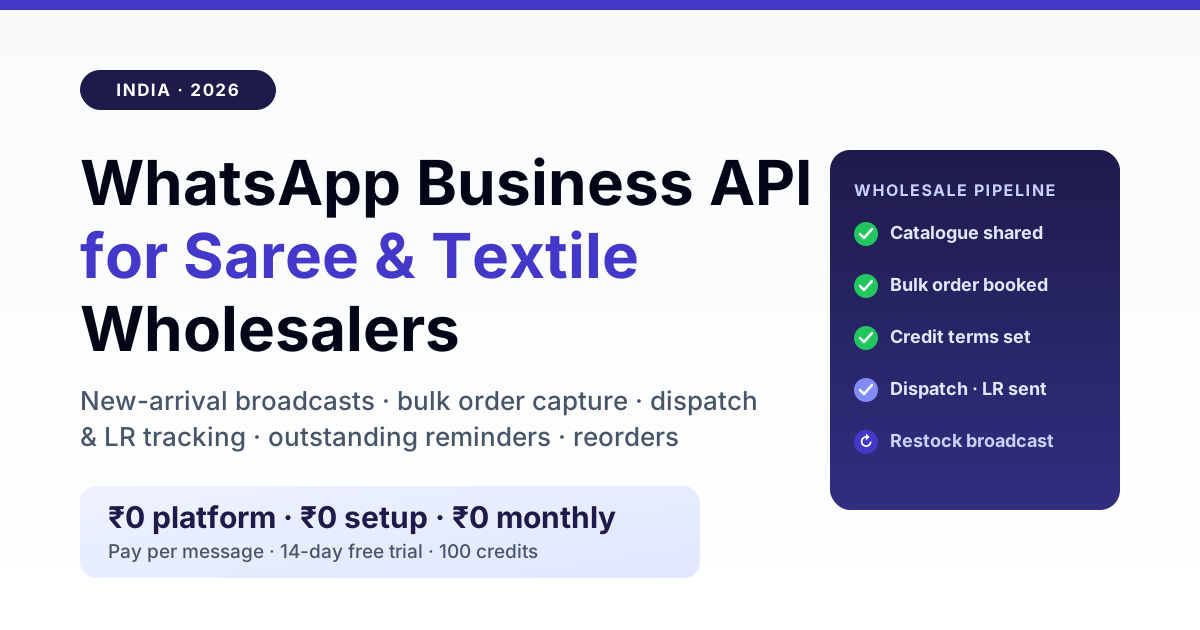
You can stand up the entire enquiry-to-reorder layer — instant retailer capture from referrals and ads, chatbot answers on rates, minimum order and dispatch cities, new-design catalogues and wholesale rate lists, clean bulk-order capture with stock hold, advance and balance payment links, dispatch and LR tracking, outstanding-balance reminders against agreed credit terms, and opted-in new-arrival and festival-collection broadcasts — without engineering lift, while your stock register and accounts stay the source of truth. RichAutomate charges ₹0 platform fee, ₹0 setup, ₹0 monthly. On Client Pay you pay only ₹0.10 per message plus Meta's own per-conversation charge billed to you directly by Meta at Meta's rates; on SaaS Pay it is an all-in ₹1.20 per marketing conversation and ₹0.30 per utility conversation — and order confirmations, dispatch updates and balance reminders are utility conversations, the cheaper category. There is a 14-day free trial with 100 credits, so you can measure the reach, working-capital and reorder improvement before committing. Keep WhatsApp as the conversation layer, keep your stock and accounts as the source of truth, and verify advertising and DPDP data rules as of 2026. See the full pricing page for details, and compare options in the best WhatsApp Business API providers guide.
Stop letting lots, outstandings and reorders leak
A saree or textile wholesaler does not have to lose the lot because a retailer saw a competitor's new arrivals first, double-sell an order because it was buried in a hundred-message group, freeze his working capital because outstandings went unchased in a festival rush, or watch a regular retailer drift a season without ever showing him the next collection. From the instant retailer capture, through the catalogue and rate list, the clean bulk-order booking and stock hold, the advance and balance, the dispatch and LR tracking, the outstanding reminders, to the opted-in new-arrival reorder broadcast — WhatsApp can be the one continuous wholesale thread, while your stock register and accounts stay the source of truth. On illustrative numbers that means more lots moved on launch day, cleaner working capital, fewer double-sold orders and a retailer base that reorders every season, for a messaging bill that is negligible against your turnover. RichAutomate's pricing stays flat through all of it: ₹0 platform fee, ₹0 setup, ₹0 monthly — Client Pay at ₹0.10 per message with Meta conversation charges billed direct by Meta, or SaaS Pay at ₹1.20 marketing / ₹0.30 utility all-in. Start the 14-day free trial with 100 credits, WhatsApp us at 918160311319, or book a 30-minute walkthrough at https://calendly.com/inrichdaddy/30min. (All cohort, order and outstanding figures here are illustrative — model your own on the calculator — no platform guarantees against Meta quality or ban actions, and advertising and DPDP rules change; verify the current position as of 2026. This is operational guidance, not legal, tax or financial advice.)
Start your 14-day free trial → · See full pricing · Read the boutiques & clothing stores guide