Run a self-drive car rental business in India in 2026 — a single owner with three or four cars rented by the day, a city fleet of twenty across an airport and two neighbourhood hubs, or a multi-city operator listing on aggregators while taking direct bookings off Instagram and Google — and you already know the whole business is a chain of trust handoffs done over messages: a stranger asks "is the Creta free this weekend?", you have to verify a driving licence and an ID before you hand over a ₹15-lakh asset, you take a security deposit, you photograph the car at handover so the dent argument never happens, you remind the renter of the return time, you inspect on return, you refund the deposit, and three weeks later an e-challan for over-speeding lands on your RC and you have to recover it from a customer who has long since vanished. Miss a step and it costs real money. A booking enquiry answered four hours late goes to the operator who replied in four minutes. A handover without timestamped photos becomes a deposit dispute you lose. A challan you forget to pass through is a fine you eat. A renter who had a clean, friendly experience never books again because you have no channel to bring them back. Self-drive rental is a business where a slow reply loses the weekend booking, a sloppy handover loses the deposit argument, an un-chased challan is money out of your pocket, and a one-time renter who should have been a repeat is lost to silence — and every one of those moments now happens on WhatsApp, where the customer asks, sends the licence photo, gets the location pin, receives the handover checklist and reads the return reminder. The operator who turns that WhatsApp thread into a system — instant availability reply, KYC and licence capture, deposit and payment links, timestamped handover and return inspection, challan pass-through and an opted-in repeat-booking engine — wins the bookings, wins the deposit disputes, recovers the fines and keeps the cars earning. This is the buyer's guide to choosing the best WhatsApp Business API for a self-drive car rental business in India in 2026: what actually matters for this vertical, the rental lifecycle it has to carry, and how to pick a platform that respects an asset-heavy, deposit-driven, document-heavy operation. Treat every commercial and pricing specific below as "verify as of 2026," treat every figure as illustrative, and treat none of this as legal, tax, insurance or financial advice.
Why self-drive car rental is a WhatsApp problem. A self-drive rental is a high-value, high-trust transaction made of short, time-sensitive messages: the availability enquiry where the fastest credible reply usually wins the booking, the KYC step where a licence and ID must be verified before a costly asset is handed to a stranger, the deposit and rental-payment link, the pickup-location pin and timing, the handover where condition photos protect both sides, the return reminder, the post-return inspection and deposit refund, the e-challan pass-through that lands days later, and the repeat-booking nudge that turns a one-time renter into a regular. The customer already lives on WhatsApp, opens messages within minutes, and judges an operator by responsiveness and clarity. An owner juggling pickups, returns and cleaning cannot also watch an inbox — so enquiries go cold and disputes go unrecorded. WhatsApp is where a rental operator wins the booking by replying first, protects the asset by capturing KYC and condition proof, gets paid and refunded cleanly, recovers challans, and earns the repeat booking — provided every send is consent-based, lawful and genuinely useful. Verify KYC, advertising, motor-vehicle and DPDP data rules as of 2026; nothing here is legal or insurance advice, and no platform guarantees against Meta quality or ban actions.
What "best" actually means for a self-drive car rental operator
The "best WhatsApp Business API" for a self-drive rental business is not the one with the most features or the loudest brand — it is the one that fits the specific shape of an asset-heavy, deposit-driven, document-heavy operation where a single bad handover or un-recovered challan wipes out the margin on a booking. Before comparing logos, get clear on the criteria that actually decide outcomes for this vertical. The table below is the buyer's checklist — weigh each against your own fleet size and booking mix as of 2026.
| What to evaluate | Why it matters for a rental operator | What good looks like |
|---|---|---|
| Speed-to-first-reply on availability | A weekend booking goes to whoever answers first with a clear yes and a price; hours late loses it | Instant auto-reply with availability capture, dates, car class and a human follow-up to confirm |
| KYC & document capture | You must verify a driving licence and ID before handing over a costly asset to a stranger | Structured collection of licence and ID images on one secure thread, stored against the booking |
| Deposit, payment & refund | Security deposits and rental payments must be collected up front and refunded cleanly to avoid disputes | Secure payment and deposit links, plus a refund confirmation message on return |
| Handover & return condition proof | Dent and fuel-level arguments are won by timestamped photos, not memory | A handover and return checklist with condition photos captured on the thread, both sides aligned |
| Challan pass-through & reminders | An e-challan landing days later is money you eat unless you can recover it fast from the right renter | Challan notification linked to the booking, with a payment-recovery nudge to the renter |
| Transparent, low pricing | A per-booking margin is thin; a fat per-seat SaaS fee on every login eats it further | ₹0 platform fee, pay only per message and Meta's conversation charge |
The reframe most operators eventually make: the platform is not the product — the booking-to-refund discipline and repeat-customer base it lets you run is. An operator who picks on price-per-message alone, but cannot reply fast, capture KYC or prove condition at handover, has bought a cheaper way to lose bookings and deposit disputes. Pick for the rental journey, then optimise the cost. For the closely adjacent fleet view, the WhatsApp for taxi and cab aggregators guide and the tour operator and DMC playbook share much of the same booking-and-trust shape.
The end-to-end self-drive rental WhatsApp lifecycle
Here is the full lifecycle a self-drive rental operator can run over WhatsApp, from the first availability enquiry to KYC, deposit, handover, return, challan recovery and the repeat booking, mapped to the automation at each stage and the guardrail that keeps it lawful and fair. Treat the automation column as a reference pattern and verify KYC, motor-vehicle, advertising and data-protection specifics as of 2026.
| Lifecycle stage | WhatsApp automation | Guardrail (verify 2026) |
|---|---|---|
| 1. Availability enquiry | An Instagram post, Google listing, aggregator hand-off or click-to-WhatsApp ad opens a chat; bot replies instantly with availability and captures dates, car class and pickup hub | Capture consent at first contact; honour opt-out; quote honestly |
| 2. KYC & verification | Bot collects driving licence and ID images, vehicle preference and booking dates, stored against the booking record | Lawful KYC only; minimise and secure personal documents; explicit consent to store |
| 3. Deposit & payment | Secure rental-payment and security-deposit links sent on the thread, with a booking-confirmation message | Secure links only; clear deposit terms; no surprise charges |
| 4. Pickup & handover | Pickup location pin, timing and a handover checklist with condition photos and fuel level captured on the thread | Honest condition record; both sides see the photos; accurate fuel and odometer note |
| 5. During rental & return reminder | A mid-rental support line and a return-time reminder with extension options if the renter needs more time | Honour the agreed terms; clear extension pricing; quick human handoff for issues |
| 6. Return inspection & refund | Return checklist with condition photos, damage and fuel reconciliation, and a deposit-refund confirmation | Fair, evidence-based deductions; prompt refund; transparent reconciliation |
| 7. Challan, review & repeat | E-challan pass-through linked to the booking, a review request, and an opted-in repeat-booking and offer nudge | Recover only the renter's own fines; opt-in only; frequency caps so it never feels like spam |
Notice the rhythm: WhatsApp protects a high-value asset transaction that phone calls and memory let drift into disputes, then compounds the business by turning a clean rental into the repeat booking and referral that keep the cars earning — which is where a rental operator's real margin lives. For the relocation-and-logistics adjacency the packers and movers guide covers a similar deposit-and-handover pattern, and the budget hotel playbook is a useful companion for the travel-booking side of the pipeline.
The click-to-WhatsApp link generator produces the link and the QR code together if you need both.
The deposit-and-challan problem: where rental margin is won or lost
The two places a self-drive rental quietly bleeds money are the security deposit and the e-challan, and both are document-and-evidence problems that WhatsApp solves better than any phone call. The deposit dispute is the classic: the renter swears the scratch was already there, you swear it was not, and without a timestamped handover photo on a shared thread you either eat the repair or lose a customer to a fight. Capture condition photos at handover and again at return, on the same WhatsApp thread both parties can see, and the argument simply ends — the evidence is there, dated, agreed at the time. The challan is the slower leak: an over-speeding or no-parking e-challan tied to your registration number arrives days or weeks after the renter has gone, and unless you can identify the booking, link the fine to the right renter and nudge them to pay quickly, it becomes a fine you absorb and a recovery you never make. A WhatsApp system that ties every booking to a verified renter, holds the condition evidence, and can fire a challan-recovery message to the exact person who was driving on that date turns two of the biggest margin leaks in the business into routine, recoverable events. The operator who runs this discipline keeps the deposit clean and the fines recovered; the one who runs on memory and phone calls eats the difference, booking after booking. Do it fairly — evidence-based deductions only, recover only the renter's own fines, refund promptly — and it is simply good, defensible operations.
Get a 1-minute BSP audit on WhatsApp
Drop your WhatsApp number — we line-item your current invoice against Meta India rates in under 60 seconds. India-hosted, DPDP-compliant.
The deposit-and-challan engine, in one principle. Treat every rental as an evidence trail you keep, not a memory you argue from. Verify the renter before handover, photograph the car's condition and fuel at pickup and return on a shared thread, link every booking to the verified renter so a later challan reaches the right person, and refund the deposit promptly with a transparent reconciliation. The thread should feel like a fair, professional operator who protects both sides — never like a channel engineered to withhold deposits. Verify KYC, motor-vehicle and DPDP data rules as of 2026; this is not legal or insurance advice, and no platform guarantees against Meta quality or ban actions.
Per-seat SaaS vs a ₹0-platform model: the margin question
A self-drive rental earns a thin per-booking margin against a heavy asset cost — financing, insurance, maintenance, cleaning and the occasional un-recovered challan — so a fixed monthly platform fee charged on every login and every seat is dead weight in a slow week and an arbitrary tax in a busy one. Most legacy BSPs charge a per-seat or tiered monthly platform fee on top of Meta's own per-conversation charge; a ₹0-platform model charges only for what you actually send. This comparison is directional — verify current pricing on each vendor as of 2026.
| Dimension | ₹0-platform model (RichAutomate) | Typical per-seat / tiered SaaS BSP |
|---|---|---|
| Platform / setup / monthly fee | ₹0 platform, ₹0 setup, ₹0 monthly | Monthly platform fee, often per seat or per tier |
| What you pay for | Only per message + Meta's conversation charge | Subscription + markup on conversations |
| Fit for a seasonal, asset-heavy fleet | Costs scale with bookings and reminders sent; a quiet week costs little | You pay the subscription even in the off-season |
| Margin impact per booking | Messaging cost is negligible against the rental value | Fixed monthly fee runs whether one car or twenty are out |
| Billing transparency | Client Pay: Meta bills you direct at Meta rates | Often a bundled markup you cannot see through |
The conclusion most operators reach: for a seasonal, asset-heavy fleet with uneven booking flow, a model where the messaging cost is negligible against each rental beats a fixed monthly tax you pay even in the off-season. Run your own numbers on the WABA cost calculator and read the Client Pay vs SaaS Pay billing breakdown before committing.
The automation stack that runs it
The good news for a rental operator is that none of this needs custom engineering. The building blocks map onto a standard WhatsApp Business API automation stack: a click-to-WhatsApp and listing capture flow that takes dates, car class and pickup hub instantly; a chatbot FAQ that answers the predictable questions — daily rates, fuel policy, deposit amount, age and licence requirements, kilometre limits, hubs covered — without a human; a KYC step that collects licence and ID images against the booking; a deposit-and-payment engine with secure rental and deposit links and a confirmation; a handover-and-return module with condition photos, fuel and odometer notes and a shared evidence trail; a return-reminder and extension step; a refund-and-reconciliation close; a challan pass-through tied to the verified renter; a review-and-repeat-booking nudge; an opted-in offer note for the off-season; and a human handoff the moment a renter has a breakdown, an accident or a dispute. For the driver-and-vehicle operations parallel the taxi and cab aggregator guide is a close adjacent reference. The discipline is to keep the chatbot scoped to availability, FAQs, KYC and logistics, and route every breakdown, accident or dispute to a human immediately.
The economics: an illustrative fleet cohort
Criteria and architecture are the floor; the reason to run WhatsApp across the rental lifecycle is more bookings won, fewer deposit disputes, more challans recovered, and a repeat-customer base that keeps the cars earning. Consider an illustrative single self-drive operator running a mix of direct social and Google enquiries, aggregator hand-offs, and an opted-in base of past renters across a small fleet. Every figure below is illustrative — model your own on the calculator.
| Metric (illustrative) | Without WhatsApp lifecycle | With WhatsApp lifecycle |
|---|---|---|
| Speed to first reply on availability | Hours, if you reach it between pickups and returns | Seconds; instant availability reply, human follow-up to confirm |
| Weekend bookings won against rivals | Lower (a slow reply loses the booking) | Higher (instant, clear first response) |
| Deposit disputes lost on dents and fuel | Common; argued from memory | Fewer; timestamped handover and return photos settle it |
| Challans recovered from renters | Rarely; often absorbed | More; challan linked to the verified renter and nudged |
| WhatsApp messaging cost | ₹0 | Utility confirmations, reminders and recovery messages at the cheapest tier |
The asymmetry is the argument: booking confirmations, KYC requests, handover and return checklists, return reminders and challan-recovery nudges are largely utility-category conversations — the cheapest tier — and they directly reduce the most expensive failures in a rental business, namely slow replies that lose the weekend booking, deposit disputes lost for want of a photo, challans absorbed because the renter was never linked to the fine, and one-time renters lost to silence. A single deposit dispute avoided or challan recovered can cover a month of messaging, which is negligible against a rental's value. Run your own figures on the WhatsApp Business API cost guide before committing.
Build the self-drive rental lifecycle on RichAutomate
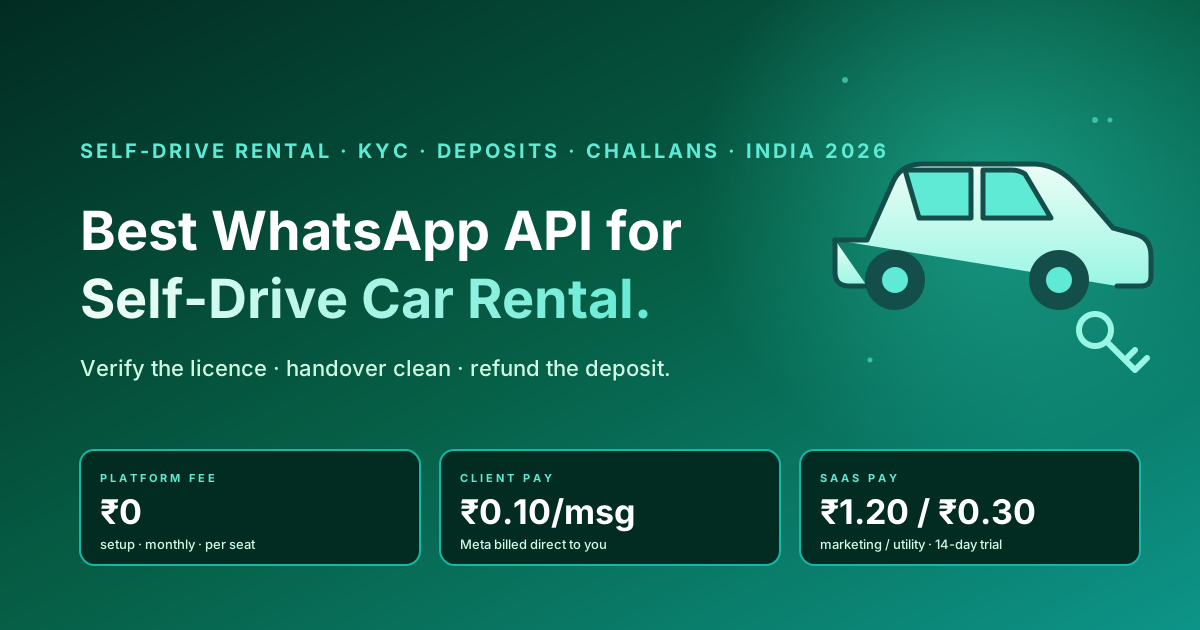
You can stand up the entire booking-to-refund layer — instant availability capture from social, Google, aggregators and ads, chatbot answers on rates, fuel policy, deposit and licence rules, KYC and document collection, deposit and rental payment links, handover and return condition photos, return reminders and extensions, deposit refunds with reconciliation, challan pass-through tied to the verified renter, and an opted-in review and repeat-booking engine — without engineering lift, while your fleet-management records stay the source of truth. RichAutomate charges ₹0 platform fee, ₹0 setup, ₹0 monthly. On Client Pay you pay only ₹0.10 per message plus Meta's own per-conversation charge billed to you directly by Meta at Meta's rates; on SaaS Pay it is an all-in ₹1.20 per marketing conversation and ₹0.30 per utility conversation — and booking confirmations, KYC requests, handover checklists, return reminders and challan nudges are utility conversations, the cheaper category. There is a 14-day free trial with 100 credits, so you can measure the booking-win, deposit-dispute and challan-recovery improvement before committing. Keep WhatsApp as the conversation layer, keep your fleet and booking records as the source of truth, and verify KYC, motor-vehicle, advertising and DPDP data rules as of 2026. See the full pricing page for details, and compare options in the best WhatsApp Business API providers guide.
Stop letting bookings, deposits and challans leak
A self-drive rental operator does not have to lose the weekend booking because the first reply came four hours late from a pickup, eat a deposit dispute because nobody photographed the dent at handover, or absorb an e-challan because the fine was never linked to the renter who was driving. From the instant availability capture, through the KYC and document collection, the deposit and payment links, the timestamped handover and return inspection, the return reminders and refunds, to the challan recovery and the opted-in repeat-booking nudge — WhatsApp can be the one continuous rental thread, while your fleet records stay the source of truth. On illustrative numbers that means more bookings won, fewer deposit disputes, more challans recovered and a repeat base that keeps the cars earning, for a messaging bill that is negligible against a rental's value. RichAutomate's pricing stays flat through all of it: ₹0 platform fee, ₹0 setup, ₹0 monthly — Client Pay at ₹0.10 per message with Meta conversation charges billed direct by Meta, or SaaS Pay at ₹1.20 marketing / ₹0.30 utility all-in. Start the 14-day free trial with 100 credits, WhatsApp us at 918160311319, or book a 30-minute walkthrough at https://calendly.com/inrichdaddy/30min. (All cohort, booking and challan figures here are illustrative — model your own on the calculator — no platform guarantees against Meta quality or ban actions, and KYC, motor-vehicle, advertising and DPDP rules change; verify the current position as of 2026. This is operational guidance, not legal, tax, insurance or financial advice.)
Start your 14-day free trial → · See full pricing · Read the taxi & cab aggregator guide
Related reading: WhatsApp for Car Rental & Self-Drive Agencies India 2026 walks through the same WhatsApp setup for a neighbouring use case.