All articles
Guide

WhatsApp for Bike & Scooter Rental Operators India 2026

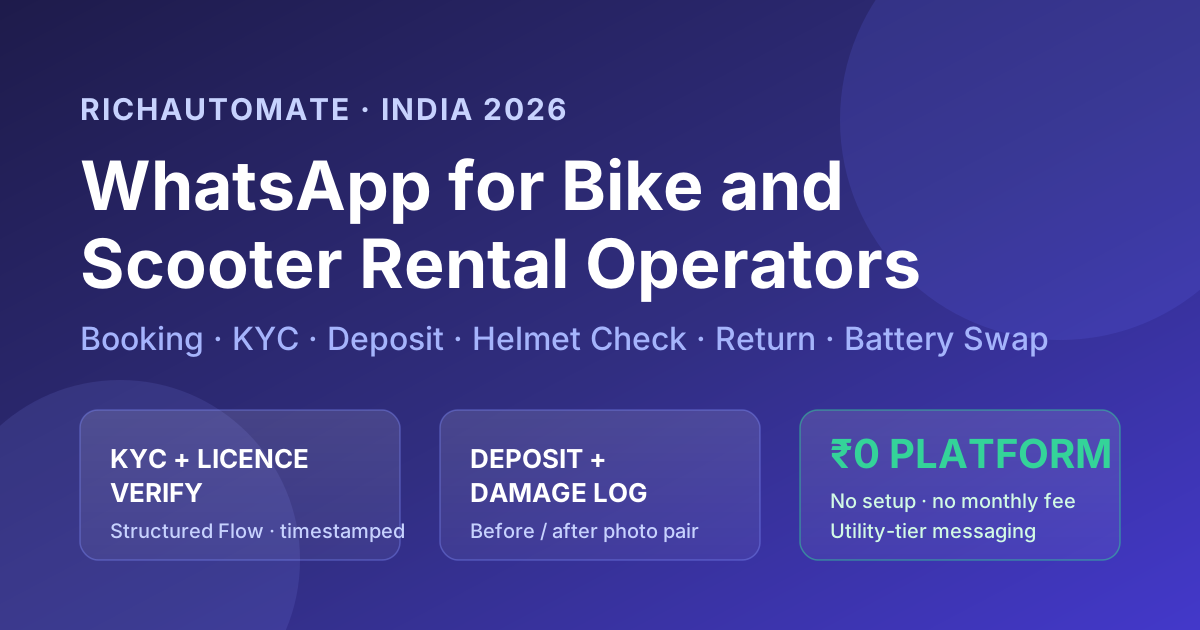
An operational 2026 playbook for using the WhatsApp Business API in an Indian bike, scooter and e-scooter rental / e-scooter-sharing business: availability and booking via WhatsApp Flows, driving-licence and KYC verification with DPDP-grade handling, security-deposit links and refund-status reminders, a ride-start and helmet checklist with baseline condition photos, in-ride support with bot triage and human handoff, return-and-damage documentation with before/after photo pairs, and for electric fleets battery-swap and charging reminders. Covers the seven recurring WhatsApp jobs of a two-wheeler rental operator (mostly cheap utility conversations); a manual-vs-automated rental-ops comparison; the DPDP discipline for licence and ID images; illustrative rupee cost math for a 600-rental mid-size fleet; and a 24-48h pilot-first go-live that does not touch booking software, telematics or insurance. Regulatory context (Motor Vehicles Act, rent-a-vehicle/aggregator rules, state transport and permit rules, helmet requirements, EV/battery-safety norms, DPDP) must be verified as of 2026. RichAutomate flat pricing: Rs 0 platform/setup/monthly, Client Pay Rs 0.10 per message with Meta billed direct, SaaS Pay Rs 1.20 marketing / Rs 0.30 utility, 14-day trial plus 100 credits. All cohort and rupee figures are illustrative. Operational guidance, not legal advice.

RichAutomate Editorial
11 min read 0 views
WhatsApp for Bike & Scooter Rental Operators India 2026

A bike, scooter or e-scooter rental business in India lives and dies on two numbers: how fast a rider can go from “I want a vehicle” to actually riding, and how few vehicles you lose to bad KYC, unreturned deposits or undocumented damage. WhatsApp sits exactly on top of both. It is the one channel almost every rider already has open, and it can carry the whole rental loop — availability and booking, licence and KYC capture, security-deposit handling, a ride-start and helmet checklist, in-ride support, return and damage documentation, and for e-scooters the battery-swap and charging reminders that keep a fleet utilised. This is the operational 2026 playbook for running that loop on the WhatsApp Business API, with honest cost math and the regulatory and data-protection lines drawn where they belong. Every regulatory specific below should be verified against the live position as of 2026, and all cohort and rupee figures are illustrative — model your own fleet.

Where the rules sit (verify as of 2026). Two-wheeler rental in India touches the Motor Vehicles Act and the rent-a-vehicle / aggregator framework made under it, plus state-level transport and permit rules that differ materially between states; EV fleets additionally fall under evolving battery-safety and EV norms, and licence and identity images you collect are personal data under the Digital Personal Data Protection framework. WhatsApp does not change any of these obligations — it is a coordination and record layer, not a substitute for the permits, insurance, helmet provision and licence verification your operation is legally required to maintain. Treat every regulatory detail in this guide as something to confirm with your own counsel and your state transport authority as of 2026. This is operational guidance, not legal advice.

The seven WhatsApp jobs of a two-wheeler rental operator

Strip a rental business down and almost every customer interaction falls into one of seven recurring jobs. Each maps cleanly onto a WhatsApp pattern, and most are cheap utility conversations rather than marketing — which is exactly why the channel is so well suited to this vertical.

JobWhat the rider needsWhatsApp pattern
Availability & bookingIs a scooter free for my dates and pickup point?Inbound enquiry → Flow with model, dates, location → slot hold
Licence & KYC verifySubmit driving licence and ID before ridingStructured Flow upload of DL + ID into one timestamped thread
Security depositPay and later get the deposit backPayment link out, refund-status reminder on return
Ride-start & helmet checklistConfirm fuel/charge, helmet, condition before riding offTemplated checklist + photo capture at handover
In-ride supportBreakdown, flat, low charge, route helpLive support thread with bot triage → human handoff
Return & damageHand back the vehicle, settle any damageReturn Flow with photos → deposit settlement note
Battery / charging (e-scooter)Swap reminders, charge-low nudges, swap-station infoUtility reminder template tied to telematics or schedule

Notice that six of the seven are utility-tier conversations — service messages to a rider who is already transacting with you — and only availability promotion or a re-rent nudge ever ventures into marketing. That cost shape, explored later, is what makes WhatsApp economical for a rental fleet. The same booking-and-deposit discipline runs in the sister vehicle-rental vertical; the self-drive car-rental fleet playbook covers the four-wheeler version of this loop.

Booking and availability without the phone-tag

The first message a rental operator usually gets is some version of “Activa available tomorrow near the station?” Answered over calls, that question burns staff time and loses riders to whoever replies first. On WhatsApp, an inbound enquiry triggers a structured Flow that captures model preference, rental dates and times, and pickup location, then either confirms a hold or offers the nearest available alternative. The rider gets an instant, factual response; you get a clean booking record instead of a scribbled note. Keep the booking message purely informational — availability, rate, pickup point, what to bring — and reserve any promotional “weekend offer” messaging for a separate, opted-in marketing template. Verify your rate display and any aggregator-rule disclosures as of 2026.

Licence and KYC verification via Flow

No rider should ride off before their driving licence and identity are on file, and this is precisely where a structured WhatsApp Flow earns its keep. Instead of WhatsApp-ing blurry photos into a chaotic chat, the rider works through a Flow that asks for the driving licence and a government ID in defined fields, each upload landing in their booking thread with a timestamp. Your staff verify against the booking before handover, and you hold an auditable KYC record per rental. The discipline that must ride alongside is data protection: licence and ID images are sensitive personal data.

The data-protection discipline for licence and ID images. Under the DPDP framework, a driving-licence or ID image is personal data you are processing for a specific purpose — verifying eligibility to rent. Collect only what you genuinely need, tell the rider why you are collecting it, restrict which staff can view the documents, set a retention period after which images are deleted rather than kept forever, and treat the rider's consent as recorded and revocable. Never let an automated bot make the final eligibility call on a blurred or doubtful licence — route it to a human. The same minimisation and consent rigour detailed in the DPDP compliance checklist applies directly here. Verify the operative DPDP provisions as of 2026.

Security deposit, ride-start checklist and the handover moment

The handover is where money and liability change hands, so it deserves a tight, repeatable WhatsApp routine. A payment link goes out for the security deposit; on receipt, a ride-start checklist template confirms the essentials — fuel or battery level, helmet handed over, mirrors and brakes, and a couple of condition photos captured into the thread. That photo set is your damage baseline: if a scratch is disputed on return, you have a timestamped before-image. For e-scooters, the same checklist confirms the starting charge level and notes the nearest swap or charging point. Keep the checklist factual and quick — a rider eager to ride will not tolerate a long form — and make helmet confirmation a non-negotiable line, because helmet provision is both a safety duty and, in most states, a legal one to verify as of 2026.

In-ride support and return-and-damage documentation

Once a rider is out, things go wrong in predictable ways — a flat, a low battery, a wrong turn, a minor knock — and a live WhatsApp thread is the calmest way to handle all of them. A bot can triage the first message (location, issue type) and either resolve simple cases with swap-station or instruction info or hand off instantly to a human for a breakdown. On return, a structured Flow walks the rider through return photos and odometer or charge reading, after which a settlement note confirms any damage deduction and the deposit-refund status. The before-and-after photo pair, both timestamped in one thread, is what turns deposit disputes from arguments into evidence. This is the single biggest source of goodwill — and dispute avoidance — in the whole rental loop.

Stop overpaying on WhatsApp

Get a 1-minute BSP audit on WhatsApp

Drop your WhatsApp number — we line-item your current invoice against Meta India rates in under 60 seconds. India-hosted, DPDP-compliant.

DPDP-compliant · India-hosted · 1-min reply

E-scooter battery-swap and charging reminders

For an electric two-wheeler fleet, range and uptime are the business, and WhatsApp is a natural reminder rail for both. Tied to telematics or a simple schedule, utility templates can nudge a rider when charge is low, point them to the nearest swap or charging station, and remind a longer-term renter when a swap is due. For the operator, the same channel can carry internal swap-station status to field staff. Keep these messages strictly utility — they are service notifications a rider expects, not marketing — and make sure any range or charging guidance is accurate, because a stranded rider is both a safety and a reputation problem. EV-specific battery-safety norms are still evolving; verify the current position as of 2026.

Manual rental ops vs WhatsApp-automated

The clearest way to see the value is to put the everyday rental jobs side by side — the manual way most small fleets run today versus a disciplined WhatsApp setup. Every row below is a real operational task, not a sales pitch.

TaskManual (calls / paper / loose chat)WhatsApp-automated
Availability enquiryPhone tag; riders lost to faster repliesInstant Flow with model, dates, pickup → hold
Licence & KYCBlurry photos in a messy chat; no recordStructured Flow; timestamped, auditable per rental
Security depositCash or ad-hoc UPI; refund chased by callPayment link out; refund-status reminder on return
Ride-start / helmet checkVerbal, inconsistent; no condition proofTemplated checklist + baseline condition photos
Damage on returnDisputes with no evidence either wayBefore/after photo pair settles it objectively
Battery / charge (e-scooter)Riders strand; staff field panic callsProactive low-charge and swap reminders

The automation never replaces your permits, insurance, helmets or licence checks — it makes the service around them faster, more consistent and far better documented. To keep riders, bookings and deposit records organised behind all of it, a WhatsApp CRM is the natural companion, used for service and opted-in re-rent nudges only.

The cost shape for a rental fleet

Because a two-wheeler rental operator's messaging is dominated by cheap utility conversations, the WhatsApp bill is small and scales with rentals, not with a fixed fee. Take an illustrative mid-size fleet doing 600 rentals a month, where each rental generates on average about 6 rider-facing utility messages across its life — booking confirmation, KYC request, deposit link, ride-start checklist, a return note and a deposit-refund update — plus, say, 4 opted-in marketing broadcasts a month to a list of about 500 past riders. That is roughly 3,600 utility conversations and 2,000 marketing conversations a month.

Line item (illustrative)RichAutomate SaaS PayFee-bearing provider (illustrative)
Platform / monthly fee₹0A fixed monthly platform fee (verify the vendor's number, 2026)
~3,600 utility conversations~₹1,080 (3,600 × ₹0.30 all-in)Meta's utility rate + markup × 3,600 (verify)
~2,000 marketing conversations~₹2,400 (2,000 × ₹1.20 all-in)Meta's marketing rate + markup × 2,000 (verify)
Indicative monthly total~₹3,480, no platform feeA similar message cost plus a fixed platform fee on top (verify)

The figures are illustrative — model your own rental volume and broadcast cadence — but the shape holds: most of the spend is in the cheap utility tier, and a ₹0-platform model means a slow month costs proportionally less. RichAutomate's pricing is flat: ₹0 platform fee, ₹0 setup, ₹0 monthly. On Client Pay (your own WhatsApp number, ₹0.10 per message, with Meta's conversation charge billed to you directly by Meta) the cost tilts further toward usage-only. Run your real numbers through the WABA cost calculator and verify Meta's live conversation rates and the GST position as of 2026.

Going live in 24–48 hours

Standing up WhatsApp as your rental coordination layer is a quick, low-risk exercise, and it does not touch your booking software, telematics or insurance — it sits beside them. Pilot on a single branch or model first so your live rentals keep running exactly as they do today.

StepWhat happensTypical timing
1. Start the trialBegin the 14-day free trial with 100 credits; connect or onboard your WhatsApp Business numberDay 0
2. Build the core FlowsCreate the booking Flow, the licence/KYC upload Flow and the return-and-damage photo FlowDay 0–1
3. Wire the utility templatesDeposit link, ride-start/helmet checklist, deposit-refund status and (for e-scooters) battery-swap remindersDay 1
4. Pilot on one branchRun one branch's rentals end-to-end; confirm KYC, deposit, checklist and consent/opt-out all work; then roll outDay 1–2

Because you pilot on one branch first, there is no dark window and no dependency on your existing fleet stack — the rest of the operation keeps running until you are satisfied. Verify your number-onboarding steps and template categories with the provider, and verify the rent-a-vehicle, helmet, EV and DPDP positions as of 2026.

Run the whole rental loop on the channel your riders already use

For a bike, scooter or e-scooter rental operator in India, WhatsApp can carry the entire loop a rider moves through — checking availability and booking a slot, submitting driving licence and ID through a structured KYC Flow, paying and later reclaiming a security deposit, running a ride-start and helmet checklist with baseline condition photos, getting live in-ride support, documenting return and any damage with a before-and-after photo pair, and, for electric fleets, receiving low-charge and battery-swap reminders that keep vehicles utilised. Most of it is cheap utility messaging to riders who are already transacting with you, the licence and ID images are handled with DPDP-grade minimisation, consent and retention discipline, and none of it replaces the permits, insurance, helmets and licence verification your operation is legally required to maintain — WhatsApp is the coordination and record layer on top. RichAutomate keeps the economics flat: ₹0 platform fee, ₹0 setup, ₹0 monthly, Client Pay at ₹0.10 per message with Meta's conversation charge billed direct by Meta, or SaaS Pay at ₹1.20 marketing / ₹0.30 utility all-in. Start the 14-day free trial with 100 credits, pilot one branch end-to-end first, WhatsApp us at 917434901027, or book a 30-minute walkthrough at https://calendly.com/inrichdaddy/30min. (Every regulatory specific — the Motor Vehicles Act and rent-a-vehicle/aggregator rules, state transport and permit rules, helmet requirements, EV and battery-safety norms, DPDP provisions and GST treatment — changes; verify the current position as of 2026. All cohort and rupee figures are illustrative; model your own. This is operational guidance, not legal advice.)

Start your 14-day free trial → · See full pricing · Run the WABA cost calculator

Ready to ship this?

Get the full migration playbook on WhatsApp

A founder-led 1-minute reply with the migration steps, template approval timeline, and a 14-day pilot offer. DPDP-compliant. India-hosted. No spam.

DPDP-compliant · India-hosted · 1-min reply
Tagged
Bike RentalScooter RentalE-Scooter SharingTwo-Wheeler RentalLicence VerificationKYCSecurity DepositHelmet ChecklistBattery SwapReturn & DamageWhatsApp FlowsDPDPMotor Vehicles ActWABA PricingWhatsApp Business APIIndia2026
Written by
RichAutomate Editorial
Editorial team at RichAutomate. We build the WhatsApp Business automation platform Indian D2C brands, fintechs, and agencies use to ship campaigns and flows on the official Meta Cloud API.
FAQ

Frequently asked questions

How does a bike or scooter rental business use WhatsApp end to end in India?
WhatsApp can carry the entire rental loop a rider moves through, and almost all of it is cheap utility messaging to a rider who is already transacting with you. It starts with availability and booking, where an inbound enquiry triggers a structured Flow that captures model preference, rental dates and pickup location and returns an instant hold or the nearest alternative. Next is licence and KYC verification, where the rider submits a driving licence and a government ID through a Flow with defined fields, each upload landing in the booking thread with a timestamp. Then the security deposit, where a payment link goes out and a refund-status reminder is sent on return. Then the ride-start and helmet checklist, a quick template that confirms fuel or battery level, helmet handed over and a couple of baseline condition photos that become your damage evidence. Then in-ride support, a live thread where a bot triages a flat, low charge or wrong turn and hands off to a human for a breakdown. Then return and damage, a Flow that captures return photos and an odometer or charge reading followed by a settlement and deposit-refund note. And for electric fleets, battery-swap and charging reminders that keep vehicles utilised. None of this replaces your permits, insurance, helmets or licence verification, which remain legally required; verify the rent-a-vehicle, helmet, EV and DPDP positions as of 2026. This is operational guidance, not legal advice.
How should a rental operator handle driving-licence and ID images under DPDP?
With real discipline, because a driving-licence or ID image is sensitive personal data you are processing for a specific purpose, namely verifying a rider eligibility to rent, and the Digital Personal Data Protection framework applies. The rules to follow are: collect only what you genuinely need rather than every document you can think of, tell the rider clearly why you are collecting it, restrict which staff members can view the licence and ID, set a defined retention period after which the images are deleted rather than held forever, and treat the rider consent to share and store these documents as recorded and revocable. A structured WhatsApp Flow helps here because it captures the documents into defined fields in one timestamped, auditable thread per rental rather than as blurry photos scattered through a messy chat. One hard rule sits on top: never let an automated bot make the final eligibility decision on a blurred or doubtful licence, always route it to a human. Any compliant provider supports this kind of access control, consent capture and retention; verify the consent and opt-out tooling on whichever you choose, and verify the operative DPDP provisions as of 2026. This is operational guidance, not legal advice.
How does WhatsApp help with security deposits and damage disputes?
It turns the two most contentious moments of a rental, taking a deposit and settling damage, into documented, evidence-backed exchanges instead of arguments. On handover, a payment link goes out for the security deposit, and on receipt a ride-start checklist template confirms the essentials and captures a couple of baseline condition photos into the booking thread, so you have a timestamped before-image of the vehicle. On return, a structured Flow walks the rider through return photos and an odometer or charge reading, after which a settlement note confirms any damage deduction and the deposit-refund status. The crucial element is the before-and-after photo pair, both timestamped in the same thread: if a scratch or dent is disputed, you are no longer relying on memory or a rider word against yours, you have objective evidence either way. That same record protects the rider too, because a pre-existing mark photographed at handover cannot later be charged to them. The result is fewer disputes, faster deposit refunds and more goodwill, which is a major driver of repeat rentals. Keep the deposit and refund messages factual and verify the GST and refund-handling positions as of 2026.
How much does WhatsApp cost for a mid-size two-wheeler rental fleet, illustratively?
The cost is low because a rental operator messaging is dominated by the cheap utility tier, and every figure here is illustrative, so model your own rental volume. Take a mid-size fleet doing 600 rentals a month, where each rental generates on average about 6 rider-facing utility messages across its life, namely a booking confirmation, a KYC request, a deposit link, a ride-start checklist, a return note and a deposit-refund update, plus about 4 opted-in marketing broadcasts a month to a list of around 500 past riders. That is roughly 3,600 utility conversations and 2,000 marketing conversations a month. On RichAutomate SaaS Pay that is about 1,080 rupees for the 3,600 utility conversations at 0.30 rupees each, plus about 2,400 rupees for the 2,000 marketing conversations at 1.20 rupees each, an indicative total near 3,480 rupees a month with no platform fee. A fee-bearing provider charges a similar Meta-driven message cost plus a fixed monthly platform fee whether you do 600 rentals or 60. RichAutomate pricing is flat: 0 platform fee, 0 setup, 0 monthly. On Client Pay, meaning your own WhatsApp number at 0.10 rupees per message with the Meta conversation charge billed to you directly by Meta, the structure tilts further toward usage-only cost. Run your real numbers through the WABA cost calculator and verify Meta live conversation rates and the GST position as of 2026.
How quickly can a rental business go live on WhatsApp without disrupting operations?
Usually within 24 to 48 hours, and crucially it does not touch your booking software, telematics or insurance, so there is no operational risk to rentals already in progress. The shape is: on day zero, start the 14-day free trial with 100 credits and connect or onboard your WhatsApp Business number. On day zero to one, build the three core Flows, namely the booking Flow that captures model, dates and pickup, the licence and KYC upload Flow, and the return-and-damage photo Flow. On day one, wire the utility templates for the deposit link, the ride-start and helmet checklist, the deposit-refund status, and for electric fleets the battery-swap and charging reminders. Then on day one to two, pilot on a single branch or vehicle model by running its rentals end-to-end and confirming that KYC, deposit, checklist, return documentation and consent or opt-out all work, before rolling out to the rest of the fleet. Because you pilot on one branch first, your live rentals keep running exactly as they do today until you are satisfied, so there is no dark window and no dependency on your existing fleet stack. Verify your number-onboarding steps and the template categories with the provider, and verify the rent-a-vehicle, helmet, EV and DPDP positions as of 2026. This is operational guidance, not legal advice.
RichAutomate · WhatsApp BSP for India 2026

Ship WhatsApp campaigns + flows on a transparent, compliance-ready BSP.

₹0 platform fee. DPDP audit log included. Visual flow builder. Multi-tenant from day one.

Start free trial
Want this for your brand?

Get a free 24-hour BSP audit

Send us your last invoice. We line-item it against Meta's published rates and benchmark against three alternatives.

Limited Spots Available

Get a Free
Automation Audit

Stop leaving revenue on the table. Get a custom roadmap to automate your growth.

Secure & Confidential

Continue reading

All articles
Guide

WhatsApp Business API Cost India 2026: 10 Questions Answered

The 10 questions Indian buyers actually ask before going live on WhatsApp Business API — answered plainly. How much it costs, whether it is free, App vs API, the green tick, setup time, BSP vs Cloud API, DPDP compliance, Meta per-message charges, legal bulk messaging, and the cheapest option. Real RichAutomate numbers: Rupee 0 platform fee, Client Pay 0.10/msg + Meta direct, or SaaS Pay 1.20 marketing / 0.30 utility-auth, with a 14-day trial + 100 free credits.

Read article
Guide

WhatsApp Drip Campaigns for India 2026: Setup, Cost & Examples

A 2026 playbook for building WhatsApp drip campaigns on the WhatsApp Business API for the Indian market. Explains what a drip campaign is (a timed, automated, trigger-based sequence of messages, as opposed to a one-off broadcast or an interactive chatbot); how the trigger-and-delay machinery works using approved utility and marketing templates and the 24-hour window; the utility-vs-marketing template rule that controls cost and compliance; five high-ROI drips to build first (welcome/onboarding, abandoned-cart recovery, post-purchase, re-engagement/win-back, renewal/repeat); illustrative rupee cost math for a D2C brand; the opt-in and DPDP discipline; design principles for cadence, length and exit rules; and a 24-48h pilot-first go-live. Meta template categories and conversation rates and DPDP provisions must be verified as of 2026. RichAutomate flat pricing: Rs 0 platform/setup/monthly, Client Pay Rs 0.10 per message with Meta billed direct, SaaS Pay Rs 1.20 marketing / Rs 0.30 utility, 14-day trial plus 100 credits. All cohort and rupee figures are illustrative.

Read article
Guide

WhatsApp for Pest Control Operators India 2026: CIB&RC Ready

Pest control is a licence-and-proof business — CIB&RC-registered chemicals under the Insecticides Act, state operator licences, and restaurant clients who need your service records for their own FSSAI audits — yet most operators still run bookings on a personal number with no service trail. This India 2026 playbook for pest-control operators covers the regulator stack (Insecticides Act 1968 and CIB&RC registration, state licensing for commercial operations, FSSAI record requirements, label-claim discipline — all hedged, verify current rules), market direction (hygiene awareness, compliance pull, AMC economics), the 5-stage WhatsApp lifecycle — enquiry and inspection booking, quote with chemical disclosure, service-day coordination with prep instructions, post-service photo proof and service-card PDFs, AMC renewals and seasonal campaigns (monsoon termites, winter rodents) — the FSSAI-audit evidence angle that wins B2B contracts, DPDP handling of household data and society/RWA lists, the RichAutomate automation stack, illustrative cost math for a 300-AMC portfolio, honest limits (chemical advice never automated), and safety copy rules: never claim a treatment is 100% safe.

Read article
Guide

WhatsApp for Audiology & Hearing Care Clinics India 2026

Hearing care has India's longest patient journey — screening camp to audiometry to device trial to lifelong service — and most clinics lose the patient between every step. This India 2026 playbook for audiology clinics, hearing-aid dispensing chains and ENT-attached hearing centres covers the regulator stack (RCI registration, CDSCO medical-device rules for hearing aids, state Clinical Establishments Acts, GST device-vs-service split, ADIP subsidy scheme — all hedged, verify current rules), the market direction (ageing India, noise-induced hearing loss, low aid penetration), the 5-stage WhatsApp lifecycle — camp booking and lead capture, audiometry plus report PDF delivery, trial-to-purchase nudge sequences with EMI/insurance info, post-fitting battery/filter/AMC reminders, annual re-test and family-screening referrals — the audiometry-to-trial drop-off funnel with structured utility follow-ups, DPDP health-data consent and family-member data, the RichAutomate stack (flows, quick replies, recall campaigns, multi-branch routing), illustrative cost math for a 500-patient base, honest limits (clinical advice never automated), and ASCI-safe marketing with zero cure claims.

Read article
Guide

WhatsApp Conversation Design System & Microcopy India 2026

Brands have design systems for pixels but not for sentences — yet on WhatsApp the sentence is the interface. This methodology guide for marketing/CX leads and agencies running WhatsApp at scale (10+ templates, multiple bots, multiple writers) builds the conversation design system: why copy breaks at scale (voice drift, factual contradictions, claim risk, orphan error copy), the six core artefacts — tone-of-voice charter with do/don't pairs, Hinglish/vernacular style guide (script per segment, aap/tum policy, locked transliteration glossary), message-length and verb-first ≤20-char button standards, emoji policy, single fact sheet — the five error/fallback messages everyone forgets to design (didn't-understand, agent-offline, window-expired, payment-failed, opt-out confirm) with example copy, ASCI-safe claim rules (superlative substantiation, banned-words list, offer disclosure pattern), DPDP-safe variable governance with green/mask-only/red lists and last-4 masking, localisation QA via glossary + back-translation + native-speaker gates, a risk-tiered review-gate matrix with template change log and rollback rule, copy KPIs (reply rate and opt-out rate per template family), and a one-page style-guide starter skeleton you can copy today.

Read article
Guide

WhatsApp for Elevator Installation & Lift AMC India 2026

Every lift in India runs under a state Lifts Act licence and an AMC — yet breakdown calls still land on a personal phone and service proof lives in a paper register. This playbook for elevator installation companies, OEM dealers and multi-brand AMC firms maps the full lifecycle to WhatsApp Business API: the state regulator stack (erection permission, licence to work, periodic inspection — state-specific, verify), a 5-stage WhatsApp lifecycle from spec enquiry and site survey to installation project threads with inspector coordination, AMC onboarding with a preventive-maintenance calendar, a structured breakdown/entrapment SOS flow with timestamped evidence trail and escalation ladder (coordination layer alongside mandated emergency procedures — never a guarantee), and the renewal + compliance reminder ladder. Includes paper-register vs WhatsApp-evidence comparison, in-thread parts-approval dispute defence, automation stack on RichAutomate, illustrative cost math for a 300-lift portfolio (~₹120/month platform-side on Client Pay ₹0.10/msg + Meta utility direct), the DPDP consent chain for resident numbers shared by societies/RWAs, and honest limits — sub-20-lift portfolios should start on the free WhatsApp Business app.

Read article