All articles
Guide

WhatsApp for Dialysis Centres & Nephrology India 2026

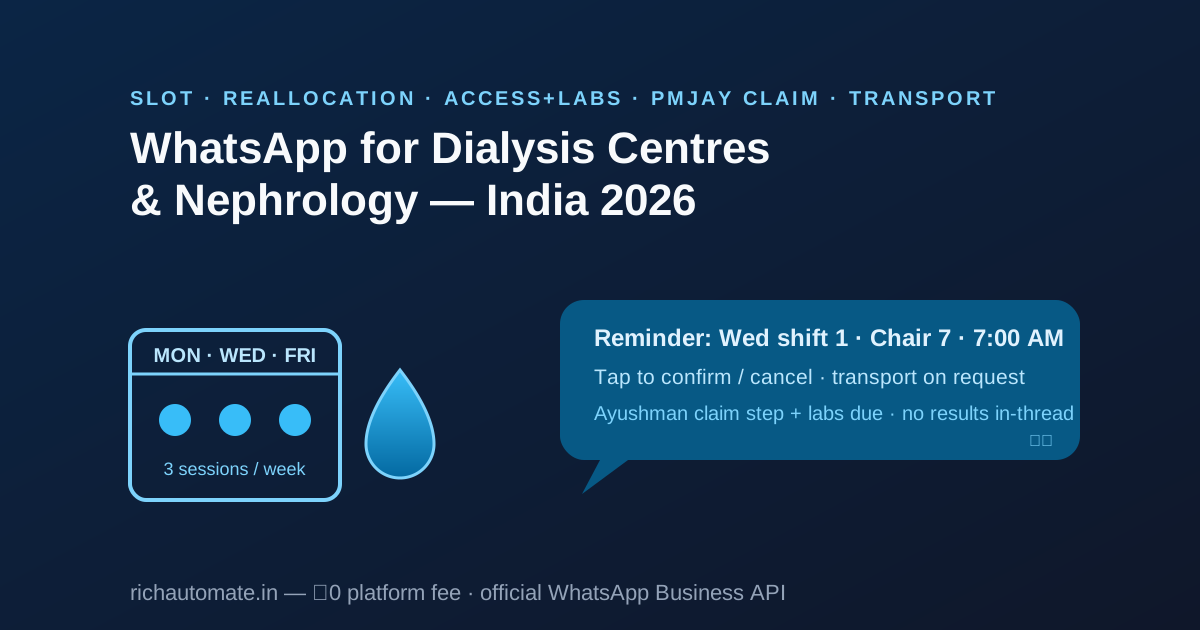
The thrice-weekly playbook for dialysis centres - session-slot reminders (shift + chair + one-tap confirm/cancel = missed-session and empty-chair killer), instant reallocation of freed slots, vascular-access and monthly-lab nudges (reminder only, no results in-thread), PMJAY/Ayushman + state-scheme claim threads, transport and co-pay coordination, and consented adherence check-ins - all built on strict DPDP-first data-minimisation (logistics in-thread, clinical detail off it). NABH / NMC / PMJAY / DPDP compliance notes (hedged) and honest cost math (Rs 2,000-3,500/month for 60 stations, illustrative) on a Rs 0-platform model.

RichAutomate Team
8 min read 0 views
WhatsApp for Dialysis Centres & Nephrology India 2026

The short answer. A dialysis centre runs on a fixed, unforgiving rhythm: most patients come three times a week, in slot-bound shifts, for years. Miss a session and it is a clinical event, not a no-show. WhatsApp on the official Business API is built for exactly this cadence — session-slot reminders the day before and morning of, machine/chair reallocation when someone cancels, vascular-access and lab-report nudges, and the paperwork spine of PMJAY/Ayushman and state-scheme claims that keep a chair affordable. Around it sit transport coordination, monthly investigation reminders (HB, KFT, serology), and diet/fluid-adherence check-ins. But a dialysis thread carries sensitive health data — this is where the DPDP Act 2023 and medical-council confidentiality rules bite hardest, so the design leads with data-minimisation, not features. A 60-station unit runs the reminder-and-claims loop for roughly ₹2,000-3,500 a month on RichAutomate's ₹0-platform model (illustrative below). Compliance first: NABH/state clinical-establishment rules, NMC confidentiality, PMJAY/scheme protocols, biomedical-waste rules and DPDP all bind — verify current requirements with your authority and a lawyer.

A dialysis patient forgives a lot, but not a chair that wasn't ready. Put the session slot, the access reminder and the scheme claim in one thread per patient and the week runs itself — quietly, and with the health data kept to the minimum.

Why WhatsApp fits a dialysis centre specifically

Unlike most clinics, a dialysis unit has a recurring, scheduled, high-frequency relationship with each patient — 150+ sessions a year each. That is precisely the pattern utility messaging serves best: predictable reminders, reallocation when a slot frees, and a running record of a chronic journey. The catch is that everything about that journey is health data, so the automation must carry the logistics of care while keeping clinical detail off the channel wherever possible.

The 6-loop treatment cycle on WhatsApp

LoopWhat happensWhatsApp jobCategory
1. Session slotFixed thrice-weekly shiftDay-before + morning slot reminder with shift + chair; confirm/cancel in-threadUtility
2. ReallocationA patient cancels; a chair freesOffer the freed slot to a waitlisted/flexible patient — fills the chair, not lost revenueUtility
3. Access + labsFistula/catheter care, monthly investigationsVascular-access care reminder + monthly HB/KFT/serology test nudge (reminder only, no results in-thread)Utility
4. Scheme claimPMJAY/Ayushman/state coverDocument-checklist + pre-auth status + claim-stage updates referencing the scheme IDUtility
5. Transport + billingAmbulance/pickup, co-payTransport confirmation + co-pay/receipt on the recordUtility
6. Adherence check-inDiet, fluid, inter-dialytic weightOpt-in adherence reminders + service recovery on missed sessionsOpt-in (health, consented)

The session-slot reminder — the money message (and the safety one)

The single highest-value message is the one that gets a patient into the right chair at the right time: the day-before and morning-of reminder with shift and chair number, and a one-tap confirm/cancel. When a patient cancels, the freed slot is immediately offered to a flexible patient — the chair stays productive instead of sitting empty for a four-hour session. Over a month across 60 stations, recovered slots are real revenue and, more importantly, fewer missed sessions. The discipline: the reminder carries logistics — slot, chair, transport, scheme step — and never puts lab values, diagnoses or clinical notes into the thread.

Stop overpaying on WhatsApp

Get a 1-minute BSP audit on WhatsApp

Drop your WhatsApp number — we line-item your current invoice against Meta India rates in under 60 seconds. India-hosted, DPDP-compliant.

DPDP-compliant · India-hosted · 1-min reply

Regulator + compliance spine (verify everything)

  • DPDP Act 2023 (leads here) — dialysis data is sensitive health data. Collect explicit consent, minimise what goes in-thread (logistics not clinical detail), honour deletion/erasure, and keep a lawful basis for every message. This constraint shapes the whole build.
  • NMC confidentiality + medical ethics — patient information is confidential; automated messages must not disclose clinical status to anyone but the consented patient/guardian.
  • Clinical Establishments Act / state rules + NABH — registration, standards and record-keeping for the unit.
  • PMJAY/Ayushman + state schemes — dialysis is a covered package; pre-auth, claim and document protocols are scheme-defined and change — quote scheme steps only after checking current NHA/state guidelines.
  • Biomedical Waste Management Rules — dialysis generates regulated waste; unrelated to messaging but part of the compliance picture the unit lives in.
  • Meta health-data posture — keep templates logistical; sensitive-category content and any marketing to patients is a WABA-quality and ethics risk.

The carve-out — what the bot must never do

The automation reminds and coordinates. It must never put lab results, diagnoses or clinical notes in the thread, never message anyone but the consented patient/guardian, never diagnose or advise on dose/diet as if clinical, never reallocate a slot in a way that skips a medically-prioritised patient, and never market to a vulnerable chronic-care patient. Logistics and consented reminders — the clinical judgment stays with the nephrologist, off the channel.

What it costs — illustrative math on RichAutomate

A 60-station unit running ~2 shifts/day: session reminders (2 per patient per session across ~150 active patients ≈ a few thousand utility messages/month), reallocation offers, monthly lab/access nudges, and scheme-claim updates, with confirmations riding free inside 24-hour service windows. On Client Pay: ₹0 platform + ₹0.10/message with Meta charges billed direct; on SaaS Pay: ₹1.20 marketing / ₹0.30 utility all-in. Monthly ≈ ₹2,000-3,500 on Client Pay for a unit this size. Verify current Meta rates; workings in the cost breakdown and Client Pay vs SaaS Pay. 14-day trial, 100 free credits, ₹0 platform/setup/monthly.

One-week rollout

  1. Day 1-2: Official API on the unit number; import patients with explicit health-data consent + opt-in tags; write the data-minimisation policy first.
  2. Day 3: Session-slot reminder + confirm/cancel templates (shift + chair, no clinical detail) submitted.
  3. Day 4: Reallocation-offer + transport-confirmation + monthly lab/access-reminder formats.
  4. Day 5: Scheme-claim checklist + status templates referencing scheme ID.
  5. Day 6-7: Pilot on one shift, verify no clinical data leaks into threads, then roll to all shifts.

Who fits which platform

RichAutomate fits the standalone dialysis centre or small chain that wants the session-and-scheme loop at ₹0 platform cost, with data-minimisation built into the templates. A plain inbox fits a single-shift 4-chair unit. Enterprise CPaaS with HIS/EMR integration fits a large hospital nephrology department. Related reading: hospital teleconsult, diagnostic labs & phlebotomy, PMJAY/Ayushman claim journey, the DPDP compliance checklist, and the best WhatsApp CRM guide.

Standing honesty line: no platform — ours included — can promise a ban-proof WhatsApp number, and in chronic care the real risk isn't a ban, it's mishandled health data. Keep the thread to slots, transport and scheme steps; keep the clinical detail with the clinician. Start the 14-day free trial or see pricing.

Ready to ship this?

Get the full migration playbook on WhatsApp

A founder-led 1-minute reply with the migration steps, template approval timeline, and a 14-day pilot offer. DPDP-compliant. India-hosted. No spam.

DPDP-compliant · India-hosted · 1-min reply
Tagged
WhatsApp Business APIDialysisNephrologyChronic CarePMJAYAyushmanDPDPHealthcareIndia2026
Written by
RichAutomate Team
Editorial team at RichAutomate. We build the WhatsApp Business automation platform Indian D2C brands, fintechs, and agencies use to ship campaigns and flows on the official Meta Cloud API.
FAQ

Frequently asked questions

How does WhatsApp help a dialysis centre reduce missed sessions?
A dialysis patient typically comes three times a week for years, so the highest-value message is the session-slot reminder: a day-before and morning-of message with the shift and chair number plus one-tap confirm/cancel. When a patient cancels, the freed slot is offered to a flexible/waitlisted patient so the chair stays productive instead of sitting empty for a four-hour session. Fewer missed sessions is both a clinical win and recovered revenue - and the reminder carries only logistics (slot, chair, transport, scheme step), never lab values or clinical notes.
Is it safe to put dialysis patient data on WhatsApp?
Only with strict data-minimisation. Dialysis data is sensitive health data under the DPDP Act 2023, and NMC confidentiality rules apply. The safe design keeps LOGISTICS in the thread (slot, chair, transport, scheme claim step) and keeps CLINICAL DETAIL off it - no lab results, diagnoses or notes in-message. Collect explicit consent, message only the consented patient/guardian, honour deletion, and keep a lawful basis for every send. Verify current requirements with a lawyer.
What compliances apply to a dialysis centre using WhatsApp in India?
DPDP Act 2023 (leads - sensitive health data), NMC confidentiality and medical ethics, the Clinical Establishments Act / state rules and NABH standards, PMJAY/Ayushman and state-scheme claim protocols (NHA/state-defined, change often), Biomedical Waste Management Rules for the unit generally, and Meta's health-data posture on the channel. Verify current requirements with your authority and a lawyer.
What does WhatsApp automation cost for a dialysis unit?
Illustratively, a 60-station unit running ~2 shifts/day with ~150 active patients sends a few thousand utility messages a month (session reminders, reallocation offers, monthly lab/access nudges, scheme-claim updates) with confirmations riding free inside 24-hour service windows - roughly Rs 2,000-3,500 a month on Client Pay (Rs 0 platform + Rs 0.10/msg + Meta billed direct). SaaS Pay alternative: Rs 1.20 marketing / Rs 0.30 utility all-in. 14-day trial, 100 free credits. Verify current Meta rates.
Can the bot reallocate a freed dialysis slot automatically?
It can offer a freed slot to a flexible or waitlisted patient, which keeps the chair productive - but it must never reallocate in a way that skips a medically-prioritised patient. Clinical prioritisation is the nephrologist's call; the bot only carries the logistics offer once a human rule or staff member confirms who is eligible for the open slot.
RichAutomate · WhatsApp BSP for India 2026

Ship WhatsApp campaigns + flows on a transparent, compliance-ready BSP.

₹0 platform fee. DPDP audit log included. Visual flow builder. Multi-tenant from day one.

Start free trial
Want this for your brand?

Get a free 24-hour BSP audit

Send us your last invoice. We line-item it against Meta's published rates and benchmark against three alternatives.

Limited Spots Available

Get a Free
Automation Audit

Stop leaving revenue on the table. Get a custom roadmap to automate your growth.

Secure & Confidential

Continue reading

All articles
Guide

WhatsApp for Audiology & Hearing Care Clinics India 2026

Hearing care has India's longest patient journey — screening camp to audiometry to device trial to lifelong service — and most clinics lose the patient between every step. This India 2026 playbook for audiology clinics, hearing-aid dispensing chains and ENT-attached hearing centres covers the regulator stack (RCI registration, CDSCO medical-device rules for hearing aids, state Clinical Establishments Acts, GST device-vs-service split, ADIP subsidy scheme — all hedged, verify current rules), the market direction (ageing India, noise-induced hearing loss, low aid penetration), the 5-stage WhatsApp lifecycle — camp booking and lead capture, audiometry plus report PDF delivery, trial-to-purchase nudge sequences with EMI/insurance info, post-fitting battery/filter/AMC reminders, annual re-test and family-screening referrals — the audiometry-to-trial drop-off funnel with structured utility follow-ups, DPDP health-data consent and family-member data, the RichAutomate stack (flows, quick replies, recall campaigns, multi-branch routing), illustrative cost math for a 500-patient base, honest limits (clinical advice never automated), and ASCI-safe marketing with zero cure claims.

Read article
Guide

WhatsApp Business API Cost India 2026: 10 Questions Answered

The 10 questions Indian buyers ask before going live on WhatsApp Business API: cost, is it free, green tick, setup time, DPDP and the cheapest option.

Read article
Guide

Best WhatsApp API for Physiotherapy Clinics India 2026

An honest guide to choosing a WhatsApp Business API provider for an Indian physiotherapy or rehab clinic in 2026 — cut no-shows, stop mid-plan drop-off, convert enquiries, and automate recovery follow-ups. RichAutomate: ₹0 platform, pay-per-message, no-code booking & reminder flows, DPDP-safe consent.

Read article
Guide

Best WhatsApp API for Healthcare in India (2026)

For clinics, diagnostic labs, hospitals and telehealth practices in India, choosing a WhatsApp Business API is a compliance decision first. This buyer's guide ranks providers on the criteria that actually matter for health data — DPDP Act Sec 8, consent capture and data minimisation, audit trails, no-PII-to-third-parties, ABDM/ABHA readiness and India data handling — with a decision table, a who-should-pick-what block, consent-gated use-cases (appointment reminders, report-ready alerts, cashless/pre-auth status, Rx recalls), 24-48h go-live steps and real rupee pricing. Honest disclosure: no BSP makes you compliant on its own. As of 2026 — general information, not legal or medical advice.

Read article
Guide

WhatsApp BSP Contract Red Flags: 12 Clauses to Check (2026)

The 12-clause red-flag checklist for WhatsApp BSP contracts in India - lock-in mechanics, movable markups, WABA ownership, data-export rights, SLA credits and exit cooperation - each with the exact question to ask the vendor instead. Plus the 60-second five-question pre-signature test.

Read article
Guide

Best WhatsApp API for Hair Transplant Clinics India 2026

An honest guide to choosing a WhatsApp Business API provider for an Indian hair-transplant, trichology or hair-restoration clinic in 2026 — lead qualification, consult booking, quote follow-up with EMI, 12-month aftercare, real pricing and DPDP compliance.

Read article