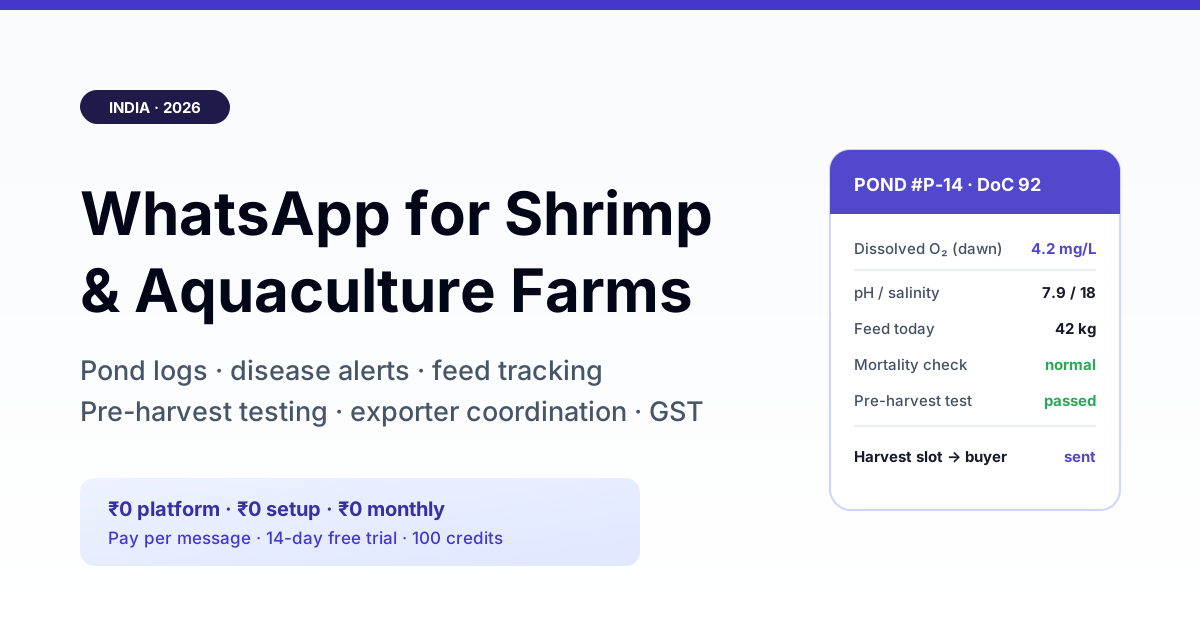
WhatsApp Business is the fastest way for shrimp and aquaculture farms in India to run a whole crop cycle from one number — hatchery seed booking, per-pond daily water-quality and feed logs, early disease alerts, pre-harvest antibiotic-test coordination, and harvest scheduling with processors and exporters. It turns scattered pond-side voice notes and a wall of personal chats into a tracked, timestamped record per pond that survives an audit and an export buyer's questions.
Quick answer: Use the official WhatsApp Business API (via a provider like RichAutomate) to run one farm number where your technicians log daily pond readings, share disease-alert photos, coordinate pre-harvest testing and post the harvest schedule to buyers — with every pond and crop conversation logged by pond ID and stage. Platform, setup and monthly are ₹0; you pay only per message plus Meta conversation charges.
Why aquaculture farms lose crops on personal WhatsApp
A pond boy sends a 5am voice note about surface-swimming shrimp. A hatchery messages that a post-larvae (PL) batch is ready two days early. An exporter asks for the pre-harvest antibiotic-test report before he confirms a price. On a personal number each of these lands with one person, the daily dissolved-oxygen and pH readings live in a paper diary that gets wet, and when a pond crashes nobody can reconstruct what the ammonia trend looked like the week before. A single missed disease alert can wipe a pond — the cost dwarfs anything on this page.
The official WhatsApp Business API fixes the plumbing under the chat. Multiple technicians and supervisors log into one farm number, every pond becomes a trackable thread tagged by pond ID and crop stage, and the routine touches — feed-schedule confirmations, water-test reminders, harvest-slot notices to buyers — send on a schedule. The same input-and-supply coordination we cover for agri-input dealers maps onto feed, PL and probiotic ordering for a farm.
The shrimp crop lifecycle on WhatsApp
Map every stage of a grow-out cycle to a WhatsApp touchpoint so nothing slips between stocking and harvest:
| Stage | WhatsApp action | Automated? |
|---|---|---|
| Seed / PL booking | Hatchery confirms PL batch, count + PCR test status against pond ID | Semi |
| Stocking | Stocking density + date logged; acclimatisation photo | Semi |
| Daily water quality | DO, pH, salinity, ammonia readings logged per pond each morning | Semi |
| Feed management | Feed-tray check + daily ration logged; low-stock reorder ping | Yes |
| Health / disease alert | Mortality or lesion photo shared; technician + consultant advise on thread | No |
| Pre-harvest testing | Antibiotic-residue / PCR sample booked with lab; report shared to buyer | Semi |
| Harvest scheduling | Harvest slot + expected count/size posted to processor + exporter | Yes |
| Payment + next crop | Weight-count reconciliation, payment follow-up, pond-prep reminder | Yes |
The stages that repeat every crop — the daily water-quality log, the feed reorder, the harvest-slot notice, the pond-prep reminder — are the ones worth automating first. The judgement calls (a disease diagnosis, whether to emergency-harvest) stay human on the same pond thread, with the photo and the reading history right there.
Per-pond daily logs — the crop-saver
The single most useful thing WhatsApp does for a farm is turn the morning pond round into a structured, timestamped record. Each technician sends dissolved oxygen, pH, salinity, temperature and ammonia against a pond ID; each reading is stamped and searchable. When a pond starts trending badly — oxygen dropping at dawn, ammonia climbing after a feed increase — the whole week's numbers are already on one thread for a consultant to read remotely, not trapped in a paper diary at the pond. The same cold-chain and storage discipline we cover for cold-storage and agri-warehouse operators applies once harvested shrimp moves to the processor.
Get a 1-minute BSP audit on WhatsApp
Drop your WhatsApp number — we line-item your current invoice against Meta India rates in under 60 seconds. India-hosted, DPDP-compliant.
Templates vs the 24-hour window
WhatsApp splits into two message types, and farms use both. Inside 24 hours of someone's last message you can reply freely with any text, photo or PDF — this covers the whole live pond-log and disease-alert conversation with your own team and consultants. Outside that window (a harvest-slot notice to an exporter you last spoke to a month ago, a pond-prep reminder for the next crop, a feed-price update to a farmer group) you must use a pre-approved template message.
Plan templates around the moments you re-open a cold conversation: harvest schedule confirmed, pre-harvest test report ready, PL batch available, next-crop pond preparation. These are utility or marketing templates depending on content; get the wording approved once and reuse across every buyer and pond. For a fuller breakdown of message categories and cost, see our guide on WhatsApp Business API pricing in India.
What it costs
Pricing below is illustrative — verify current rates as of 2026 on the pricing page before you commit, since Meta revises conversation charges periodically.
| Item | Client Pay | SaaS Pay |
|---|---|---|
| Platform fee | ₹0 | ₹0 |
| Setup | ₹0 | ₹0 |
| Monthly | ₹0 | ₹0 |
| Per message (platform) | ₹0.10 + Meta direct | Marketing ₹1.20 / Utility ₹0.30 |
| Free trial | 14 days + 100 credits | |
For a farm running a few dozen ponds across a season, the message volume is modest — most of it is internal team logging that stays inside the free 24-hour window. The cost that matters is the pond you don't lose to a missed alert, not the ₹0.30 harvest-notice template. Estimate your own monthly spend with the WABA cost calculator.
CAA, MPEDA, antibiotic rules and data — the boring-but-important bit
Coastal shrimp farming in India sits under the Coastal Aquaculture Authority (CAA) registration regime, and shrimp destined for export runs through MPEDA's pre-harvest testing and residue-control expectations — including a banned-antibiotic list (chloramphenicol, nitrofurans and others) that a single positive report can turn into a rejected consignment. Verify the current CAA registration status of your farm, the MPEDA/NRCP sampling requirements, and the banned-substance list as of 2026 with your consultant or the relevant authority — rules and thresholds change, and none of this is legal advice. WhatsApp helps by keeping your feed, probiotic and treatment log on one timestamped thread, so when a buyer or auditor asks "what went into this pond?", the answer is already recorded.
On data: you are storing farmer contacts, pond readings and lab reports. Under India's data-protection regime collect only what the crop needs, keep it on the official API rather than scattered personal phones, and honour deletion requests. Using the official WhatsApp Business API rather than a grey-market bulk tool keeps you compliant and off Meta's ban radar. No platform can guarantee against Meta quality or ban actions — good sending behaviour is your protection.
How to get started
You need a business number not currently on a personal WhatsApp app, a GST registration for going live, and a provider to connect the official API. RichAutomate handles the Meta onboarding, template approvals and the shared team inbox. Related reads: how spice exporters run the same test-report-to-buyer export cycle, and the broader breakdown of WhatsApp Business API pricing in India.
Start free — one number for every pond, log and harvest
14-day trial with 100 free credits. ₹0 platform, ₹0 setup, ₹0 monthly. Get your technicians and buyers on one official WhatsApp number this crop.
WhatsApp: 918160311319 · Book a demo: calendly.com/inrichdaddy/30min · Create account · See pricing