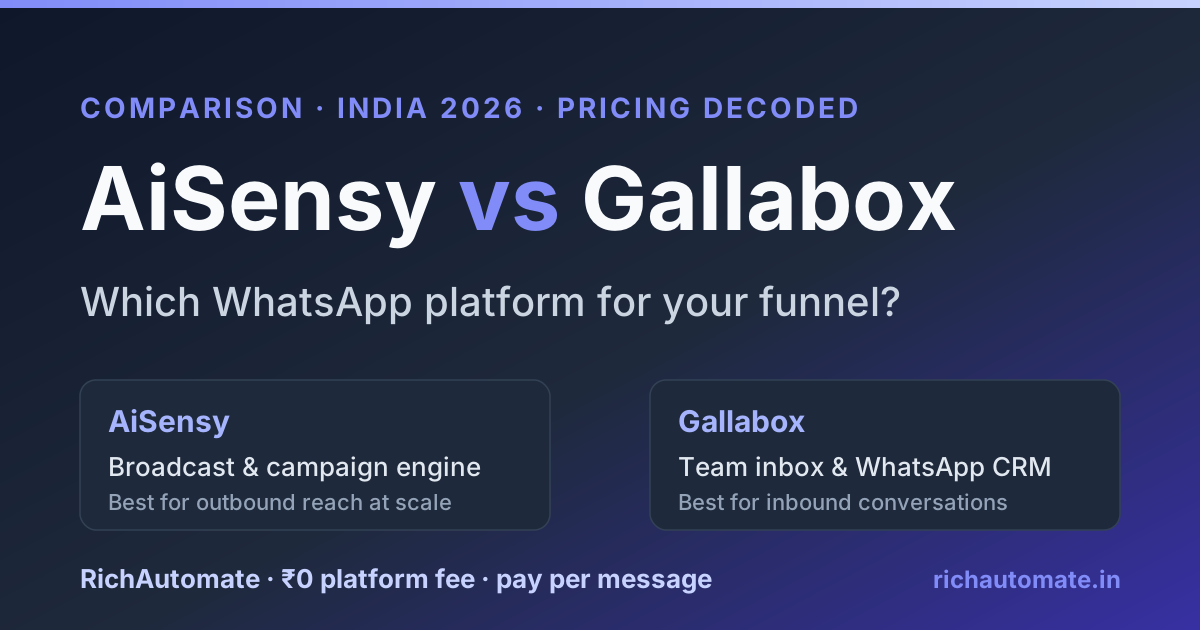
The short answer. AiSensy and Gallabox are both Indian WhatsApp Business platforms, and the fastest way to choose is by how you sell: AiSensy leans toward broadcast-and-campaign marketing at scale, while Gallabox leans toward a no-code shared team inbox with a WhatsApp CRM and drag-and-drop chatbots for conversational commerce. Both charge a monthly platform fee on top of Meta’s per-conversation WhatsApp charges, so your real bill is platform plan + WhatsApp usage. If you mainly blast promotional templates to large lists, AiSensy’s campaign tooling fits. If you mainly run two-way sales chats across a team, Gallabox’s inbox fits. If you want the official WhatsApp Business API with a ₹0 platform fee and pay only per message, RichAutomate is worth a look too. Treat every AiSensy and Gallabox figure as “as of 2026, verify on their site” and every Meta specific as something to confirm against the live 2026 position; all rupee figures are illustrative.
If you are comparing AiSensy and Gallabox, you are choosing between two of the most recognised Indian-built WhatsApp Business platforms — and the honest framing matters more than a feature checklist. Neither is “the WhatsApp API”; both are software layers that sit on top of Meta’s official WhatsApp Business API, add their own dashboard, chatbot builder and team tools, and charge a monthly fee for that software. This guide breaks down where each one genuinely wins, what the total cost looks like once Meta’s charges are added, and how to decide without a sales call.
AiSensy vs Gallabox at a glance
Both platforms are official Meta Tech/Business Solution partners serving Indian SMBs and D2C brands, and both bundle a no-code chatbot builder, template management and analytics. The difference is centre of gravity. AiSensy is built around broadcast marketing — sending approved template campaigns to large opted-in audiences, retargeting, click-to-WhatsApp ad funnels and campaign analytics. Gallabox is built around the conversation — a polished shared team inbox where multiple agents handle two-way chats, tag and assign contacts, and push data into a built-in WhatsApp CRM.
Put simply: AiSensy is a campaign engine that also does support; Gallabox is a support-and-sales inbox that also does campaigns. Most businesses need both, so the right question is which side is your daily bottleneck — outbound reach or inbound handling.
How the pricing actually works
Both follow the same two-layer model, and missing the second layer is how buyers under-budget:
Get a 1-minute BSP audit on WhatsApp
Drop your WhatsApp number — we line-item your current invoice against Meta India rates in under 60 seconds. India-hosted, DPDP-compliant.
- Platform fee — a monthly subscription to the software, usually tiered. AiSensy tiers historically gate features like the number of tags, team members, campaign scheduling and the green tick assist. Gallabox tiers historically gate agent seats, chatbot flows and CRM/automation depth. As of 2026, confirm current plans on aisensy.com and gallabox.com.
- WhatsApp conversation charges — Meta’s own per-conversation pricing, billed on top of whatever the platform charges. This is the same underlying Meta rate regardless of which platform you use, so it is not a real differentiator between AiSensy and Gallabox — but it is a large part of the true monthly bill.
So the honest comparison is platform plan + your expected WhatsApp volume. A team of six agents running heavy two-way chat will feel Gallabox’s per-seat tiers; a small team blasting large campaigns will feel AiSensy’s marketing tiers and template volume. Model your own numbers — our total-cost-of-WhatsApp-API breakdown walks through the full stack including Meta charges.
Where AiSensy wins
- Broadcast at scale. Campaign scheduling, audience segmentation and retargeting are first-class. If your growth engine is promotional template sends to a big opted-in base, this is its home turf.
- Click-to-WhatsApp ad funnels. Tight support for Meta ad-driven WhatsApp entry points and campaign attribution.
- Marketing analytics. Delivery, read and click reporting geared to campaign performance rather than agent productivity.
Where Gallabox wins
- Shared team inbox. A cleaner multi-agent experience — assignment, internal notes, canned replies and contact context in one pane.
- WhatsApp CRM. Built-in contact records, lifecycle tags and pipelines so sales conversations do not live only in a chat thread.
- No-code commerce flows. Drag-and-drop chatbot journeys aimed at catalogue, cart and order-status conversations.
The honest verdict: pick by your bottleneck
If your daily pain is reaching enough people — you have a list and need reliable, well-analysed campaign sends — AiSensy is the more natural fit. If your daily pain is handling the conversations you already get — a team drowning in chats that need assignment, context and follow-up — Gallabox is the more natural fit. Neither is wrong; they optimise for different halves of the funnel.
The trap is paying a rising monthly platform fee on the half you do not need. A campaign-heavy business paying for deep CRM seats, or a support-heavy team paying marketing-tier prices, both overspend.
Where RichAutomate fits
There is a third option that changes the cost equation: skip the platform fee entirely. RichAutomate is a self-serve WhatsApp Business API platform with ₹0 platform fee, ₹0 setup and ₹0 monthly — you pay only Meta’s per-message charge plus a transparent margin, with a no-code visual flow builder, team inbox and broadcast campaigns included rather than gated behind tiers. For a business that wants both broadcast and inbox without a per-seat subscription climbing every quarter, that is a materially different bill. Compare the two head-to-head in AiSensy vs RichAutomate and Gallabox vs RichAutomate, or browse the best AiSensy alternatives in India for the full field.
None of this is a knock on AiSensy or Gallabox — both are solid, well-supported Indian products, and for teams that value bundled onboarding and a specific tier that fits, either can be the right buy. The point is to price all three against your real volume before committing.
How to decide in one afternoon
- Write down your monthly WhatsApp volume (campaign sends + expected two-way conversations). This drives the Meta charge on every platform.
- Count the agents who need inbox access and the campaigns you send per month. That tells you which platform’s tiers you will actually hit.
- Get the current platform plan price from each vendor’s site (they change — verify in 2026).
- Add platform fee + Meta charges for each, and compare against a ₹0-platform option so you can see the fee you are paying purely for software.
Decide on total cost against your bottleneck, not on the longest feature list. The best WhatsApp platform is the one whose strong half matches the half of the funnel that is actually costing you customers.
Comparing Wati with Gallabox too? Our Wati vs Gallabox pricing breakdown shows which is cheaper for small teams.