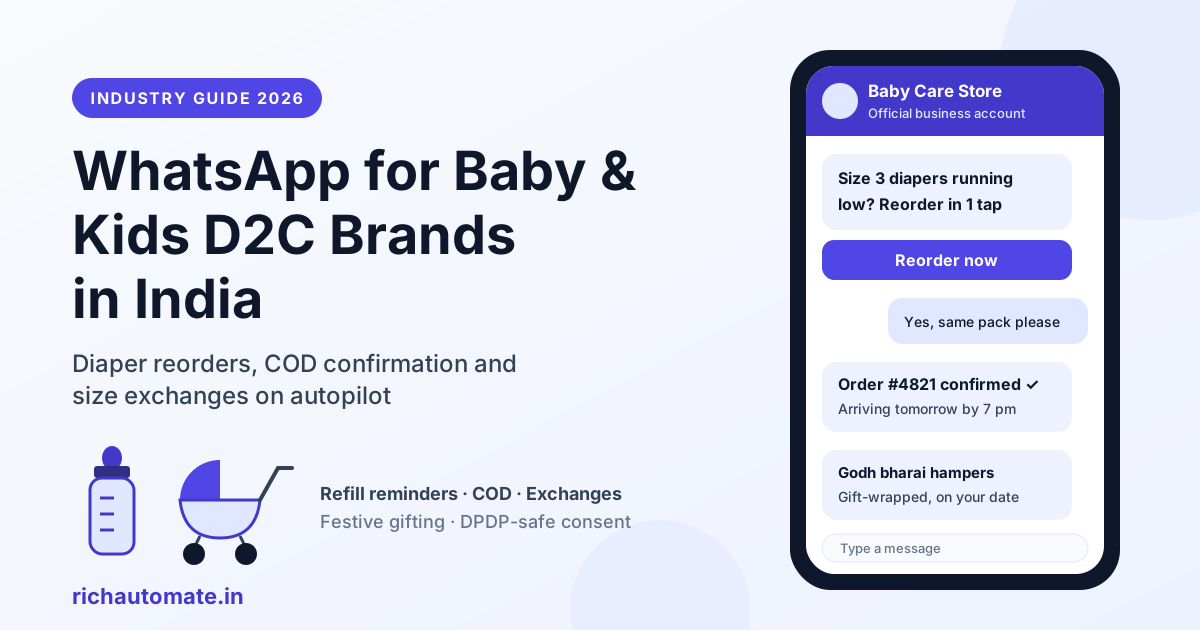
WhatsApp Business API lets Indian baby and kids D2C brands send diaper size-up and refill reminders timed to a baby's age, confirm COD orders, handle size exchanges and answer anxious parents in the app they already have open all day. The headline benefit is repeat revenue: mom-and-baby is a replenishment category, and a well-timed WhatsApp nudge turns a one-time diaper buyer into a monthly customer without paying to acquire the same parent again through ads.
This playbook covers the full lifecycle for diapers, baby skincare, feeding, baby clothing, maternity and mom-care, and kids apparel: an age-stage message calendar, sample templates with their Meta categories, what each message costs, a worked ROI example, and how to handle children's data under the DPDP Act 2023.
Why WhatsApp fits mom-and-baby D2C in India
Baby products behave differently from most D2C categories. The customer is a parent — often a first-time parent — who is short on sleep, cautious about anything that touches a newborn's skin, and buying on a predictable clock. A pack of newborn diapers runs out in days, not months. Baby wash, rash cream and formula get reordered on a cycle. Clothing sizes change every few months.
That predictability is exactly what WhatsApp automation is good at:
- Replenishment is time-based. If you know roughly when a pack was bought and the baby's stage, you know roughly when it will run out.
- Size changes are age-based. Diapers, onesies and kids' apparel all move up in size on a rough schedule — a natural moment to message.
- Trust is conversation-based. Parents ask questions before buying: Is this fragrance-free? Is it safe for a 2-month-old? Can I use it on eczema-prone skin? A real chat answers that better than an FAQ page.
- COD is still common. Many tier-2 and tier-3 parents prefer cash on delivery, which brings RTO risk that a WhatsApp confirmation step helps control.
Email gets opened rarely by this audience and SMS feels purely transactional. WhatsApp is where the parent already talks to family, the pediatrician's clinic and the housing society group — so a brand that shows up there helpfully gets remembered.
The baby-age journey: a message calendar
The strongest programmes map messages to the baby's stage instead of blasting the whole list with the same offer. Below is a starting calendar for a brand selling diapers, skincare, feeding and clothing. Treat the timings as illustrative and tune them to your own reorder data.
| Stage | Typical need | WhatsApp message | Meta category |
|---|---|---|---|
| Pregnancy, 7–9 months (due month shared with consent) | Hospital bag, maternity care, newborn starter kit | Hospital-bag checklist plus starter-kit offer | Marketing |
| Newborn, 0–1 month | Newborn diapers, gentle wash, swaddles | Order confirmation, delivery updates, how-to-use care tips | Utility (orders), Marketing (tips with offers) |
| 1–3 months | Size 1 to 2 diapers, rash cream refills | Refill reminder a few days before estimated run-out | Marketing |
| 3–6 months | Size 2 to 3 diapers, first clothing size-up | Size-up nudge with a trial pack | Marketing |
| 6–12 months | Feeding bottles, sippers, weaning | Pediatrician-reviewed weaning guide, feeding range launch | Marketing |
| 12–24 months | Size 4 to 5, pull-up pants, toddler apparel | Pull-up switch prompt, apparel size chart | Marketing |
| 2–6 years | Kids apparel, festive wear, toys | Festive collection, birthday reminder (with consent) | Marketing |
Every transactional message in that journey — order confirmed, shipped, out for delivery, exchange approved — is a utility message. Anything that promotes a product, even softly, is marketing. Meta decides the category at template review, so write each template for one clear purpose.
Diaper size-up and replenishment reminders
This is the single biggest revenue lever for most baby brands. Two kinds of reminders do the heavy lifting.
1. Refill reminders
Calculate a reorder window per SKU. A 64-count pack of Size 2 diapers at seven or eight changes a day lasts a little over a week; a 200 ml baby wash may last four to six weeks. Send the reminder two to three days before the estimated run-out, not after — a parent who runs out at 11 pm buys whatever the nearest chemist stocks, and you may lose that customer for good.
2. Size-up reminders
Babies change diaper size based on weight more than strict age, so frame the message as a question, not an instruction. Offer a small trial pack so the parent can test the next size without committing to a jumbo pack.
Sample template — size-up reminder (Meta category: Marketing)
Hi {{1}}, {{2}} is almost {{3}} months old! Many babies move to Size {{4}} around now — signs include red marks on the thighs or more leaks at night. Want a trial pack of 10 Size {{4}} diapers added to your next order? Tap “Add trial pack”, or reply STOP to pause these reminders.
Sample template — refill reminder (Meta category: Marketing)
Hi {{1}}, your {{2}} pack from {{3}} should be running low in the next few days. Reorder the same pack in one tap and get it delivered by {{4}}. Tap “Reorder now”.
Parents who reorder the same pack every month are natural candidates for a subscription. If you run one, our guide to WhatsApp for monthly D2C subscription boxes covers renewal, skip and pause flows that work just as well for diaper subscriptions.
Recover carts too. New parents browse late at night and often abandon checkout the moment the baby wakes up. A gentle reminder an hour later brings a good share of those orders back — see our abandoned cart recovery playbook for Indian D2C brands for timing and copy.
COD confirmation, delivery updates and size exchanges
Baby clothing and kids' apparel carry two operational headaches: cash-on-delivery refusals and size-related returns. WhatsApp handles both with utility messages.
COD confirmation
Before dispatching a COD order, send a confirmation with two quick-reply buttons. Confirmed orders ship; unconfirmed orders get one follow-up or a call; cancellations are stopped before you pay forward and reverse shipping.
Sample template — COD confirmation (Meta category: Utility)
Hi {{1}}, thank you for shopping with {{2}}! Your order #{{3}} for ₹{{4}} is Cash on Delivery. Please confirm so we can dispatch it today. Buttons: “Confirm order” and “Cancel order”.
We go deeper into button design, reminder timing and prepaid-conversion nudges in our guide to WhatsApp COD confirmation for RTO reduction.
Size exchanges
For clothing, the most common post-delivery message from a parent is some version of “it doesn't fit”. Instead of routing that to email, let the parent start the exchange in chat: they share the order number, pick the new size from a list and choose a pickup slot. Because the parent messaged first, you are inside the 24-hour customer-service window, and your replies there are free from Meta.
Sample template — exchange update (Meta category: Utility)
Hi {{1}}, your exchange for order #{{2}} is approved. We'll pick up the {{3}} on {{4}} and ship Size {{5}} the same day. Please keep the tags attached. Reply here if you need a different slot.
Add a size-chart button to the order confirmation as well, so fewer parents order the wrong size in the first place. For kids' apparel, a simple age-versus-height chart prevents a lot of exchanges.
Building trust with new parents
A first-time parent doesn't trust a brand because of an ad; they trust it because someone answered a worried question at 2 am without a sales pitch. A few practices build that trust on WhatsApp:
- Pediatrician-reviewed content only. If you share care tips — nappy rash, bath routines, starting solids — have them reviewed by a qualified pediatrician or dermatologist and say so. Never make claims your product labels don't support.
- Fast human handover. Let a chatbot handle order status and FAQs, but route anything about rashes, allergies or reactions to a trained human agent quickly. Don't diagnose in chat; suggest the parent consults their doctor.
- Ingredient transparency. Keep quick-reply options for “ingredients”, “fragrance-free?” and “safe from which age?” so every answer is consistent.
- Respect frequency. A parent with a newborn does not want three promotions a week. Cap marketing messages and make opt-out one tap.
- Handle sensitive moments. Build a way to switch off baby-stage messages instantly if a parent tells you something has gone wrong. One insensitive automated message can undo years of goodwill.
Opt-in plus consistently useful messages is what keeps your number's quality rating healthy. No provider can promise a number will never be restricted, but brands that message only parents who asked, and keep block rates low, rarely run into trouble.
Get a 1-minute BSP audit on WhatsApp
Drop your WhatsApp number — we line-item your current invoice against Meta India rates in under 60 seconds. India-hosted, DPDP-compliant.
Festive gifting: baby showers, godh bharai and naming ceremonies
Indian mom-and-baby brands have a gifting calendar on top of the replenishment calendar. Godh bharai and baby showers, naming ceremonies (naamkaran), annaprashan, first birthdays and festivals like Diwali and Raksha Bandhan all drive gift purchases — often by relatives who are not the parent.
- Gift hampers by occasion. Build curated catalogues — godh bharai hamper, newborn welcome kit, first-Diwali outfit — and share them as WhatsApp catalogue or carousel templates.
- Gift notes and delivery dates. Let the buyer add a personal note and choose a delivery date that matches the ceremony.
- Turn the gift into a customer. Put a QR code in the hamper that opens a WhatsApp chat with a welcome offer for the receiving parent. One gift becomes one new opted-in customer.
Sample template — festive gifting (Meta category: Marketing)
Hi {{1}}, planning a godh bharai or baby shower this season? Our {{2}} hamper has gentle skincare, soft muslin swaddles and a keepsake card — gift-wrapped and delivered on the date you choose. Tap “See hampers” to browse.
DPDP Act 2023 and children's data: consent done right
This is where baby brands need more care than almost any other D2C category. The Digital Personal Data Protection Act, 2023 treats anyone under 18 as a child. It requires verifiable consent from a parent or lawful guardian before processing a child's personal data, and it bars tracking, behavioural monitoring and targeted advertising directed at children. The DPDP Rules are phasing in the operational details, so build compliant flows now rather than retrofitting later.
The good news: in mom-and-baby commerce, the parent is your customer. You message the parent, about products the parent buys. But the baby's age, name or due date is still data about a child (or an unborn child), so treat it with extra care:
- Ask explicitly, for a stated purpose. “Share your baby's age so we can remind you when it's time for the next diaper size” — with a clear opt-in button or checkbox, never pre-ticked.
- Collect the minimum. Month and year of birth, or the expected month, is enough for size-up reminders. You rarely need the baby's full name or exact date of birth.
- Keep marketing aimed at the parent. Messages go to the adult customer about their purchase needs. Don't build ad audiences or behavioural profiles of the child, and don't use child data for lookalike targeting.
- Separate WhatsApp opt-in from data consent. Record the WhatsApp marketing opt-in (which Meta requires) and the consent to use baby-stage data as two separate, timestamped records.
- Make withdrawal easy. Replying STOP should stop marketing, and parents should be able to ask you to delete their baby's details and see it done.
- Restrict access. Only team members who need baby-stage fields in your CRM or inbox should see them.
This is general guidance, not legal advice — have your counsel review your consent text and data-retention policy before launch.
What it costs: message types, categories and pricing
Meta charges per template message based on its category. Customer-initiated conversations are the cheapest part: when a parent messages you and you reply within 24 hours, those service replies are free from Meta. Under Meta's 2025 pricing, utility templates sent inside an open customer-service window are also free.
RichAutomate has ₹0 setup and ₹0 monthly fee on pay-as-you-go. You choose how messages are billed:
- SaaS Pay — we pay Meta, you pay us: ₹1.50 per marketing message and ₹0.50 per utility message.
- Client Pay — you pay Meta directly on your own card, plus a ₹0.10 per message platform fee to us.
- Starter plan — ₹499/month if you prefer a fixed plan.
| Message | Example | Meta category | Cost on SaaS Pay |
|---|---|---|---|
| Size-up or refill reminder | “Size 3 diapers running low?” | Marketing | ₹1.50 |
| Festive or gifting campaign | Godh bharai hamper launch | Marketing | ₹1.50 |
| Order confirmation, shipping, delivery | “Order #4821 shipped” | Utility | ₹0.50 (free inside an open service window) |
| COD confirmation | Confirm and Cancel buttons | Utility | ₹0.50 |
| Exchange or return update | Pickup scheduled | Utility | ₹0.50, usually free when the parent messaged first |
| Reply to a parent's question within 24 hours | “Is this fragrance-free?” | Service | Free from Meta |
Full details, including Client Pay, are on our WhatsApp Business API pricing page.
Manual vs automated: an illustrative ROI example
Take an illustrative baby brand doing 3,000 orders a month, with around 60% on COD and an opted-in list of 4,000 parents. These numbers are a planning example, not a benchmark — plug in your own.
- COD confirmations: 1,800 × ₹0.50 = ₹900
- Order and shipping updates: 3,000 orders × 2 messages = 6,000 × ₹0.50 = ₹3,000 (lower in practice, since some land inside open service windows)
- Refill and size-up reminders: 4,000 parents × 2 a month = 8,000 × ₹1.50 = ₹12,000
- Total: about ₹15,900 a month on SaaS Pay
On the other side of the ledger: if just 8% of reminded parents reorder at an average of ₹1,100, that's 320 orders and roughly ₹3,52,000 in repeat revenue. And if confirmation stops even 100 COD parcels from going RTO, at ₹150–200 of wasted forward and return shipping each, that saves ₹15,000–20,000 — close to the entire messaging bill on its own.
| Task | Manual (team and phone) | Automated on WhatsApp |
|---|---|---|
| COD verification | Calling 1,800 customers, many unanswered | Button confirmation; team calls only non-responders |
| Refill reminders | Rarely done; relies on the parent remembering | Triggered per SKU run-out window |
| Size-up nudges | Not feasible at scale | Triggered from consented baby age |
| Order status questions | Agents check tracking and reply one by one | Bot answers from order data 24x7 |
| Exchanges | Days of email back-and-forth | In-chat size pick and pickup slot |
| Gifting season | One broadcast to everyone | Segmented by occasion and past purchase |
Setting it up: a 7-day launch plan
- Day 1 — Connect your number. Sign up, connect a dedicated WhatsApp Business number through Meta's embedded signup and start business verification.
- Day 2 — Connect your store. If you sell on Shopify, follow our Shopify WhatsApp integration setup guide so orders, COD status and shipping events flow in automatically.
- Day 3 — Submit utility templates. Order confirmation, COD confirmation, shipped, out for delivery and exchange update.
- Day 4 — Build consent capture. Add the WhatsApp opt-in and a separate baby-stage consent at checkout and in your welcome flow.
- Day 5 — Submit marketing templates. Refill, size-up and festive gifting — each with an opt-out line.
- Day 6 — Build the chatbot. FAQs on ingredients, sizing and age suitability, order status, the exchange flow and a human handover for health questions.
- Day 7 — Soft launch. Switch on utility flows for all orders and reminders for a small segment; watch replies, blocks and reorders before scaling up.
Start your baby brand's WhatsApp journey
RichAutomate gives Indian D2C brands the WhatsApp Business API with a shared team inbox, a no-code flow builder for size-up and refill journeys, and COD confirmation — with ₹0 setup and ₹0 monthly fee on pay-as-you-go. Start free on RichAutomate and send your first COD confirmation this week.