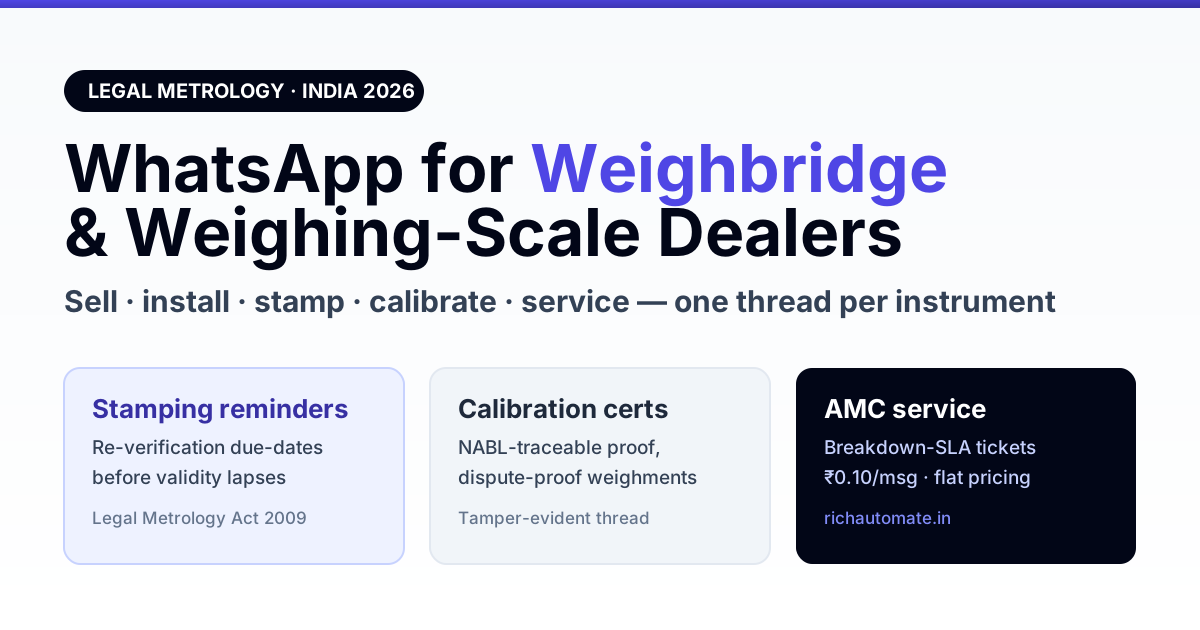
Yes — a weighbridge and industrial weighing-scale dealer can run the whole business on WhatsApp in India: capacity-and-spec enquiries, quotes, dispatch with e-Way Bill, installation and Legal Metrology stamping coordination, calibration certificates, and AMC breakdown service — one auditable thread per instrument. The single most valuable automation is the stamping / re-verification due-date reminder: a weighing instrument used in trade must carry a valid Legal Metrology verification stamp, and a lapsed stamp makes every weighment legally invalid — so the reminder that keeps a customer compliant is also the reminder that keeps the customer yours.
This 2026 guide covers the regulatory spine (Legal Metrology Act 2009 and its General Rules 2011, dealer/repairer licensing, BIS/OIML accuracy class, NABL-traceable calibration, GST and e-Way Bill), the six-stage sell-install-service lifecycle on WhatsApp, the automation stack that keeps a dealer's orders and service tickets moving, and the DPDP carve-outs for customer and site data. Figures and rules are directional — verify current Legal Metrology provisions, stamping validity and thresholds for your state and instrument class.
Why a weighing-instrument dealer wins on service response and stamping compliance
A weighbridge or weighing-scale dealer is not a one-time seller — the money is in the installed base. Every dharamkanta, platform scale, batching-plant load cell and jewellery balance you sell needs periodic Legal Metrology re-verification, calibration, and eventually spares and service. The deciding factor between you and the next dealer is how fast you respond when a weighbridge dies (trucks queue, the plant stops billing) and whether you remind the customer before their stamping lapses instead of after a Legal Metrology inspector does.
The old way — a service diary, stamping dates in a register, breakdown calls to a mobile that is switched off on site — leaks exactly the recurring revenue that makes this business profitable. A structured WhatsApp Business API workflow keeps the quote, the dispatch document, the initial stamping proof, the calibration certificate, and every service ticket in one thread per instrument — and fires the re-verification reminder automatically, so renewal service comes to you.
The regulatory spine (verify for your state and instrument class)
- Legal Metrology Act 2009 + Legal Metrology (General) Rules 2011 — a weighing instrument used in trade or commerce needs model approval and mandatory verification & stamping by the Legal Metrology department before use, plus periodic re-verification/re-stamping (validity commonly one year for many instruments — verify per state and class). Using an unverified or expired-stamp instrument in trade is an offence.
- Dealer / repairer licence — selling, or repairing/servicing, weighing and measuring instruments generally requires a Legal Metrology dealer/repairer licence (verify your state's requirement and renewal).
- BIS / OIML accuracy class — weighing instruments are built and rated to a standard accuracy class (e.g. Class III for most trade weighbridges — verify applicability and any QCO).
- Calibration & traceability — beyond legal stamping, industrial customers often need a NABL-traceable calibration certificate for their own quality/audit needs (this is separate from statutory Legal Metrology verification).
- GST + e-Way Bill — instrument sale is goods; installation/AMC/repair is a service or works contract — the split affects invoicing (verify current rates and HSN/SAC). Dispatch above the threshold needs an e-Way Bill.
- DPDP Act 2023 — customer contacts, site locations and service history are personal/commercial data (see the carve-out below).
The one that protects the customer — and the account
A trade weighbridge with a lapsed Legal Metrology stamp is not just non-compliant; every weighment it prints is legally challengeable, which is a live dispute risk for the customer's own buyers and sellers. Fire an automated reminder into the instrument's thread before the stamping validity expires, book the re-verification service, and log the new stamping proof back into the same thread. That single reminder converts a compliance duty into recurring service revenue — and makes you the dealer the customer never leaves.
The six-stage sell-install-service lifecycle on WhatsApp
1. Enquiry and spec-matched quote
Buyers ask for a "50-tonne weighbridge" without the details that set the price. A WhatsApp Flow captures the real spec — capacity in tonnes, platform length, pit vs pitless, load-cell type and count, accuracy class, indoor/outdoor — so you quote right the first time instead of after three phone calls. Enquiries from Google, IndiaMART and site boards land in one shared inbox and get an instant, structured response.
Get a 1-minute BSP audit on WhatsApp
Drop your WhatsApp number — we line-item your current invoice against Meta India rates in under 60 seconds. India-hosted, DPDP-compliant.
2. Order confirmation, site-readiness and dispatch
On confirmation, send the civil-foundation / site-readiness checklist (pit dimensions, RCC cure time, power, earthing) into the thread so the customer's site is ready when your team arrives — the most common install delay. Dispatch goes out with the invoice and e-Way Bill attached to the same thread.
3. Installation and Legal Metrology stamping coordination
Installation, commissioning and the initial Legal Metrology verification/stamping are coordinated in-thread, and the stamping certificate/proof is logged against the instrument. The customer now has a timestamped record that their weighbridge went live legally verified — and you have the anchor date for the next re-verification reminder.
4. Calibration certificate and weighment-accuracy proof
Where the customer needs NABL-traceable calibration for their own audits, the calibration certificate and test-load results go into the thread, timestamped. This tamper-evident record settles the classic "your scale is reading wrong" dispute with evidence, not an argument, and protects both sides.
5. AMC and breakdown-SLA service tickets
A dead weighbridge means trucks queue and the plant cannot bill — so breakdown response is the retainer. Customers raise a service ticket in the thread, get a technician ETA, and receive the service-report photo-log and invoice on close. AMC customers get scheduled preventive-service reminders before things fail.
6. Re-verification reminders, spares and renewal
Automated template reminders fire before Legal Metrology stamping validity lapses, before AMC renewal, and when consumables/spares (load cells, indicators, printer rolls) are due. A dealer's cheapest business is the re-verification, AMC renewal and spares reorder from an installed base that already trusts your service — WhatsApp is how you never miss that window.
What "best" means for a weighing-instrument dealer
| Dealer need | What to look for |
|---|---|
| Spec-matched quoting | WhatsApp Flow intake for capacity, platform, load-cell, accuracy class |
| Document handling | Quotes, invoices, e-Way Bills, stamping proofs, calibration certs in a per-instrument thread |
| Stamping compliance | Automated re-verification due-date reminders per installed instrument |
| Service uptime | Breakdown-SLA tickets with technician ETA and photo-logged service reports |
| Multi-desk operation | Shared inbox across sales, installation and service desks |
| Predictable cost | Flat per-message pricing, not per-seat SaaS that taxes a field-service team |
RichAutomate fits this shape: structured Flows, a shared inbox, opted-in reminder broadcasts and flat pricing — see the full pricing. Dealers who also want the statutory-calibration side of the story can read our guide for NABL calibration & testing labs, and the pre-packaged-declaration slice of the same Act in the Legal Metrology packaged-goods playbook.
The automation stack
- Spec-intake Flow — capacity, platform, load-cell, accuracy class as structured data.
- Document delivery in-thread — quotes, invoices, e-Way Bills, stamping proofs, calibration certificates.
- Re-verification & AMC reminders on approved templates, per installed instrument.
- Breakdown-SLA ticketing — technician ETA, service-report photo-log, closure invoice.
- Shared inbox across sales, installation and service desks.
- CRM/asset-register sync so every instrument's stamping date and service history stays in one place.
The same field-service-and-reorder discipline that keeps an industrial MRO distributor's counter moving, and the dispatch-document rigor a construction-material dealer or switchgear dealer relies on, applies directly to weighing-instrument sales and AMC.
DPDP Act 2023: customer and site data
Customer contacts, site locations, stamping schedules and service history are personal and commercial data. Under the DPDP Act 2023, a weighing-instrument dealer should:
- Take consent before adding a customer to a reminder/broadcast list, and honour opt-outs.
- Collect only what the sale and service need (purpose limitation) — instrument spec, site, contact — not extra personal data.
- Restrict who can open service and calibration records — shared-inbox role controls help.
- Set a retention limit on old service and stamping records beyond the legal/tax need.
- Keep an append-only consent and access trail — the same record that also settles a weighment dispute.
Broadcast responsibly: reminder blasts to customers who never opted in are the fast way to a WABA strike, not more renewals. And be honest — no WhatsApp workflow can promise "no ban" for unsolicited sends.
Bottom line
A weighbridge and weighing-scale dealer wins on service response and stamping compliance and loses on a leaky service diary, and a WhatsApp Business API workflow fixes both: spec-matched quotes and dispatch documents on one side, automated re-verification reminders, calibration certificates and breakdown-SLA tickets on the other — one auditable thread per instrument. Start with a spec-intake Flow and a stamping-reminder template; layer calibration certificates and AMC ticketing next. RichAutomate runs it on flat per-message pricing with no platform fee, so cost scales with your installed base, not with the size of your field-service team.
Related reading: WhatsApp for CNG & LPG Retrofit Kit Dealers 2026 walks through the same WhatsApp setup for a neighbouring use case.