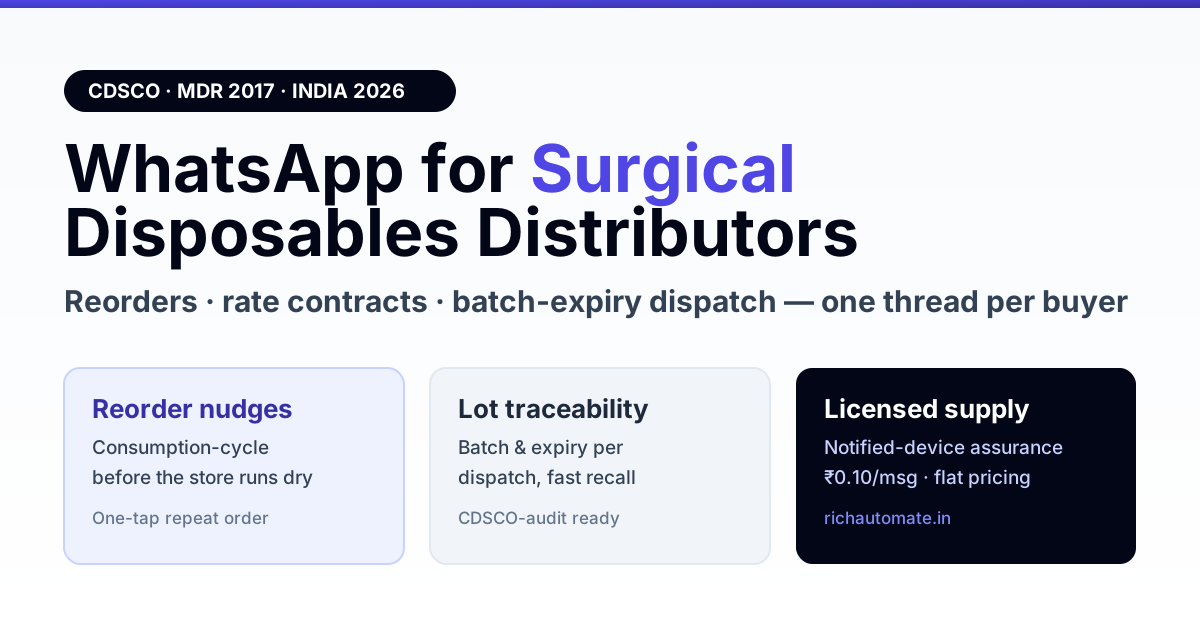
Yes — a surgical and medical disposables distributor can run the whole supply operation on WhatsApp in India: hospital and clinic reorders, rate-contract quotes, dispatch with batch/expiry and e-Way Bill, and lot-recall notices — one auditable thread per buyer. The single most valuable automation is the consumption-cycle reorder nudge: gloves, syringes, IV sets, sutures and dressings burn down on a predictable rhythm, and the distributor who messages "your usual 20 boxes of nitrile gloves are due — reorder?" the day before a hospital store runs dry is the distributor who keeps that account.
This 2026 guide covers the regulatory spine (CDSCO Medical Device Rules 2017, wholesale licence MD-42, risk classification, batch/expiry and sterilization control, GST and e-Way Bill), the six-stage source-supply-reorder lifecycle on WhatsApp, the automation stack that keeps a disposables distributor's orders and recall thread moving, and the DPDP carve-outs for hospital-buyer data. Figures and rules are directional — verify current CDSCO Medical Device Rules provisions, licence categories and notified-device lists for your product range and state; this is not legal advice.
Why a disposables distributor wins on reorder speed and lot traceability
A surgical-disposables distributor is not a one-time seller — the money is in the reorder cycle. Every box of examination gloves, every bag of IV cannulas, every roll of surgical tape a hospital consumes has to be replaced on a tight, repeating rhythm, and the buyer will reorder from whoever makes it frictionless. The deciding factors between you and the next distributor are how fast you turn a store-in-charge's "send the usual" into a confirmed dispatch, and whether you can trace a batch and expiry to the exact hospital in minutes when a lot is recalled or questioned.
The old way — reorders on phone calls that go unanswered, batch numbers in a paper challan book, recall notices chased ward by ward — leaks exactly the recurring revenue and the compliance safety that make this business defensible. A structured WhatsApp Business API workflow keeps the price list, the rate-contract quote, the dispatch note with batch and expiry, and the reorder nudge in one thread per buyer — and fires the consumption-cycle reminder automatically, so the repeat order comes to you before the buyer thinks about calling anyone else.
The regulatory spine (verify for your product range and state)
- CDSCO Medical Device Rules 2017 (MDR-2017) — surgical and medical disposables are notified medical devices and are risk-classified Class A / B / C / D (low to high risk — e.g. many dressings Class A, syringes/cannulas/catheters higher). Manufacture, import and sale are regulated by the Central Drugs Standard Control Organisation (CDSCO) and State Licensing Authorities. Verify the current class and notification status for each item you carry.
- Wholesale / distribution licence — selling or distributing notified medical devices generally requires the applicable CDSCO licence (commonly Form MD-42 for wholesale/distribution of Class A/B; imported devices ride on the importer's MD-15). Verify which licence your product range and role need, and its renewal.
- Batch, lot, expiry & sterilization control — sterile single-use disposables carry a batch/lot number, manufacture and expiry dates and a sterilization method; these must be tracked through your stock and onto every dispatch document so any lot can be traced and recalled.
- UDI & labelling — Unique Device Identification and labelling requirements are being phased in for notified devices; align your records with the current UDI timeline for your device classes.
- BIS / QCO — certain devices fall under BIS standards or Quality Control Orders; confirm applicability for what you stock.
- GST + e-Way Bill — disposables are goods; verify the current GST rate and HSN for each category, and raise an e-Way Bill for dispatches above the threshold.
- DPDP Act 2023 — hospital and clinic buyer contacts, order history and rate contracts are personal and commercial data (see the carve-out below).
The one that protects the patient — and the account
When a manufacturer recalls a lot of syringes or IV sets, the distributor has to identify every buyer who received that batch and pull it, fast. If your dispatch notes with batch and expiry live in one WhatsApp thread per buyer, that recall is a filtered search and a broadcast to the affected accounts — minutes, with an auditable trail — instead of days of paper-chasing. The same batch-traced thread that protects patients is the record that protects you in a CDSCO or hospital audit.
The six-stage source-supply-reorder lifecycle on WhatsApp
1. Enquiry, rate contract and quote
Hospitals and nursing homes buy on rate contracts and tenders, not ad-hoc. A WhatsApp Flow captures the real line items — product, size, sterile/non-sterile, quantity, pack size — so you quote the rate-contract price correctly the first time. Enquiries from hospital stores, IndiaMART and field reps land in one shared inbox and get an instant, structured response instead of a delayed callback.
Get a 1-minute BSP audit on WhatsApp
Drop your WhatsApp number — we line-item your current invoice against Meta India rates in under 60 seconds. India-hosted, DPDP-compliant.
2. Order confirmation and stock allocation
On a confirmed purchase order, the order is logged against the buyer and stock is allocated. Because disposables move fast and expiry matters, first-expiry-first-out picking is confirmed in-thread, so the buyer knows they are getting stock with adequate shelf life — the complaint that quietly loses accounts.
3. Dispatch with batch, expiry and e-Way Bill
Dispatch goes out with the invoice, the batch/lot and expiry details for each line, and the e-Way Bill, all attached to the same thread. The buyer's store-in-charge now has a timestamped record of exactly which lots landed and when — the anchor for both goods-receipt and any future recall.
4. Consumption-cycle reorder nudge (the money stage)
This is where a disposables distributor makes its margin. Based on the buyer's usual order rhythm, an automated template nudges the reorder before the store runs dry — "your monthly nitrile gloves and IV sets are due, reply to confirm the usual." A one-tap repeat order beats every competitor who waits for the phone to ring, and it is the difference between a supplier and a habit.
5. Batch, expiry and lot-recall management
Near-expiry stock at the buyer's end gets a proactive swap-or-use reminder; a manufacturer recall triggers a filtered notice to exactly the accounts that received the affected lot, logged in-thread. This is the traceability that turns a compliance obligation into a trust advantage — buyers stay with the distributor who caught the recall for them.
6. Statement, new-product and licence-assurance broadcast
Monthly ledger statements, new-product and price-revision notices, and CDSCO-licence / notified-device assurance go out on opted-in templates to the buyers who want them. In a market with counterfeit and non-notified devices, being the distributor who can show a valid licence and genuine, notified stock on demand is a closing argument, not a footnote.
What "best" means for a surgical-disposables distributor
| Distributor need | What to look for |
|---|---|
| Rate-contract quoting | WhatsApp Flow intake for product, size, sterile/non-sterile, pack size, quantity |
| Document handling | Quotes, POs, invoices, e-Way Bills, batch/expiry dispatch notes in a per-buyer thread |
| Reorder capture | Consumption-cycle template nudges with one-tap repeat order |
| Lot traceability | Batch/expiry logged per dispatch, filterable for fast recall notices |
| Multi-desk operation | Shared inbox across sales, dispatch and accounts |
| Predictable cost | Flat per-message pricing, not per-seat SaaS that taxes a field-sales team |
RichAutomate fits this shape: structured Flows, a shared inbox, opted-in reorder broadcasts and flat pricing — see the full pricing. Distributors who also carry equipment or medicines can read our guides for medical-equipment rental & home care and the pharma distributor stock-management playbook, which shares the same reorder-and-batch discipline.
The automation stack
- Rate-contract intake Flow — product, size, sterile/non-sterile, pack size, quantity as structured data.
- Document delivery in-thread — quotes, POs, invoices, e-Way Bills, batch/expiry dispatch notes.
- Consumption-cycle reorder nudges on approved templates, per buyer's order rhythm.
- Batch/lot recall broadcast — filtered to the exact accounts that received an affected lot.
- Shared inbox across sales, dispatch and accounts desks.
- CRM/stock sync so every buyer's batch history and reorder schedule stays in one place.
The same batch-traced dispatch and reorder rigor that keeps an industrial & medical gas distributor's cylinders accounted for, and the spec-intake discipline a lab-equipment dealer relies on, applies directly to surgical-disposables supply and reorder.
DPDP Act 2023: hospital and buyer data
Hospital and clinic buyer contacts, order history, rate contracts and batch-supply records are personal and commercial data. Under the DPDP Act 2023, a disposables distributor should:
- Take consent before adding a buyer to a reorder/broadcast list, and honour opt-outs.
- Collect only what the order and supply need (purpose limitation) — product, quantity, delivery point, contact — not extra personal data.
- Restrict who can open rate-contract and buyer records — shared-inbox role controls help.
- Set a retention limit on old order records beyond the legal/tax and traceability need.
- Keep an append-only consent and access trail — the same record that also proves batch-recall diligence.
Broadcast responsibly: reorder blasts to buyers who never opted in are the fast way to a WABA strike, not more orders. And be honest — no WhatsApp workflow can promise "no ban" for unsolicited sends.
Bottom line
A surgical and medical disposables distributor wins on reorder speed and lot traceability and loses on a leaky order book and paper batch records, and a WhatsApp Business API workflow fixes both: rate-contract quotes and batch/expiry dispatch notes on one side, automated consumption-cycle reorder nudges and lot-recall notices on the other — one auditable thread per buyer. Start with a rate-contract intake Flow and a reorder-nudge template; layer batch-traced dispatch and recall broadcasts next. RichAutomate runs it on flat per-message pricing with no platform fee, so cost scales with your order volume, not with the size of your field-sales team.