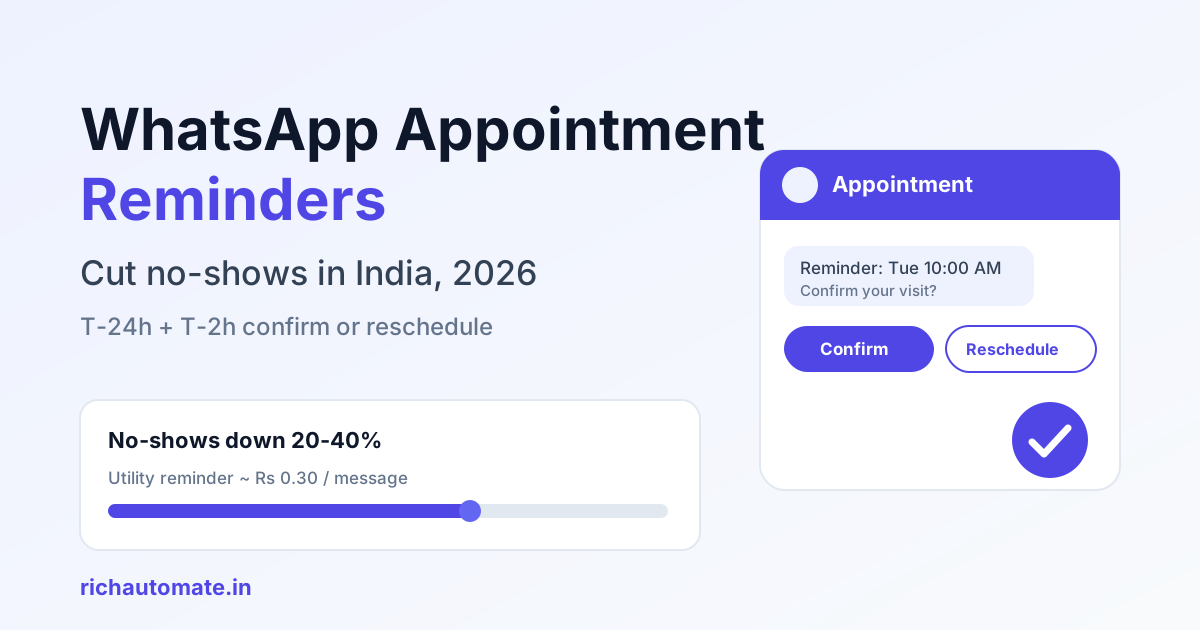
WhatsApp appointment reminders cut no-shows because they land on the one channel almost every Indian patient or client opens within minutes, and they let people confirm or reschedule with a single tap instead of ghosting the slot. A two-message sequence, one at T-24 hours and one at T-2 hours, with confirm and reschedule buttons, typically trims no-shows into the 20 to 40 percent relative-reduction band that clinics, salons and diagnostic labs report after they switch off SMS-only reminders.
This guide is about the reminder cadence and the no-show math, not about capturing the booking in the first place. If you still need the booking flow, see the companion piece on WhatsApp appointment booking automation. Here we assume the appointment already exists and focus on getting the person to actually show up.
Why no-shows happen and why WhatsApp fixes them
No-shows are rarely deliberate. Most are forgetfulness, a clashing plan, or a person who meant to cancel but had no easy way to do it. The appointment sat in your calendar and in nobody else's. A reminder solves the memory problem; a confirm-or-reschedule button solves the second problem by turning a silent no-show into a booked cancellation you can backfill.
Across Indian service businesses, no-show rates typically sit in the 10 to 30 percent band. Walk-in-heavy clinics and diagnostic labs skew higher, especially for morning fasting tests and follow-up visits. Salons and spas cluster in the middle. Coaching centres see spikes around exam season and fee-cycle dates. The exact figure matters less than the pattern: every empty slot is capacity you paid for and cannot resell after the fact.
WhatsApp works where SMS stopped working. Open and read rates on WhatsApp are far higher than promotional SMS in India, and the two-way thread means a reminder is not a dead-end blast. The person can reply, tap a button, or ask a question, and your team sees it in the same conversation.
What a no-show actually costs you
Put a number on the problem before you spend anything fixing it. The cost of one no-show is the revenue of the empty slot plus the staff time held in reserve for it, minus the tiny cost of the reminder that could have saved it. The reminder itself is cheap: an appointment reminder is a Meta-approved utility template billed at roughly ₹0.30 per message on RichAutomate, with ₹0 setup and ₹0 monthly, usage only.
| Business | Avg slot value | No-show rate (typical) | Reminder cost (T-24h + T-2h) | Net saved per rescued slot |
|---|---|---|---|---|
| Dental clinic | ₹800 | 18% | ₹0.60 | ₹799.40 |
| Diagnostic lab (fasting test) | ₹600 | 25% | ₹0.60 | ₹599.40 |
| Salon / spa service | ₹1,200 | 15% | ₹0.60 | ₹1,199.40 |
| Coaching demo / counselling | ₹500 | 22% | ₹0.60 | ₹499.40 |
The two-message sequence costs ₹0.60 for the whole appointment. Against a slot worth hundreds of rupees, the reminder pays for itself the moment it rescues one appointment in several hundred. Even a modest relative reduction in no-shows returns many multiples of the reminder spend.
The T-24h plus T-2h reminder cadence
Two reminders beat one, and they beat five. One reminder at T-24 hours gives the person time to reschedule if the day no longer works. A second at T-2 hours catches the same-day slippage: the person who confirmed yesterday but is now stuck at work or in traffic. More than two reminders reads as nagging, raises block risk, and adds cost without adding attendance.
| Timing | Purpose | Buttons | What it prevents |
|---|---|---|---|
| T-24 hours | Confirm intent, allow easy reschedule | Confirm · Reschedule | Day-clash no-shows, forgotten bookings |
| T-2 hours | Final nudge, share location / prep | On my way · Reschedule | Same-day slippage, running late |
Adjust the second reminder to the vertical. A fasting blood test needs its nudge the evening before with prep instructions, so a T-12h reminder often replaces T-2h. A salon appointment does fine with the standard T-2h. Coaching demos benefit from a T-1h reminder with the video-call link. The principle holds: one reminder to reschedule, one to actually turn up.
Keep the reminder short and specific
Name the person, the service, the date, the time and the place. Then give the two buttons. A reminder that reads like a paragraph gets skimmed and ignored. The details a person needs to decide are the date, whether they can still make it, and how to change it if they cannot.
Confirm and reschedule buttons do the heavy lifting
The reminder text reduces forgetting. The buttons reduce the silent no-show. When a person taps Reschedule at T-24 hours, you learn the slot is free in time to offer it to your waitlist. That converts a dead loss into a filled slot, which is where most of the recovered revenue actually comes from.
Wire the buttons to real actions. Confirm marks the appointment confirmed and stops further reminders. Reschedule either opens a slot picker or hands the thread to your front desk. Never send a button that leads nowhere; a broken Reschedule tap trains people to ignore the next reminder.
Get a 1-minute BSP audit on WhatsApp
Drop your WhatsApp number — we line-item your current invoice against Meta India rates in under 60 seconds. India-hosted, DPDP-compliant.
Channel comparison: SMS vs WhatsApp vs phone call
Reminder channels are not interchangeable. The phone call has the highest attention but the worst economics and the worst scale. SMS scales but gets ignored and cannot carry a tap-to-reschedule button. WhatsApp sits in between on cost and ahead on engagement, which is why most reminder programmes migrate to it.
| Channel | Typical open / answer | Two-way + buttons | Cost per reminder | Scales to hundreds/day |
|---|---|---|---|---|
| Phone call (manual) | Highest when answered | Yes, but staff-bound | Staff minutes | No |
| SMS | Low, often unread | No interactive buttons | Per-SMS carrier rate | Yes |
| WhatsApp (utility template) | High open, high reply | Yes, confirm / reschedule | ~₹0.30 utility | Yes, automated |
The realistic setup for a busy clinic or salon is WhatsApp for the automated sequence and a phone call reserved only for high-value slots that go silent after both reminders. That keeps staff time on the appointments most worth chasing.
Opt-in and template approval come first
You cannot send reminders to people who never agreed to receive them, and the reminder template has to be approved before it can go out. Collect opt-in at the point of booking with a clear line that says reminders will come on WhatsApp. Keep the opt-in list clean, because stale or bought numbers drive blocks and template quality drops. The companion guide on opt-in list hygiene and re-permissioning covers how to keep that list healthy.
Submit the reminder as a utility template in the appointment-reminder category, not marketing. Utility templates carry the ₹0.30 rate and clear review more predictably when the content is strictly transactional. If your template gets bounced, the usual causes are promotional language or missing variables; the template rejection fixes guide walks through the common bounces. Clinics running higher volumes should also read the notes on WhatsApp API for clinics.
Watch the 24-hour window and your costs
Reminders are template messages, so each one is billed whether or not the person had an open conversation window. But once a person replies to your reminder, a 24-hour service window opens, and any follow-up you send inside it (a rescheduled time, a location pin, a prep note) is free-form and not separately template-billed. Structuring your reschedule flow to happen inside that window keeps costs down. The mechanics are covered in the 24-hour window cost optimization guide.
On RichAutomate the reminder itself is the utility rate of about ₹0.30 per message, with a ₹0.10 per-message platform fee on the Client Pay model, ₹0 setup and ₹0 monthly. Budget two utility messages per appointment for the standard cadence and you have your reminder cost per booking.
Measure the reduction, do not assume it
Track no-show rate before and after, on the same day-of-week and season, so you are comparing like with like. The single number that matters is no-shows as a percentage of confirmed appointments, measured over a full cycle of at least four weeks. Layer on button-response rate, because a rising Confirm rate is the leading indicator that attendance is about to improve.
A practical dashboard has four numbers: reminders sent, confirm taps, reschedule taps, and actual attendance. Reschedule taps are not failures; they are slots you saved from silent loss and can now backfill. If your reschedule taps are near zero, your button is probably not wired to a real action and people are giving up on it.
Vertical notes: clinics, dentists, salons, spas, coaching, labs
Dental and medical clinics get the most out of a T-24h plus T-2h cadence with a clear reschedule path, since a large share of their no-shows are follow-ups. Diagnostic labs should move the second reminder earlier and pack it with fasting or prep instructions. Salons and spas do well with the standard cadence plus a warm, on-brand tone. Coaching centres should attach the demo or class link to the final reminder and time it to about one hour before. Spas with high-value slots are the clearest case for a human call as the final fallback after both automated reminders go unanswered.
Start with your busiest reminder day
You do not need to reminder-enable your whole calendar on day one. Pick your single busiest appointment day, turn on the T-24h and T-2h sequence for it, and measure the no-show rate against the same day last month. Once the number moves, roll the cadence across every service. Reminders are usage-only, so there is no upfront cost to test the idea on one day of bookings.
Set up WhatsApp appointment reminders on RichAutomate and run the two-message cadence on your next busy day. ₹0 setup, ₹0 monthly, and utility reminders at about ₹0.30 each, so your only real cost is the slots you stop losing.