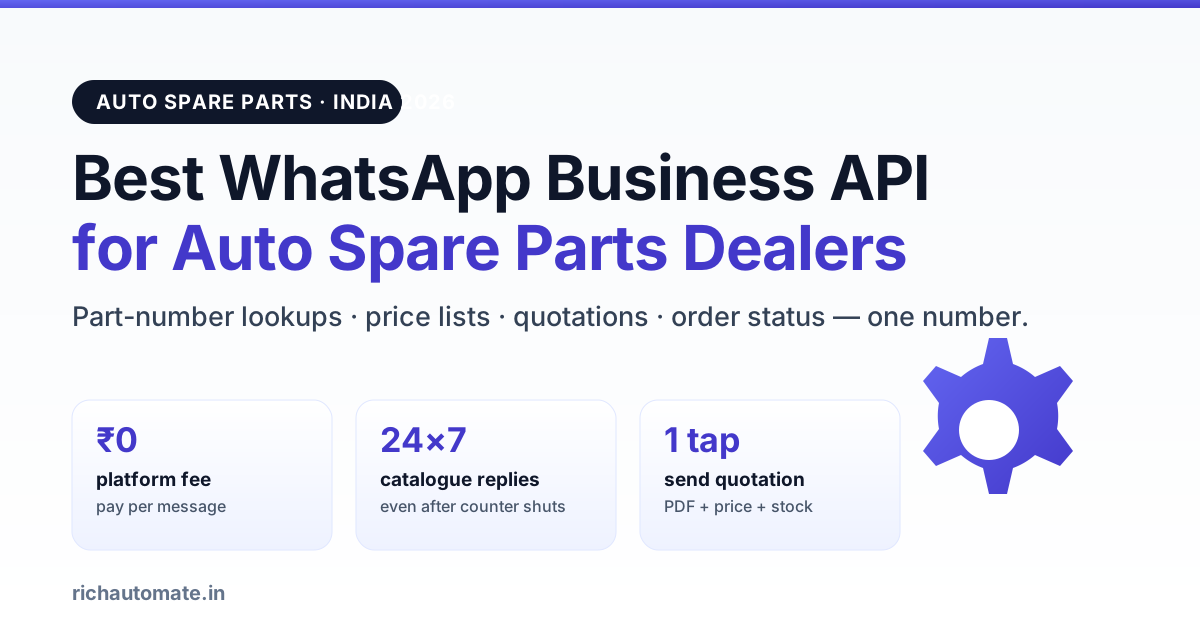
The best WhatsApp Business API for auto spare parts dealers in India in 2026 is one that turns a chaotic day of part-number lookups, "bhai stock hai?" pings and photo-based enquiries into one searchable, automated number — without a per-agent SaaS licence eating your margin. For most parts traders and distributors that means a provider with catalogue browsing, quick-reply price lists, quotation templates and order-status updates, billed strictly per message on Meta's Cloud API rather than a fat monthly platform fee.
Spare parts retail runs on speed and accuracy. A mechanic wants to know if you have a specific OEM number right now; a garage owner wants a rate list before the vehicle is on the ramp; a fleet buyer wants a formal quotation on letterhead. Miss the reply by twenty minutes and the order goes to the shop next door. WhatsApp is already where these conversations happen — the API just makes them answerable at scale, after hours, and without ten staff phones.
Why auto parts dealers need WhatsApp API, not a personal WhatsApp
A normal WhatsApp Business app caps out fast. One number, one device, no automation, and a hard ceiling on how many people you can broadcast to. Once you cross a few hundred daily enquiries — common for any dealer stocking two-wheeler, commercial-vehicle or multi-brand car parts — you hit walls:
- Part-number chaos. The same enquiry ("do you have 90915-YZZE1?") lands on three different staff phones and gets three different answers — or none.
- Lost after-hours enquiries. Garages message at 9pm when they close a job. A manual counter can't reply; an automated one sends the price and stock instantly.
- No broadcast. New stock arrival, a price revision, a festive discount on filters and brake pads — you can't legally blast that to 5,000 buyers from a personal number without a ban.
- Zero record. Quotations sent from personal chats vanish. No CRM, no follow-up, no idea which buyer went cold.
The WhatsApp Business API fixes all four: one business number, many agents, automated first-response, compliant broadcast templates, and a searchable history of every quotation. Like steel and TMT dealers and tractor dealers, parts traders live in a rate-list-and-availability world where the API's catalogue and quotation flows fit like a glove.
The 6 features that actually matter for a spare parts business
Ignore the feature-list arms race. For a parts dealer, only these move the needle:
1. Product catalogue + part-number search
Buyers browse a WhatsApp-native catalogue of fast-movers (filters, brake pads, clutch plates, bearings, belts) with photos, MRP and your rate. For the long tail of part numbers, an automated flow lets a buyer type or paste a number and get back stock status and price — no human needed for the routine 60% of enquiries.
2. Quick-reply price lists by category
A garage messages "brake pads Swift" — an interactive list menu fires back variants, prices and availability in one tap. This alone deflects the single most common enquiry type in the trade.
3. One-tap quotation templates
Fleet and workshop buyers want a formal quote. A pre-approved template merges buyer name, part lines, rate, GST and total into a clean PDF-style message — sent in one tap instead of typed out each time.
4. Order + dispatch status updates
"Dispatched via VRL, LR number 4471, expected Tuesday." Automated status templates cut the endless "kahan pahuncha?" calls and build trust with out-station buyers.
Get a 1-minute BSP audit on WhatsApp
Drop your WhatsApp number — we line-item your current invoice against Meta India rates in under 60 seconds. India-hosted, DPDP-compliant.
5. Compliant broadcast for new stock & price revisions
Segment buyers (two-wheeler / car / CV / garages / retailers) and broadcast new arrivals or revised rate lists through approved marketing templates — legal, opt-out-aware, and far higher-opened than SMS or email.
6. Multi-agent shared inbox
Counter staff, the quotation desk and the owner all work the same number with assignment and internal notes — no more "which phone had that chat?"
Best WhatsApp Business API providers for auto parts dealers (2026)
The India market splits into two camps: pure BSPs (Business Solution Providers) that charge a monthly platform fee on top of Meta's own message charge, and pay-per-message platforms that add zero platform markup. For a margin-sensitive parts business doing volume, the second camp usually wins.
| Provider type | Typical pricing | Catalogue + quotation | Best for |
|---|---|---|---|
| Legacy BSP (per-seat SaaS) | ₹2,000–₹15,000+/mo platform fee + Meta charges | Yes, but gated behind higher tiers | Large distributors with a marketing budget |
| Mid-market BSP | ₹999–₹5,000/mo + Meta charges + per-agent add-ons | Partial | Multi-branch dealers |
| RichAutomate (pay-per-message) | ₹0 platform fee, ₹0 setup, ₹0 monthly | Yes, included | Any parts dealer that wants margin-safe scale |
RichAutomate pricing for parts dealers — no platform fee
₹0 platform fee. ₹0 setup. ₹0 monthly. You choose how messages are billed:
- Client Pay: ₹0.10 per message + Meta's own conversation charge, billed at cost.
- SaaS Pay: ₹1.20 per marketing conversation / ₹0.30 per utility conversation, all-in.
Start on the 14-day free trial + 100 free credits, connect your existing dealership number, and only pay for messages you actually send. Full rates on the pricing page.
What a real dealer WhatsApp flow looks like
Here is a typical automated path once the API is live on your counter number:
- Buyer messages your number (from your visiting card, a Google Business profile, or a Click-to-WhatsApp ad).
- The bot greets and offers: Browse catalogue · Check a part number · Get a quotation · Track my order · Talk to counter.
- "Check a part number" → buyer sends the number → automated stock + price reply. In stock: option to add to a quotation. Out of stock: option to be notified on arrival.
- "Get a quotation" → collects part lines → fires the approved quotation template with GST and total.
- Anything non-routine ("need a discount", "bulk order", "wrong part supplied") routes to a human agent in the shared inbox.
The routine majority is handled in seconds, 24×7; your staff only touch the enquiries that actually need a human. The same pattern powers dealers in adjacent trades — see how online stores wire catalogue-to-order on WhatsApp.
GST, invoicing and compliance notes
Auto parts attract GST (commonly 18% or 28% depending on the part), so quotations and invoices sent over WhatsApp must carry correct HSN codes and tax breakup. To run the WhatsApp Business API on a verified business number for live commercial use, a GST registration is effectively required as part of Meta Business verification — plan for it before you go live, not after. A trial can start without full verification, but sustained sending and green-tick eligibility depend on a verified, GST-backed business identity. (GST slabs and verification rules current as of 2026 — confirm the exact rate for your part category with your CA.)
How to get started in a week
- Pick your number. A dedicated dealership number is best; a fresh number not already on personal WhatsApp is ideal for API onboarding.
- Business verification. Keep GST, trade licence and business proof ready for Meta verification.
- Build the catalogue. Start with your top 50–100 fast-movers; add the long tail over time.
- Approve templates. Quotation, order status and price-revision broadcast templates go for Meta approval (usually same-day).
- Go live. Print the number on cards, invoices and your Google profile; add a Click-to-WhatsApp button to any ads.
Put your parts counter on autopilot
Stop losing after-hours enquiries and quotation follow-ups to the shop next door. RichAutomate gives auto spare parts dealers the full WhatsApp Business API — catalogue, part-number lookup, one-tap quotations and compliant broadcast — with ₹0 platform fee and a 14-day free trial. Start at richautomate.in/pricing or explore more dealer playbooks on the blog.
Dealers who also supply off-highway and mining fleets run a heavier version of this loop, with machine serials and consignment stock in the mix — see WhatsApp for mining equipment spares and service in India.