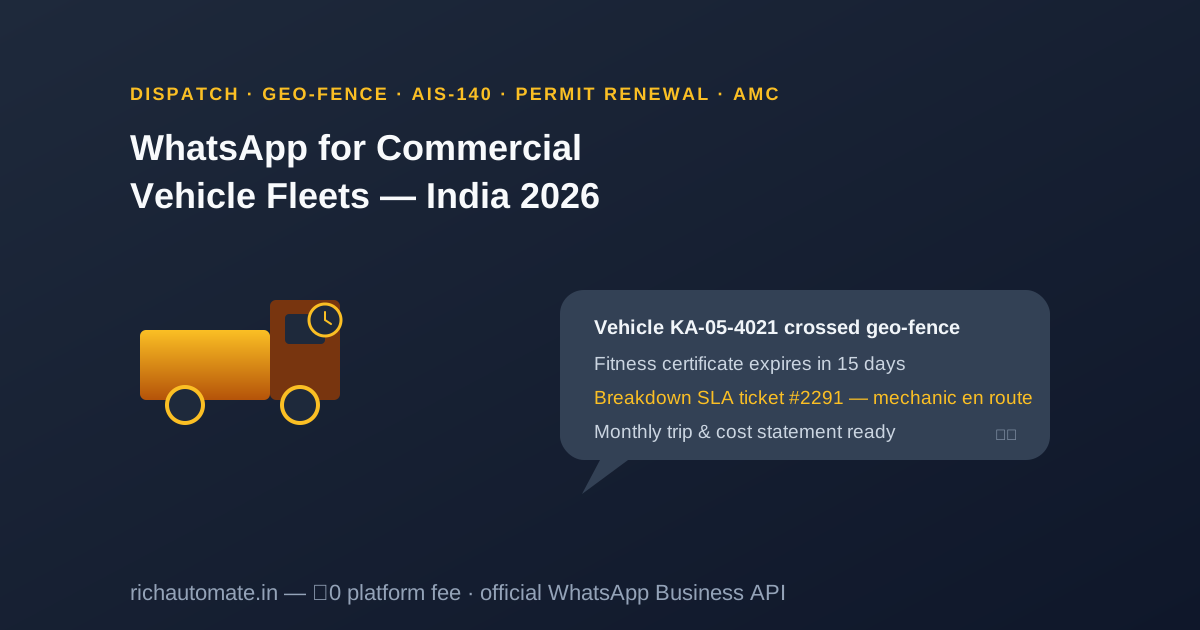
The short answer. A commercial-vehicle fleet doesn't lose money when a truck breaks down - it loses money when nobody in the office knows it broke down until the driver calls three hours late, or when a permit lapses and the vehicle gets impounded on a highway checkpost the fleet owner never saw coming. WhatsApp on the official Business API turns the phone every driver already carries into the fleet's nervous system: a trip-dispatch alert the moment a vehicle is assigned, a live-location and geo-fence-breach thread while it's on the road, a permit/fitness/insurance/PUC renewal reminder weeks before expiry (the compliance engine that keeps a truck off the impound list), an instant breakdown SLA ticket when something goes wrong, and a monthly trip-and-cost statement the owner can read without opening a dashboard. A 40-vehicle fleet runs the whole loop for roughly ₹1,800-2,800 a month on RichAutomate's ₹0-platform model (illustrative below). Compliance first: MoRTH AIS-140 GPS/VLT mandates, permit/fitness/PUC/insurance renewal rules, e-Way Bill and FASTag reconciliation, and state motor-vehicle rules all bind - verify current requirements before you rebuild dispatch and compliance around this.
A fleet owner doesn't find out a permit lapsed from a dashboard - they find out from a call from a highway checkpost, with a loaded truck sitting there and a driver who doesn't know what to say.
Why WhatsApp fits commercial-vehicle fleet operations
Fleet software is built for the office; drivers live on WhatsApp. A telematics dashboard can show a geo-fence breach in real time, but if nobody is staring at the screen at 2am, it doesn't matter - a WhatsApp alert to the dispatcher's phone does. Renewal dates for permits, fitness certificates, insurance and PUC sit buried in a spreadsheet until someone remembers to check; a WhatsApp reminder thread 30/15/3 days out turns a silent deadline into a document a driver can forward back in one tap. And when a truck breaks down on a highway 200km from the yard, the fastest path to a mechanic isn't a support ticket - it's a message the ops team sees the second it lands.
| Stage | What happens | WhatsApp job | Category |
|---|---|---|---|
| 1. Trip assignment | Vehicle and driver assigned to a load | Dispatch alert with route, load details, ETA target | Utility |
| 2. Live tracking | Vehicle en route | Live-location share + ETA updates + geo-fence-breach alert (money message) | Utility |
| 3. Fuel/toll reconciliation | Trip completes | FASTag/fuel-card/toll spend summary against the trip | Utility |
| 4. Compliance renewal | Permit, fitness, insurance or PUC nearing expiry | Renewal reminder + document-upload thread (the compliance engine) | Utility |
| 5. Breakdown/service | Vehicle issue on-road or due for AMC | Breakdown SLA ticket + nearest-service-point dispatch + AMC scheduling | Utility |
| 6. Driver onboarding | New driver or vehicle joins the fleet | KYC collection + AIS-140 device-install confirmation | Utility |
| 7. Monthly billing | Month closes | Trip count + cost statement pushed to the fleet owner/client | Utility |
The compliance-renewal reminder - the money message
Every other alert on this list saves time. This one saves the vehicle. A truck stopped at a checkpost with a lapsed fitness certificate or an expired permit isn't a paperwork inconvenience - it's an impounded vehicle, a stranded load, a penalty, and a client who doesn't care whose fault it was. A WhatsApp thread that pings the fleet manager and the specific vehicle's file 30, 15 and 3 days before a permit, fitness certificate, insurance policy or PUC certificate expires - with a one-tap "upload renewed document" reply - is the cheapest insurance a fleet operator can buy against a truck sitting idle at the roadside for the wrong reason. This is the message worth building correctly before the rest.
Regulator + compliance spine (verify everything)
- MoRTH AIS-140 (GPS/VLT + panic-button mandate) - public-service and several categories of commercial vehicles are required to run AIS-140-compliant vehicle-location tracking devices with an emergency panic button, feeding data to a state/central command centre; device certification and rollout rules vary by vehicle category and state - verify current applicability before claiming AIS-140 compliance in a template.
- Permit, fitness, insurance and PUC renewals - RTO-issued permits, periodic fitness certificates, third-party/comprehensive insurance and Pollution Under Control certificates all run on separate expiry cycles under the Motor Vehicles Act framework; a lapsed document is a roadside liability, not just an admin gap - keep the renewal calendar current and verified per vehicle.
- e-Way Bill and FASTag reconciliation - GST e-Way Bill requirements for goods movement and FASTag-based toll/fuel reconciliation both generate data an automation can summarise, but the underlying compliance obligation (raising a correct e-Way Bill, GST treatment of freight) sits with the fleet/shipper, not the messaging layer.
- State motor-vehicle and transport rules - route permits, overloading rules and state-specific transport-department requirements differ by state and change without much notice - verify current rules with your RTO/transport consultant rather than assuming a national default.
- DPDP Act 2023 - driver KYC, live-location and vehicle-tracking data is personal data requiring purpose limitation and retention limits; don't retain location history longer than the operational or compliance need requires. See the DPDP checklist.
The carve-out - what the bot must never do
The automation sends dispatch alerts, shares live-location links, pushes renewal reminders and logs breakdown tickets. It must never certify a vehicle as AIS-140-compliant, roadworthy or permit-valid on its own - that's a document a human must verify and upload; never suppress or delay a compliance-renewal alert to avoid "bothering" an owner; never share a driver's live-location data with anyone outside the fleet's own dispatch chain; never promise a breakdown response time the ops team hasn't actually committed to; and never message a client or driver who hasn't opted in with anything beyond operational trip updates. A permit renewal, an insurance claim, or a route-safety call is always a human decision - the bot only carries the reminder and the document, never the judgment.
Get a 1-minute BSP audit on WhatsApp
Drop your WhatsApp number — we line-item your current invoice against Meta India rates in under 60 seconds. India-hosted, DPDP-compliant.
What it costs - illustrative math on RichAutomate
A 40-vehicle fleet running dispatch alerts, live-tracking pings, fuel/toll reconciliation summaries, compliance reminders and monthly statements generates roughly 6,000-9,000 utility messages a month across trips, renewals and driver threads, with most in-thread replies riding free inside the 24-hour service window. Occasional client-facing marketing (a service-expansion or referral push to shippers) adds a small marketing-conversation cost on top. On Client Pay: ₹0 platform fee + ₹0.10/message with Meta's conversation charges billed direct; on SaaS Pay: ₹1.50 per marketing conversation / ₹0.50 per utility conversation, all-in. Monthly cost lands around ₹1,800-2,800 on Client Pay for a 40-vehicle fleet - a fraction of what one impounded truck or one missed breakdown costs in downtime. Verify current Meta rates; full workings in the cost breakdown and Client Pay vs SaaS Pay guide. 14-day trial, 100 free credits, ₹0 platform/setup/monthly.
The conversation window cost calculator shows how the 24-hour window changes your per-conversation spend.
One-week rollout
- Day 1-2: Official WhatsApp Business API on the fleet's dispatch number; trip-assignment template wired to the existing telematics/TMS feed.
- Day 3: Live-location share + geo-fence-breach alert template, tested against one route before full rollout.
- Day 4: Compliance-renewal reminder templates (permit/fitness/insurance/PUC) submitted for Meta approval, mapped to each vehicle's actual expiry calendar.
- Day 5: Breakdown SLA ticket template + nearest-service-point routing; AMC service-due reminders for vehicles under contract.
- Day 6-7: Pilot on 5-10 vehicles, verify reconciliation and monthly-statement templates against real trip data, then roll to the full fleet.
Who fits this / who doesn't
RichAutomate fits a regional or mid-size fleet operator (10-200 vehicles) running trucks, buses or cabs on contract who wants dispatch, compliance-renewal and breakdown alerts live on WhatsApp without building a custom driver app. A large national fleet already running an integrated TMS with its own driver app may only need WhatsApp bolted on as the renewal-reminder and breakdown-alert layer rather than a full rebuild. A single-owner-operator with one or two vehicles and no dispatch office won't see much lift - a personal reminder app covers that case better. Related reading: the fleet-card fuel reconciliation guide, the 3PL freight coordination guide, the DPDP checklist, and the cost breakdown.
Standing honesty line: no platform - ours included - can promise a ban-proof WhatsApp number, and for a fleet the real risk was never a ban, it's a truck stopped at a checkpost with a document nobody tracked. Keep the thread to dispatch, compliance and breakdowns; keep every safety and legal call with a human. Start the 14-day free trial or see pricing.