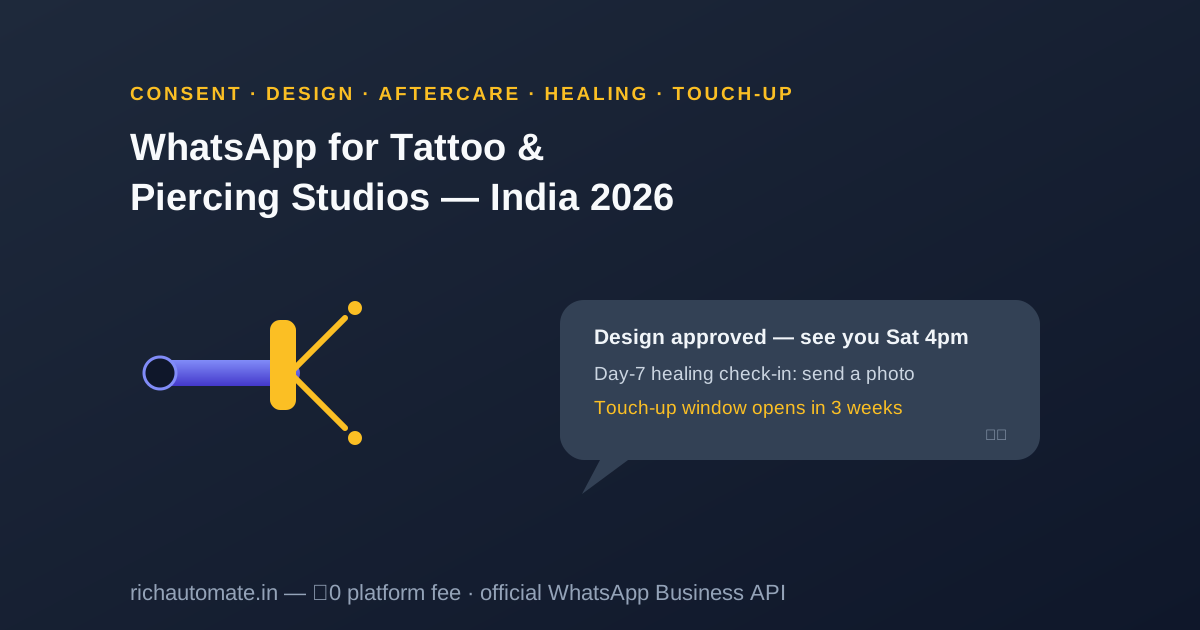
A tattoo and piercing studio in India runs its whole client journey on the official WhatsApp Business API: a walk-up enquiry sends reference images into one chat, an artist replies with a design consult and a quote, the client locks the slot by paying a booking deposit through a WhatsApp Flow, signs a digital aftercare-consent form before the needle touches skin, and is then carried through a timed healing-aftercare reminder sequence and pulled back later for a touch-up and a referral. That single lifecycle turns a busy body-art studio — where every serious enquiry starts with a photo and every booking should carry a deposit — into a tracked pipeline where no design thread, no consent record and no touch-up window leaks to a missed DM. Figures here are directional; verify current licensing, hygiene, consent and GST rules with the relevant municipal and state authorities.
Why a tattoo & piercing studio is a natural WhatsApp business
Body art is a visual, deposit-driven, younger-demographic business — and every part of that maps cleanly onto WhatsApp. A tattoo enquiry is never "what time are you open"; it is a reference photo, a placement, a size and a budget, which is exactly the kind of image-rich thread a chat app carries and a phone call cannot. India's tattoo and piercing market is small but fast-growing, concentrated in metros and college towns and expanding into tier-2 cities as body art loses stigma among under-30s (directional — verify current sizing with an industry source before quoting it). The two things that leak money in a studio are unqualified enquiries that never convert — a DM asking "how much for a tattoo?" with no reference — and no-shows on unpaid slots, where an artist blocks four hours for a client who never arrives. WhatsApp fixes both: a structured image-intake thread qualifies the design, and a deposit Flow makes the booking real. The same appointment-and-deposit discipline that our WhatsApp salon-at-home booking playbook brings to beauty services applies directly to a chair that bills by the hour.
The 5-stage body-art lifecycle on WhatsApp
Map every stage of the client journey to a WhatsApp touchpoint and the studio funnel stops leaking:
- 1. Design enquiry + reference-image thread: a Click-to-WhatsApp ad, an Instagram "message" button or a QR sticker in the studio opens a chat where the client sends reference images, describes placement, size and style, and shares a rough budget — a qualified brief the artist can quote against, instead of a vague "how much?" that goes nowhere.
- 2. Consult + quote + booking deposit: the artist reviews the references, replies with a design direction and a price range, and a WhatsApp Flow collects the booking deposit that locks the slot. A deposit-secured booking is the single biggest defence against the no-show that wastes an artist's whole afternoon.
- 3. Appointment + aftercare-consent form: before the session, a second Flow captures the consent form — age confirmation, medical flags (allergies, blood conditions, pregnancy), and acknowledgement of the aftercare and risk disclosure — as a timestamped digital record. Anyone under 18 is turned away or routed to explicit guardian consent, never quietly booked.
- 4. Session + healing-aftercare reminder sequence: after the session, a timed sequence of utility reminders carries the client through healing — day-1 wrap removal, first-wash instructions, day-3 and day-7 moisturising and "do not pick" nudges, and a "send a photo if anything looks off" check-in. This is where a studio's reputation is actually made or lost, and a phone call never delivers it on schedule.
- 5. Touch-up + referral / loyalty re-engagement: once healed, nudge the free or discounted touch-up window, invite a review or a healed-tattoo photo, and re-engage with a referral or loyalty offer for the next piece. Body art is a repeat and word-of-mouth business, and this is the re-engagement engine that turns one tattoo into a lifetime client and three referrals.
The consent-and-reminder half of this funnel behaves much like a clinic's appointment lifecycle — structured intake, a signed form and timed follow-ups — mapped in our WhatsApp appointment-lifecycle playbook for clinics, while the deposit-and-rebooking mechanics mirror the WhatsApp pet-grooming salon booking pattern.
The regulatory spine: what shapes your templates and consent form
A body-art studio sits at the intersection of local health law, consumer protection and tax. Build these into your templates and consent Flow from day one, and verify the current position with the relevant authority — the rules are largely local and state-specific:
- Municipal health / trade / sanitation licence: tattoo and piercing studios generally need a local municipal trade licence and are subject to health and sanitation inspection; requirements differ city to city, so confirm your municipal corporation's exact licensing and renewal terms.
- State hygiene & infection-control norms: single-use sterile needles, autoclaving, biomedical-waste disposal and artist hygiene are governed by state health rules and biomedical-waste norms; keep your sterilisation and waste-disposal records, because they are what an inspection and a serious client both want to see.
- Informed consent (Consumer Protection Act, 2019): a documented, timestamped consent covering the design, the risks and the aftercare is your defence against a "deficiency of service" complaint. The WhatsApp consent Flow is exactly the transparent, retrievable record this points toward.
- No minors without guardian consent: tattooing or piercing a minor without verified guardian consent is a serious exposure. Bake an age gate into the consent Flow — anyone under 18 is stopped and routed to explicit guardian consent, never booked on a self-declared age.
- GST on body-art services: tattoo and piercing services attract GST, and jewellery or aftercare products sold alongside are goods with their own treatment. Show the split on the invoice and get your exact classification and rate confirmed by a qualified tax professional.
- No medical advice by the bot: healing guidance is aftercare, not clinical diagnosis. Keep the bot strictly on studio aftercare instructions and, for any sign of infection, tell the client to see a doctor — never let automation give medical advice.
Handling client and body-image data the DPDP way
A studio's chat threads hold some of the most sensitive data a small business collects — reference and body-part photos, a signed consent with medical flags, and age or guardian details. The Digital Personal Data Protection Act, 2023 treats this as personal data deserving real care (verify the current DPDP Rules and their commencement as they roll out through 2026):
Book a WhatsApp booking demo
See how brands run bookings, reminders, and re-engagement on WhatsApp — DPDP-compliant, India-hosted. Book a 15-minute demo.
- Reference & body photos are sensitive: design references and body-part images plus a consent form carrying medical flags are sensitive personal data. Take clear opt-in, state why you hold them, and set a strict retention limit — do not keep a permanent gallery of clients' bodies beyond what the touch-up and your records genuinely need.
- Purpose limits & access control: a guest artist should see only the job in hand, not the whole client archive. Use an API stack with role-based access, not a shared studio WhatsApp group where every hand sees every client's photos and consent.
- Explicit guardian consent under 18: for any client under 18, hold verified guardian consent and keep it separate and auditable; never rely on a self-declared age in a chat.
- Consent for re-contact & erasure: touch-up, referral and loyalty messages need a lawful basis and an easy opt-out; keep healing reminders (utility) separate from marketing offers, and honour a client's request to access or erase their photos and record.
The automation tech stack
Three building blocks on the official API run the whole lifecycle:
The customer LTV calculator shows what a retained customer is worth before you set the spend.
- WhatsApp Flows for deposit & consent: one Flow collects the booking deposit that locks the slot, and a second captures the aftercare-consent form — age gate, medical flags and risk acknowledgement — in-chat, with no app install and no web redirect.
- Image-thread intake: the reference-image enquiry lands directly in a structured thread the artist quotes against, so a photo-first business runs on a photo-first channel.
- Utility templates for reminders: deposit and appointment confirmations, the timed healing-aftercare sequence and touch-up-window nudges are transactional and sit in the cheaper utility category. Keep referral, loyalty and flash-design offers in the marketing category, which needs prior opt-in.
The same booking-Flow, consent and rebooking pattern powers adjacent appointment verticals — see the best WhatsApp Business API for salons, spas and wellness chains for how a chair-based, deposit-taking studio picks a provider.
What a WhatsApp setup costs a tattoo & piercing studio on RichAutomate
RichAutomate runs on the official Meta WhatsApp Business API with ₹0 platform fee, ₹0 setup and ₹0 monthly — you pay only for messages. Two models:
- Client Pay — ₹0.10 per message plus Meta's conversation charges billed to you directly at cost by Meta.
- SaaS Pay — ₹1.50 marketing / ₹0.50 utility per message, all-inclusive on one INR GST invoice, tiering down toward ₹0.50 at volume.
Because most studio traffic — deposit and appointment confirmations, the healing-aftercare sequence and touch-up reminders — is utility, the running cost stays low even for a studio doing several bookings a day across artists. Going live on the official API needs a verified business, and in India GST is effectively required to move a WhatsApp Business Account to live status, so treat it as necessary, not optional. See the full WhatsApp Business API pricing breakdown for the per-conversation maths. A 14-day free trial with 100 free credits lets a studio pilot a deposit Flow and an aftercare-reminder sequence before committing.
Run your tattoo & piercing studio on WhatsApp
From reference-image design enquiries and a deposit Flow that kills no-shows, to a digital aftercare-consent form with a built-in under-18 gate, to a timed healing-reminder sequence and touch-up and referral re-engagement — RichAutomate runs it all on the official Meta WhatsApp Business API at ₹0 setup, ₹0 monthly, ₹0 platform fee. Client Pay is ₹0.10/message plus Meta's rates billed direct at cost; SaaS Pay is ₹1.50 marketing / ₹0.50 utility all-inclusive. Start with a 14-day free trial and 100 free credits, or book a 30-minute walkthrough. This is general information; verify current municipal-licensing, hygiene, consent, GST and DPDP specifics with the relevant authorities.
Start your 14-day free trial → · Book a 30-min walkthrough · WhatsApp us on 91 81603 11319