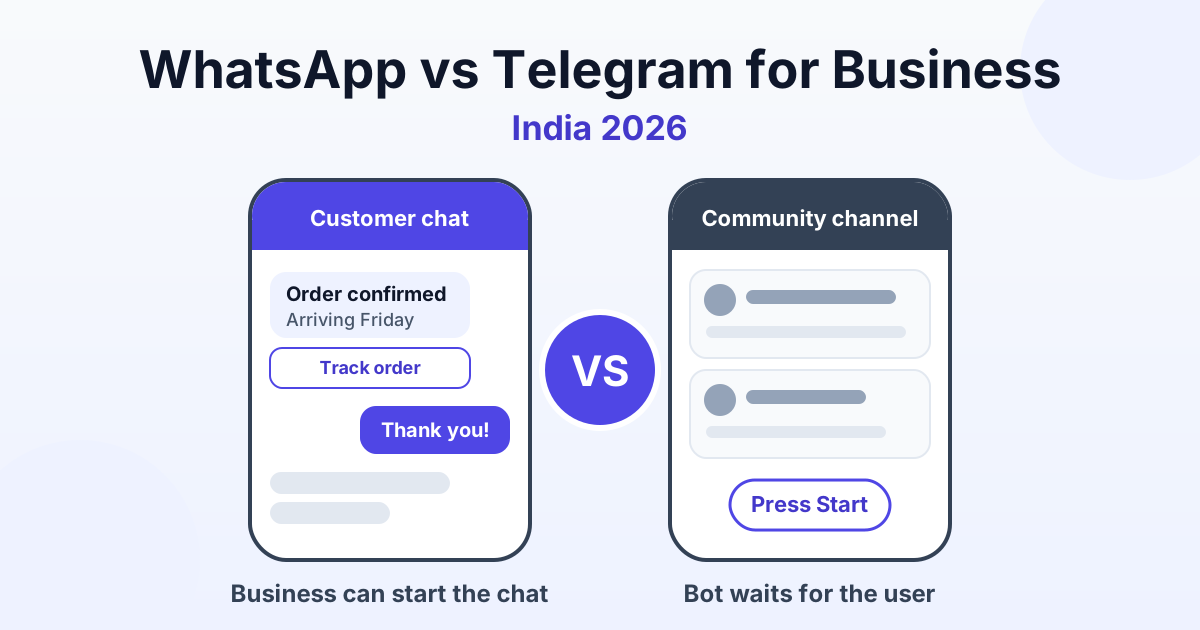
For most Indian businesses, WhatsApp is the better channel for revenue-critical customer messaging, because it is where customers already are and it lets you start conversations with opted-in contacts using Meta-approved templates. Telegram is a strong, free complement for communities and large broadcasts, but a Telegram bot cannot message a customer until that customer presses Start first.
That single difference, who may send the first message, decides most of this comparison. Below: reach, cost for 10,000 messages a month, automation, trust, compliance and a 30-day plan.
Quick verdict: WhatsApp vs Telegram for business
WhatsApp is a customer-messaging channel; Telegram is a community-and-broadcast channel. Both have business tools, but they are built for different jobs.
- Choose WhatsApp for order updates, appointment reminders, fee and payment reminders, OTPs, lead follow-up and support, where a message must reach a specific customer on time.
- Choose Telegram for large groups, public channels, study communities and content distribution, where people choose to join you and cost per message matters more than guaranteed reach.
- Use both when you run a community that also buys from you: Telegram for the crowd, WhatsApp for the one-to-one transaction.
| Feature | WhatsApp Business Platform (API) | Telegram (Bot API + Business) |
|---|---|---|
| Who sends the first message | Business can message opted-in customers with an approved template | Bot can reply only after the user presses Start or messages it |
| Per-message fee | Yes for template messages, per Meta's published rate card | No per-message fee |
| Template approval | Required for business-initiated messages | Not required |
| Free-form replies | Inside the 24-hour customer-service window | Any time after the user starts the chat |
| Group and broadcast size | Built for one-to-one; campaigns go to opted-in lists within limit tiers | Groups documented up to 200,000 members; channels with unlimited subscribers |
| Sending controls | Messaging-limit tiers and a quality rating | Bot API rate limits; spam reports can restrict accounts |
| Business profile tools | Business profile, catalog, WhatsApp Flows forms | Greeting, away messages, quick replies, hours and chatbot connection need Telegram Premium |
| Typical Indian use | Orders, reminders, OTPs, support, lead nurture | Communities, course groups, content channels, deal alerts |
Reach and audience in India
Reach is where WhatsApp pulls ahead. WhatsApp is widely reported to have over 500 million users in India, which makes it the default messaging app for a very large share of smartphone owners across metros and tier-2 and tier-3 towns. For a business, a customer's phone number is usually also a WhatsApp number, with no new app to install and no new account to create.
Telegram is big in India too. India is widely reported as one of Telegram's largest markets by downloads, and the app is especially popular with students, exam aspirants, trading audiences, tech communities and content followers. But a download is not a daily habit, and many people open Telegram only for a handful of specific groups or channels.
The practical test is simple: look at your last 100 customers. If most of them would have to install or open Telegram to receive an order update, Telegram cannot be your primary customer channel. If they already gather in Telegram groups for your niche, it can be an excellent secondary one. The same logic applies to other channels; our guide to WhatsApp vs SMS for business messaging in India explains why two-way replies matter as much as raw reach.
Who can start the conversation: the key structural difference
On WhatsApp, a business can send the first message; on Telegram, a bot cannot. Everything else in this comparison follows from that.
How WhatsApp business-initiated messaging works
On the WhatsApp Business Platform, a business can message a customer first when two conditions are met: the customer has opted in to hear from that business, and the message uses a template Meta has approved. Templates fall into three categories:
- Marketing templates for offers, launches, re-engagement and cart-recovery nudges.
- Utility templates for order confirmations, shipping updates, appointment reminders, fee reminders and account alerts.
- Authentication templates for one-time passwords and login codes.
When a customer messages you, a 24-hour customer-service window opens. Inside it you can send free-form replies, media and interactive buttons without a template, and per Meta's current pricing, service conversations are not charged by Meta.
How Telegram bots work
A Telegram bot is a powerful, free automation account, but it is reactive by design. The Bot API does not let a bot open a chat with someone who has never interacted with it. The user must find the bot and press Start or send a message; only then can the bot reply and send follow-ups. If the user blocks the bot, it can no longer reach them.
That makes Telegram excellent for audiences who come to you, and weak when you must reach a customer who never opened your bot: a COD order to confirm, tomorrow's clinic appointment, a fee due Friday or a fresh website lead. On WhatsApp, each can be an approved template sent to an opted-in number.
Cost: Telegram is free, but reach is not
Telegram's Bot API is free with no per-message fee; WhatsApp charges per template message. On paper Telegram wins. The more useful question is cost per message that actually reaches the right customer.
Telegram's hidden costs are building and hosting your own bot, persuading people to press Start, and the customers you simply cannot reach because they never joined. Telegram Business features such as greeting and away messages, quick replies, business hours, location and connecting a chatbot require a Telegram Premium subscription.
WhatsApp costs are predictable per message. On RichAutomate you pay ₹0 setup and ₹0 monthly on usage-only billing, with two ways to pay for messages:
- Client Pay: Meta's per-message rate, billed by Meta directly to your card, plus a ₹0.10 per message platform fee.
- SaaS Pay: we bill everything in one place, at ₹1.50 per marketing message and ₹0.50 per utility message.
Optional plans add features if you need them: Starter at ₹499/month, Pro at ₹899/month and White-label at ₹1,199/month. We compare both billing models in detail in Client Pay vs SaaS Pay WhatsApp billing.
Worked example: 10,000 messages a month
| Scenario (10,000 messages/month) | Message cost | What to keep in mind |
|---|---|---|
| Telegram Bot API | ₹0 per message | Reaches only users who already pressed Start; you build and host the bot |
| Telegram Business features | No per-message fee | Greeting, away messages, quick replies and chatbot connection need Telegram Premium |
| WhatsApp SaaS Pay: 10,000 utility | ₹5,000 | 10,000 × ₹0.50 for order, appointment and fee reminders |
| WhatsApp SaaS Pay: 10,000 marketing | ₹15,000 | 10,000 × ₹1.50 for offers and re-engagement |
| WhatsApp SaaS Pay: 7,000 utility + 3,000 marketing | ₹8,000 | ₹3,500 + ₹4,500, a typical mixed month |
| WhatsApp Client Pay: 10,000 messages | ₹1,000 platform fee plus Meta's per-message rate | Meta bills its rate to your card; ₹0.10 × 10,000 is the platform fee |
Free-form replies inside the 24-hour window are not charged by Meta, per Meta's current pricing, so a support-heavy business can spend well below the template totals above. Check RichAutomate WhatsApp API pricing for current plan details before you budget.
Rule of thumb: if one confirmed COD order, one attended appointment or one collected fee is worth more than ₹0.50 to you, a WhatsApp utility template is easy to justify.
Automation, bots and API
Telegram automation
The Telegram Bot API is free, well documented and flexible. Bots can send files, polls and inline keyboards, moderate groups, post to channels and run Mini Apps. For a coaching institute running doubt-solving groups, that is hard to beat on price. The trade-off: you own the bot code, hosting and uptime, and every flow still starts with the user pressing Start.
Get a 1-minute BSP audit on WhatsApp
Drop your WhatsApp number — we line-item your current invoice against Meta India rates in under 60 seconds. India-hosted, DPDP-compliant.
WhatsApp automation
The WhatsApp Business Platform, through a provider like RichAutomate, gives you a shared team inbox, template management, campaigns to opted-in lists, chatbot flows, WhatsApp Flows (native in-chat forms), product catalogs and webhooks into your CRM or store. Because the business can open the conversation, automation can be event-driven: an order is placed, a payment fails or an appointment is booked, and the right template goes out automatically.
If you only need a one-way announcement feed on WhatsApp, a Channel may be enough; our comparison of WhatsApp Channels vs the Business API explains when each fits. For two-way, personalised, revenue-linked messaging, the API is the right tool.
Trust, verification and spam or ban risk
Trust is a revenue feature. Customers act faster on a message they believe really comes from you.
On WhatsApp, a business number shows a business profile with a reviewed display name, and businesses can complete Meta business verification and, where eligible, apply for a verified badge. Every template is reviewed before use. Sending is governed by messaging-limit tiers, which cap how many unique customers you can start conversations with in a rolling 24-hour period, and by a quality rating driven by how recipients respond. If many people block or report your messages, quality drops, limits can shrink and the number can be restricted. No provider can honestly guarantee a WhatsApp number will never be restricted; genuine opt-in, relevant templates and sensible frequency are what keep you safe.
On Telegram, anyone can create a channel, group or bot with almost any name, which makes impersonation easy. Fake support handles and job or task scams on Telegram are widely reported in India, so many customers are wary of unexpected Telegram contact.
Compliance in India: DPDP Act, TRAI and SEBI
Neither app removes your own legal duties. A phone number, a name and a chat history are personal data, whichever app carries them.
- DPDP Act consent: India's Digital Personal Data Protection Act, 2023 expects consent to be free, specific, informed and unambiguous, with an easy way to withdraw it. Record when, where and for what each contact opted in, and honour opt-outs on both channels. Our guide to WhatsApp DPDP Act opt-in compliance walks through a practical consent setup.
- TRAI rules: TRAI's commercial-communication regulations and DLT registration are built for SMS and voice calls carried by telecom operators. As widely understood, OTT apps such as WhatsApp and Telegram are not currently part of the DLT regime, but the regulatory position on OTT communication can change, so treat this as a current reading, not a permanent exemption.
- SEBI and finfluencers: stock-tip and trading-call channels are common on Telegram. SEBI has restricted regulated entities from associating with unregistered finfluencers, and action against unregistered investment-tip operators on messaging apps has been widely reported. If you share investment advice on any channel, check SEBI registration requirements first.
Best channel by business type
Transactions belong on WhatsApp; content communities often fit Telegram. Use this table as a starting point.
| Business type | Primary channel | Role of the other channel |
|---|---|---|
| D2C and e-commerce | WhatsApp: order and COD confirmation, shipping updates, cart recovery | Telegram optional for a VIP drops or deals community |
| Edtech and coaching institutes | WhatsApp: admissions follow-up, fee and class reminders, parent updates | Telegram for batch groups, doubt-solving and notes channels |
| Clinics, diagnostics and wellness | WhatsApp: appointment reminders, reports, follow-ups | Telegram rarely needed |
| Real estate and local services | WhatsApp: lead follow-up, site visits, bookings | Telegram rarely needed |
| Creators, publishers and communities | Telegram: large channels and groups | WhatsApp for paid members, renewals and one-to-one sales |
| Trading and finance education | WhatsApp for utility updates to opted-in clients | Telegram only with SEBI-compliant content |
| B2B SaaS and IT services | WhatsApp: demos, onboarding, renewals | Telegram for developer or user communities |
Using WhatsApp and Telegram together
Edtech brands, coaching institutes and creators often get the best of both by giving each channel a clear role:
- Telegram for the crowd. A free channel or group where followers get content, announcements and discussion at no per-message cost.
- WhatsApp for the conversion. A "chat with us on WhatsApp" link in the channel description and pinned posts, so interested members start a one-to-one chat and opt in.
- WhatsApp for the money moments. Fee reminders, payment links, enrolment confirmations and renewals go out as utility templates.
- One consent record. Keep opt-ins from both channels in one CRM so you never message someone who withdrew consent.
A 30-day decision plan
If you are still unsure, run a structured month and let your own numbers decide.
- Days 1-5, map your messages: list every message you send customers and label it transactional (order, reminder, payment, OTP) or content (tips, news, community). Transactional messages are WhatsApp candidates.
- Days 6-10, set up WhatsApp properly: connect a dedicated number to the WhatsApp Business Platform, verify your business, add opt-in checkboxes to your website and checkout, and get your first utility templates approved.
- Days 11-15, launch Telegram only if a community exists: create a channel or group for your most engaged audience and a simple FAQ bot. Skip this if your customers do not already use Telegram.
- Days 16-25, measure what matters: track read and reply rates, confirmed orders, attended appointments and fees collected per channel, not follower counts.
- Days 26-30, decide and budget: keep WhatsApp for every message tied to revenue, keep Telegram where it grows your community cheaply, and set a monthly message budget using the cost table above.
Ready to test WhatsApp for your business? Start your free WhatsApp Business API trial with 14 days and 100 free credits, ₹0 setup and ₹0 monthly on usage-only billing, and send your first approved template this week.
Frequently asked questions
Is Telegram better than WhatsApp for business in India?
For most Indian businesses, no. WhatsApp is better for revenue-critical customer messaging because it is widely reported to have over 500 million users in India and lets a business message opted-in customers first with approved templates. Telegram is better for large free communities, with groups documented up to 200,000 members and channels with unlimited subscribers.
Can a Telegram bot send the first message to a customer?
No. A Telegram bot can only message a user after that user presses Start or sends the bot a message. On WhatsApp, a business can send the first message to an opted-in customer using a Meta-approved marketing, utility or authentication template.
How much does WhatsApp Business API cost compared with Telegram?
The Telegram Bot API is free with no per-message fee, though Telegram Business features need Telegram Premium. On RichAutomate, WhatsApp has ₹0 setup and ₹0 monthly on usage-only billing: SaaS Pay is ₹1.50 per marketing message and ₹0.50 per utility message, or Client Pay is Meta's rate billed to your card plus a ₹0.10 per message platform fee.
Do TRAI DLT rules apply to WhatsApp and Telegram business messages?
TRAI's DLT regime is built for SMS and voice calls carried by telecom operators, and as widely understood it does not currently cover OTT apps like WhatsApp and Telegram. That position can change, and you still need valid consent under the DPDP Act, plus Meta's opt-in rules on WhatsApp.
Should a business use both WhatsApp and Telegram?
Yes, if you run a community. Use Telegram channels and groups for free content and discussion, and use WhatsApp for one-to-one conversations, order updates, fee and payment reminders and renewals. Keep consent records from both channels in one CRM.