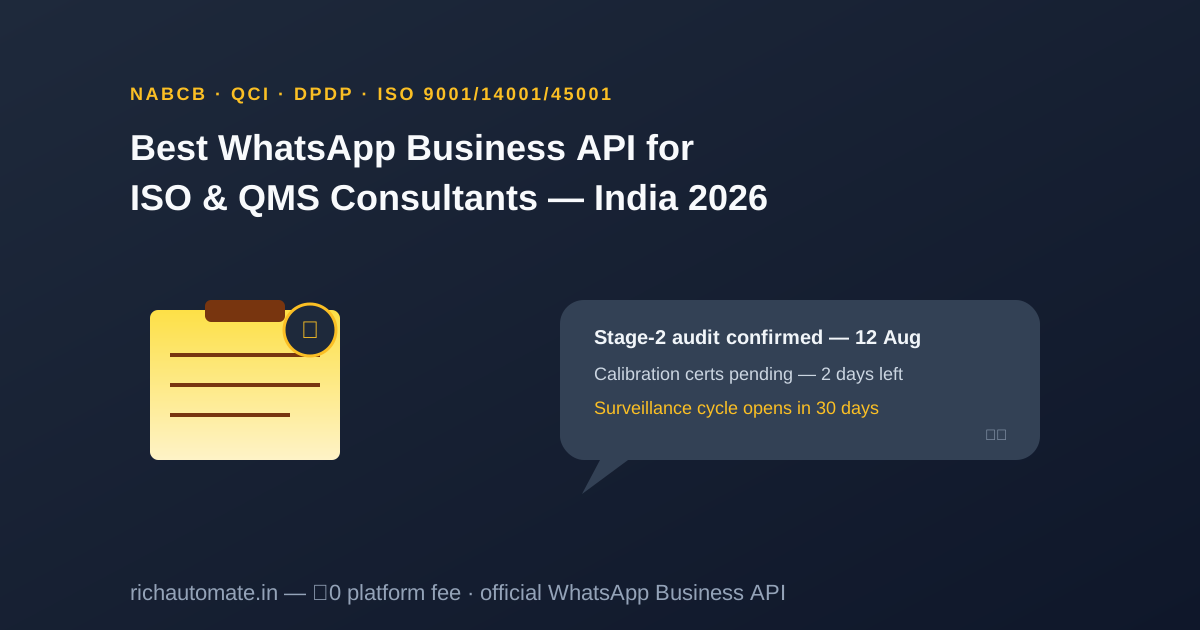
A 15-client ISO 9001/14001/45001 consulting practice runs on paperwork chases, not paperwork. NC evidence, audit-day confirmations, surveillance-cycle reminders — every one of them dies in a WhatsApp thread that a partner has to scroll through by hand. This is a straight buyer's guide to picking a WhatsApp Business API for that specific workflow, not a generic "why WhatsApp" pitch.
ISO/QMS consulting is a document-chase business wearing a certification badge. The API that wins is the one that (1) timestamps NC-evidence uploads per client per clause, (2) runs surveillance-audit and recertification reminders on a calendar the consultant doesn't have to babysit, and (3) never lets a template message imply a certification outcome — that call stays with the auditor. Cost: roughly ₹0.10 per client-pay utility message on the Meta-verified tier, platform access itself is free; a 14-day trial with 100 credits is enough to run one full client cycle before you commit.
Who this is actually for
Picture Meera, who runs a 4-person ISO consulting firm out of Pune — ISO 9001, 14001, and 45001 implementation plus internal-audit-as-a-service for 18 mid-size manufacturers and 6 export-oriented SMEs. Her week is: chase a factory manager for calibration certificates before Thursday's stage-2 audit, remind three clients their surveillance audit window opens in 30 days, and push a corrective-action-request (CAR) template to a plant that just got a major nonconformity. None of that is glamorous. All of it currently happens over personal WhatsApp, email, and a shared Google Sheet nobody updates. That's the exact gap a business API closes — not by being smarter than her, but by not forgetting.
What actually matters when you compare providers
| Criteria | Why it matters for ISO/QMS practices | What to check before signing |
|---|---|---|
| Template approval turnaround | Audit-day reminders and CAR nudges are time-boxed — a template stuck in Meta review for a week misses the surveillance-audit window | Ask for actual turnaround data, not a marketing claim; test with one real template first |
| Document/media handling | NC evidence is photos, PDFs of calibration certs, signed CAPA forms — the thread needs to hold them against a client + clause reference | Confirm media storage duration and whether it links back to a CRM/case record, not just a chat log |
| Multi-client broadcast controls | Reminding 18 clients about staggered surveillance cycles is a broadcast job, not 18 manual chats | Check per-recipient personalization (client name, audit date, standard) is supported in one send, not copy-paste |
| Audit trail / message history | If a client disputes "we were never told," the WhatsApp thread is your evidence | Confirm exportable message logs — some cheap tools purge history after 90 days |
| Pricing transparency | Conversation-based pricing gets confusing fast across dozens of clients with different audit calendars | Ask for the per-category breakdown (marketing vs utility vs service) in writing, not a blended "starting at" number |
What NOT to automate
Be blunt with yourself here. A WhatsApp API should never be the channel that tells a client they passed or failed an audit, issues a certification decision, or replaces the auditor's signed report. Those stay human, on letterhead, through the accredited certification body's formal process — automation only carries the logistics around that decision (scheduling, evidence collection, reminders), never the decision itself. Blurring that line isn't a productivity win, it's a professional-liability problem.
Get a 1-minute BSP audit on WhatsApp
Drop your WhatsApp number — we line-item your current invoice against Meta India rates in under 60 seconds. India-hosted, DPDP-compliant.
The regulatory backdrop (know this before you pitch it to clients)
India doesn't have one central regulator for ISO/QMS consultants the way IBBI governs insolvency professionals — accreditation for certification bodies runs through NABCB under the Quality Council of India (QCI), but consultants advising clients ahead of certification aren't themselves licensed by a single body. That said, two things do apply regardless: client audit evidence (calibration data, employee records, incident reports for 45001) is business and often personal data under the DPDP Act, so consent and retention practice matter, and any client-facing claim about certification timelines or outcomes should be conservative — we're not qualified to tell you what NABCB or your certification body will decide, and neither is a chatbot.
Use the customer LTV calculator to work out how much a repeat customer justifies spending to keep.
Honest cost math
Platform access itself runs ₹0 — you're not paying a licence fee to have a business number. What you pay for is message volume, split by Meta's category: roughly ₹1.50 for marketing-category sends (new-client outreach, service upsells) and about ₹0.50 for utility-category sends under the SaaS Pay model, or approximately ₹0.10 per message if you route through Client Pay where the client's own Meta business footprint absorbs conversation cost. For Meera's 18-client base running maybe 40-60 utility messages a month (reminders, CAR nudges, evidence confirmations) plus occasional marketing sends to prospects, that's a two-figure monthly number, not a line item that needs board approval. Start with the 14-day trial and 100 credits — that's enough to run one real surveillance-audit reminder cycle before deciding.
Onboarding, realistically
- Verify your Meta Business account and connect (or acquire) a dedicated WhatsApp Business number — don't reuse a personal number tied to client relationships already.
- Build 3-4 templates first: audit-date confirmation, evidence-request-with-deadline, surveillance-cycle-reminder, CAR-acknowledgement. Submit for Meta approval before your next audit window, not the week of.
- Import your client roster with standard (9001/14001/45001), certification body, and next audit date as fields — this is what makes broadcasts feel personal instead of spammy.
- Run one full cycle — evidence request through audit-day reminder — for a single client before rolling out firm-wide.
- Only then move recurring nudges (surveillance countdowns, recertification windows) onto a scheduled send.
Who this fits — and who it doesn't
Fits: solo-to-mid consultants managing 8+ concurrent client audit calendars, firms doing multi-standard work (9001 + 14001 + 45001 combos) where reminder logic differs by standard, and anyone whose current NC-evidence collection lives in scattered email attachments. Doesn't fit: a one- or two-client boutique advisor where a shared calendar and a phone call already work fine — buying an API for that is solving a problem you don't have yet.
Honesty line: a WhatsApp API doesn't make your consulting better and it doesn't influence a certification decision either way. It removes the unpaid admin tax of chasing evidence and reminding people of dates they already agreed to — that's the entire pitch, and it's a real one for a busy practice.