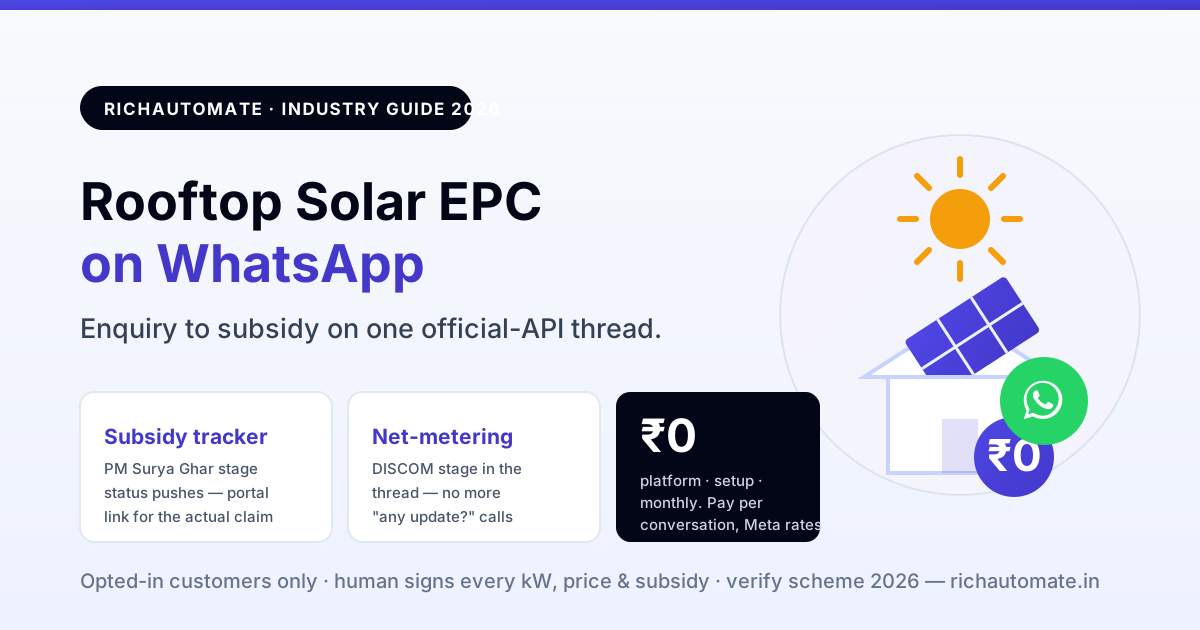
Yes — a rooftop solar EPC installer in India can run its entire site-visit-to-subsidy journey on WhatsApp: the ₹0-cost killer move is a single thread that carries a homeowner from a rooftop-photo enquiry through a load estimate, quotation, DISCOM net-metering status and PM Surya Ghar subsidy tracking, so nobody calls asking "where is my subsidy" for the third time. The official WhatsApp Business API does the reminders and status pushes; a human still signs off every kilowatt, every price and every subsidy claim.
Why WhatsApp fits a rooftop solar business
Rooftop solar is a long, anxious purchase with a government subsidy bolted on. From the first enquiry a residential customer waits weeks — site survey, quotation, DISCOM feasibility, meter change, installation, inspection, then the PM Surya Ghar subsidy landing in their bank. Every silent gap in that chain is a support call and a chance for the customer to drift to a competitor. WhatsApp is where those customers already are, and a structured thread turns "any update?" calls into tap-to-see status. The pattern below mirrors what a solar company running the full API uses, focused here on the residential EPC installer.
| Stage | Automate on WhatsApp | Keep human |
|---|---|---|
| Enquiry | Rooftop photo + pincode + monthly bill intake, auto-tag by DISCOM area | Feasibility judgement |
| Site survey | Slot booking, surveyor name + ETA, reschedule | Shadow/structure assessment on site |
| Quotation | Send the signed PDF, capacity + price, answer FAQs | Final price, discount, capacity sign-off |
| Net-metering | DISCOM application-status pushes, document checklist | Utility liaison, feasibility approval |
| Subsidy | PM Surya Ghar application-stage status, bank-details reminder | Filing the claim, any amount claim |
| After-sales | Generation-check nudge, AMC renewal, breakdown ticket | Warranty call, technician dispatch |
The subsidy thread is the reason customers pick you
Under the PM Surya Ghar Muft Bijli Yojana, a residential rooftop customer applies through the National Portal, the subsidy is disbursed to their bank account by Direct Benefit Transfer after installation and inspection, and the amount depends on system capacity — details you must verify against the current scheme, because rates and slabs are revised. The anxiety is entirely about "when does my money come." A WhatsApp thread that shows which stage the application is at — registered, feasibility approved, installed, inspection done, subsidy released — removes the single biggest source of post-sale calls. But the automation reports status; it never files the claim, never quotes a guaranteed subsidy figure, and never asks for bank credentials in chat. Getting a subsidy number wrong in a message is a trust and liability problem, so the thread links to the official portal and a human confirms every amount.
Net-metering: the approval customers cannot see
Before a rooftop system can export power, the local DISCOM has to approve net-metering — a feasibility check, an agreement, and a bidirectional meter installation, with the process and timelines varying by state and utility. To the homeowner this is an invisible black box that stalls the project for weeks. Pushing the DISCOM application reference and its current stage into the same WhatsApp thread — application submitted, feasibility cleared, meter scheduled, meter installed — turns that black box into a status bar. Your team still does the utility liaison; WhatsApp just relays where it stands so the customer stops calling to ask. This is the same one-tap status-and-SLA pattern a rooftop-plus-EV lifecycle runs across its longer install journey.
Get a 1-minute BSP audit on WhatsApp
Drop your WhatsApp number — we line-item your current invoice against Meta India rates in under 60 seconds. India-hosted, DPDP-compliant.
Compliance you cannot automate away
These are the reasons a bot must never speak for you on a solar thread. Verify each against the current rule as of 2026 — scheme terms, ALMM/BIS standards, electrical-inspection rules, GST and enforcement all change and vary by state:
PM Surya Ghar — apply on the portal, claim by human
The subsidy runs through the National Portal and is paid by DBT to the customer's account after installation and inspection. Your WhatsApp automation can remind a customer to complete registration, share the document checklist, and report which stage the application sits at — but it must never assert a subsidy amount as guaranteed, never collect bank or Aadhaar details in the chat, and always point to the official portal for the actual claim. A wrong subsidy figure sent in writing is a liability.
ALMM and BIS — approved modules only
Government-subsidised rooftop installations are generally required to use solar modules from the Approved List of Models and Manufacturers (ALMM) and BIS-certified equipment; the eligible list is revised periodically. Share the actual module make, model and certification with the customer on request — the automation sends the real datasheet, it does not invent or paraphrase a certification.
Electrical inspection and safety
Depending on system size and state rules, the installation may need sign-off from the state electrical inspector (CEIG) before commissioning, and the workmanship carries a real safety duty. WhatsApp logs the inspection date and shares the certificate; a human owns the electrical sign-off and any safety call. The thread records the milestone, it never certifies the installation is safe.
GST and pricing
Rooftop solar has a specific GST treatment on equipment and installation services, and the rate and input-credit position deserve a check with your CA rather than an assumption. WhatsApp sends the quotation and payment-stage reminders; it never gives a tax opinion or negotiates a price on its own.
DPDP — homeowner data
A customer's rooftop photo, address, electricity bill and contact are personal data under the DPDP Act, 2023. Keep proof of consent, send only what the homeowner opted into, and give an easy opt-out — which is also exactly what keeps the WhatsApp number healthy. See the DPDP 2026 changes guide.
Capturing the enquiry the first time
Most rooftop leads die in the gap between "I saw your ad" and a booked site survey. A short structured intake on WhatsApp — rooftop photo, pincode, average monthly bill, own house or society — before the lead reaches a salesperson lets you size the system and route it to the right surveyor immediately, tagged by DISCOM area. A homeowner sends a photo and a bill amount; the enquiry lands qualified and ready to quote instead of starting another phone game. Track every enquiry in a WhatsApp CRM so no rooftop goes cold between survey and subsidy.
What it costs on RichAutomate
RichAutomate runs on the official WhatsApp Business API (Meta Cloud API) with ₹0 platform fee, ₹0 setup and ₹0 monthly minimum. You pay per conversation on Meta's category rates: Client Pay at ₹0.10/message plus Meta's per-conversation rate, or SaaS Pay at ₹1.20/marketing and ₹0.30/utility conversation all-in. A promotional or scheme-awareness push is marketing-category; survey confirmations, net-metering status and subsidy-stage updates are the cheaper utility category. A 14-day trial with 100 free credits and no card lets you run one real enquiry-to-quotation cycle before committing. Verify current Meta rates, which change periodically. Full breakdown in the WhatsApp Business API cost guide and Client Pay vs SaaS Pay. Note: going live on the official API in India effectively requires GST for business verification — treat GST as required, not optional.
A realistic 30-day rollout
- Week 1: Number on the official API, business verification underway (GST ready). Build the opted-in list from customers who already enquired or bought — consent logged.
- Week 2: Launch the structured rooftop enquiry intake (photo, pincode, bill, house type) and site-survey slot booking with surveyor ETA.
- Week 3: Wire quotation delivery, DISCOM net-metering status pushes, and the PM Surya Ghar subsidy-stage tracker (status only, portal link for the claim).
- Week 4: Add after-sales — generation-check nudge, AMC renewal reminder, one-tap breakdown ticket. Review which reminders converted and tune timing.
Start with the enquiry intake and the subsidy-status thread — highest return, lowest risk — and expand to after-sales once the thread carries real projects. See the platform in full on features and pricing.
Bottom line
A rooftop solar EPC business is a long anxious journey with a government subsidy at the end, and every stage of it is messaging. Put enquiry capture, site-survey booking, quotation, DISCOM net-metering status and PM Surya Ghar subsidy tracking on WhatsApp, and the "any update?" calls stop. Keep every price, capacity, subsidy amount and safety sign-off human, apply on the official portal not in chat, and work an opted-in customer list — and the number stays healthy while the projects move.
Get the full migration playbook on WhatsApp
A founder-led 1-minute reply with the migration steps, template approval timeline, and a 14-day pilot offer. DPDP-compliant. India-hosted. No spam.
Frequently asked questions
Can I track PM Surya Ghar subsidy status for customers on WhatsApp?
How does WhatsApp help with DISCOM net-metering approval?
Will sending solar offers and reminders get my WhatsApp number banned?
Do subsidised rooftop installs have equipment and inspection rules the bot must respect?
What does WhatsApp automation cost for a rooftop solar installer on RichAutomate?
Ship WhatsApp campaigns + flows on a transparent, compliance-ready BSP.
₹0 platform fee. DPDP audit log included. Visual flow builder. Multi-tenant from day one.
Start free trial