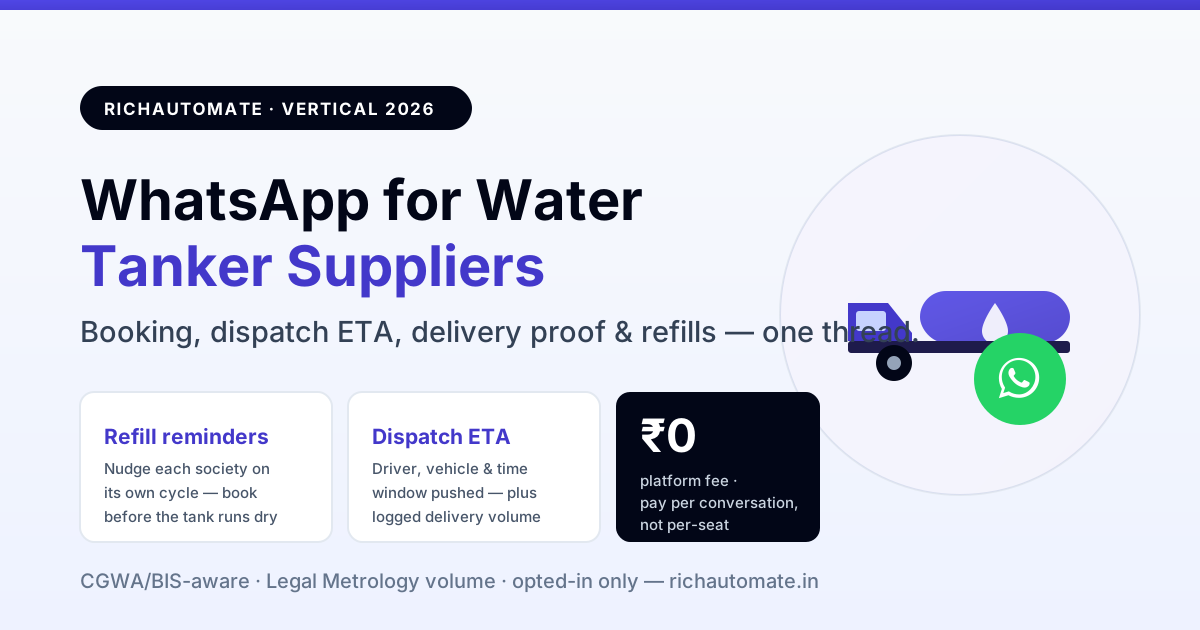
Yes — a bulk water-tanker supplier in India can run its whole delivery operation on WhatsApp: booking capture from societies, builders and factories; live dispatch with driver and ETA; delivery proof with the delivered volume logged; and automatic refill reminders on a household's or site's consumption cycle. The refill reminder is the money message — it books tomorrow's trip before the customer's tank runs dry and they call a competitor. Price, water-source certification and credit stay human. Here is how tanker operators in Bengaluru, Hyderabad, Chennai, Pune and NCR set it up in 2026.
Why WhatsApp fits a water-tanker business
A tanker operator sells a simple thing — a known volume of water delivered to a known address on time — to a rotating book of apartment societies, construction sites, factories, offices, banquet halls and homes on borewell failure. The whole business turns on two questions the customer asks every time: can you deliver today, and when will the tanker reach. Both are pure messaging problems. A society manager does not want to chase your dispatcher by phone; they want to send "need 2 tankers of 6000 litres tomorrow morning" and get a slot back.
Demand is spiky and seasonal — summer and monsoon-failure months bury the phone line, and calls get missed exactly when every call is an order. WhatsApp collapses booking, dispatch and proof onto one timestamped thread per customer, which is also the record you reach for when a builder disputes how many trips ran last month.
The refill reminder — the killer message
The single highest-return automation for a tanker business is the refill reminder: a scheduled nudge to a society or site on its own consumption cycle — "your last delivery was 6 days ago, book tomorrow's slot?" — sent as a template to opted-in regular customers. First tanker in the manager's chat gets the booking. Done right it is one template on a schedule that replaces a dispatcher's morning of outbound calls and, more importantly, catches the reorder before the tank runs empty.
What to automate — and what stays human
Rule for a water-delivery desk: automate the booking, the dispatch update and the delivery proof; never let a bot commit a price, a credit line or a potability claim.
| Stage | Automate | Keep human |
|---|---|---|
| Enquiry | Structured capture: volume, tanker size, address/site, date, potable or non-potable | Final quote, credit terms |
| Booking | Slot confirmation + tanker count + expected time window | Priority juggling on peak days |
| Dispatch | "Tanker left, driver name + vehicle number, ETA" push | Route calls the dispatcher makes |
| Delivery proof | Delivered-volume confirmation + photo/meter reading logged to the thread | Quantity dispute resolution |
| Refill | Reminder on the customer's consumption cycle | Contract renegotiation |
| Payments | Trip-count statement + UPI reminder on the thread | Write-offs, disputed trips |
| Source docs | CGWA NOC / lab potability report as PDF on request | Any certification statement |
Capturing the booking the first time
Most booking delay is chasing missing detail: how much water, what tanker size (a 6,000-litre versus a 12,000-litre changes the whole plan), potable or construction-grade, exact site access for the truck, which day and window. A short structured intake on WhatsApp — a few required fields before the booking reaches your dispatcher — kills that round trip. A builder answers the questions; the order lands tagged and ready to schedule. This is the same structured-capture pattern a borewell driller uses for site enquiries and a ready-mix concrete supplier uses for pour bookings.
Get a 1-minute BSP audit on WhatsApp
Drop your WhatsApp number — we line-item your current invoice against Meta India rates in under 60 seconds. India-hosted, DPDP-compliant.
Compliance you cannot automate away
These are the reasons a bot must never speak for you on a water thread. Verify each against the current rule as of 2026 — ground-water and water-quality rules change and enforcement varies sharply by state and city:
CGWA / state ground-water NOC
Extracting ground water for commercial supply generally needs a No Objection Certificate — from the Central Ground Water Authority or the relevant state ground-water body, depending on where you draw and how the notified/over-exploited-area rules apply to your location. Whether your specific borewell and volume need a fresh NOC, a renewal or fall under a state exemption is something to confirm with the current rule, not assume. WhatsApp is a fine way to send a corporate buyer your NOC copy on request — but the bot delivers the PDF, it never certifies your source is compliant.
BIS IS 10500 — potability
If you supply drinking-grade water, potability is judged against the BIS drinking-water standard (IS 10500) — and a customer buying "potable" tanker water can legitimately ask for a recent lab test. Keep your test reports current and deliver them as a PDF when asked. If you supply construction or flushing-grade water, say so plainly at the enquiry stage so nobody assumes drinking quality — mislabelling grade is both a trust and a liability problem the bot must never paper over.
Legal Metrology — tanker volume
You sell by volume, so the tanker's stated capacity is a measurement the customer is paying against. Calibration and any required stamping of the tanker's volume under Legal Metrology rules is what stops a "6,000-litre" trip becoming a dispute. Log the delivered volume to the thread on every trip so the record matches what you billed.
Municipal permit and vehicle rules
Many cities require water-tanker operators to register with the local body or water board, and some run their own tanker-booking or price-cap systems in scarcity periods; the truck itself needs a valid commercial permit and fitness under the Motor Vehicles Act. None of this changes because you book over WhatsApp — but a clean digital trail of trips and volumes is exactly what helps at a municipal audit.
DPDP — customer data
Your society and site contact list is personal data under the DPDP Act, 2023. Keep proof of consent, send only what customers opted into, and give an easy opt-out. That is also exactly what keeps the WhatsApp number healthy.
Peak-season dispatch without missed calls
Summer and borewell-failure spikes are when a tanker business makes its year — and when the phone line drops the most orders. Routing enquiries into a WhatsApp queue means no booking is lost to a busy tone: each lands as a tagged message your dispatcher works in order, with the customer already told a realistic window instead of hearing nothing. The same "we're on it, here's your slot" acknowledgement that a RO-plant AMC operator sends on a service ticket keeps an anxious society manager from calling three competitors while they wait.
What it costs on RichAutomate
RichAutomate runs on the official WhatsApp Business API (Meta Cloud API) with ₹0 platform fee, ₹0 setup and ₹0 monthly minimum. You pay per conversation on Meta's category rates: Client Pay at ₹0.10/message plus Meta's per-conversation rate, or SaaS Pay at ₹1.20/marketing and ₹0.30/utility conversation all-in. A refill or offer reminder is marketing-category; booking confirmations, dispatch ETAs and delivery proof are the cheaper utility category. A 14-day trial with 100 free credits and no card lets you run one real booking-to-proof cycle before committing. Verify current Meta rates, which change periodically. Full breakdown in the WhatsApp Business API cost guide and Client Pay vs SaaS Pay. Note: going live on the official API in India effectively requires GST for business verification — treat GST as required, not optional.
A realistic 30-day rollout
- Week 1: Number on the official API, business verification underway (GST ready). Build the opted-in customer list from societies, builders and sites you already supply — consent logged.
- Week 2: Launch the structured booking intake (volume, tanker size, address, date, grade). Add booking-confirmation templates.
- Week 3: Turn on dispatch ETA pushes (driver + vehicle) and delivery-proof capture with logged volume.
- Week 4: Add refill reminders on each customer's cycle and trip-count statements with UPI reminders. Review which reminders converted and tune timing.
Start with the booking intake and refill reminder — highest return, lowest risk — and expand once the thread carries real trade. Track it all in a WhatsApp CRM so no society goes cold, and see the platform in full on features and pricing.
Bottom line
A tanker business is delivery on time and proof of what was delivered, and both are messaging. Put booking, dispatch ETA and delivery proof on WhatsApp, deliver the NOC and potability PDFs on the same thread, and keep price, credit and certification human. Do it on an opted-in list, not a scraped one, and the number stays healthy while the bookings come to you.