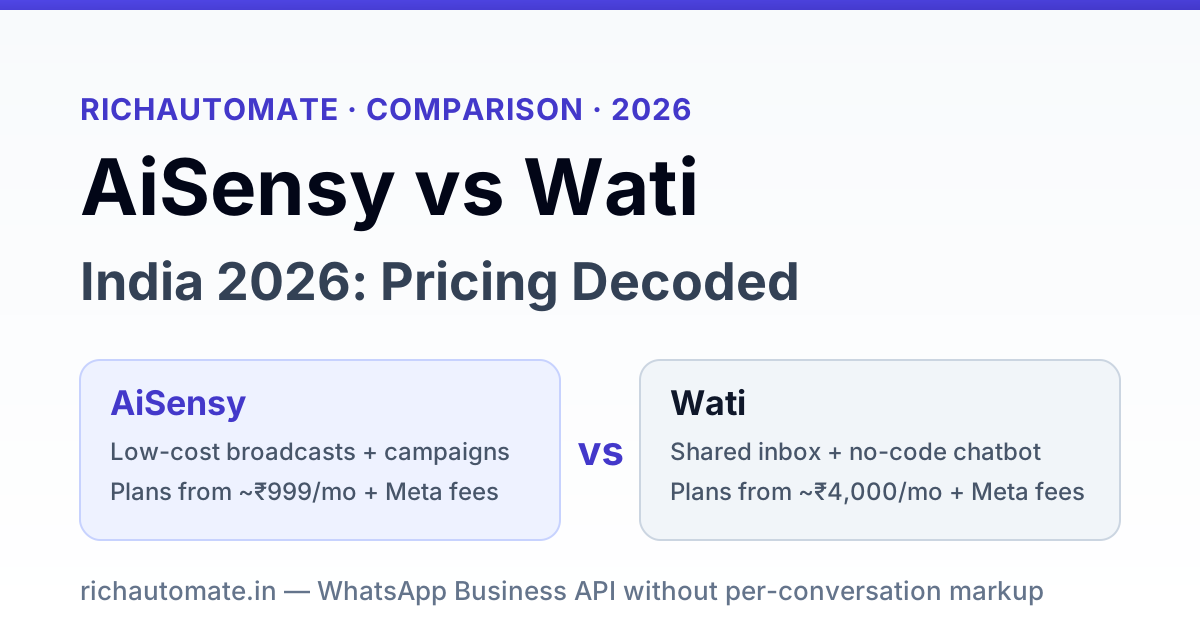
The short answer. Choose AiSensy if your priority is low-cost, high-volume WhatsApp broadcasts and campaigns on India-native pricing; choose Wati if you want a polished shared team inbox with a no-code chatbot builder for two-way sales and support. Both are official Meta Business Partners that add a monthly platform fee on top of Meta's per-conversation charges — AiSensy starts around ₹999/month, Wati around ₹2,999/month (Growth, monthly billing) — so the real cost gap for an Indian business usually comes from message volume, agent seats, and any per-conversation markup, not the sticker price.
AiSensy vs Wati at a glance
Both platforms sit on top of the same WhatsApp Business API from Meta, so delivery, the green tick, and the 24-hour service window behave identically. What you actually pay for is the software layer: the inbox, the automation builder, the broadcast tooling, and the analytics. That is where AiSensy and Wati diverge.
| Factor | AiSensy | Wati |
|---|---|---|
| Best for | Broadcast-heavy marketing + campaigns | Sales + support teams wanting a shared inbox |
| Entry price | ~₹999/mo (billed annually) | ₹2,999/mo Growth (₹2,199/mo billed yearly) |
| Meta conversation fees | Passed through, some plans add markup | Passed through, some plans add markup |
| No-code bot builder | Good, campaign-oriented | Strong, drag-and-drop KnowBot |
| Bulk broadcast UX | Excellent, core strength | Good |
| Per-agent seat cost | Add-on above included seats | Add-on above 5 included seats |
| Pricing currency | INR, India-native | USD — FX swings hit your bill |
Pricing is indicative for Indian businesses in 2026 and changes often — always confirm the current plan on each vendor's site before you commit. The numbers above are list prices; your effective cost depends on message volume and the Meta charges below.
How the pricing actually works
Neither platform fee is your total bill. Every WhatsApp API provider in India charges you on two layers, and mixing them up is the most common budgeting mistake we see:
- The platform subscription — the monthly SaaS fee (₹999+ for AiSensy, ₹2,999+ for Wati) that unlocks the inbox, automation, and seats.
- Meta's per-conversation charges — set by Meta, not the vendor. In India these are billed per 24-hour conversation window and vary by category (marketing, utility, authentication, service).
Some resellers quietly add a markup on top of Meta's conversation rate — a few paise to a rupee per conversation. At low volume that is invisible; at 50,000 marketing conversations a month it can dwarf the subscription fee. Before signing, ask both vendors one direct question: "Do you charge Meta's exact conversation rate, or do you add a markup?" We break down the raw Meta rates in our how much the WhatsApp Business API costs in India guide.
Where AiSensy wins
AiSensy is built around broadcasting and campaigns on India-first pricing. Its entry plan is a fraction of Wati's, it bills in rupees (so no foreign-exchange surprises), and the campaign manager makes it fast to blast a promotional template to a large opted-in list and track click-throughs. For a D2C brand, a coaching business, or a marketing team whose WhatsApp use is mostly outbound promotional volume, AiSensy usually delivers the lower effective cost — especially if you are seat-light and campaign-heavy.
Get a 1-minute BSP audit on WhatsApp
Drop your WhatsApp number — we line-item your current invoice against Meta India rates in under 60 seconds. India-hosted, DPDP-compliant.
Where Wati wins
Wati is built around the shared team inbox. If you have five to twenty people handling WhatsApp — a mix of pre-sales, support, and account managers — Wati's assignment rules, canned replies, internal notes, and the drag-and-drop KnowBot builder are more mature. It bundles more seats out of the box and has a deeper integration catalogue (Shopify, HubSpot, Zoho, and a documented API). For a support-led SaaS, an e-commerce brand running two-way conversations, or any team that treats WhatsApp as a live channel rather than a megaphone, Wati feels more complete.
The hidden costs to check before you sign
- Extra agent seats. Both bundle a few seats; each additional agent is a monthly add-on. A 15-person team can multiply the sticker price.
- Conversation markup. As above — the single biggest variable at scale.
- Fixed platform fee (Wati). Wati Growth costs ₹2,999/month on monthly billing before a single message is sent; at low volume that fee is most of the bill.
- Annual lock-in. The lowest advertised price is usually the annual-prepaid rate. Monthly billing costs more.
- Green-tick and setup. Meta's display-name and verification steps are the same on both — no vendor can promise the blue/green tick faster than Meta approves it, and both need a proper WABA setup before you go live.
A third option: pay Meta's rate with no markup
If the conversation markup is your worry, RichAutomate takes a different line: you pay Meta's exact per-conversation charge with no per-message markup, plus a flat platform fee — so your bill stays predictable as volume grows. You still get the shared inbox, a visual flow builder, broadcasts, and catalog support. It is worth putting the field side by side before you commit: see how AiSensy compares with Gupshup, how Wati compares with Interakt, and the broader Gallabox vs DoubleTick breakdown. Already on one platform and unhappy? You can switch BSP and keep your number.
How to choose in 60 seconds
- Marketing-led, high broadcast volume, want rupee pricing? → AiSensy.
- Support-and-sales team, want a real shared inbox and no-code bots? → Wati.
- Scaling marketing volume and worried about per-message markup? → get a no-markup quote (RichAutomate) before you lock into an annual plan.
Whichever you pick, remember the platform fee is the small number. Model your expected monthly conversation volume against Meta's real rates first — that is the line item that decides your actual annual cost. For the current Meta rate card, start with our India cost guide.
Shortlisting just these two? Read our AiSensy vs Interakt pricing comparison at 25,000 messages a month.