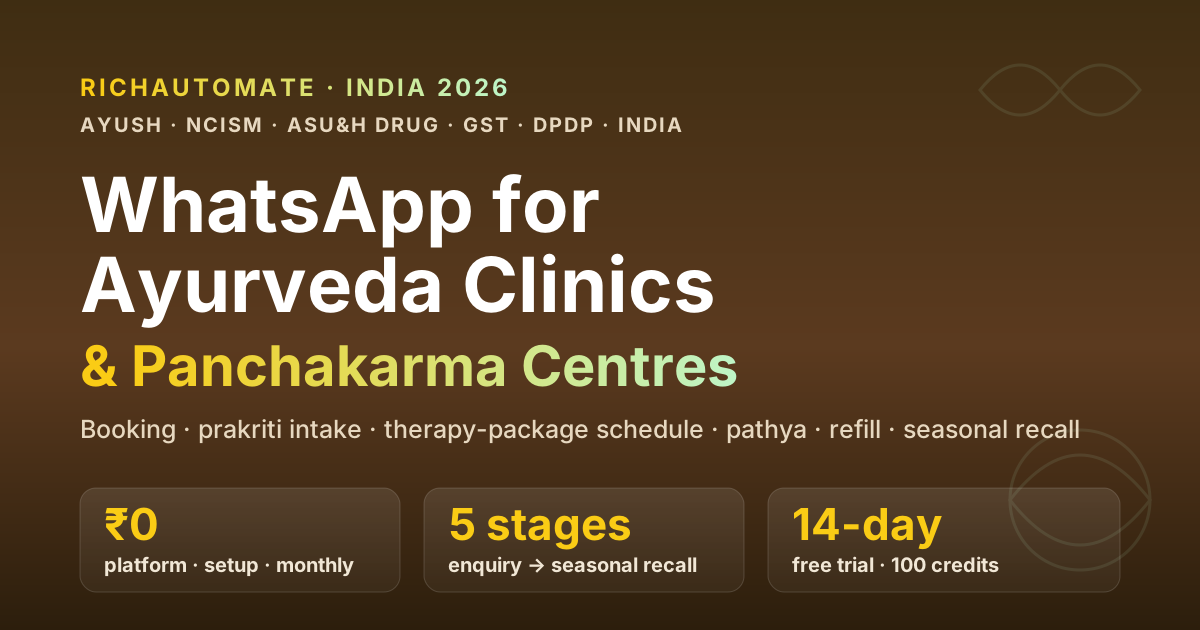
An Ayurveda clinic or Panchakarma centre in India 2026 is a fundamentally different business from a one-visit allopathic OPD, and it is a fundamentally different business from a D2C Ayurvedic-products brand. The same wellbeing-continuity playbook shapes our WhatsApp playbook for mental-health and counselling clinics, where follow-up decides the outcome. Its economics are decided by two numbers that have nothing to do with how many first consultations it books: the therapy-package completion rate — does a patient who signed up for a 14-day or 21-day Panchakarma protocol (Vamana, Virechana, Basti, Nasya, Raktamokshana, or the gentler Snehana–Swedana–Abhyanga sequences) actually finish every scheduled session — and the seasonal-Ritucharya rebooking rate, because authentic Ayurveda is a maintenance practice, not a single cure. A BAMS physician can give a superb pulse diagnosis and prescribe a perfect dosha-balancing protocol, but the value compounds only if the patient turns up for all 21 days, follows the pathya (diet) and dinacharya (daily routine) instructions between sessions, refills the prescribed classical and proprietary medicines, and comes back each season for a Shodhana or rejuvenation cycle. Yet most Ayurveda clinics and Panchakarma retreats in India run this whole machine on a receptionist's personal phone: a swamp of WhatsApp voice notes, appointment slips lost in a register, therapy sessions that silently slip, diet charts photographed and forgotten, and follow-ups nobody ever makes. The clinics that compound in 2026 move the entire lifecycle onto the WhatsApp Business API — one auditable, consent-first thread per patient carrying the consultation booking, the prakriti-and-dosha assessment intake, the therapy-package schedule, the daily pre/post-therapy and pathya instructions, the medicine-refill reminders, and the seasonal Ritucharya recall. This guide maps that lifecycle end-to-end, the AYUSH licensing-and-compliance stack you should reference (all hedged), and the carve-outs that make Ayurveda clinic ops genuinely unusual: the AYUSH/ASU&H drug-licensing regime for an in-house dispensary, the practitioner-registration boundary, the advertising rules for traditional-medicine claims, and the healthcare-vs-product GST split. Every regulatory specific below is as of 2026 — verify the current Ministry of AYUSH / NCISM rules, ASU&H drug-licensing norms, advertising restrictions, GST treatment and DPDP obligations before relying on it. This is general information, not legal or medical advice.
The AYUSH Licensing & Compliance Spine in Five Minutes (All Hedged)
An Ayurveda clinic sits at the junction of a registered medical practice, a regulated pharmacy and a wellness service — so the rule stack is denser than a typical spa or salon. Do not run a Panchakarma centre, dispense medicines or advertise a protocol without checking the current text of each:
- Practitioner registration: NCISM / state boards of Indian medicine. Ayurvedic medicine in India is practised by physicians who hold a recognised BAMS (or higher) qualification and are registered with the National Commission for Indian System of Medicine (NCISM, which succeeded the erstwhile CCIM) or the relevant state board of Indian medicine. The clinical consultation, the dosha diagnosis and the Panchakarma prescription must be done by, or under the supervision of, a registered practitioner — WhatsApp never replaces that. Verify current registration and scope-of-practice rules.
- Clinical-establishment registration. Many states require clinics and Panchakarma centres to register under the Clinical Establishments Act (or the state equivalent) with minimum-standards, infrastructure and qualified-staff conditions. Verify your state's current registration requirement before opening therapy rooms.
- ASU&H drug licensing for an in-house dispensary. Ayurvedic, Siddha, Unani and Homoeopathy (ASU&H) medicines are regulated under the Drugs & Cosmetics Act 1940 and Rules 1945. If your clinic stocks, dispenses or makes classical or proprietary Ayurvedic medicines, the manufacturing, sale and labelling rules — and the relevant state licensing — apply. Selling or compounding medicines is not the same as prescribing them. Verify current ASU&H licensing for dispensing and any compounding you do in-house.
- Advertising and claims: the Drugs & Magic Remedies Act and ASCI. The Drugs and Magic Remedies (Objectionable Advertisements) Act restricts advertising that claims to cure certain conditions, and the Advertising Standards Council of India (ASCI) plus the Consumer Protection Act's misleading-advertisement provisions apply to health claims. You may not promise a "cure" for conditions the law restricts, and testimonials and before/after claims carry risk. Keep marketing messages factual and hedged, and verify current advertising restrictions before broadcasting anything.
- GST: healthcare service vs product supply. A clinical consultation by an authorised practitioner is treated very differently from the over-the-counter sale of a bottle of medicine, a herbal oil or a wellness package. The treatment, rate and HSN/SAC differ and turn on facts. Mark every quote "GST as applicable, verify current rate" and get your exact treatment from a qualified tax professional.
- DPDP for patient PII and health data. A patient's name, contact, prakriti assessment, symptoms, prescriptions and therapy history are personal — and largely sensitive health — data under the Digital Personal Data Protection Act 2023. Collect only what care needs, state the purpose and retention, never reuse a patient's photos or testimonials in marketing without separate written consent, and set a deletion schedule. The thread itself becomes your consent ledger. Verify current DPDP rules as of 2026.
- Cruelty-free / ingredient and the wellness-tourism overlay. If your centre runs as a residential wellness retreat (a large and fast-growing segment in Kerala, Rishikesh, Goa, the Himalayas and beyond), hospitality, food-safety (FSSAI) and, for foreign guests, AYUSH wellness-visa and accreditation considerations can also apply. Verify the current rules for the residential/retreat model if that is your format.
Treat all market sizing as directional — the operational truth for an Ayurveda clinic is simpler: this is a diagnosis-heavy, multi-session-protocol, adherence-dependent, seasonally-recurring business, which makes consultation-to-package conversion, therapy-package completion rate, pathya/dinacharya adherence, medicine-refill rate and seasonal rebooking rate — not footfall — the real competitive variables. Every one of those is a WhatsApp problem.
Worth knowing the scale of the risk, and the DPDP penalty calculator estimates it from your own numbers.
Why an Ayurveda Clinic Is a Near-Perfect WhatsApp Vertical
Few healthcare formats fit WhatsApp as cleanly as a Panchakarma centre. The patient journey is inherently long and instruction-dense: a single Shodhana protocol can run 7, 14, 21 or 28 days with a different pre-therapy preparation (Purvakarma), daily main therapy (Pradhanakarma) and post-therapy regimen (Paschatkarma), each with its own diet, sleep and activity rules. Miss the instructions and the protocol fails; capture them in a thread the patient can re-read and the protocol holds. Here is the contrast that makes the case:
| Operational reality | On a personal phone | On WhatsApp Business API |
|---|---|---|
| Enquiry capture | "What do you treat?" call, line busy, lost | Click-to-WhatsApp Flow captures concern, city, preferred format (OPD vs residential), language |
| Consultation booking | Slot scribbled in a register, double-booked | Slot-picker Flow + reminder + practitioner assignment + intake form |
| Prakriti & dosha intake | Verbal history, half-remembered | Structured intake Flow with DPDP consent feeding the practitioner before the visit |
| Therapy-package schedule | 21 dates in a diary, sessions slip silently | Auto multi-session schedule + per-session reminder + reschedule handling |
| Pathya & daily regimen | Diet chart photographed, then forgotten | Daily pre/post-therapy + pathya instruction in the thread, re-readable |
| Medicine refill | Patient runs out, stops, relapses | Refill reminder + one-tap reorder (dispensing by a licensed pharmacy) |
| Seasonal recall | Patient drifts away after one cycle | Ritucharya seasonal-cleanse nudge to opted-in patients |
The 5-Stage Ayurveda Clinic Lifecycle on WhatsApp
An Ayurveda engagement is a diagnosis that becomes a multi-week protocol and then, ideally, a multi-season relationship. The table maps each stage to the WhatsApp capability that drives it, plus the data and the compliance note that rides along.
| Stage | Clinic activity | WhatsApp capability | Key data / documents | Compliance note |
|---|---|---|---|---|
| 1. Enquiry & consultation booking | Concern triage, OPD-vs-residential, practitioner & slot selection | CTWA/QR entry + chatbot menu + slot-picker Flow with DPDP consent | Concern, city, format, language, slot | Opt-in captured and logged at first contact; no cure claims |
| 2. Prakriti & dosha assessment | History, lifestyle, pulse/clinical exam, prakriti–vikriti, protocol decision | Structured intake Flow + reminder; practitioner reviews before visit | History, symptoms, prakriti notes, contraindications | Diagnosis stays with the registered practitioner, not the bot |
| 3. Therapy-package scheduling | Purvakarma prep + day-by-day Pradhanakarma sessions + Paschatkarma | Auto multi-session schedule + per-session reminder + reschedule flow | Package type, session calendar, room/therapist allocation | Package priced with hedged GST; consent to therapy recorded |
| 4. Daily adherence & medicine refill | Pre/post-therapy rules, pathya diet, dinacharya, classical/proprietary meds | Daily instruction template + pathya card + refill reminder + reorder | Diet chart, regimen, prescription, refill cadence | Dispensing by licensed pharmacy; labelling per ASU&H rules |
| 5. Follow-up & seasonal recall | Post-protocol review, maintenance plan, seasonal Shodhana, referrals | Follow-up review + Ritucharya recall + opted-in up-sell broadcast | Outcome notes, maintenance plan, recall schedule | Marketing only to opted-in contacts; honour STOP instantly |
Stage 1: Enquiry Capture and Consultation Booking
The most expensive leak in an Ayurveda practice is the unanswered "what do you treat and how much does it cost" enquiry. The prospect — often a chronic-condition sufferer who has tried everything else, or a wellness-seeker planning a residential retreat — is high-intent but cautious, comparing three centres at once. If your reception line is busy, the next clinic's WhatsApp answers within minutes. Route every enquiry — the click-to-WhatsApp ad, the QR on your clinic board and brochures, the Practo/Justdial lead, the Instagram bio link, the wellness-aggregator referral — into a structured intake. The chatbot asks the few things that qualify an Ayurveda enquiry: the primary concern in plain language, the city, whether they want an outpatient consultation or a residential Panchakarma stay, and their preferred language — then books a consultation slot with the right practitioner and confirms with a reminder. Crucially, the bot answers process questions ("how long is a Panchakarma," "what is the consultation fee," "do you have residential rooms") without ever making a treatment or cure claim, so genuine prospects self-qualify and you stay on the right side of the advertising rules. For the high-volume qualification and FAQ-deflection mechanics behind this, see our WhatsApp chatbot for business guide.
Get a 1-minute BSP audit on WhatsApp
Drop your WhatsApp number — we line-item your current invoice against Meta India rates in under 60 seconds. India-hosted, DPDP-compliant.
Stage 2: The Prakriti & Dosha Assessment Intake
Authentic Ayurveda begins with a careful assessment of the patient's constitution (prakriti) and current imbalance (vikriti) — a process that depends on history, lifestyle, diet, sleep, digestion and a clinical examination including pulse. A WhatsApp Flow sent before the visit lets the patient complete a structured intake — chief complaint and duration, medical and medication history, lifestyle and diet, sleep and stress, digestion and bowel pattern, allergies and contraindications — so the registered practitioner walks into the consultation already briefed and spends the appointment on diagnosis and explanation rather than data entry. This is also where the safety boundary is drawn explicitly: the Flow captures information, but the diagnosis, the prakriti–vikriti determination and the decision on whether a Panchakarma protocol is appropriate (and safe) remain entirely with the BAMS practitioner. Certain Shodhana procedures are contraindicated in pregnancy, in the very young or elderly, or in specific conditions — that clinical screening is a physician's job, never a bot's. Tie the contact record, intake, assessment notes and package together with a proper WhatsApp CRM so the patient's full history is one tap away at every future visit.
Stage 3: Therapy-Package Scheduling — The Multi-Session Engine
This is where Ayurveda diverges hardest from ordinary OPD and where WhatsApp earns its keep. A Panchakarma protocol is not one appointment — it is a designed sequence: a Purvakarma preparation phase (internal and external oleation, Snehana and Swedana), the Pradhanakarma main procedures (Vamana, Virechana, Basti, Nasya or Raktamokshana as indicated), and a Paschatkarma recovery and rejuvenation phase with a graduated diet (Samsarjana Krama). A 21-day protocol can mean 20-plus scheduled touchpoints, each with a specific time, room and therapist. On a personal phone these dates live in a diary and slip silently the moment a patient travels or a therapist is unwell — and a half-finished Panchakarma is both a clinical failure and a refund dispute. On the Business API the whole package becomes an automated schedule: each session fires its own reminder the evening before, reschedules route through a structured flow rather than a missed call, and the clinic sees the completion rate as a live number instead of discovering at the end that the patient quietly stopped on day 9. Price the package as a clear quote with a hedged "GST as applicable" note, record the patient's consent to the therapy plan, and the thread becomes both the schedule and the evidence. The recurring, multi-session, adherence-critical rhythm here mirrors other long-care formats; compare the playbook for home nursing and elder care and the appointment-and-recall mechanics in our dental and specialty clinic guide.
Stage 4: Daily Adherence and the Medicine-Refill Lifecycle
A Panchakarma works only if the patient follows the regimen between sessions, and most relapses are adherence failures, not treatment failures. The Business API turns the diet chart and daily routine from a photographed sheet that gets lost into a living thread. Each day a short, gentle instruction template carries the pre-therapy preparation (what to eat or avoid, oleation timing), the post-therapy care (rest, warmth, hydration as advised), and the pathya/apathya diet and dinacharya for that phase — re-readable at 6am when the patient actually needs it. The medicine layer rides alongside but respects a hard boundary: the practitioner prescribes the classical and proprietary Ayurvedic medicines, and a licensed pharmacy dispenses them under the ASU&H rules. WhatsApp's job is the lifecycle around that — a refill reminder a few days before the patient runs out, a one-tap reorder request that routes to the dispensary, and a confirmation when it is ready or dispatched — so a patient who would otherwise quietly run out, stop and relapse instead stays on protocol. Never let automation imply that a bot is prescribing or that a medicine "cures" a condition the advertising rules restrict; keep the copy factual and hedged.
Stage 5: Follow-Up, Seasonal Ritucharya Recall and the Loyalty Flywheel
Here is the structural reason Ayurveda clinics under-earn: they treat a Panchakarma like a one-off cure and let the patient drift away the day the protocol ends — when authentic Ayurveda is explicitly a seasonal, lifelong maintenance practice. The classical texts tie Shodhana to the turn of seasons (Ritucharya): a cleanse in early monsoon, a different regimen in autumn, lifestyle shifts for winter and summer. That is not a marketing invention — it is the tradition, and it is the most legitimate recall engine in healthcare. A clinic that, with the patient's opt-in, sends a seasonal Ritucharya nudge ("the monsoon is the classical season for a Shodhana cleanse — would you like to plan your seasonal Panchakarma?") re-engages a warm, already-trusting patient at a fraction of new-patient acquisition cost. Layer in a post-protocol follow-up review (how are you feeling two weeks on, here is your maintenance plan), a rejuvenation/Rasayana up-sell to the right patients, and a one-tap referral ask — Ayurveda is a deeply word-of-mouth, family-and-community business — and the clinic compounds. Every marketing send goes only to opted-in patients, capped in frequency, with STOP honoured instantly and zero cure claims.
The Automation Tech Stack: Stage by Stage
Everything above assembles from five WhatsApp Business API primitives — Flows for structured intake (enquiry, prakriti-and-dosha assessment, consultation booking), approved templates for business-initiated messages (appointment reminders, daily regimen instructions, refill reminders, follow-up reviews, seasonal recall), a chatbot for FAQ deflection and concern triage, human handoff for everything clinical, and broadcast segments for opted-in seasonal recall. Mapped to the lifecycle with the KPI each stage owns:
| Stage | Automation | KPI to watch |
|---|---|---|
| Enquiry → consultation | CTWA entry + qualification chatbot + slot-picker booking Flow + reminder | Enquiry-to-consultation rate; no-show rate |
| Assessment → package | Prakriti/dosha intake Flow reviewed by the practitioner before the visit | Consultation-to-package conversion |
| Package → completion | Auto multi-session schedule + per-session reminders + reschedule flow | Therapy-package completion rate; session no-shows |
| Adherence → refill | Daily regimen template + pathya card + refill reminder + one-tap reorder | Pathya/dinacharya adherence; medicine-refill rate |
| Follow-up → seasonal recall | Post-protocol review + opted-in Ritucharya seasonal-cleanse broadcast | Seasonal rebooking rate; referral-sourced patients |
Ayurveda clinics share their refill-and-recall rhythm with the broader Indian-system-of-medicine and wellness world — read how a D2C Ayurveda and Ministry of AYUSH brand runs the consultation-and-refill loop at product scale to see how the same primitives flex from a single clinic to a national catalogue.
The Compliance Carve-Out: Practice, Pharmacy and Claims Make Ayurveda Different
An Ayurveda clinic combines a registered medical practice, a regulated dispensary and a marketing surface for health claims — which adds obligations a generic wellness service never faces. Under the relevant regimes (all of which you must verify as of 2026):
- Only a registered practitioner diagnoses and prescribes. The pulse diagnosis, prakriti assessment, protocol selection and prescription must be by, or supervised by, an NCISM/state-board-registered BAMS (or higher) practitioner. WhatsApp collects information and schedules care; it never diagnoses, prescribes or screens for Panchakarma safety. Verify current registration and scope-of-practice rules.
- Dispensing is a licensed-pharmacy function. Stocking, selling, labelling and any in-house compounding of ASU&H medicines fall under the Drugs & Cosmetics Act and Rules and the relevant state licensing. Prescribing is not dispensing — keep the licences and the records straight. Verify your current ASU&H dispensing and any compounding licence.
- No restricted cure claims, ever. The Drugs and Magic Remedies (Objectionable Advertisements) Act restricts advertising cures for certain conditions, and ASCI plus consumer-protection law govern misleading health claims. Keep every chatbot answer, template and broadcast factual and hedged, avoid before/after and disease-cure promises, and get testimonials' consent and substantiation right. Verify current advertising restrictions.
- GST: consultation vs product vs package. An authorised practitioner's consultation, the sale of a medicine, and a residential wellness package can each be treated differently for GST. Hedge "GST as applicable, verify current rate" and get your treatment from a tax professional.
- DPDP for health data. Symptoms, history, prakriti notes, prescriptions and condition photos are personal and largely sensitive data; apply purpose limitation, data-minimisation, access control and a deletion schedule for dropped enquiries, and never reuse patient photos or words as marketing without separate written consent.
- The residential/retreat overlay. If you run a residential Panchakarma retreat, food-safety (FSSAI), hospitality and, for foreign guests, AYUSH wellness-visa and accreditation considerations can also apply. Verify the current rules for that format.
Where individuals are identifiable in records or photos, DPDP applies; verify your exact practice, pharmacy, advertising, tax and data obligations with qualified professional advice as of 2026.
Cost Model: An Ayurveda Clinic on RichAutomate
With RichAutomate (₹0 platform fee · ₹0 setup · ₹0 monthly), the cost of the WhatsApp Business API for an Ayurveda clinic or Panchakarma centre is purely the Meta conversation charges — and only for conversations actually sent. Consider a busy clinic running, say, 120 consultations a month and 25 active multi-session Panchakarma packages, each package generating a string of daily regimen, per-session reminder and refill conversations:
- Care and reminder conversations (appointment reminders, daily regimen instructions, per-session nudges, refill reminders, follow-up reviews): comfortably several hundred to low-four-figures of utility-tier conversations a month at this scale
- On Client Pay (₹0.10 per message, Meta conversation charges billed directly to you by Meta): the platform cost is a few hundred to low-four-figure rupees a month
- SaaS Pay is ₹1.20 per marketing message and ₹0.30 utility/authentication, all-inclusive — relevant when you run an opted-in seasonal Ritucharya recall or rejuvenation broadcast
- A 14-day free trial with 100 credits lets you pilot a full consultation-to-package-to-recall Flow with a handful of live patients before paying anything
Set that against the value of a single saved protocol — one 21-day Panchakarma package is worth a meaningful multiple of a month's conversation charges, so recovering even a few patients who would otherwise have dropped out mid-protocol, or rebooking a handful of past patients for their seasonal cleanse, pays for a year of conversation charges many times over. Model your own consultation volume, package count and message mix with the WABA cost calculator, and see the RichAutomate pricing page for volume rates — the platform fee stays ₹0 regardless of scale.
Anti-Patterns: How Ayurveda Clinics Get This Wrong
- Running it on a personal number. No templates, no shared inbox, no audit trail, and one ban away from losing every patient thread and therapy schedule. Use the Business API — and never promise a patient your number "won't get banned"; promise opt-in discipline instead.
- Letting therapy sessions silently slip. A half-finished Panchakarma is a clinical failure and a refund dispute. Automate the multi-session schedule and per-session reminders so the completion rate is a visible, defensible number.
- Making cure claims in chat or broadcasts. Promising to "cure" a restricted condition, or posting before/after disease claims, is an advertising-law and consumer-protection risk. Keep every message factual and hedged.
- Letting a bot blur into diagnosis or dispensing. The practitioner diagnoses and prescribes; a licensed pharmacy dispenses. The bot only collects, schedules and reminds. Keep that boundary explicit in your copy.
- Quoting GST as a flat fact. Consultation-vs-product-vs-package classification is fact-specific. Hedge "GST as applicable, verify current rate" and get your treatment from a tax professional.
- Reusing patient photos or words as marketing without consent. Health data and testimonials are a DPDP and advertising exposure. Get separate written consent, honour opt-outs and frequency caps on every send, and protect your number's quality rating as the operational asset it is.
This article is general information, not legal, tax or medical advice. NCISM / state-board registration and scope-of-practice rules, Clinical Establishments Act registration, ASU&H drug-licensing and dispensing norms, the Drugs and Magic Remedies Act and ASCI advertising restrictions, GST classification and rates, FSSAI/hospitality rules for residential retreats, and DPDP obligations all change — verify every specific against current government publications and qualified professional advice before acting.
Run your Ayurveda clinic & Panchakarma centre on WhatsApp
RichAutomate gives Ayurveda clinics and Panchakarma centres a WhatsApp Business API platform — consultation-booking and prakriti-assessment Flows, multi-session therapy-package schedules with per-session reminders, daily pathya and regimen instructions, refill reminders that route to your licensed dispensary, post-protocol follow-up reviews, and opted-in seasonal Ritucharya recall — all consent-first, all factual, at ₹0 platform fee, ₹0 setup, ₹0 monthly. Start with a 14-day free trial and 100 conversation credits, no card required. Questions? WhatsApp us on 918160311319.
Related: WhatsApp for de-addiction & rehabilitation centres in India (2026) — confidential admission enquiries, consent-gated family updates and relapse-prevention follow-up on one private thread.