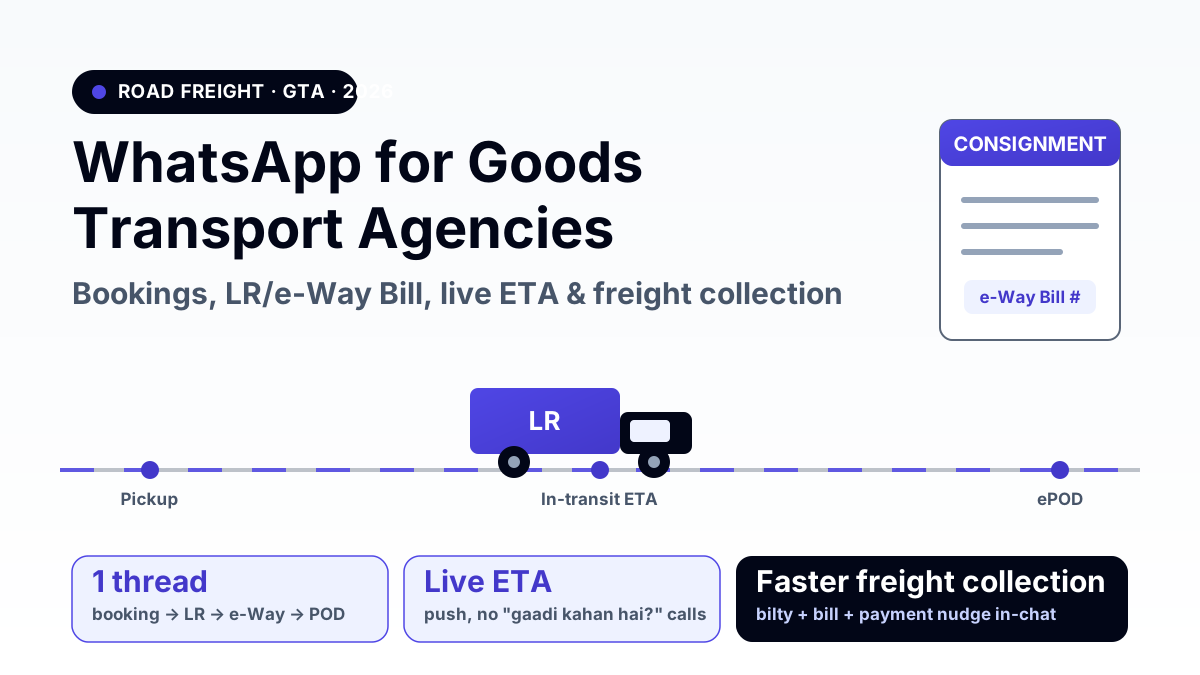
Goods transport agencies (GTAs) and truck operators in India can run the entire consignment cycle on WhatsApp — load enquiries, freight quotes, consignment note (LR/bilty) and e-Way Bill sharing, live in-transit ETA, delivery proof and freight collection — from one number the customer already uses. The payoff is fewer “gaadi kahan hai?” calls, faster payment, and a documented trail that stands up to a GST or e-Way Bill check.
This guide maps the 2026 playbook: the regulatory spine every Indian transporter must respect, a six-stage WhatsApp lifecycle from booking to reorder, and the consent rules that keep your number safe.
The India regulatory spine for goods transport (verify current rules)
A goods transport agency is not just a truck owner — it is a regulated intermediary, and WhatsApp automation must sit inside that frame. Confirm each of these with your CA or transport consultant, because thresholds and rates change:
- GST and the GTA definition. Under GST law you qualify as a Goods Transport Agency only if you issue a consignment note (the LR or “bilty”). That one document decides whether the service is exempt, taxed at 5% under reverse charge (RCM) with the recipient paying, or 12% under forward charge with input tax credit. The option is elected for the financial year — verify the current rate and procedure before you quote.
- e-Way Bill (Rule 138, CGST Rules). Consignments above the notified value threshold need an e-Way Bill generated on the portal, carried by the driver, and matched to the invoice. Sharing the e-Way Bill number and PDF in the trip thread is the fastest way to keep the driver compliant at a check-post.
- Carriage by Road Act 2007 and Rules 2011. Common carriers register and issue a goods forwarding note; liability, declared value and consignment-note particulars flow from this Act.
- Motor Vehicles Act permits. Goods vehicles need a valid national or state goods-carriage permit, fitness certificate and the correct driver licence class — the documents most often demanded on the road.
- Motor Transport Workers Act and the new labour codes. Driver hours, wages and welfare records apply where you employ crews; the labour codes may change specifics, so verify current applicability.
None of this changes because you moved to WhatsApp — but WhatsApp gives you a timestamped, retrievable record of every LR, e-Way Bill and POD, which is exactly what an audit wants.
The WhatsApp compliance self-audit walks through the consent and record-keeping gaps that cause most notices.
The 6-stage WhatsApp lifecycle for a goods transport agency
Map your existing phone-and-register workflow onto six WhatsApp stages. Each stage replaces a call or a lost paper slip.
1. Load enquiry and qualify
A shipper or booking agent messages “need a 32ft container, Delhi to Surat, Tuesday.” A structured form (or a quick-reply flow) captures lane, vehicle type, weight, material and pickup date cleanly — so your dispatcher quotes once, not after three follow-up calls. Restricted or hazardous material can be flagged here before you commit a vehicle.
2. Freight quote and confirmation
Send the rate, expected transit time and terms as a clean message the customer can forward internally. On acceptance, lock the booking against a vehicle and driver. For agencies moving many lanes, a proper WhatsApp API platform pays off here — templated quotes and instant confirmations beat WhatsApp on a personal phone. If you are weighing the numbers, our breakdown of WhatsApp Business API cost in India shows what per-message and platform fees actually look like.
3. Consignment note (LR/bilty) and e-Way Bill
Issue the consignment note and share the LR number plus PDF in the trip thread. Attach the e-Way Bill number and validity so the driver has it on his phone before the first check-post. This is the compliance heartbeat of the trip — and having it in-chat means no frantic call when a document goes missing at 2 a.m.
4. In-transit ETA and exception updates
Push scheduled updates — “loaded”, “crossed Vadodara, ETA 6 p.m.”, “detained at RTO, 40 min delay” — instead of fielding “gaadi kahan hai?” calls all day. For agencies running dozens of trucks, automating these status pushes is the single biggest time-saver; the same pattern is covered in our guide to the best WhatsApp API for logistics.
Get the India 2026 WhatsApp BSP price comparison
Wati vs AiSensy vs Interakt vs RichAutomate: Meta rates, platform fees and hidden costs, side by side. We send it to your WhatsApp in a minute.
5. Delivery proof (ePOD) and unloading
The driver or consignee sends a photo of the signed POD, unloading confirmation and any shortage or damage note straight into the thread. A digital, timestamped POD closes the trip cleanly and removes the week-long wait for a paper bilty to travel back to the office before you can raise the bill.
6. Freight billing, collection and reorder
Send the freight invoice with the LR and POD referenced, then nudge on due date, detention and balance politely from the same thread. Because collection is the trade’s biggest pain, a documented bill-plus-proof message shortens the payment cycle. Regular-lane and return-load customers get a simple re-book prompt — turning one-off bookings into a standing account.
Why WhatsApp beats phone calls and paper for transporters
| Job to be done | Phone + register | WhatsApp workflow |
|---|---|---|
| Booking capture | Verbal, re-confirmed 3 times | Structured form, quoted once |
| LR / e-Way Bill | Paper, easily lost | PDF + number in trip thread |
| “Where is my truck?” | Repeated calls all day | Scheduled ETA pushes |
| Delivery proof | Bilty travels back by hand | Photo POD, instant |
| Freight collection | Follow-up calls, disputes | Bill + proof + reminder in-chat |
Staying compliant: consent, opt-in and safe sending
WhatsApp Business messaging in India runs on consent. Add customers and booking agents to your list only with their opt-in, and keep the record — our explainer on the DPDP Act opt-in and consent rules covers what a valid opt-in looks like. Transactional trip updates to a customer you are actively serving are naturally welcome; promotional broadcasts to a bought list are not — if you plan any broadcast, read how to send bulk WhatsApp messages legally in India first. Minimise the personal data you store, keep driver and consignee details to what the trip needs, and remember that no honest platform can promise you will never be blocked — disciplined, consent-first sending is what protects your number. You can compare our transparent per-message pricing to see how a compliant setup is costed.
Frequently asked questions
Can a goods transport agency legally use WhatsApp for consignment notes and e-Way Bills?
Yes. WhatsApp is a communication channel, not the system of record — you still generate the LR and e-Way Bill through your normal process and the government portal, then share the number and PDF in-chat. The chat becomes a convenient, timestamped copy for the driver and customer; keep your official records as your CA advises.
What is the difference between reverse charge and forward charge for a GTA?
Under GST, a GTA can operate under reverse charge (typically 5%, where the recipient pays the tax) or forward charge (typically 12%, where you pay and claim input tax credit). The option is elected for the financial year. Confirm the current rates and filing procedure with your accountant before quoting — this guide is not tax advice.
Do I need the official WhatsApp Business API, or is the free app enough?
A single owner with a few trucks can start on the WhatsApp Business app. Once you run many trips with multiple dispatchers, automated ETA pushes and templated quotes, the WhatsApp Business API on a platform is the practical path — it supports team access, automation and a proper audit trail.
How does WhatsApp speed up freight collection?
Because you can raise the bill the moment a photo POD lands, instead of waiting for the paper bilty to reach your office, and then send the invoice, LR and proof together with a polite due-date reminder. A documented bill-plus-proof message leaves less room for payment disputes.
Is broadcasting rate updates to all my customers allowed?
Only to customers who opted in, using approved message templates, and within WhatsApp’s rules. Bulk promotional sending to a non-consented list risks blocks and penalties. Transactional trip updates to an active customer are fine; treat rate broadcasts as marketing and get consent first.