Walk into the world of a modular kitchen dealer or interior studio in India in 2026 — a single showroom on a tier-2 high street, a franchise outlet of a national kitchen brand, or a boutique design studio working out of Instagram and word-of-mouth — and you will find the same quiet leak: a beautiful kitchen render sitting in a phone gallery while the prospect goes cold, a site-measurement appointment nobody confirmed, a quotation sent over email that was never opened, and a half-finished installation whose homeowner is anxious because no one told them what happens next. A modular kitchen is a high-ticket, long-cycle, high-trust purchase — a single kitchen runs from ₹1.5 lakh for a basic galley to ₹8–15 lakh for a premium island setup with imported hardware — and the buyer is already on WhatsApp, comparing your studio against three others they messaged the same evening. A slow reply means the consultation books elsewhere; a quote that vanishes into email means a competitor's 3D render wins the living-room conversation; a missed site-visit means the project slips a month. The dealers who grow in 2026 are the ones who turn that chaos into a system: instant enquiry capture from Instagram and the website, fast consultation and site-measurement booking, moodboard and 3D-quote sharing in chat, project-stage updates from design to factory to installation, and clean payment-milestone reminders — all on the WhatsApp Business API. This is the buyer's guide to choosing the best WhatsApp Business API for a modular kitchen dealer, kitchen studio or interiors firm in India in 2026: what actually matters for this vertical, the customer lifecycle it has to carry, and how to pick a platform that does not eat a project-based business's margins. Treat every regulatory and pricing specific below as "verify as of 2026," treat every figure as illustrative, and treat none of this as legal, tax or financial advice.
Why a modular kitchen studio is a WhatsApp problem. Modular kitchens sell on trust, visuals and follow-through. An Instagram enquiry, a question about cost and finishes, a site-measurement booking, a 3D design and quote, a payment-milestone confirmation, an installation-day update, a post-handover snag list — every one of these is a short, time-sensitive, often image-heavy message, and the buyer already lives on WhatsApp, where they read far more than they read email and reply within minutes. A showroom team that has to choose between attending the walk-in customer, calling back the Instagram lead and chasing the carpenter on site will always drop something. WhatsApp — opened within minutes, far higher read rates than email, and able to carry the render, the catalogue PDF and the voice note in one thread — is where a studio answers the finish question, books and confirms the site visit, shares the quote, updates the project stage, collects the next milestone and asks for the review that brings the neighbour's kitchen too, provided every send is consent-based, honest and customer-respectful. Verify advertising and DPDP data rules as of 2026; nothing here is legal advice.
What "best" actually means for a modular kitchen dealer
The "best WhatsApp Business API" for a modular kitchen dealer is not the one with the most features or the loudest brand — it is the one that fits the specific shape of a high-ticket, visual, multi-stage, project-led sale. Before comparing logos, get clear on the criteria that actually decide outcomes for this vertical. The table below is the buyer's checklist — weigh each against your own showroom funnel and project pipeline as of 2026.
| What to evaluate | Why it matters for a kitchen studio | What good looks like |
|---|---|---|
| Speed-to-first-reply on enquiries | Kitchen buyers message three or four studios in an evening; the first to reply with a render or catalogue usually wins the consultation | Instant auto-reply on every Instagram, ad and website enquiry, with a designer for detail |
| Rich media in chat | The sale is visual — moodboards, 3D renders, finish swatches and catalogue PDFs close the deal, not text | Native image, PDF and video sharing inside the WhatsApp thread |
| Site-measurement & consultation booking | A booked, confirmed site visit is the real conversion event, not the enquiry | Self-serve booking or quick-reply scheduling with an instant confirmation |
| Project-stage updates | A six-to-ten-week build with no updates breeds anxiety, bad reviews and milestone-payment friction | Templated stage updates: design approved, factory, dispatch, installation, handover |
| Payment-milestone reminders | Kitchens are paid in stages; a forgotten advance or balance stalls the factory and the install crew | Polite, scheduled milestone reminders tied to the project stage |
| Transparent, low pricing | A single-showroom dealer cannot carry a fat per-seat SaaS fee on every salesperson's login | ₹0 platform fee, pay only per message and Meta's conversation charge |
The reframe most studio owners eventually make: the platform is not the product — the customer-relationship engine it lets you run is. A dealer who picks on price-per-message alone, but cannot reply fast, share a render in chat or keep the homeowner updated through a ten-week build, has bought a cheaper way to lose high-ticket projects and earn one-star reviews. Pick for the customer journey, then optimise the cost. For the closely related design-led view, the best WhatsApp Business API for interior designers guide is a direct companion.
The end-to-end modular kitchen customer WhatsApp lifecycle
Here is the full lifecycle a kitchen dealer can run over WhatsApp, from the first Instagram enquiry to the post-handover review, mapped to the automation at each stage and the guardrail that keeps it ethical. Treat the automation column as a reference pattern and verify advertising and data-protection specifics as of 2026.
Get a 1-minute BSP audit on WhatsApp
Drop your WhatsApp number — we line-item your current invoice against Meta India rates in under 60 seconds. India-hosted, DPDP-compliant.
| Lifecycle stage | WhatsApp automation | Guardrail (verify 2026) |
|---|---|---|
| 1. Enquiry capture | A click-to-WhatsApp ad, Instagram DM, Google listing or website widget opens a chat; bot replies instantly, captures the city, kitchen size and budget band, and shares a starter catalogue | Capture consent at first contact; honour opt-out; no over-claiming on price or delivery |
| 2. Qualification & consultation | Bot shares indicative finish and layout options and routes design and cost questions to a designer; consultation booked | No misleading "starting price" claims; clear that final quote follows site measurement |
| 3. Site measurement | Site-visit booked via quick-reply or self-serve flow with an instant confirmation and a day-before reminder | Accurate slot; clear what the surveyor needs; easy reschedule path |
| 4. Design & quote | 3D renders, moodboard, finish swatches and an itemised quotation PDF shared in chat; revisions tracked in the same thread | Honest specification; quote matches what is shown; revision history kept clear |
| 5. Booking & advance | Order confirmed, advance milestone invoice and payment link shared, production kicked off | Transparent milestone schedule; no hidden charges; receipts issued |
| 6. Production & install | Stage updates — factory, dispatch, installation date, on-site crew — plus balance-milestone reminders | Realistic timelines; proactive delay communication; respectful reminder cadence |
| 7. Handover & review | Handover checklist, snag-list capture, warranty and care notes, and a review request to a happy homeowner | Honest review solicitation; resolve snags before asking; easy opt-out |
Notice the rhythm: WhatsApp carries a high-ticket, visual sale that is too rich for phone tag and too time-sensitive for email, then keeps the customer through a multi-week build and into the review and referral that fills the next slot — which is where a kitchen studio's real lifetime value lives. For adjacent material-supply and fit-out playbooks, the modular kitchen and interior operator guide and the uPVC, aluminium windows and fenestration playbook map closely, as does the construction material dealers guide for the supply side.
The WhatsApp compliance self-audit is a quick way to find which of these you are actually missing.
The follow-up engine: where kitchen dealers quietly leak revenue
The single most under-run part of a modular kitchen business is the follow-up between enquiry and quote. A buyer who walks the showroom on Saturday, or DMs your Instagram render at 11pm, is in-market for maybe two weeks — and the studio that simply follows up with the quote, a render and a gentle nudge captures the project, while the studio that lets the lead sit in a notebook loses it to the competitor who replied with a 3D design the next morning. High-ticket, considered purchases are won on responsiveness and visuals, not on the lowest sticker price, and almost nobody runs the follow-up well because the sales team is busy serving the walk-in in front of them. WhatsApp turns the follow-up from a manual call-list nobody gets to into a structured, consent-based sequence: the catalogue on enquiry, the render after the consultation, the quote after the site visit, the milestone reminder during the build, and the review request after handover. Treat every lead as a relationship on a timeline, keep each nudge respectful and easy to opt out of, and verify advertising and DPDP data rules as of 2026.
Why a zero-platform-fee model fits a project-based dealer
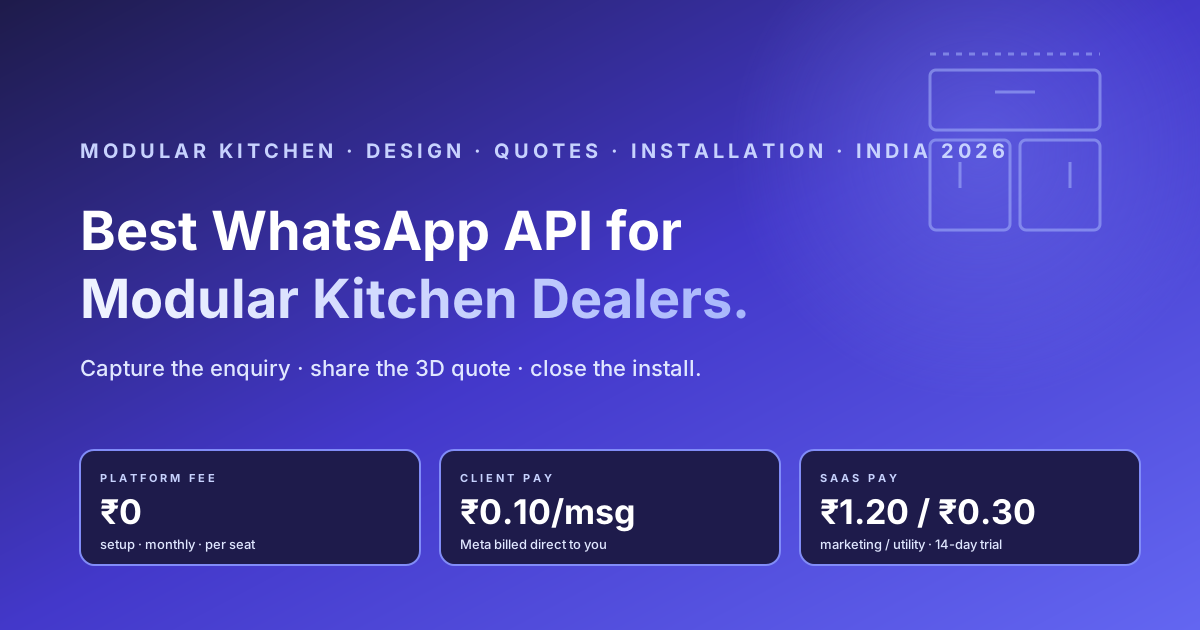
A modular kitchen dealer runs on project margins and lumpy, seasonal volume — a flurry of enquiries around a new launch or festive season, quiet weeks in between — so a fixed monthly platform fee on every salesperson's login is dead weight whether you close two kitchens or twenty in a month. Most legacy BSPs charge a per-seat or tiered monthly platform fee on top of Meta's own per-conversation charge; a zero-platform model charges only for what you actually send. For a business where a single project's messaging cost is a rounding error against a ₹4-lakh kitchen, a model that taxes you per login every month makes no sense. RichAutomate charges ₹0 platform fee, ₹0 setup and ₹0 monthly, then either Client Pay at ₹0.10 per message plus Meta's own conversation charge billed to you directly by Meta, or SaaS Pay at an all-in ₹1.20 per marketing conversation and ₹0.30 per utility conversation. There is a 14-day free trial with 100 credits to model your own funnel before you commit a rupee. To compare the two billing routes line by line, read the Client Pay vs SaaS Pay billing breakdown, run the numbers on the WhatsApp Business API cost guide, and see the full plan on the pricing page.
The automation stack for a modular kitchen studio
Underneath the lifecycle sits a small, repeatable automation stack any dealer can run without a developer. An instant first-reply bot acknowledges every Instagram, ad and website enquiry and captures city, kitchen size and budget band. A booking flow turns "I want a site visit" into a confirmed, reminded appointment. A media-rich quote thread carries renders, swatches and the itemised PDF in one place. A project-stage broadcast keeps the homeowner calm through factory, dispatch and installation. A milestone-reminder sequence keeps the cash flowing without an awkward phone call. And a review-and-referral nudge after a clean handover turns one happy kitchen into the next two. Most of these high-value messages — booking confirmations, site-visit reminders, stage updates and milestone nudges — are utility-category conversations, the cheapest tier, which is exactly why the messaging bill stays a rounding error. To see how other verticals wire the same stack, browse the use-cases library.
An illustrative dealer cohort
Consider an illustrative single-showroom modular kitchen dealer in a tier-2 city running click-to-WhatsApp ads, an active Instagram page and steady walk-ins, closing a handful of kitchens a month at an average ticket in the low single-digit lakhs. Before WhatsApp automation: Instagram DMs answered hours late, quotes lost in email, site visits forgotten, and homeowners calling the showroom mid-build because nobody updated them. After: every enquiry gets an instant acknowledgement and a catalogue, site visits are booked and reminded, renders and quotes live in one thread, stage updates go out automatically, and milestone reminders keep production moving — for a messaging bill that is a rounding error against a single ₹4-lakh kitchen. Faster replies lift the enquiry-to-site-visit rate, in-chat renders lift site-visit-to-order conversion, and proactive updates lift reviews and referrals. Every figure here is illustrative — model your own funnel on the cost guide and the 14-day trial, and verify Meta's live conversation-category pricing as of 2026, since it changes.
The bottom line for 2026
The best WhatsApp Business API for a modular kitchen dealer in India in 2026 is the one that fits the real shape of the business: a high-ticket, visual, multi-stage, trust-led sale that lives or dies on speed-to-reply, rich media in chat and follow-through across a multi-week build. Pick the platform that lets you capture the Instagram enquiry instantly, share the 3D render and quote in the thread, book and remind the site visit, keep the homeowner updated from factory to handover, and collect milestones cleanly — without a per-seat monthly tax on a project-based margin. On RichAutomate that is ₹0 platform, ₹0 setup, ₹0 monthly, then ₹0.10 per message on Client Pay with Meta billed direct, or ₹1.20 marketing / ₹0.30 utility on SaaS Pay, with a 14-day trial and 100 credits to prove it on your own funnel first. Verify all pricing, advertising and DPDP specifics as of 2026; this is operational guidance, not legal, tax or financial advice.
Ready to turn your showroom enquiries into booked kitchens? Start the 14-day free trial with 100 credits, wire up instant enquiry capture, site-visit booking, quote sharing and project-stage updates, and only ever pay for what you send — ₹0 platform fee, ₹0 setup, ₹0 monthly. See the full plan on the pricing page and explore more playbooks in the use-cases library. Build the WhatsApp engine that captures the Instagram lead, shares the render, books the site visit and closes the install — verify every specific as of 2026.
Related guide: See the WhatsApp Business API guide for electrical goods dealers for a vertical-specific breakdown.