Run a cloud kitchen in India in 2026 — a single delivery-only brand on Swiggy and Zomato, a multi-brand kitchen running five virtual restaurants out of one 300-square-foot space, or a growing cloud-kitchen chain with outlets across three cities — and you already know the brutal arithmetic of this business: you are renting customers from the aggregators at 25-30% commission, you almost never own the diner's phone number, and the moment an order ends the relationship resets to zero. A first-time customer orders your biryani, loves it, and you have no way to bring them back except paying the aggregator again to surface your listing. A repeat order that should have come direct comes through Swiggy instead, and a third of the bill vanishes in commission. A delivery runs late, the customer fumes in the app, and you only find out when the one-star review lands. A new brand launch that should have gone out to your best diners reaches nobody because you have no channel to reach them. Cloud kitchens live and die on two numbers the aggregators control — repeat rate and commission — and the only durable escape is a direct, owned customer relationship. WhatsApp is the one channel where a delivery-only brand can capture the diner who scanned a QR on the packaging insert, take a direct reorder at zero commission, fire an order-out-for-delivery update, recover a late order before it becomes a one-star, announce a new virtual brand to opted-in regulars, and run an opted-in offer the night the kitchen is quiet. The customer is already on WhatsApp; the question is whether your brand owns that thread or rents it from an aggregator forever. This is the buyer's guide to choosing the best WhatsApp Business API for a cloud kitchen in India in 2026: what actually matters for a delivery-only, multi-brand, commission-squeezed business, the order lifecycle it has to carry, and how to pick a platform that does not eat a thin-margin kitchen's profit. Treat every commercial and pricing specific below as "verify as of 2026," treat every figure as illustrative, and treat none of this as legal, tax or financial advice. Running a retail bakery instead? See our bakery and custom-cake WhatsApp ordering guide.
Why a cloud kitchen is a WhatsApp problem. A cloud kitchen has no storefront, no walk-ins and no face-to-face moment to build loyalty — the entire relationship is mediated by an aggregator app that owns the customer and takes a cut of every order. The deciding moments are all short messages: the QR-on-the-packaging capture that finally gets you the diner's number, the direct reorder that skips the 28% commission, the order-confirmed and out-for-delivery updates, the "your order is running late, here is a coupon" recovery before a bad review, the new-brand or new-dish announcement to opted-in regulars, and the quiet-night offer that fills idle kitchen capacity. The diner already lives on WhatsApp and opens messages within minutes. WhatsApp is where a cloud kitchen finally owns the customer relationship the aggregators rent back to it — provided every send is consent-based, honest and genuinely useful. Verify advertising and DPDP data rules as of 2026; nothing here is legal advice, and no platform guarantees against Meta quality or ban actions.
What "best" actually means for a cloud kitchen
The "best WhatsApp Business API" for a cloud kitchen is not the one with the most features or the loudest brand — it is the one that fits the specific shape of a delivery-only, multi-brand, commission-squeezed business whose single biggest lever is converting aggregator orders into owned, direct, repeat relationships. Before comparing logos, get clear on the criteria that actually decide outcomes for this vertical. The table below is the buyer's checklist — weigh each against your own order volume and brand mix as of 2026.
| What to evaluate | Why it matters for a cloud kitchen | What good looks like |
|---|---|---|
| Direct-order capture & reorder | Every order taken direct skips the aggregator commission — the single biggest margin lever a cloud kitchen has | QR-to-WhatsApp capture on packaging, a catalogue or menu reorder flow, and direct payment links |
| Order & delivery status updates | A delivery-only brand has no counter to reassure the diner; the status update is the entire service experience | Order-confirmed, preparing, out-for-delivery and delivered updates on one thread |
| Multi-brand routing | One kitchen runs several virtual brands; enquiries and orders must route to the right brand and menu | Per-brand keyword routing and menus on a single number, or a clean number-per-brand setup |
| Late-order & complaint recovery | A late or wrong order becomes a one-star review unless you catch it first; recovery protects the rating that drives orders | Fast human handoff and a make-good flow before the diner rates in the app |
| Opted-in repeat & launch marketing | Repeat rate is the metric that beats commission; a new brand or dish must reach your best diners | Consent-based broadcasts for offers, new brands and quiet-night deals with easy opt-out |
| Transparent, low pricing | A thin-margin, high-frequency business cannot carry a fat per-seat SaaS fee on top of aggregator commission | ₹0 platform fee, pay only per message and Meta's conversation charge |
The reframe most cloud-kitchen owners eventually make: the platform is not the product — the owned customer relationship it lets you build is. A kitchen that picks on price-per-message alone, but cannot capture diners off the packaging or run a clean reorder flow, has bought a cheaper way to stay a permanent tenant of the aggregators. Pick for the direct-relationship journey, then optimise the cost. For the closely related dine-and-delivery view, the best WhatsApp Business API for restaurants guide and the WhatsApp for QSR and food delivery playbook go deeper on the food-service mechanics.
The end-to-end cloud kitchen WhatsApp lifecycle
Here is the full lifecycle a cloud kitchen can run over WhatsApp, from the first packaging-insert capture to the direct reorder, the delivery update, the recovery and the opted-in launch broadcast, mapped to the automation at each stage and the guardrail that keeps it ethical. Treat the automation column as a reference pattern and verify advertising and data-protection specifics as of 2026.
| Lifecycle stage | WhatsApp automation | Guardrail (verify 2026) |
|---|---|---|
| 1. Capture off the order | A QR or "save ₹50 on your next direct order" insert in the packaging opens a chat; bot welcomes, captures the brand and opt-in | Explicit opt-in at first contact; honour opt-out; no scraping aggregator data |
| 2. Direct menu & reorder | Bot shares the menu or catalogue, takes the reorder, captures address and routes to the right virtual brand | Honest pricing and availability; no dark-pattern nudges |
| 3. Order confirmation & payment | Order summary, a secure UPI or payment link, and an estimated delivery time | Secure payment links only; accurate ETAs, not optimistic ones |
| 4. Kitchen & delivery status | Preparing, out-for-delivery and delivered updates, with the rider's contact where relevant | Accurate status; minimise personal data on chat; honour the ETA given |
| 5. Late-order recovery | If an order runs late or wrong, a fast human handoff and a make-good coupon before the diner rates in the app | Genuine make-good, not a stalling tactic; honest about the delay |
| 6. Feedback & review | A post-delivery "how was it?" and, for happy diners, a nudge to rate the brand | Ask honestly; never incentivise only five-star or fake reviews |
| 7. Repeat, launch & quiet-night offers | Opted-in broadcasts for a new virtual brand, a new dish, a festival combo or a quiet-night deal to fill idle capacity | Opt-in only; frequency caps; one-tap opt-out so it never feels like spam |
Notice the rhythm: WhatsApp captures the diner the aggregator never lets you reach, then keeps them with direct reorders and opted-in offers that skip the commission entirely — which is where a cloud kitchen's real margin lives. For the festival and offer-calendar side, the WhatsApp festival commerce playbook is a useful companion, and for the catering-order parallel the catering-services guide shares the same order-and-confirm shape.
Direct reorders: where a cloud kitchen's margin is won back
The single highest-leverage move a cloud kitchen can make is shifting even a slice of its repeat orders from the aggregator to a direct channel. The arithmetic is stark: on an aggregator, a meaningful share of every bill disappears in commission, payment and packaging-fee deductions, so a diner who orders the same biryani four times a month is four times rented, never owned. Capture that diner's number once — off a QR on the packaging, a discount insert, or a "order direct and save" card — and every future order they place on WhatsApp lands at a fraction of the commission cost, with the diner's number, preferences and order history finally yours. Most kitchens never capture the number, never store consent, and never build the reorder flow, so they pay the aggregator to re-acquire the same loyal diner over and over. WhatsApp turns a one-time aggregator order into a direct, owned, repeat relationship: a catalogue the diner can browse, a one-tap reorder of their usual, a saved address, and an opted-in nudge when you launch the dish they will love. Done well and honestly — real savings passed to the diner, genuine convenience, never spam — the direct-reorder engine is the highest-margin, lowest-cost growth lever a cloud kitchen has, and it is the one the aggregators cannot tax.
Get a 1-minute BSP audit on WhatsApp
Drop your WhatsApp number — we line-item your current invoice against Meta India rates in under 60 seconds. India-hosted, DPDP-compliant.
The direct-reorder engine, in one principle. Treat every aggregator order as a chance to start an owned relationship you have permission to nurture, not a transaction that ends when the rider leaves. Give the diner a real reason to come direct — a genuine saving, a faster reorder, a saved usual — capture explicit consent, store the brand and preference, cap the frequency so it never feels like spam, and make opting out a single tap. The thread should feel like a brand the diner chose to keep — never like a channel engineered to pester. Verify advertising and DPDP data rules as of 2026; this is not legal advice, and no platform guarantees against Meta quality or ban actions.
Worth knowing the scale of the risk, and the DPDP penalty calculator estimates it from your own numbers.
Per-seat SaaS vs a ₹0-platform model: the margin question
A cloud kitchen already gives up a large slice of every aggregator order to commission, so stacking a fixed monthly platform fee on top — charged whether you do fifty orders or five hundred — is exactly the wrong cost shape for a thin-margin, high-frequency, seasonal business. Most legacy BSPs charge a per-seat or tiered monthly platform fee on top of Meta's own per-conversation charge; a ₹0-platform model charges only for what you actually send. This comparison is directional — verify current pricing on each vendor as of 2026.
| Dimension | ₹0-platform model (RichAutomate) | Typical per-seat / tiered SaaS BSP |
|---|---|---|
| Platform / setup / monthly fee | ₹0 platform, ₹0 setup, ₹0 monthly | Monthly platform fee, often per seat or per tier |
| What you pay for | Only per message + Meta's conversation charge | Subscription + markup on conversations |
| Fit for a thin-margin, high-volume kitchen | Costs scale with orders and updates sent; a quiet week costs little | You pay the subscription even in a slow week |
| Margin impact on a ₹250 order | Messaging cost is a few paise against the order | Fixed fee eats into a commission-thinned margin |
| Billing transparency | Client Pay: Meta bills you direct at Meta rates | Often a bundled markup you cannot see through |
The conclusion most cloud-kitchen owners reach: for a business already taxed by aggregator commission, a model where the messaging cost is a few paise against each order beats a fixed monthly fee you pay whether the kitchen is slammed or idle. Run your own numbers on the WABA cost calculator and read the Client Pay vs SaaS Pay billing breakdown before committing.
The automation stack that runs it
The good news for a cloud kitchen is that none of this needs custom engineering. The building blocks map onto a standard WhatsApp Business API automation stack: a QR and packaging-insert capture flow that turns an aggregator order into an opted-in direct contact; a catalogue and reorder flow with the menu, a one-tap reorder of the usual, address capture and a secure payment link; a multi-brand router that sends each enquiry to the right virtual brand and menu on a single number or a clean number-per-brand setup; an order-status engine with confirmed, preparing, out-for-delivery and delivered updates; a late-order recovery flow with fast human handoff and a make-good coupon before the diner rates in the app; a feedback-and-review step after delivery; an opted-in broadcast engine for new-brand launches, new dishes, festival combos and quiet-night offers that fill idle capacity; and a human handoff the moment a diner complains or asks something the bot should not answer. For the demand-spike and ops side the cheapest WhatsApp Business API total-cost breakdown helps you model the messaging bill, and the QSR and food-delivery guide shares the same order-and-status spine. The discipline is to keep the chatbot scoped to menus, reorders and status, and route every complaint and custom request to a human.
The economics: an illustrative kitchen cohort
Criteria and architecture are the floor; the reason to run WhatsApp across the cloud-kitchen lifecycle is more orders captured direct at lower commission, fewer late-order one-stars, and an opted-in base you can re-engage on every launch and quiet night. Consider an illustrative single multi-brand cloud kitchen running a mix of aggregator orders, QR and packaging-insert direct captures, and an opted-in base of past diners with logged brand and preference across two or three virtual brands. Every figure below is illustrative — model your own on the calculator.
| Metric (illustrative) | Without WhatsApp lifecycle | With WhatsApp lifecycle |
|---|---|---|
| Share of repeat orders taken direct | Near zero; every reorder pays aggregator commission | Higher; opted-in diners reorder direct at lower cost |
| Late-order one-star reviews | Land in the app before you can react | Fewer; caught and made good on WhatsApp first |
| Reach for a new brand or dish launch | None; you rely on the aggregator to surface it | Direct; opted-in regulars hear first |
| Idle-capacity / quiet-night fill | Kitchen sits idle | Opted-in quiet-night offer fills slots |
| WhatsApp messaging cost | ₹0 | Utility status and reminder messages at the cheapest tier |
The asymmetry is the argument: order confirmations, preparing and out-for-delivery updates and delivered notifications are largely utility-category conversations — the cheapest tier — and they directly reduce the most expensive failures in a cloud kitchen, namely repeat orders lost to commission, late-order one-stars that sink the rating that drives discovery, and a base of loyal diners you can never reach when you launch. A handful of extra direct reorders and recovered orders a week dwarf the messaging bill, which is a few paise against each order. Run your own figures on the restaurants buyer guide before committing.
Build the cloud kitchen lifecycle on RichAutomate
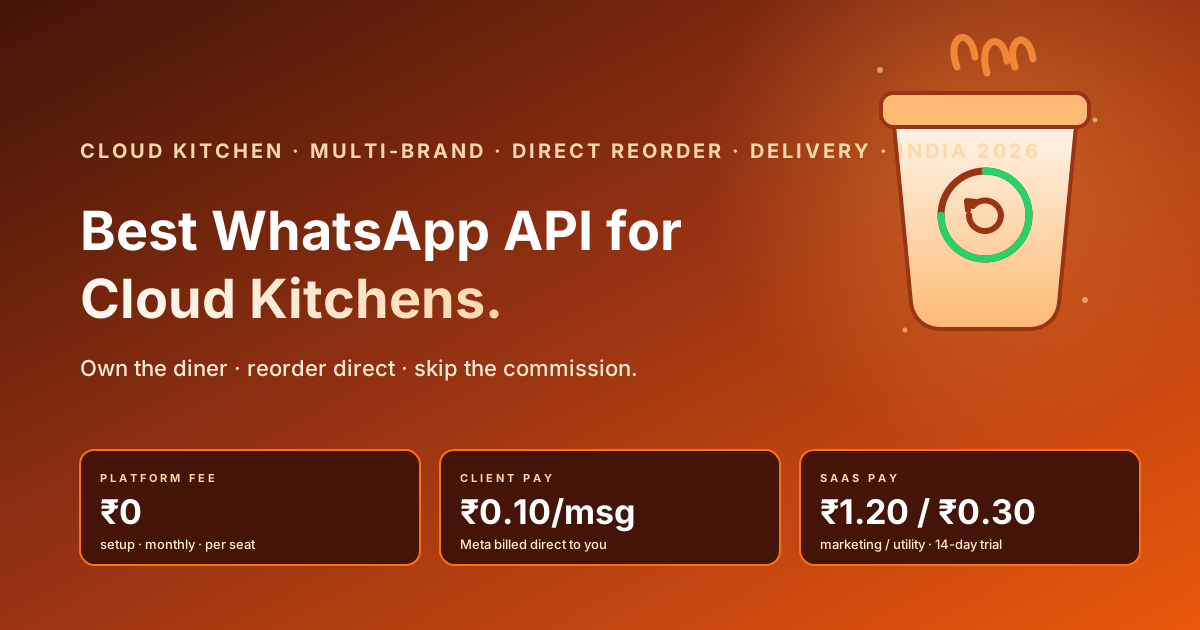
You can stand up the entire owned-customer layer — QR and packaging-insert capture off aggregator orders, a catalogue and one-tap reorder flow, multi-brand routing, order-status updates, late-order recovery with a make-good coupon, feedback and review nudges, and opted-in broadcasts for new brands, new dishes and quiet-night offers — without engineering lift, while your aggregator listings and kitchen ops stay the source of truth. RichAutomate charges ₹0 platform fee, ₹0 setup, ₹0 monthly. On Client Pay you pay only ₹0.10 per message plus Meta's own per-conversation charge billed to you directly by Meta at Meta's rates; on SaaS Pay it is an all-in ₹1.20 per marketing conversation and ₹0.30 per utility conversation — and order confirmations, status updates and delivery notifications are utility conversations, the cheaper category. There is a 14-day free trial with 100 credits, so you can measure the direct-reorder lift before committing. Keep WhatsApp as the owned conversation layer, keep your kitchen and aggregator ops as the source of truth, and verify advertising and DPDP data rules as of 2026. See the full pricing page for details.
Stop renting your customers from the aggregators
A cloud kitchen does not have to stay a permanent tenant of Swiggy and Zomato — paying commission on every reorder from a diner who already loves your food, finding out about a late order only when the one-star lands, and launching a new virtual brand to nobody. From the QR-on-the-packaging capture, through the direct catalogue reorder, the order-status updates, the late-order recovery, and the opted-in launch and quiet-night offers — WhatsApp can be the one owned customer thread, while your kitchen and aggregator listings stay the source of truth. On illustrative numbers that means more orders taken direct at lower commission, fewer late-order one-stars, and an opted-in base you can re-engage on every launch, for a messaging bill that is a few paise against each order. RichAutomate's pricing stays flat through all of it: ₹0 platform fee, ₹0 setup, ₹0 monthly — Client Pay at ₹0.10 per message with Meta conversation charges billed direct by Meta, or SaaS Pay at ₹1.20 marketing / ₹0.30 utility all-in. Start the 14-day free trial with 100 credits, WhatsApp us at 918160311319, or book a 30-minute walkthrough at https://calendly.com/inrichdaddy/30min. (All cohort, order and reorder figures here are illustrative — model your own on the calculator — no platform guarantees against Meta quality or ban actions, and advertising and DPDP rules change; verify the current position as of 2026. This is operational guidance, not legal, tax or financial advice.)
Start your 14-day free trial → · See full pricing · Read the QSR & food-delivery playbook