Catering in India runs on two scarce things: a reliable headcount and a confirmed advance. A wedding caterer in Pune, a corporate-lunch operator in Gurugram, an outdoor-event kitchen in Hyderabad — they all leak the same way. An enquiry lands at 9pm asking for a per-plate rate for 350 guests; nobody replies till morning and the bride has already booked someone else. A confirmed function's final headcount shifts from 300 to 380 the night before and the message sits unread in a personal WhatsApp. A balance payment that should clear before the event happens after it, if at all. For a business where a single function can be worth ₹2–15 lakh and margins live or die on accurate counts, that is not a small leak. The right WhatsApp Business API turns those scattered chats into a system that quotes fast, locks headcounts, collects advances, and sends the menu, the staff, and the kitchen the same confirmed numbers. This guide is about choosing that platform for an Indian catering business in 2026 — and what actually matters versus what the brochures shout about.
Why WhatsApp is the right channel for caterers
Catering is a high-consideration, conversation-led purchase. Nobody books a 400-guest sit-down dinner off a web form. The customer wants to talk: discuss menu, taste preferences, dietary mix (Jain, Swaminarayan, halal, no-onion-no-garlic), service style, and price — and they want it on the channel they already live in. With WhatsApp used by the overwhelming majority of Indian smartphone owners, it is the one place a caterer can hold that entire conversation, share a menu PDF and past-event photos, send a formal quote, take the advance, and run the day-of coordination — without the lead ever leaving the thread.
The difference between the consumer WhatsApp app and the WhatsApp Business API is the difference between one busy owner typing on one phone and a real operation. The API lets multiple team members — sales, the kitchen manager, the event captain — work the same numbers from a shared inbox, send automated reminders, fire structured quote and confirmation templates, and connect WhatsApp to your booking sheet or CRM. For anything past a handful of functions a month, the API is the only version that scales.
The catering workflows that actually move money
1. Instant quote-on-enquiry
Speed-to-first-reply is the single biggest lever in catering. The caterer who answers the per-plate question first usually gets the tasting. An auto-reply that fires within seconds — capturing date, guest count, veg/non-veg split, and venue — then routes a hot lead to a human, wins functions you are currently losing to silence. Pair it with a saved menu catalogue and tiered per-plate ranges so prospects self-qualify before your sales team even picks up.
2. Headcount lock and the final-count reminder
The most expensive mistake in catering is cooking for the wrong number. A scheduled interactive template sent 72 and 24 hours before the function — "Confirm your final guest count: tap 300 / 350 / Other" — captures the number in writing, timestamped, in the thread. That single confirmed message protects your food cost and ends the "but I told your office 280" dispute.
3. Advance and balance collection
Catering cashflow is advance-driven. Tie a payment link into the booking confirmation template so the advance is collected the moment the customer says yes, and schedule a balance-due reminder before the event date. Getting the balance in before the trucks roll out is the difference between a clean margin and chasing money for three weeks after.
4. Day-of coordination
On the function day, the venue contact, your event captain, and the kitchen all need the same address, timing, menu, and count. A broadcast to the internal team group plus a "we're en route, ETA 45 mins" update to the host removes the frantic calls that plague every catering operation. For multi-function days in peak wedding and banquet season, this coordination layer is what keeps a small team running five events without dropping one.
5. Post-event review and rebooking
Corporate clients and venues rebook. A polite post-event message asking for feedback and a Google review — then a festival-season or anniversary nudge months later — turns a one-off function into a repeat account. The same engine that runs festival-commerce campaigns works for caterers: Diwali corporate hampers, wedding-season early-bird offers, monsoon corporate-lunch contracts.
What to actually look for in a provider
| Criterion | Why it matters for catering |
|---|---|
| Speed-to-first-reply automation | The first caterer to answer the per-plate question usually wins the tasting. Auto-acknowledge and qualify in seconds. |
| Shared team inbox | Sales, kitchen manager, and event captain work one thread — no headcount lost between a personal phone and the office. |
| Interactive templates and reply buttons | One-tap headcount confirmation and menu selection capture the number in writing, not on a phone call. |
| Scheduled reminders | 72h / 24h count locks and balance-due nudges must fire automatically, not depend on someone remembering. |
| Payment-link integration | Collect the advance inside the confirmation; chase the balance before the event, not after. |
| Catalogue / menu sharing | Send menus, packages, and past-event photos natively so prospects self-qualify. |
| Transparent, usage-only pricing | Seasonal businesses cannot afford fat per-seat monthly fees in the off-season. Pay for what you send. |
The pricing trap — and what catering should pay
Most WhatsApp platforms marketed to Indian SMBs bury the real cost under per-seat monthly subscriptions, setup fees, and markups on top of Meta's own per-message charge. For a catering business — which is brutally seasonal, slammed during wedding and festival months and quiet in between — paying a fat fixed monthly fee through the off-season is exactly the wrong shape.
Get a 1-minute BSP audit on WhatsApp
Drop your WhatsApp number — we line-item your current invoice against Meta India rates in under 60 seconds. India-hosted, DPDP-compliant.
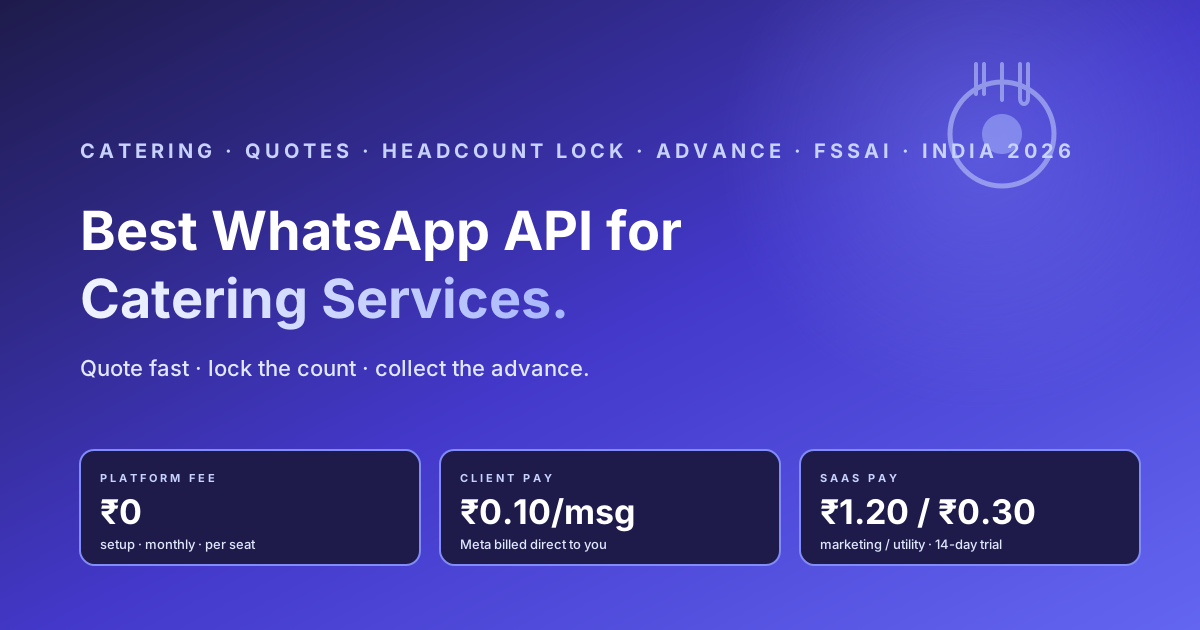
RichAutomate is built the other way. The platform fee is ₹0 — no setup, no monthly, no per-seat charge. You pick how you pay for the actual messages:
- Client Pay: ₹0.10 per message on the platform, and Meta's per-conversation fee is billed directly to you by Meta — full transparency, no middleman markup.
- SaaS Pay: a flat all-in ₹1.20 per marketing message and ₹0.30 per utility message, with the Meta fee already included — one simple number.
Every account starts with a 14-day free trial and 100 free credits, so a caterer can run a real wedding-season enquiry flow before paying a rupee. For the deeper economics of marketing versus utility templates and the 24-hour window, see our breakdowns of WhatsApp Business API cost in India and the 24-hour window session economics. The headline: a caterer doing a few hundred enquiry and confirmation messages a month pays in the low hundreds of rupees, not a five-figure subscription.
The conversation window cost calculator is the quickest way to see what the window rules do to your monthly bill.
Worked example. A mid-size wedding caterer handles 40 enquiries and 12 confirmed functions in a peak month. Say 600 utility messages (quotes, count locks, balance reminders, day-of updates) and 400 marketing messages (festival offers, rebooking nudges). On SaaS Pay that is roughly 600 × ₹0.30 + 400 × ₹1.20 = ₹180 + ₹480 = ₹660 for the month — against even one saved function worth lakhs. The platform pays for itself on the first enquiry it answers before a competitor does.
Compliance: FSSAI and DPDP for caterers
Two regulatory threads matter for a catering business running WhatsApp at scale in 2026.
FSSAI. Catering is a food business — you operate under an FSSAI licence or registration, and your messaging should reflect that you are a licensed operator. When you send menus, allergen information, or packaged-item details over WhatsApp, keep them accurate and consistent with your labelling obligations; misdescribing a Jain or allergen-free menu is both a trust failure and a food-safety one. Many caterers now put their FSSAI licence number on quotes and confirmations sent via WhatsApp — a small credibility signal that closes corporate and institutional clients. See our note on FSSAI labelling and WhatsApp for the detail.
DPDP Act. Under India's Digital Personal Data Protection framework, the contact numbers and event details you store are personal data. The clean way to operate is opt-in: the customer messaged you first (which a click-to-WhatsApp ad or a "message us" button gives you), you only send service messages and offers they would reasonably expect, and you offer an easy opt-out on marketing broadcasts. A compliant platform makes consent and opt-out native rather than something you bolt on. Our DPDP compliance checklist walks through exactly what a caterer needs in place.
RichAutomate vs typical catering setups
| Setup | Reality for a caterer |
|---|---|
| One owner, personal WhatsApp | Enquiries missed when on-site; no reminders; headcount disputes; doesn't scale past a few functions. |
| Per-seat SaaS platform | Fixed monthly fee bleeds through the off-season; pay for seats you don't use in quiet months. |
| RichAutomate | ₹0 platform fee, pay only for messages sent, shared inbox, automated count-locks and reminders, 14-day trial — built for seasonal cashflow. |
For the full menu of automations and other verticals, browse our use-cases and transparent pricing. Caterers serving tent-house and event-rental partners often run the same shared inbox across both sides of the function — quoting food and decor from one thread.
How to start this week
You do not need a three-month rollout. A catering operation can be live on WhatsApp Business API in days: connect your number, set the auto-reply that captures date and guest count, build three templates (quote, count-lock, balance-due), and load your menu catalogue. Run it through the free trial on your next batch of wedding-season enquiries and measure one number — how many more tastings you book because you answered first. That single metric usually decides the platform.
Answer the next enquiry before your competitor does
RichAutomate gives Indian caterers a ₹0-platform-fee WhatsApp Business API with a shared team inbox, one-tap headcount confirmation, automated advance and balance reminders, and menu sharing — pay only for the messages you send, on Client Pay (₹0.10/msg + Meta direct) or SaaS Pay (₹1.20 marketing / ₹0.30 utility). Start the 14-day free trial with 100 credits and lock your next function's count in writing.