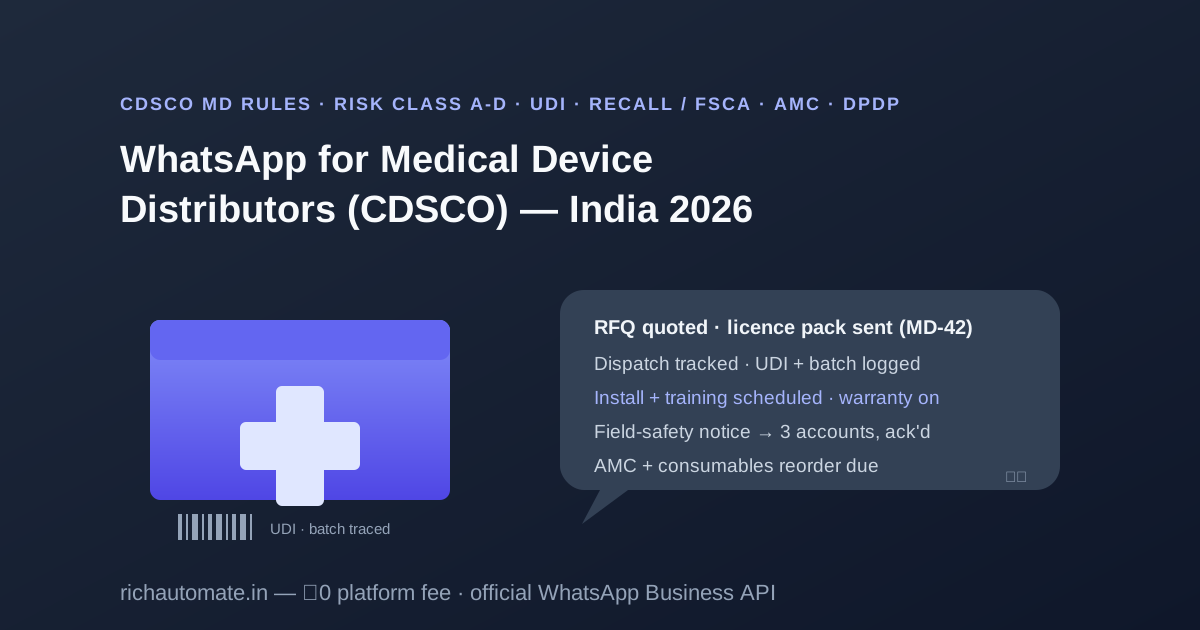
The short answer. A medical-device importer or distributor in India lives on documents and after-sales duty, not just boxes - a hospital or dealer buys a class-wise catalogue, a valid CDSCO licence pack (MD-15 import, MD-42 wholesale, ISO 13485), a traceable batch with its UDI, an installation and application-training slot, a warranty activation, and a promise you can reach every unit if a field-safety notice or recall lands. WhatsApp on the official Business API is the rail that carries all of it: an RFQ + class-wise catalogue Flow, a quotation with the regulatory-document pack delivered as PDFs, an order + batch/UDI + dispatch tracker, an installation + training-scheduling + warranty-activation thread, and the compliance spine of this trade - an AMC/consumables reorder engine plus a targeted recall / Field Safety Notice broadcast to exactly the accounts holding an affected batch. A mid-size distributor serving ~200 hospital and dealer accounts runs the whole loop for roughly ₹900-1,600 a month on RichAutomate's ₹0-platform model (illustrative math below). Compliance first: the CDSCO Medical Device Rules 2017 (risk classes A-D, MD-14/MD-15 import and MD-42 wholesale licensing), UDI labelling as it phases in, the Materiovigilance Programme of India (MvPI) recall/FSCA route, Legal Metrology, and the DPDP Act 2023 all govern this trade - verify each with your regulatory consultant and the current CDSCO notifications before you ship a single device.
A medical-device distributor is a compliance business wearing a warehouse costume. The stock on the racks is the raw material, but what a hospital actually pays for is a licensed, traceable, installed and supported device - and every one of those is a document or a status update that belongs in a WhatsApp thread, not a phone call the biomedical engineer has to chase.
Why WhatsApp fits medical-device distribution
Selling a medical device into an Indian hospital is a document-heavy, relationship-long transaction. A procurement officer, a biomedical-engineering department and a purchase committee all want the same things before a purchase order: proof you are a licensed importer or wholesaler, the device's risk class and registration status, ISO 13485 and test certificates, a clear warranty and AMC promise, and confidence that if the device is ever recalled you can trace and reach the exact unit they hold. That last point is the quiet obligation in this trade - a distributor who sells a class-C or class-D device but cannot pull the list of accounts holding an affected batch is one field-safety notice away from a compliance failure. A WhatsApp thread that carries the RFQ, the licence pack, the UDI-tagged dispatch, the installation and training record and the reorder-and-recall channel answers all of it in one auditable place. Compared with the reality of most distributors today - a personal WhatsApp number, PDFs mailed and lost, and an Excel of who-bought-what nobody trusts - the official API adds intake Flows, approved utility templates, document delivery, a team inbox so no RFQ dies on one rep's phone, and a time-stamped record when a warranty claim, an installation date or a recall reach is later questioned.
The WhatsApp template approval checker will tell you whether the wording is likely to clear review before you waste a submission.
| Stage | What happens | WhatsApp job | Category |
|---|---|---|---|
| 1. RFQ + catalogue | Hospital/dealer requests products; needs class-wise options | RFQ Flow: department, device type, quantity, budget; class-wise catalogue share | Utility |
| 2. Quotation + licence pack | Quote plus regulatory proof required before PO | Quotation PDF + MD-15/MD-42 licence, ISO 13485 and test-cert delivery | Utility |
| 3. Order + dispatch | PO placed; batch and UDI assigned; goods shipped | Order confirmation + batch/UDI record + dispatch and delivery tracker | Utility |
| 4. Installation + training | Device installed; staff trained; warranty starts | Installation-slot booking + application-training scheduling + warranty-activation confirmation | Utility |
| 5. AMC + consumables reorder | Recurring service and consumable demand | AMC-renewal + calibration-due + consumables reorder nudges | Utility + Marketing (opt-in) |
| 6. Recall / field-safety notice | Manufacturer issues FSCA on a batch | Targeted FSN broadcast to accounts holding the affected batch + acknowledgement capture | Utility |
The recall + reorder thread - the money message
The single highest-value automation in this vertical is the batch-linked recall-and-reorder thread. Because every order is tagged to a batch and, increasingly, a UDI, your WhatsApp records become the traceability layer regulators expect. When a manufacturer issues a Field Safety Corrective Action - a software patch, a batch recall, a usage advisory under the Materiovigilance Programme of India - you can broadcast a precise utility message to exactly the accounts holding that batch, capture their acknowledgement in the thread, and hold an auditable record that you reached them. That is the difference between a controlled corrective action and a scramble through spreadsheets. The same batch link powers the quieter revenue engine: consumables and reagents that run out on a schedule, AMC contracts that lapse, calibration that comes due. A reorder nudge - "your dialysis consumables are due this week; reply to confirm the standing order" - and an AMC-renewal reminder turn a one-time capital sale into a recurring, predictable relationship. The reorder loop pays the WhatsApp bill many times over; the recall reach is the compliance insurance you hope never to use.
Regulator + compliance spine (verify everything)
- CDSCO Medical Device Rules 2017 - devices are risk-classified A (low) to D (high), and the licence you need depends on your role: MD-14/MD-15 for import, MD-42 for wholesale sale/distribution, MD-9 for manufacture, with state or central licensing authority depending on class. Your WhatsApp catalogue and quotes must reflect what you are actually licensed to import and sell; never let automation imply you can supply a class or category outside your registration. Verify the current classification and licensing route for each device with CDSCO before you list it.
- UDI + labelling - Unique Device Identification is being phased in for Indian medical devices, tightening batch and unit traceability. Tag every dispatch to its batch and UDI in the thread so your records match what a recall or audit will ask for. The WhatsApp thread records and delivers this data; it never substitutes for the statutory label.
- Materiovigilance / recalls (MvPI + FSCA) - adverse-event reporting under the Materiovigilance Programme of India and manufacturer field-safety corrective actions are the compliance heart of distribution. A recall broadcast must reach affected accounts and capture acknowledgement; keep the message factual, tied to the actual FSCA notice, and never soften a safety instruction to protect a sale.
- Legal Metrology + import documentation - packaged devices carry declaration requirements, and imports carry their own documentation and duty trail. Owner-facing comms should deliver the real certificates, not paraphrase them; keep the licence pack current so an outdated MD-15 never goes out with a quote.
- DPDP Act 2023 - hospital procurement contacts, biomedical-engineer phone numbers and dealer details are personal data; collect the minimum needed to quote, supply and support, state a retention period that satisfies your record-keeping and warranty obligations, keep contact lists out of open chats, honour deletion requests once statutory retention lapses, and take separate explicit opt-in before any marketing broadcast. Patient data never belongs in a distributor thread. See the DPDP compliance checklist.
The carve-out - what the bot must never do
The automation collects an RFQ, delivers a quote and licence pack a human prepared, tracks a dispatch, schedules an installation, and broadcasts a recall notice a regulator or manufacturer issued. It must never claim a device is registered or approved when it is not, never supply a class or category outside your CDSCO licence, never quote clinical suitability or make a diagnostic or treatment claim, never soften or delay a field-safety notice to protect a sale, and never handle patient data. When an enquiry pushes for a device you are not licensed to supply, asks for a clinical recommendation, or requests documents you cannot substantiate, the correct bot behaviour is to flag a human and pause, not to keep the funnel moving. Registration status, clinical guidance and the wording of a safety notice carry real regulatory weight; those stay with your regulatory-affairs and product staff, always.
Get a 1-minute BSP audit on WhatsApp
Drop your WhatsApp number — we line-item your current invoice against Meta India rates in under 60 seconds. India-hosted, DPDP-compliant.
Hospital & dealer accounts - the B2B pipeline
The volume in this trade is institutional, not retail: multi-specialty hospitals, diagnostic chains, standalone dealers and government procurement. A B2B pipeline on WhatsApp is a different template set from a consumer store: a tender/RFQ intake keyed to department and device class, a batch-status dashboard message ("12 of 20 units installed, 4 pending biomedical sign-off"), consolidated licence-pack delivery for a purchase committee, and a single reconciled AMC statement across a hospital's installed base. For a procurement team this is the difference between an auditable account history and a folder of loose PDFs - and it is exactly the recurring institutional relationship that makes a distributor's pipeline predictable. The cold-chain discipline a temperature-controlled pharma distributor uses on reagents applies to heat-sensitive diagnostics too, and the stock-and-order rigour of a pharma distributor's stock management maps straight onto device consumables.
The installation + AMC loop - support that retains
Every capital device sale is the start of a support relationship, not the end of a transaction. Installation scheduling, application training for the clinical staff who will use the device, warranty activation, and then the long tail of AMC renewals, preventive-maintenance visits and calibration-due reminders are where a distributor keeps - or loses - an account. A distributor who stops at delivery leaves the renewal and the consumables revenue to a competitor; one that runs a structured post-sale thread - installation slot, training confirmation, warranty card, then timed AMC and calibration nudges - becomes the default supplier for that hospital's next purchase. Run the reorder and renewal nudges as opt-in utility messages with clear preferences and frequency caps. A light CRM tie-in keeps the installed-base cohorts clean by account, device and warranty status; the best WhatsApp CRM guide covers the setup. Clinics that fit and supply devices, like prosthetics and orthotics providers, run a similar fitting-and-follow-up rhythm.
What it costs - illustrative math on RichAutomate
A mid-size distributor serving ~200 hospital and dealer accounts: RFQ confirmations, quotations with licence packs, dispatch and UDI trackers, installation and training slots, warranty activations, AMC and consumables reorder nudges, and the occasional targeted recall broadcast add up to roughly 800-1,400 utility messages a month, plus a modest opt-in reorder/AMC broadcast. On Client Pay: ₹0 platform fee + ₹0.10 per message, with Meta's conversation charges billed to you directly by Meta; on SaaS Pay: ₹1.50 per marketing conversation / ₹0.50 per utility conversation, all-in. Monthly cost lands around ₹900-1,600 on Client Pay - a rounding error against the value of one retained hospital AMC or one cleanly executed recall, for the rail that documents every licence pack, batch, installation and field-safety notice. Verify current Meta conversation rates - they change. Full workings in the cost breakdown and the Client Pay vs SaaS Pay guide. Going live on the WhatsApp Business API needs a GST-registered entity - treat GST as effectively required, not optional. 14-day free trial, 100 free credits, ₹0 platform / ₹0 setup / ₹0 monthly.
One-week rollout
- Day 1-2: Official WhatsApp Business API on the distributor's business number; build the RFQ Flow (department, device type and class, quantity, budget) and the class-wise catalogue.
- Day 3: Quotation, licence-pack (MD-15/MD-42, ISO 13485, test certs) and dispatch/UDI-tracker templates submitted for approval; missing-document nudge logic wired.
- Day 4: Installation-slot, application-training and warranty-activation templates; team-inbox routing (hospital procurement vs dealer queue vs service desk).
- Day 5: AMC-renewal, calibration-due and consumables-reorder segments with frequency caps; a tested recall/FSN broadcast template linked to batch/UDI records with acknowledgement capture.
- Day 6-7: Pilot on this week's live RFQs and one installed account, tighten the licence-pack and reorder flows based on what procurement still had to ask for, then switch the website enquiry and sales number to the WhatsApp intake.
Who fits this / who doesn't
RichAutomate fits the licensed medical-device importer, wholesaler or authorised distributor that needs the RFQ, licence-pack delivery, batch/UDI traceability, installation-and-AMC support and recall reach on a channel that is auditable and team-operable - at ₹0 platform cost, with registration status, clinical guidance and safety-notice wording staying with regulatory-affairs staff. An unlicensed reseller has no business issuing licence packs or supplying regulated devices at all; a very large multi-division distributor with its own regulatory ERP may want deeper custom integration than a WhatsApp-first stack offers out of the box, though the customer-comms and recall layer still fits. Related reading: pharma distribution & stock management, cold-chain pharma, industrial & medical gas distribution, hospital teleconsult, and the best WhatsApp CRM guide.
Standing honesty line: no platform - ours included - can promise a ban-proof WhatsApp number, and in this trade the real risk was never a ban; it is a device you cannot trace when a field-safety notice lands, or a licence pack that went out expired. Keep intake structured, keep registration and safety-notice wording with your regulatory staff, keep every batch, installation and recall acknowledgement in writing. Start the 14-day free trial or see pricing.
Most distributors on Marg can push invoices straight to WhatsApp — Marg ERP WhatsApp integration.