WhatsApp for Dental Clinics in Bangalore (India 2026)
Bangalore dental clinics — Indiranagar, Koramangala, HSR Layout, Whitefield, Jayanagar — run appointment booking with UPI advance, six-month recall recovery, aligner and RCT consult flows, and DPDP-compliant patient comms inside one WhatsApp thread. Typical 90-day result as of July 2026: no-show rate down ~38%, recall recovery up ~42%, GST-invoiced INR billing through Razorpay, no FX, no hidden BSP markup.
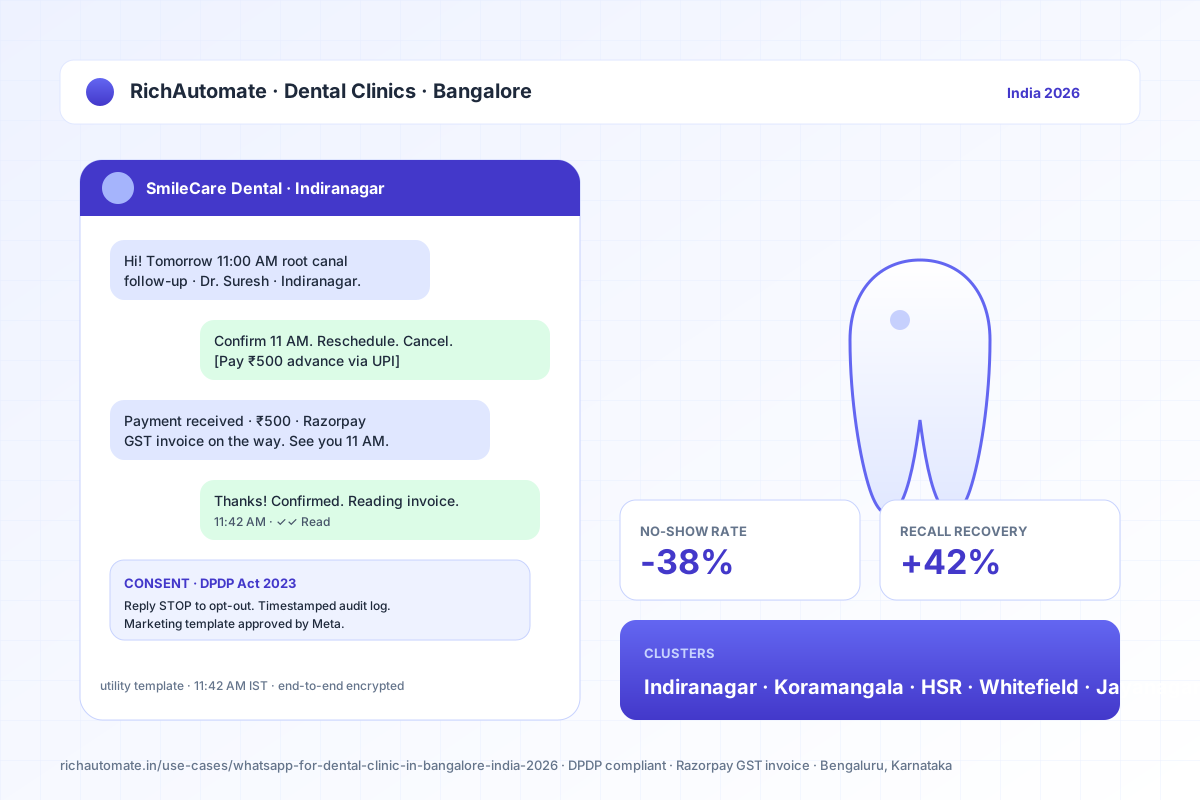
Why Bangalore dental clinics are switching to WhatsApp-first comms
Bangalore has roughly 3,500 active dental clinics serving a 14-million metro population that is younger, more digitally-fluent, and more brand-aware than any comparable Indian city. The patient does not look at the JustDial listing first any more — they search Google Maps, read the clinic's Instagram, and message on WhatsApp. The clinic that responds inside the WhatsApp thread with a slot, a doctor name, and a UPI link wins the booking. The clinic that returns a missed call two hours later loses it. As of June 2026 the no-show problem at Bangalore OPD clinics sits in the 20% to 30% range — chair-time worth ₹35,000 to ₹60,000 a month for an average 2-chair practice — and the single biggest lever to bring it down is a paid-advance WhatsApp confirmation flow.
Six-month recall is the other unclaimed goldmine. A Bangalore family practice in HSR Layout or Jayanagar typically has a 1,500 to 4,000 patient database accumulated over five to fifteen years, sitting in DentiMax or a basic Excel sheet. Phone-call recall recovers ~12%. WhatsApp recall — segmented by last-visit category, sent in the patient's preferred language (English / Kannada / Hindi), and offering a one-tap rebook — recovers 45% to 60%. That delta is real revenue.
Three Bangalore dental ROI scenarios with named numbers
The table below is calibrated against actual Bangalore dental-clinic deployments as of July 2026 — not theoretical estimates. Numbers vary by clinic size, brand, and treatment mix, but the relative magnitudes hold across Indiranagar, Koramangala, HSR, Whitefield, and Jayanagar.
| # | Scenario | Bangalore clinic profile | Before | After WhatsApp | ROI (INR) |
|---|---|---|---|---|---|
| 1 | Appointment + UPI advance (general OPD) | Indiranagar / Koramangala 2-chair clinic | No-show rate ~28%, ~₹38,000/month chair-time lost | No-show rate ~10%, advance ₹300 filters tyre-kickers | ₹26,000/month recovered chair-time |
| 2 | Recall + hygiene-cleaning campaign | HSR Layout family practice, 1,800 past patients | Annual recall recovery ~12% via phone calls | WhatsApp recall recovery ~54% with one-tap rebook | ~₹2.1L incremental hygiene + treatment / quarter |
| 3 | Aligner / RCT / implant consult funnel | Whitefield specialist (orthodontist + endodontist) | Instagram lead → phone tag → 18% consult-to-treatment | WhatsApp lead → photo + estimate → 41% consult-to-treatment | CAC down ~55%, treatment value ₹35K–₹2.4L per case |
The appointment + UPI advance flow is the single biggest no-show killer
How the flow runs end-to-end
- Patient clicks WhatsApp link from Instagram bio or scans QR at reception.
- Meta Native Flow opens in-WhatsApp — doctor, date, time, complaint category.
- Live chair-calendar check prevents double-booking.
- Optional ₹300–₹500 UPI advance via Razorpay — kills no-shows on its own.
- Meta-approved confirmation template fires back with chair number, parking, doctor name.
- Receptionist gets parallel notification on the front-desk WhatsApp.
- 24-hour reminder + 2-hour final ping auto-fire.
- Patient reply CANCEL releases slot to public booking inside 30 seconds.
Six-month recall is unclaimed money sitting in your dental software
Every dental clinic in Bangalore knows the six-month hygiene-cleaning interval is the foundation of recurring revenue, and almost every clinic is bad at running it. Receptionist phone-call recall hits maybe 12% of dormant patients. The reasons are mundane — calls go unanswered, the receptionist is also doing chair-side, and there is no segmentation between a patient who got an RCT last visit and a patient who got a routine scaling. WhatsApp recall fixes all three. Segment by treatment type, last-visit date, and language preference. Send a Meta-approved utility template at the six-month mark with a one-tap rebook button. The rebook button drops the patient straight into the appointment flow above. Average recovery moves to the 45% to 60% range — a 4x to 5x lift on what phone-call recall delivers.
Aligner, RCT, and implant consults convert better when the estimate lives in the WhatsApp thread
High-ticket dental treatment — clear aligners ₹35,000 to ₹2.4 lakh, RCT plus crown ₹12,000 to ₹35,000, single implant ₹35,000 to ₹85,000 — is rarely closed at the first chair-side conversation. The patient needs to see the treatment plan, the photos, the estimate, and discuss with a spouse or parent before signing up. The legacy flow is a printed estimate, a follow-up phone call, and a 18% to 22% close rate. The WhatsApp flow is a PDF treatment plan inside the thread, intra-oral photos with annotated tooth numbers, the estimate broken down by phase, EMI-option screenshots from Bajaj Finserv or HDFC, and a one-tap consult-rebook for the partner / parent to join. Close rate moves to 38% to 45% on the same lead volume — and crucially the CAC drops because Instagram-paid leads no longer fall through the phone-tag gap.
DPDP Act 2023 compliance for Indian dental clinics
Patient phone numbers, treatment plans, intra-oral photos, and OPG scans are all personal data under the Digital Personal Data Protection Act 2023 (MeitY) and the draft Rules notified November 2024. Three things matter for a Bangalore dental clinic. Consent must be specific and informed — "appointment reminders, recall messages, and treatment-plan updates from your clinic name" is fine; "send me anything you want" is not. Opt-out must be one-tap — every marketing template includes the standard opt-out keyword, honoured automatically with audit log. Retention must be purpose-bound — clinical photographs should not sit in your CRM forever, and per-category retention windows are configurable. Clinical-consult content separately falls under the Telemedicine Practice Guidelines 2020 (MoHFW), which permit messaging-based consult subject to registered-practitioner identification and recordkeeping. Razorpay handles payments at PCI DSS Level 1 — the RichAutomate platform never sees or stores card or UPI credentials.
Flow templates that ship in your tenant on day one
- Appointment + UPI advance — Meta Native Flow with live chair-calendar, Razorpay ₹300–₹500 hold, 24-hour and 2-hour auto-reminders, CANCEL releases slot.
- Six-month recall — segmented by last treatment, English / Kannada / Hindi variants, one-tap rebook.
- Aligner consult funnel — Instagram-lead capture, intra-oral photo intake, treatment-plan PDF delivery, EMI option screenshots.
- RCT / implant follow-up — 24-hour pain-check, 7-day suture-check, 90-day crown-fit reminder.
- Paediatric guardian flow — separate consent capture for the parent, fluoride schedule, school-holiday camp campaigns.
- Review request after the chair — Meta-approved post-visit template with a Google review deep link, scheduled 48 hours after appointment, opt-out honoured.
Cost per message after Meta's January 2026 India rate hike
What a Bangalore clinic actually pays as of July 2026
- Utility template (reminder, recall, follow-up): ~₹0.115 per message.
- Marketing template (campaign): ~₹0.86 to ₹0.88 per message.
- Service messages inside the 24-hour customer-care window: free.
- UPI-in-WhatsApp checkout adds Razorpay's standard MDR — no surcharge from RichAutomate.
- Reference: Meta WhatsApp Business Platform pricing.
A typical 2-chair Bangalore clinic running appointment + recall + post-visit review at ~600 patients a month spends ₹350 to ₹600 in Meta message charges. The recovered chair-time pays this back many times over.
Pricing on RichAutomate
Single-clinic Bangalore practices typically run on the Pro plan, which bundles the flow builder, campaign scheduler, Razorpay payments, treatment-plan PDF delivery, and DPDP audit log. Multi-clinic groups (a flagship in Indiranagar with branches in HSR and Whitefield) fit the Chain plan with role-based access per branch manager. All pricing is INR, GST-invoiced, no FX, no hidden BSP markup. See full pricing or compare against Wati · AiSensy · Interakt · RichAutomate.
Want this live in your Bangalore clinic this week?
Book a 30-minute call. We map your doctor roster, chair calendar, recall database, and aligner consult flow live. You leave with a working setup ready for the next walk-in.
Related reading
- WhatsApp for Dental Clinic OPD · India 2026 playbook
- WhatsApp for Dental Specialty Clinics (Orthodontics, Endodontics, Implants) · India 2026
- Cutting WhatsApp Marketing Cost after Meta's January 2026 Rate Hike
- Wati vs AiSensy vs Interakt vs RichAutomate
- Wati vs RichAutomate
- AiSensy vs RichAutomate
- Appointment-booking architecture (reused by the dental flow)
- DPDP Act 2023 + Draft Rules Nov 2024 — what Indian clinics must know
- WhatsApp pricing calculator for Indian clinics
Bangalore dental WhatsApp · FAQ
Which Bangalore dental clusters benefit most from WhatsApp automation?+
Five Bangalore catchments produce most of the dental-clinic upside. (1) Indiranagar and 100 Feet Road — dense walk-in OPD plus aligner / cosmetic consults from a younger working-professional base, the no-show problem is acute because patients double-book between dentists. (2) Koramangala 5th and 7th Block — startup-employee cluster, very WhatsApp-native, willing to pay UPI advance to lock a slot. (3) HSR Layout — high concentration of family practices with multi-year recall databases that are sitting dormant in Excel sheets or basic dental software. (4) Whitefield and Marathahalli — IT-corridor specialists (orthodontist, endodontist, implantologist) where treatment ticket values are ₹35,000 to ₹2.4 lakh per case and consult quality matters more than volume. (5) Jayanagar and JP Nagar — established neighbourhood practices, multi-generational patient base, recall is a goldmine but the practice has never run a structured campaign. Each cluster maps to a slightly different flow template — RichAutomate ships all of them in your tenant on day one.
Is patient-data handling on WhatsApp compliant with the DPDP Act 2023 for an Indian dental clinic?+
Yes, when configured correctly. The Digital Personal Data Protection Act 2023 plus the draft Rules notified November 2024 require three things that the platform enforces by default. First, specific informed consent — the opt-in flow shows the patient exactly what they are signing up for ("appointment reminders, recall messages, and treatment-plan updates from <your clinic name>") and stores the consent text plus timestamp. Second, one-tap opt-out — every marketing template includes the standard opt-out keyword and the system honours it without human intervention. Third, purpose-bound retention — clinical photographs and treatment notes should not sit in your CRM forever, and retention windows are configurable per data category. On the storage side, all patient data sits in Indian data-centre regions and never leaves India. Combined with Razorpay PCI DSS Level 1 for payments, the clinic has a defensible end-to-end audit trail.
How does the appointment-booking flow with UPI advance actually work for a Bangalore clinic?+
A new or returning patient sends a message, clicks a WhatsApp Click-to-Chat link from your Instagram bio, or scans a QR code at the reception. They land inside a Meta Native Flow rendered in-WhatsApp. They pick the doctor (Dr. Sneha · general dentistry, Dr. Karthik · orthodontics, Dr. Reema · implantology — whatever your roster looks like), choose a date and time slot that is checked live against the chair calendar (no double-booking), and indicate complaint category (routine cleaning, toothache, follow-up, aligner consult, paediatric). The system then offers an optional ₹300 to ₹500 UPI advance via Razorpay — this single step is what kills the no-show problem because a patient who has paid even ₹300 turns up. A Meta-approved confirmation template fires back with the chair number, parking direction, and the doctor name. The receptionist gets a parallel notification. 24 hours before, an auto-reminder. 2 hours before, a final ping. If they reply CANCEL, the slot is released back to the public booking flow within 30 seconds.
What does a typical Bangalore dental clinic see in ROI in the first 90 days?+
Three numbers move first. (1) No-show rate drops from the typical 20% to 30% band down to roughly 8% to 12% — the UPI advance is doing most of the work, the rest is the auto-reminder cadence. (2) Recall-recovery (six-month hygiene cleaning, annual check-up, post-RCT follow-up) jumps from sub-15% via phone calls to roughly 45% to 60% via segmented WhatsApp campaigns. (3) Consult-to-treatment conversion for aligner, RCT, and implant cases improves because the patient now gets the treatment plan PDF, the estimate, and a comparison of options on WhatsApp where they can re-read it and discuss with family — instead of a five-minute conversation at the chair where they forget half of it. For a 2-chair clinic the recovered chair-time alone typically pays the subscription back inside the first 30 days.
Can the clinic send treatment photos, X-rays, and OPG scans through WhatsApp safely?+
Yes, but treat them as sensitive personal data under the DPDP Act 2023. The platform supports sending media via Meta-approved templates and free-form session messages within the 24-hour customer-service window. For clinical images, three safeguards matter — (a) send only to the patient (and their consented guardian for paediatric cases), never to a broadcast list, (b) avoid storing the image in any third-party tool outside the platform, and (c) tag the message with the patient record so retention is enforced when the consent window expires. For very-high-resolution OPG and CBCT scans, the recommended pattern is a WhatsApp message with a tokenised, time-limited download link rather than the raw file. The Dental Council of India advisory on tele-dentistry plus the existing Telemedicine Practice Guidelines (2020, MoHFW) apply to clinical consults conducted over messaging.
How does this compare to running a dental CRM plus a separate SMS / call-centre setup?+
Three differences matter. (1) Channel — WhatsApp open rates and reply rates run 85% to 95% versus 12% to 18% for SMS and a single-digit answer rate for outbound calls in Bangalore. (2) Cost — a single Meta utility-template message after Meta's January 2026 rate hike costs about ₹0.115 in India, while a 60-second outbound call from a receptionist costs roughly ₹50 of staff time. (3) Conversion — UPI-in-WhatsApp closes the appointment in one thread; a CRM that emails a Google Calendar invite and hopes the patient turns up does not. Most Bangalore clinics that switch keep their existing dental software (DentiMax, CarestreamDental, MyDentalPracticeApp, or whatever they use for clinical records) and replace only the patient-comms layer with WhatsApp. The two systems integrate via a simple appointment-export webhook on the RichAutomate side.
All figures and rate references current as of July 2026. DPDP Act 2023 + draft Rules notified November 2024. Meta Cloud API v24.0. Razorpay PCI DSS Level 1.