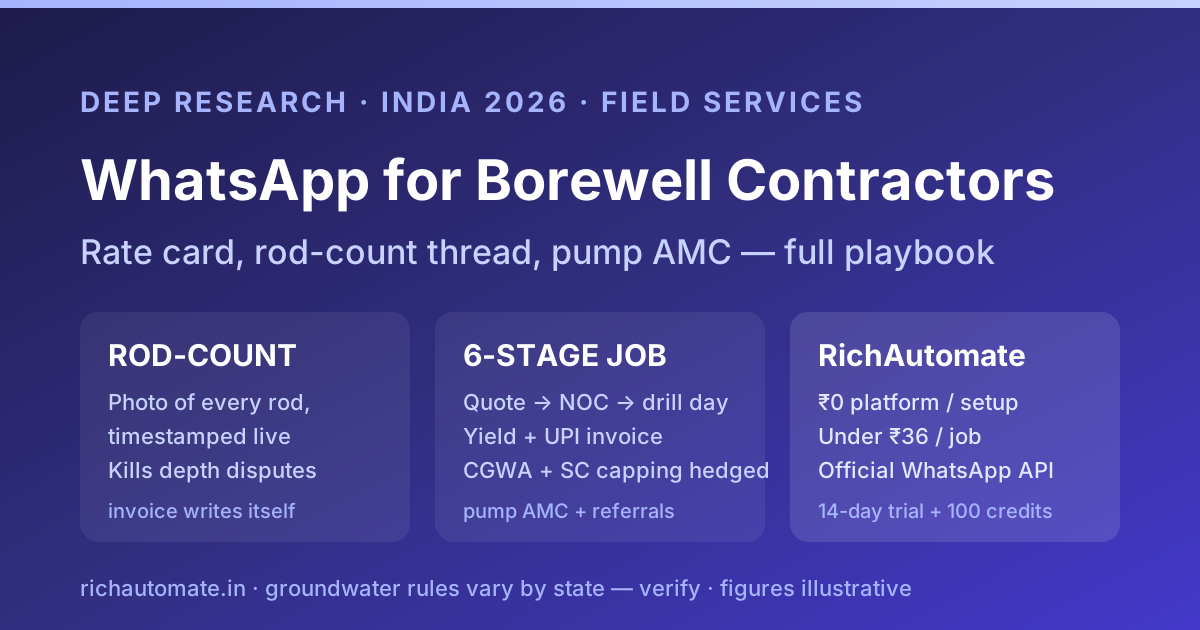
The short answer. Borewell drilling is a per-foot business where the product is invisible — the customer cannot see 400 feet underground, so every invoice is an argument waiting to happen. WhatsApp on the official Business API turns the whole job into an evidence trail: the slab-rate card sent in writing before the rig moves, a live drilling-day thread with rod-count photos, the yield result and casing invoice timestamped in one chat, then pump-install warranty and seasonal service reminders that bring the same customer back. A contractor running ~15 jobs/month spends roughly ₹400-600/month in messages on RichAutomate's ₹0-platform model (illustrative math below). One legal note first: groundwater extraction is regulated — state Groundwater Acts + CGWA NOC rules vary by state and use, and failed borewells must be safely capped per Supreme Court guidelines. Verify both for your district.
From single-rig operators in Tier-3 towns to fleet contractors serving builders and farms, the pattern is identical: the enquiry is a phone call, the dispute is about depth, and the repeat business — pump service, flushing, the neighbour's plot — goes to whoever the customer can still find on WhatsApp a year later.
The 6-stage borewell job on WhatsApp
| Stage | What happens | WhatsApp job | Category |
|---|---|---|---|
| 1. Enquiry + site visit | "Boring karwana hai, rate kya hai?" | Auto-reply: rate-card summary, site-visit booking button, survey option explained | Service |
| 2. Quote + rate lock | Slab rates by depth band | Written slab-rate card PDF (0-100 ft / 100-300 / 300+ per-ft rates, casing per-ft, rig visit charge) — the document that prevents the fight | Utility |
| 3. Permissions | NOC / municipal permission where applicable | Checklist message: what the owner arranges vs contractor; status thread until cleared | Utility |
| 4. Drilling day | Rig on site, depth climbing | Live thread: photo of rod count at each slab boundary, strata notes, casing decision with 1-tap approve | Utility |
| 5. Result + payment | Yield test, casing, invoice | Yield video + final depth summary + itemised invoice + UPI link — all in the same thread as the rod photos | Utility |
| 6. Pump + aftercare | Pump install, service, referrals | Pump warranty card, seasonal flushing/motor-service reminders, summer campaign to past customers (opt-in) | Utility/Marketing |
The rod-count thread — why disputes die in the chat
The most expensive sentence in this trade is "itna deep gaya hi nahi hoga." The fix is procedural, not verbal: photograph every rod before it goes in, in the customer's own WhatsApp thread, timestamped as it happens. When drilling crosses a slab boundary (say 300 ft), the thread already shows the count. The final invoice then reads as a summary of photos the customer watched arrive — not a number to negotiate. Contractors who run this discipline report the payment conversation shrinking from days to minutes; the same thread doubles as the record if a builder's site engineer changes mid-project.
Rates differ per market, and the WhatsApp pricing calculator by country shows the current per-conversation cost for each country you message.
The honesty clause: no one can promise water
A hydrogeological or electrical-resistivity survey improves the odds; nothing guarantees yield — and saying so in writing before drilling is both ethics and protection. A one-line template does it: "Survey improves probability, does not guarantee water. Drilling charges apply per actual depth as per rate card." The same honesty rule applies to messaging tools: no platform can promise a "ban-proof" WhatsApp number — opt-in discipline and utility-first messaging do that.
Get a 1-minute BSP audit on WhatsApp
Drop your WhatsApp number — we line-item your current invoice against Meta India rates in under 60 seconds. India-hosted, DPDP-compliant.
Compliance spine (verify each for your state)
Groundwater law — extraction NOCs under CGWA rules and state Groundwater Acts vary sharply by state, user category (domestic/agri/industrial) and notified-area status; several states also require drilling-rig registration. Confirm your district's current position before quoting. Failed-borewell capping — Supreme Court guidelines on open/abandoned borewells (issued after child-fall tragedies) require secure capping and, in many states, intimation to local authorities; make the capping photo the last message of every dry-bore thread. GST — drilling is typically works-contract/service treatment; pump supply is goods — confirm the split with your CA. Meta rules — job threads are utility; summer promos to past customers are marketing category → opt-in only, honour STOP instantly. DPDP — site addresses, plot documents and payment records are personal data: collect the minimum, delete on schedule.
Cost math (illustrative — verify Meta rates)
| Item | 15-job/month contractor | Monthly |
|---|---|---|
| Job threads (quote, rod photos, invoice, pump) | ~25 utility msgs × 15 jobs = 375 × ₹0.50 | ~₹190* |
| Service reminders + summer campaign (opt-in) | ~300 × ₹1.50 marketing + ~200 × ₹0.50 utility | ~₹550 |
| Platform fee (RichAutomate) | — | ₹0 |
| Total | ~₹740 — under ₹50/job |
*Most drilling-day messages ride inside the free 24-hour service window the customer's own replies keep open — active job threads cost close to nothing. Run your numbers on the WABA cost calculator.
5-point safety + data checklist: (1) capping photo closes every dry-bore thread; (2) rate card in writing before rig moves; (3) no-yield-guarantee line in every quote; (4) opt-in recorded before any summer promo; (5) delete plot documents after handover per your DPDP retention schedule.
What the software cannot do
It cannot find water, cannot get the NOC, and cannot make a jammed rig move — it makes every foot billable without a fight and every past customer reachable next summer. Related reading: packaged drinking-water plants · pest-control operators (same AMC-evidence pattern) · DPDP compliance checklist · full cost guide.
Run a borewell or pump business? Rate-card auto-reply + rod-count threads + service reminders live in a week. Start the 14-day free trial (100 credits, no card), see pricing, or WhatsApp us at +91 81603 11319 / book a free 30-min call.