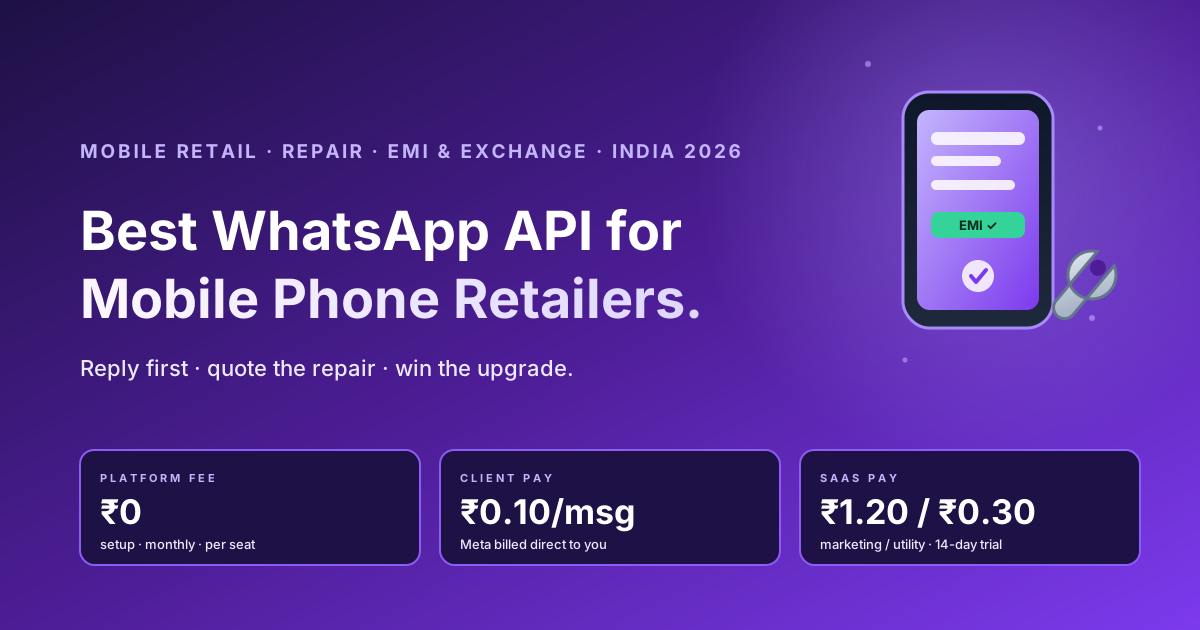
Run a mobile phone retail and repair business in India in 2026 — a single multi-brand mobile shop on a busy high street selling handsets, accessories and recharges, a small chain of stores running EMI and exchange offers across a city, or a dedicated phone-repair counter doing screen replacements, battery swaps and water-damage jobs — and you already know the business turns on things you cannot fake: how fast you reply to a "which phone for 18k with good camera?" message, whether you can quote a screen-repair price before the customer walks into the shop next door, and whether the customer who bought a phone from you last year comes back for the upgrade instead of an online marketplace. A buyer comparing a handset messages three shops at once on click-to-WhatsApp; the one who replies in two minutes with the price, the EMI option and the exchange value wins the sale, the other two never hear back. A customer with a cracked screen waits all day for a repair quote that never comes and walks into the service centre that replied within the hour. A phone bought 22 months ago is due for an upgrade, but nobody told the customer about the new launch and the exchange bonus, so they buy online and the shop loses a repeat sale it had already earned. Mobile retail and repair is a fast, price-sensitive, high-footfall, repeat-purchase business that runs on instant quotes, EMI and exchange, and after-sales repair — and the customer is already on WhatsApp comparing your reply speed against the shop whose ad they tapped thirty seconds ago. A slow reply loses the walk-in; a missing repair quote loses the service job; a forgotten upgrade hands a loyal customer to Amazon. The mobile businesses that compound in 2026 are the ones that turn that speed-and-repeat chaos into a system: instant enquiry response, model and budget capture, EMI and exchange quotes, repair estimates and pickup, order and warranty records, and upgrade and accessory reminders — all on the WhatsApp Business API. This is the buyer's guide to choosing the best WhatsApp Business API for a mobile phone retail and repair business in India in 2026: what actually matters for this vertical, the lifecycle it has to carry, and how to pick a platform that does not eat a thin-margin retail business alive. Treat every commercial and pricing specific below as "verify as of 2026," treat every figure as illustrative, and treat none of this as legal, tax or financial advice.
Why mobile retail and repair is a WhatsApp-shaped business. Margins on handsets are thin, footfall is volatile, and the same customer who buys a phone needs a screen guard today, a repair in eight months, and an upgrade in two years. The shop that captures the number at first contact, answers the price question instantly, and stays in touch through warranty and upgrade earns three sales from one acquisition. The shop that treats every walk-in as a one-off pays full ad cost every single time. WhatsApp is where Indian phone buyers already negotiate — so the platform you pick is not a "nice to have," it is the counter where the deal actually closes.
What "best" actually means for a mobile retailer
The best WhatsApp Business API for a mobile shop is not the one with the longest feature list or the flashiest dashboard — it is the one that fits the shape of a fast, price-led, repeat-purchase retail-plus-service business. Five criteria matter more than anything else. Speed-to-first-reply, because a phone buyer comparing models messages several shops and the first to quote usually wins. Model, budget and intent capture, because the right recommendation and the EMI or exchange offer depend entirely on what the customer wants and can spend. Quoting EMI and exchange, because most mid-range and premium sales in India hinge on a no-cost-EMI plan and an honest exchange value for the old handset. Repair intake and status, because after-sales repair is a timed job where a missed update earns a one-star review and a lost customer. And warranty, upgrade and accessory follow-ups, because the recurring revenue of a phone shop lives in the base of past buyers, not in the next ad. Pick for that journey first, then optimise the cost. No platform guarantees against Meta quality or ban actions, and advertising and DPDP data rules change, so verify as of 2026; this is not legal advice. For a wider view of how providers compare, see our guide to the best WhatsApp Business API providers in India and the broader electronics and appliance retail playbook.
The seven-stage mobile retail and repair lifecycle on WhatsApp
The journey a phone shop has to carry runs in seven stages, and WhatsApp can carry every one of them.
1. Enquiry capture. A click-to-WhatsApp ad, a Google Business listing, a website button or a poster QR opens a chat; the bot replies instantly and captures the model or budget, the use case (camera, gaming, battery), whether it is a new buy or a repair, and consent at first contact. 2. Recommendation and price. The bot shares two or three matching handsets with price, the no-cost-EMI plan and the indicative exchange value for the old phone, then routes a serious buyer to a human to close. 3. EMI and exchange quote. A clear breakdown — down payment, monthly EMI, tenure, documents needed and the exchange value against the new price — sent on the thread so the customer can decide without a second trip. 4. Booking and reservation. Stock confirmation, a hold on the chosen variant and colour, store address and timing, and a reminder to carry ID and the old handset for exchange. 5. Repair intake and status. For repair jobs, the bot captures the model, fault and symptom, shares an indicative price band, offers pickup or counter drop-off, and then sends job-received, in-progress, ready-for-pickup and warranty updates so the customer is never left guessing. 6. Purchase, invoice and warranty. A digital invoice, the warranty period and the serial recorded on the thread, a secure payment link for advance or full payment, and a request for a review after a clean experience. 7. Upgrade, accessory and referral. A consent-based nudge before the typical 18-24 month upgrade window, accessory and screen-guard offers after a new purchase, and a referral incentive — opt-in only, with one-tap opt-out. WhatsApp carries the urgent sale and keeps the customer by remembering the warranty and the upgrade window. Verify advertising and data-protection specifics as of 2026.
Get a 1-minute BSP audit on WhatsApp
Drop your WhatsApp number — we line-item your current invoice against Meta India rates in under 60 seconds. India-hosted, DPDP-compliant.
The click-to-WhatsApp link generator builds the wa.me link with your prefilled message in one step.
The upgrade and repair-base engine. The most under-mined asset in any phone shop is its own customer list. Every handset sold carries an upgrade window; every repair carries a warranty and a likely next fault; every accessory buyer is a screen-guard, case or earbud sale waiting to happen. Most shops never store the model, the purchase date or consent in a usable way, so they re-acquire the same buyer at full ad cost every time. WhatsApp turns the sales register into a consent-based engine: a warm, opted-in "the new model you liked is in stock — your current phone fetches a strong exchange value this month, shall we hold one?" that wins the upgrade before a marketplace does. Capture the model and purchase date, store explicit consent, cap frequency so it never feels like spam, and make opting out a single tap.
Zero-platform-fee vs per-seat SaaS: the margin maths
A mobile shop runs a high volume of low-margin, mixed-ticket conversations — a Rs 150 screen-guard query and a Rs 80,000 premium-handset EMI sale on the same afternoon — with sharp festive and launch-day spikes. A fixed monthly platform fee on every counter login is dead weight in the quiet weeks and an arbitrary tax in the busy ones. Most legacy BSPs charge a per-seat or tiered monthly platform fee on top of Meta's own per-conversation charge. A zero-platform model charges only for what you actually send, so the messaging cost is a few paise against each sale instead of a fixed monthly bill you pay whether you run twenty enquiries or four hundred.
| Cost element | Typical per-seat SaaS BSP | RichAutomate (zero-platform) |
|---|---|---|
| Platform / setup fee | Monthly subscription + per-seat add-ons | ₹0 platform, ₹0 setup, ₹0 monthly |
| Per-message cost | Markup bundled into plan | Client Pay ₹0.10/msg + Meta billed direct, or SaaS Pay ₹1.20 marketing / ₹0.30 utility |
| Seats / team logins | Often charged per user | Included |
| Trial | Limited or card-gated | 14-day free trial + 100 credits |
For a high-frequency, mixed-ticket, seasonal retail business, a model where the cost scales with messages — not seats — protects a thin margin. See the full breakdown on the RichAutomate pricing page and our deep dive on WhatsApp Business API cost in India for 2026. Run your own numbers and verify current vendor pricing as of 2026.
The automation stack that does the work
The highest-value messages in a phone shop are largely utility-category conversations — the cheapest tier — and they directly reduce the most expensive failures: slow replies that send a buyer to the next shop, repair jobs that go silent, EMI quotes that stall, and a base of past buyers whose upgrades are never re-sold. A practical stack: an always-on greeting bot that captures model, budget and consent in under a minute; saved quick replies for the ten most-asked price and EMI questions; a repair-status flow that auto-sends received, in-progress and ready updates; a payment-link step for advance bookings; and a consent-based broadcast for new launches, festive offers and upgrade nudges to the opted-in base only. The same setup runs the same way whether you are one counter or ten. New to the platform? Start with our step-by-step WhatsApp Business API setup guide for India, and browse real deployments on the RichAutomate use-cases library.
An illustrative operator cohort
Picture a single multi-brand mobile shop running click-to-WhatsApp ads, a Google Business listing and walk-in QR enquiries, with an opted-in base of past buyers tagged by model and purchase date across new sales, EMI and exchange deals, accessory add-ons and a repair counter. Instant acknowledgement replaces slow replies, model-and-budget capture lifts won sales, transparent EMI and exchange quotes close more mid-range deals, repair-status updates cut the angry "is it ready?" calls, and upgrade reminders re-sell to the base before a marketplace does — for a messaging bill that is a few paise against each sale. Every figure here is illustrative, so model your own. On RichAutomate the pricing is flat: ₹0 platform fee, ₹0 setup and ₹0 monthly, then either Client Pay at ₹0.10 per message plus Meta's own per-conversation charge billed to you directly by Meta, or SaaS Pay at an all-in ₹1.20 per marketing conversation and ₹0.30 per utility conversation, with a 14-day free trial and 100 credits. Verify Meta's live conversation-category pricing as of 2026, since it changes.
Turn your counter into a 24/7 sales and service desk
Your next phone buyer is on WhatsApp right now, comparing your reply speed against the shop next door. RichAutomate gives a mobile retail and repair business the WhatsApp Business API with ₹0 platform fee, ₹0 setup and ₹0 monthly — Client Pay at ₹0.10 per message with Meta billed direct, or SaaS Pay at ₹1.20 marketing / ₹0.30 utility — plus a 14-day free trial and 100 credits to prove it on your own enquiries first.
Start the 14-day free trial at richautomate.in/pricing, message us on WhatsApp at +91 81603 11319, or book a 30-minute walkthrough at calendly.com/inrichdaddy/30min. Reply first, quote the repair, win the upgrade — and stop paying full ad cost for a customer you already earned.
Related guide: See the WhatsApp Business API playbook for mobile repair shops for a vertical-specific breakdown.