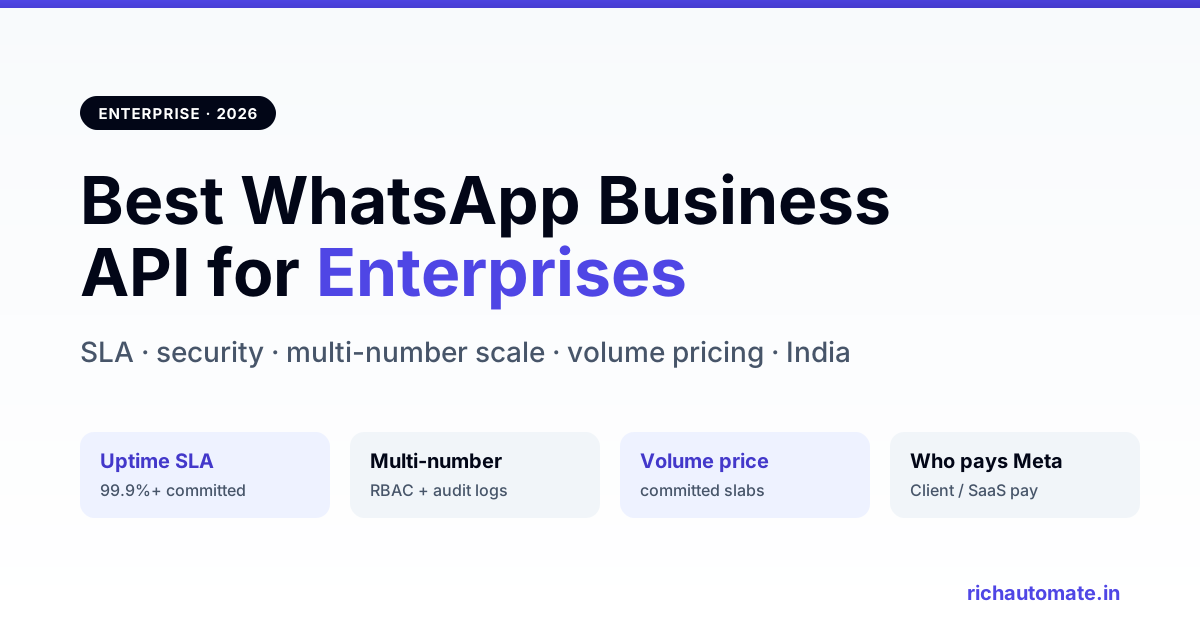
The short answer. For an enterprise in India, the best WhatsApp Business API provider in 2026 is the one that clears five bars at once: a committed uptime SLA, real security and access control (RBAC, audit logs, SSO), the ability to run many numbers and teams from one place, transparent volume pricing, and a clear answer to who pays Meta. RichAutomate fits mid-market and multi-brand enterprises that want ₹0 platform fee, self-serve multi-number scale and Client Pay so every business unit is billed by Meta direct. Be honest, though — if you need a signed 99.99% SLA with a named account manager, formal SOC 2 / ISO paperwork and a global multi-channel CPaaS (voice, SMS, email under one contract), a Tier-1 like Gupshup, Infobip or Twilio may fit the procurement checklist better.
This is a practical, honest guide to choosing a WhatsApp Business API provider for an enterprise in India in 2026 — where the decision is driven by security review, procurement, SLA and scale, not just per-message price. We cover what enterprises actually need, the five levers to compare on, which provider shape fits which enterprise, and where RichAutomate is the right call versus where it is not.
What an enterprise actually needs from a WhatsApp API provider
Enterprise buyers are not choosing a chat inbox — they are onboarding a vendor through security and procurement. The requirements that decide the deal are rarely the marketing features. They are:
- Uptime SLA in writing. A committed 99.9%+ availability target with credits, not a status page promise.
- Security and access control. Role-based access (RBAC), audit logs, SSO/SAML, data-handling and residency answers your infosec team can sign off.
- Multi-number, multi-team scale. Many phone numbers, business units and agents run from one console with clean permission boundaries.
- Transparent volume pricing. Committed slabs as volume grows, with no surprise platform markup on top of Meta's conversation charges.
- Who pays Meta. Whether each business unit is billed by Meta direct (Client Pay) or everything routes through the vendor's wallet (SaaS Pay) changes your finance and reconciliation model.
The five levers that decide it
| Lever | Why it matters at enterprise scale | What to ask the vendor |
|---|---|---|
| Uptime SLA | Downtime on a support or OTP channel is revenue and trust lost | Is 99.9%+ committed with service credits? |
| Security & RBAC | Infosec blocks vendors without audit logs, SSO and clear data handling | SSO/SAML? Per-role permissions? Audit trail export? |
| Multi-number scale | Brands, regions and BUs each need their own number and team | How many numbers/teams on one account? Permission isolation? |
| Volume pricing | Platform fees per number destroy margin at scale | Platform fee? Committed volume slabs? Markup over Meta? |
| Who pays Meta | Decides finance model and per-BU cost visibility | Client Pay (each BU direct) or SaaS Pay (one wallet)? |
Which provider shape fits which enterprise
There is no single “best” — the right shape depends on how your enterprise is built.
- Multi-brand / multi-BU enterprise that wants to keep margin: a ₹0-platform-fee BSP with strong multi-number management and Client Pay. You keep control and cost visibility per unit. This is RichAutomate's home ground.
- Large enterprise with a strict procurement checklist: a Tier-1 CPaaS (Gupshup, Infobip, Twilio, Route Mobile) with signed SLAs, formal compliance paperwork and a named account manager — you pay more, you get the procurement coverage. See our Gupshup vs RichAutomate pricing breakdown and Twilio WhatsApp alternatives for the trade-offs.
- Enterprise standardising on the cheapest sustainable per-message cost: start from the real total, not the sticker. Our cheapest WhatsApp Business API in India guide decodes the full cost stack.
Where RichAutomate is the right enterprise call — and where it is not
RichAutomate is built for the multi-number, margin-conscious shape: ₹0 platform fee, ₹0 setup, ₹0 monthly, pay only Meta's conversation cost plus a thin transparent per-message rate. Every business unit can be billed by Meta direct through Client Pay, so finance sees true per-BU cost with no vendor wallet in the middle. Multiple numbers and teams run from one dashboard, onboarding is self-serve and fast, and there is no per-number platform tax eating your scale.
Be honest about the ceiling: if your security review mandates a signed 99.99% SLA, SOC 2 Type II attestation, a dedicated technical account manager and one contract spanning WhatsApp, SMS, voice and email globally, a Tier-1 CPaaS is the safer procurement answer. RichAutomate is a self-serve SaaS BSP — excellent for mid-market and multi-brand scale, not a replacement for a global managed-CPaaS contract. If you are still on the WhatsApp Business app and unsure whether you even need the API yet, read API vs Business app first.
Enterprise onboarding checklist
- Confirm a verified Meta Business (GST required to go live) and the WABA display name you want.
- Decide Client Pay vs SaaS Pay per business unit before you onboard numbers.
- Map numbers to brands/regions and set per-team RBAC from day one.
- Baseline your monthly conversation volume and get volume pricing in writing.
- Run a pilot on one BU, measure delivery and support load, then scale the rollout.
Enterprise WhatsApp is a scale-and-security decision first and a per-message-price decision second. Pick the shape that matches how your organisation is built, get the SLA and pricing in writing, and pilot before you roll out. See RichAutomate pricing to model your per-BU cost.
Evaluating a CPaaS switch? Our Infobip alternative guide compares platform fees and per-message costs in India.