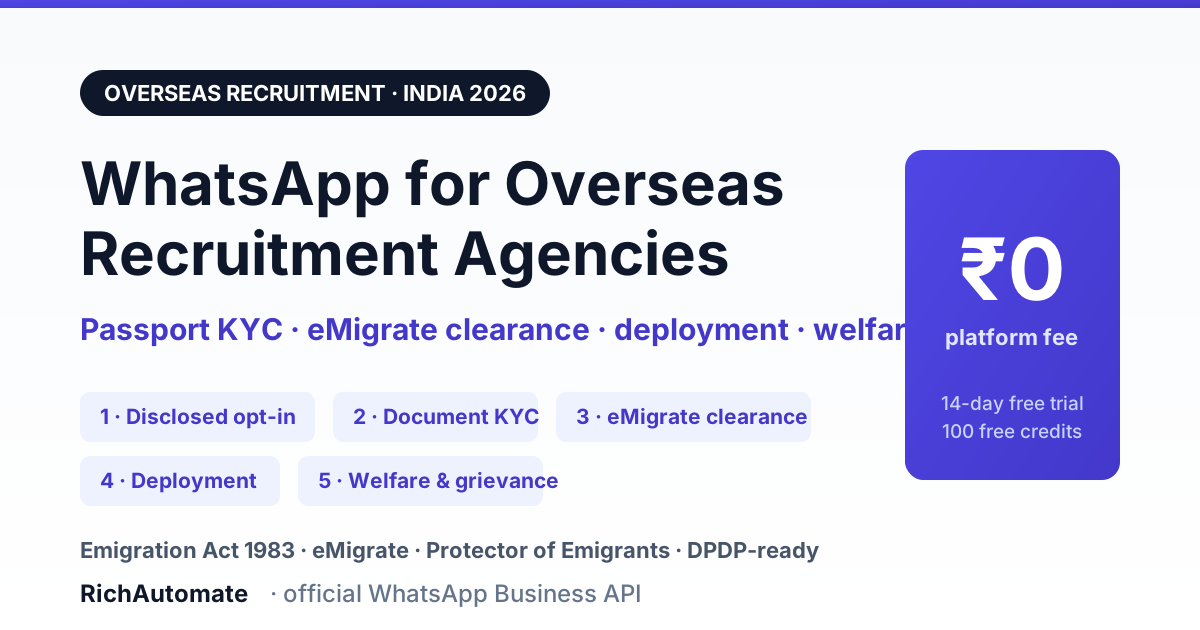
An overseas manpower recruitment agency in India runs its whole candidate pipeline on the official WhatsApp Business API: a Gulf-job applicant opts in from a Click-to-WhatsApp ad and gets the mandatory registration-number and no-illegal-fee disclosures, the candidate uploads passport and document KYC inside a WhatsApp Flow, the agency shares the verified job offer and tracks the eMigrate emigration-clearance (ECR/POE) status in the same thread, deployment and travel details land as utility messages, and post-departure welfare check-ins keep the worker reachable abroad. That single lifecycle turns a business the Ministry of External Affairs watches closely — where an unregistered sub-agent or a fake offer can mean a cancelled RA licence and a stranded worker — into a documented, consent-based, audit-ready operation on the one app every candidate already opens. Figures here are directional; verify the Emigration Act 1983, current eMigrate and Protector of Emigrants (PoE) rules, Recruiting Agent (RA) licence conditions, service-charge caps, GST and DPDP specifics with the relevant authorities.
Why an overseas recruitment agency is a compliance-first WhatsApp business
Overseas manpower recruitment is one of India's most closely regulated placement channels — millions of Indian workers migrate for employment, mostly to the Gulf and South-East Asia, moving through licensed Recruiting Agents under the watch of the Ministry of External Affairs (verify current emigration and deployment numbers with the MEA or eMigrate before quoting them). Unlike a domestic staffing firm, an overseas agent lives or dies by two things at once: a candidate pipeline that runs almost entirely on chat with workers who may not use email, and a regulator that treats the difference between a legitimate placement and human trafficking or fraud as a bright line. The Emigration Act, 1983 requires a valid Recruiting Agent (RA) registration, routing of ECR-category workers through the eMigrate portal for emigration clearance, honest job offers, and a cap on service charges — and unregistered recruitment or charging illegal fees can cost an agent the RA licence and invite criminal action. The problem is that the channel's native tool is an unmanaged personal WhatsApp: fake offers circulate in forwarded groups, no consent is recorded, passport copies sit in someone's gallery, and there is no audit trail if a complaint or the PoE comes knocking. The official WhatsApp Business API fixes exactly this — it carries the mandatory disclosures, the consented opt-in, the document KYC Flow, the verified offer, the clearance-status update and the welfare check-in in one structured, retained thread. The same consented-onboarding discipline that our WhatsApp playbook for staffing and recruitment agencies brings to domestic placement applies here — only the candidate is crossing a border under a licence.
Work out the real switching cost first, because the BSP migration cost calculator accounts for the number port, template re-approval and overlap month.
The 5-stage overseas-recruitment lifecycle on WhatsApp
Map every stage of the migration journey to a WhatsApp touchpoint and both the candidate funnel and the compliance trail come together:
- 1. Sourcing + disclosed opt-in: a Click-to-WhatsApp ad, a QR at a trade-test centre, or a referral adds a jobseeker to a consented list, and the first message carries the mandatory disclosures — the agency's RA registration number, the real employer and job, and a clear "no illegal recruitment fee" and "verify before you pay" notice. Consent and disclosure are captured up front, so a candidate can distinguish a licensed agent from a fraud from message one.
- 2. Document KYC + trade-test scheduling: a WhatsApp Flow collects passport details, ECR/ECNR status, qualifications, medical and trade-test documents, and schedules the skill test or interview. A structured intake beats a passport photo in a personal gallery and timestamps exactly what the candidate submitted — the record you need if the deployment is ever questioned.
- 3. Verified offer + eMigrate emigration clearance: the genuine, employer-attested job offer is shared in-chat and the eMigrate emigration-clearance (POE) status for an ECR-category worker is tracked and updated in the same thread — clearance applied, query raised, clearance granted. The offer letter, wage and contract terms reconcile in one place instead of a screenshot war, keeping the process on the right side of the Emigration Act.
- 4. Visa, ticketing + deployment: visa stamping, insurance (such as Pravasi Bharatiya Bima Yojana where applicable), pre-departure orientation and travel details go out as utility messages, with the candidate confirming receipt in-thread. This is where an unmanaged pipeline usually leaks — a documented deployment trail keeps the worker informed and the agency covered.
- 5. Post-deployment welfare + grievance: arrival confirmation, employer-contact and helpline details, and periodic welfare check-ins keep the worker reachable abroad, and any grievance is logged and routed in the same thread. Post-deployment care is both an MEA expectation and the difference between a repeat-referral agency and a complaint on the emigration monitoring system.
Many of these workers are the blue-collar earners whose cross-border money-movement we map in the blue-collar GCC migrant remittance playbook, so the deployment thread and the remittance relationship often sit side by side.
The regulatory spine: what shapes your disclosures and offers
Overseas recruitment is watched closely, and a handful of regimes shape every message, offer and fee. Build them into your templates from day one and verify the current position with the relevant authority:
- Emigration Act, 1983 & the eMigrate system: the core framework, administered by the Ministry of External Affairs through the Protector General of Emigrants and the Protectors of Emigrants (PoE). It requires a valid Recruiting Agent (RA) registration, emigration clearance for ECR-passport-category workers going to notified countries via the eMigrate portal, and genuine employer-attested demand. Verify your RA registration conditions, the current ECR-country list and the eMigrate workflow.
- Service-charge cap & no illegal fees: the rules cap what a Recruiting Agent may charge a worker and prohibit collecting fees beyond that or for a job that does not exist. Never let a WhatsApp message imply a guaranteed visa in exchange for a large upfront payment; state your permitted charges plainly. Confirm the current cap with the MEA.
- No misrepresentation / anti-trafficking: a false job offer, an inflated wage promise, or routing a worker outside the legal channel can amount to fraud or trafficking. Bake a "genuine employer, real wage, legal route only" guardrail into every template, and keep the employer and contract details honest in-chat.
- GST on recruitment service: the agency's placement service has its own GST treatment, and cross-border supply rules can be intricate. Show the correct tax on every invoice and get your classification confirmed by a qualified tax professional.
- Passport & insurance rules: ECR/ECNR passport status drives the clearance path, and mandatory emigrant insurance may apply for ECR workers. Verify the current passport-category and insurance requirements for each destination you recruit for.
Handling candidate data the DPDP way
Sourcing, KYC, offer and deployment flows pull in exactly the data the Digital Personal Data Protection Act, 2023 treats as personal — a candidate's passport, ECR status, qualifications, medical and biometric-adjacent documents, wage and travel details. A few disciplines keep an agency on the right side (verify the current DPDP Rules and their commencement as they roll out through 2026):
Get a 1-minute BSP audit on WhatsApp
Drop your WhatsApp number — we line-item your current invoice against Meta India rates in under 60 seconds. India-hosted, DPDP-compliant.
- Data minimisation & purpose limitation: collect only what registration, clearance and deployment need, and take clear opt-in before adding anyone to a job-alert broadcast. Passport and medical documents are sensitive — store them against the candidate file with the deployment purpose stated, not scattered across group chats. Our DPDP grievance and data-portability guide maps the notice, consent and grievance duties in detail.
- Access limits on sensitive documents: a field sub-agent should not have raw access to every candidate's passport and medical file. Use an API stack with role-based access so identity documents sit with the licensed agency, not in a personal WhatsApp on a shared phone where anyone can scroll a jobseeker's passport.
- Consent for re-contact & erasure: job-alert and re-marketing messages need a lawful basis and an easy opt-out; keep utility clearance-status and travel messages separate from marketing, and honour data-principal access and erasure requests when a candidate withdraws or is placed.
The automation tech stack
Three building blocks on the official API run the whole pipeline:
- WhatsApp Flows for document KYC & scheduling: a Flow captures passport, ECR status, qualifications and medical documents and books the trade test or interview in-chat — no app install, no web redirect for a candidate who works entirely from a phone.
- Utility templates for offers, clearance & travel: offer confirmations, eMigrate clearance-status updates, visa and ticketing notes, pre-departure orientation reminders and welfare check-ins are transactional and sit in the cheaper utility category. Keep job-alert and campaign promos in the marketing category, which needs prior opt-in and carries the mandatory RA-number disclosure. The same offer-letter discipline runs a domestic pipeline in our HR recruitment candidate-funnel and offer-letter automation playbook.
- Verified, auditable two-way threads: "clearance granted", "visa stamped" and "flight confirmed" statuses flow back to the right thread, and the same channel carries the grievance and welfare contact the MEA expects — one retained, auditable record instead of a hundred untraceable personal chats.
What a WhatsApp setup costs an overseas recruiter on RichAutomate
RichAutomate runs on the official Meta WhatsApp Business API with ₹0 platform fee, ₹0 setup and ₹0 monthly — you pay only for messages. Two models:
- Client Pay — ₹0.10 per message plus Meta's conversation charges billed to you directly at cost by Meta.
- SaaS Pay — ₹1.50 marketing / ₹0.50 utility per message, all-inclusive on one INR GST invoice, tiering down toward ₹0.50 at volume.
Because most pipeline traffic — document requests, clearance-status updates, visa and travel notes, orientation reminders and welfare check-ins — is utility, the running cost stays low even for an agency deploying thousands of workers a year. Going live on the official API needs a verified business, and in India GST is effectively required to move a WhatsApp Business Account to live status, so treat it as necessary, not optional. See the full WhatsApp Business API pricing breakdown for the per-conversation maths. A 14-day free trial with 100 free credits lets an agency pilot a compliant document-KYC Flow and a clearance-status campaign before committing. Pricing shown is RichAutomate's own; verify any competitor's current rates directly, and no platform should promise a ban-proof account for unsolicited or bulk sends.
Run your overseas-recruitment pipeline on WhatsApp
From disclosed opt-in and sourcing, to passport and document KYC, to verified offers with eMigrate clearance tracking, to visa, ticketing and pre-departure orientation, to post-deployment welfare and grievance — RichAutomate runs it all on the official Meta WhatsApp Business API at ₹0 setup, ₹0 monthly, ₹0 platform fee. Client Pay is ₹0.10/message plus Meta's rates billed direct at cost; SaaS Pay is ₹1.50 marketing / ₹0.50 utility all-inclusive. Start with a 14-day free trial and 100 free credits, or book a 30-minute walkthrough. This is general information; verify current Emigration Act 1983, eMigrate/PoE, RA-licence, service-charge, GST and DPDP specifics with the relevant authorities.
Start your 14-day free trial → · Book a 30-min walkthrough · WhatsApp us on 91 81603 11319