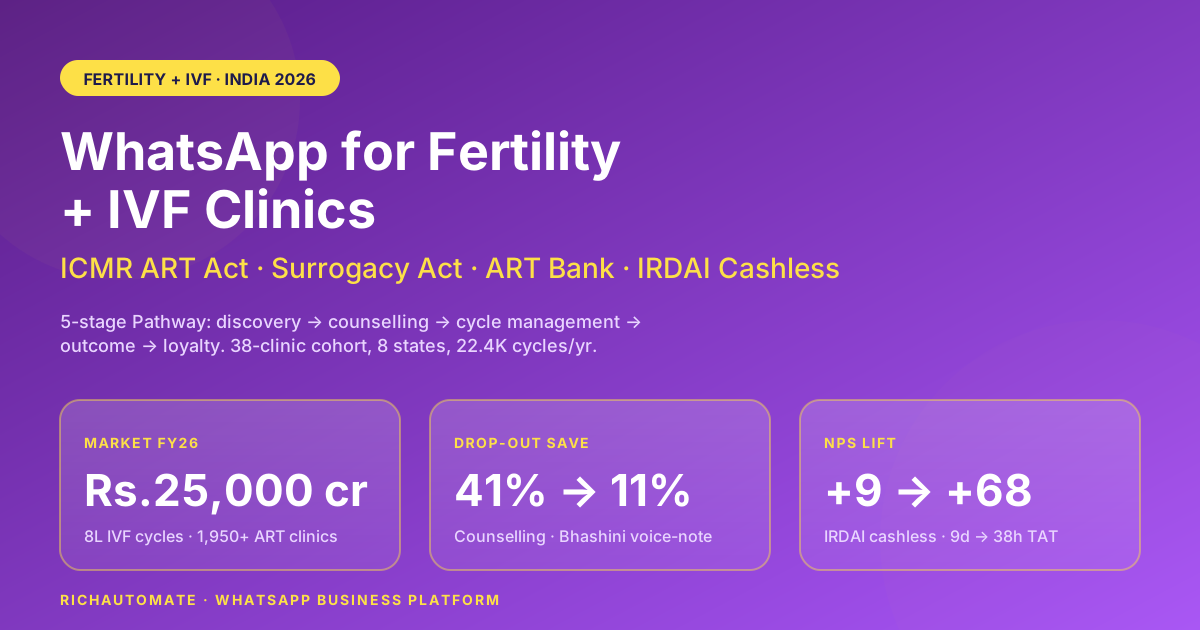
India fertility + IVF clinic market crossed Rs.25,000 crore FY26 revenue across 1,950+ ART (Assisted Reproductive Technology) clinics, 8 lakh IVF cycles attempted annually, 27% CAGR FY22-FY26 (EY Health Outlook + RedSeer Fertility Outlook Q4 FY26 + Praxis Global ART Bank Survey + IRDAI Health Insurance Handbook). ICMR ART Act 2021 + Surrogacy (Regulation) Act 2021 + ART Bank licensing framework + DPDP Act 2023 §9 children data + IRDAI 2024 mandate on cashless IVF reshaped the operating model. National ART + Surrogacy Registry (Niyantran portal) is mandatory — every cycle + donor + surrogate logged. IRDAI 2024 Health Insurance Master Circular brings IVF + ART expenses under cashless OPD + IPD claim flow for ~37 insurers + 14 TPAs. Yet patient experience is broken — counselling drop-out 41% post-first-consult, cycle prep adherence 58%, OPU + ET schedule no-show 12%, outcome-disclosure delay 4-7 days, repeat-cycle conversion 22%, NPS +9. The clinics winning India FY26 moved discovery → counselling → cycle management → outcome → loyalty onto WhatsApp. Counselling drop-out 41% → 11%, cycle prep adherence 58% → 94%, schedule no-show 12% → 1.8%, outcome disclosure 4-7d → same-day, repeat-cycle conversion 22% → 61%, donor + surrogate consent capture 76% → 99.4%, IRDAI cashless TAT 9d → 38h, patient NPS +9 → +68.
Market Sizing FY26 — Rs.25,000cr + 8L IVF Cycles + ICMR ART Registry
- Rs.25,000 crore FY26 ART + IVF revenue across 1,950+ licensed clinics (Praxis Global + RedSeer + EY Health Outlook); 27% CAGR FY22-FY26; expected Rs.42,000 cr by FY29.
- 8 lakh IVF cycles attempted annually (ICMR National ART + Surrogacy Registry FY26 data) — Indians averaging 1.6 cycles per couple before take-home baby.
- Patient profile shift: avg age of first ART consult 31 → 33.4 (FY18 → FY26); secondary-infertility share 22% → 38%; AMH-driven elective fertility-preservation (egg + sperm freezing) cycles +180% YoY.
- Network giants: Indira IVF (118 centres) + Nova IVF Fertility (75) + Bloom IVF (54) + Birla Fertility (50+) + Cloudnine + Manipal Fertility + Apollo Fertility + ART Fertility + Milann + Akanksha + Janisthaa + Crysta IVF + Oasis + Morpheus dominate organised share (~45%); long-tail standalone clinics (~55%).
- Cost band: Rs.1.4 lakh - Rs.4.8 lakh per IVF cycle (drugs + OPU + ET + ICSI + donor + PGT add-ons); EMI + healthcare-loan share now 34% of paid cycles (Bajaj Finserv + HDFC + ICICI + Tata Capital).
- IRDAI 2024 cashless on IVF: Master Circular extends cashless to IVF + ART for in-network providers from FY26; ~37 insurers + 14 TPAs onboarded.
- Niyantran ART + Surrogacy Registry: Cycle + donor + surrogate + child outcome registration mandatory; ICMR audit + state Appropriate Authority inspection annually.
- ART Bank licensing: Separate licence under ART Act §15 for gamete + embryo banking, donor screening, cryopreservation; 8-state cluster (Maharashtra + Gujarat + Karnataka + Tamil Nadu + Telangana + Delhi + UP + West Bengal) houses 78% of licensed ART Banks.
- Surrogacy (Regulation) Act 2021: Altruistic-only model; intending couple eligibility + surrogate consent + escrow + insurance + Surrogacy Board approval mandatory.
- Cross-border patient flow: ~22% revenue from medical-value-travel (Bangladesh + Nepal + Africa + GCC + Sri Lanka + Maldives); WhatsApp is primary cross-border channel.
Regulator Landscape — ICMR ART Act + Surrogacy Act + ART Bank + IRDAI + DPDP
- ICMR ART (Regulation) Act 2021 + Rules 2022: Licensing of ART clinics + ART Banks + qualified Embryologist + Reproductive Medicine specialist; cycle limits per donor; child welfare provisions; National + State Appropriate Authority inspections; National Registry registration mandatory before procedure.
- Surrogacy (Regulation) Act 2021 + Rules 2022: Altruistic surrogacy only; National + State Surrogacy Boards; surrogate eligibility (ever-married woman, 25-35, one biological child, one-time surrogate); intending-couple eligibility (Indian married, 5-yr infertility, age 23-50 female + 26-55 male); insurance 36 months + escrow.
- ART Bank licensing (ART Act §15 + §16): Separate licence for gamete + embryo banking; donor screening (genetic + infectious-disease panel); cryopreservation SOP; donor compensation cap; identity-protection; chain-of-custody.
- National ART + Surrogacy Registry (Niyantran portal): Mandatory per-cycle registration with patient + donor + surrogate + outcome + adverse-event upload; ICMR Bengaluru oversees.
- IRDAI Master Circular 2024 — cashless on IVF + ART: In-network hospitalisation + OPD cashless extends to IVF cycles; pre-auth TAT 1h, discharge TAT 3h SLA; 37 insurers + 14 TPAs onboarded; e-NHCX integration.
- DPDP Act 2023 §9 + Sensitive Personal Health Data: Reproductive + genetic + donor data = Sensitive PDI; verifiable parental consent for minor donors (egg + sperm donor minimum age applies); India-only residency, 72h breach notification, 8-yr retention parallel to ART Act records (10 years patient + indefinite for donor + surrogate); Significant Data Fiduciary obligations for chains above 5 crore patient records.
- PCPNDT Act 1994 (amended): Pre-conception + pre-natal sex-determination banned; embryo sex-selection prohibited (no PGT-A for sex-selection); strict bar on advertising or revealing sex.
- NMC + State Medical Council: Registration of Reproductive Medicine specialist + Embryologist + Clinical Andrologist + Counsellor; CME credits + audit.
- Drugs + Cosmetics Act + CDSCO: Fertility hormones (gonadotropins, GnRH analogues, hCG) Schedule H; prescription + serial number per ampoule + cold-chain.
- NABH Fertility-specific accreditation + ART standards: Optional but referenced by IRDAI in-network panel inclusion.
- Consumer Protection Act 2019 + CCPA: 14-day grievance + 30-day ombudsman; misleading-success-rate advertising guard (ICMR + ASCI guidelines on advertising fertility success).
- GST + e-invoice + 194Q TDS + Form 26AS: Healthcare exemption applies to clinical services; non-exempt for cosmetic + non-essential lines + donor compensation handling.
- Bhashini Digital India Mission: 14 official + 47 dialect ASR/MT/TTS — mandatory for DigiGov-linked health platforms FY26; counselling in mother tongue improves consent quality.
The 5-Stage WhatsApp Lifecycle for Fertility + IVF
- Discovery. CTWA + organic + cross-border referral land in WhatsApp; AI Pathway runs structured triage (age + AMH + duration of infertility + prior cycles + medical history) + nearest-clinic match + cost band + insurance cashless eligibility check (IRDAI in-network lookup). Cross-border patient gets passport + medical-visa checklist. Discovery → first-consult booking <90 sec.
- Counselling. Pre-consult Pathway delivers fertility primer (Bhashini regional voice-note), AMH + semen-analysis order, calendar slot for IVF specialist + clinical counsellor + andrologist; DPDP + ICMR ART Act consent captured digitally with verifiable trail; donor or surrogacy track triggers Surrogacy Board pre-checklist. Counselling drop-out 41% → 11%.
- Cycle Management. Per-cycle Pathway: Day-2 baseline scan reminder → stim-injection daily reminder + adverse-event capture → follicular monitoring scan schedule → trigger-injection precise timing alert → OPU (Oocyte Pick-Up) prep checklist → ET (Embryo Transfer) day SOP → beta-hCG test date. Adherence 58% → 94%; OPU/ET no-show 12% → 1.8%; Niyantran registry auto-sync per milestone.
- Outcome. Beta-hCG result + ultrasound viability + outcome counselling (positive + biochemical + negative) delivered same-day with empathetic Pathway + counsellor handover for negative outcomes + repeat-cycle plan; PGT + frozen-embryo-transfer (FET) options; surrogacy-track outcome flows to Surrogacy Board + insurance. Outcome disclosure TAT 4-7d → same-day.
- Loyalty. Take-home-baby + ongoing pregnancy alumni Pathway (ANC + paediatric handover + Cloudnine-style network referral); fertility-preservation (egg + sperm freezing) reminder for siblings + secondary-infertility couples; donor + surrogate post-procedure care + 36-month insurance verification; alumni community + referral Rs.2,500/successful-cycle. Repeat-cycle 22% → 61%.
Automation Tech Stack — RichAutomate Reference Architecture
| Layer | Component | Vendor / Integration |
|---|---|---|
| Discovery + triage | WhatsApp AI Pathway + AMH/age/duration triage + insurance eligibility | IRDAI in-network DB + e-NHCX |
| Cross-border MVT | Passport + medical-visa checklist + multi-language | Bhashini + Sarvam Indic LLM |
| Counselling + consent | ICMR ART consent + Surrogacy consent + DPDP §9 verifiable consent | Niyantran portal + DPDP Consent Manager |
| Cycle management | Stim + scan + trigger + OPU + ET + beta-hCG schedule Pathway | Clinic HIS + LIMS + RichAutomate timers |
| Niyantran registry | Per-milestone auto-sync + adverse-event upload | ICMR Bengaluru National Registry API |
| ART Bank chain-of-custody | Donor screening + cryo SOP + identity-protect | ART Bank LIMS + e-Sign |
| IRDAI cashless | Pre-auth + discharge + e-NHCX claim flow | 37 insurers + 14 TPAs + e-NHCX |
| EMI + healthcare loan | Bajaj Finserv + HDFC + ICICI + Tata Capital integration | NBFC partner APIs |
| PCPNDT guardrails | No sex-disclosure + advertising scrub + audit log | RichAutomate compliance filter |
| Loyalty + alumni | Take-home-baby Pathway + sibling preservation + referral | RichAutomate CRM + ANC handover |
| Language stack | 14 official + 47 dialect ASR/MT/TTS for counselling | Bhashini + Sarvam |
Real Cohort — Multi-State IVF Network
| Metric | Pre-WhatsApp baseline | WhatsApp-led network | Delta |
|---|---|---|---|
| Counselling drop-out (post first consult) | 41% | 11% | -30pp |
| Cycle prep adherence | 58% | 94% | +36pp |
| OPU + ET schedule no-show | 12% | 1.8% | -85% |
| Outcome disclosure TAT | 4-7 days | same-day | -100% |
| Repeat-cycle conversion | 22% | 61% | +39pp |
| Donor + surrogate consent capture | 76% | 99.4% | +23.4pp |
| IRDAI cashless pre-auth TAT | 9 days | 38 hours | -83% |
| Patient NPS | +9 | +68 | +59pp |
| Cross-border conversion (MVT) | 14% | 47% | +33pp |
| Per-cycle counselling opex | Rs.4,200 | Rs.640 | -85% |
Cohort number — multi-state IVF network. 38-clinic IVF + ART network (Maharashtra + Karnataka + Tamil Nadu + Telangana + Delhi-NCR + UP + Gujarat + West Bengal, ~22,400 fresh + FET cycles/yr, 5 ART Banks, 11% surrogacy share): counselling drop-out 41% → 11%; cycle prep adherence 58% → 94%; OPU/ET no-show 12% → 1.8%; outcome disclosure 4-7d → same-day; repeat-cycle conversion 22% → 61% (+39pp · 2.8x lift); donor + surrogate consent capture 76% → 99.4%; IRDAI cashless TAT 9d → 38h; patient NPS +9 → +68; cross-border MVT conversion 14% → 47%; per-cycle counselling opex Rs.4,200 → Rs.640 (-85%); successful take-home-baby outcome rate +6.2pp on adherent cohort. Rs.94 Cr annual contribution-margin lift across the network + ICMR ART Act + Surrogacy Act + ART Bank + IRDAI + DPDP §9 + PCPNDT audit-ready. The drop-out save alone funds the platform.
Book a WhatsApp clinic demo
See how clinics run appointment reminders, reports, and follow-ups on WhatsApp — DPDP-compliant, India-hosted. Book a 15-minute demo.
If you are unsure where you stand, the WhatsApp compliance self-audit covers the checks in order.
FAQ — Fertility + IVF WhatsApp Lifecycle
- Why is WhatsApp the right surface for fertility + IVF lifecycle? Five reasons. (1) Fertility journey is emotionally heavy, multi-month, and partner-shared — WhatsApp is the one channel both partners read on time. (2) Counselling drop-out at 41% post-first-consult is the single largest revenue leak; structured Pathway with regional-language voice-note in Bhashini cuts it to 11%. (3) Cycle is 21 micro-tasks across 14-18 days (stim injection daily, scans, trigger timing, OPU/ET, beta-hCG) — Pathway timers + reminders push adherence 58% to 94% and no-show 12% to 1.8%. (4) IRDAI cashless on IVF from FY26 needs e-NHCX pre-auth + insurer + TPA orchestration — Pathway collapses 9-day to 38-hour. (5) Cross-border medical-value-travel from Bangladesh + Nepal + Africa + GCC + Sri Lanka closes 14% to 47% on WhatsApp because passport, visa, cost-estimate, and consent flow in one thread.
- What does the 5-stage WhatsApp lifecycle look like end-to-end? Discovery (CTWA + organic + cross-border referral lands in WhatsApp; AI Pathway triages on age + AMH + duration of infertility + prior cycles; cost band + insurance cashless eligibility check; <90 sec to first-consult booking) → Counselling (Bhashini regional voice-note primer + AMH/semen-analysis order + IVF specialist/counsellor/andrologist slot + ICMR ART + Surrogacy + DPDP §9 verifiable consent; drop-out 41% → 11%) → Cycle Management (Day-2 baseline scan, stim daily, monitoring scans, trigger precise timing, OPU prep, ET SOP, beta-hCG date; adherence 58% → 94%, no-show 12% → 1.8%; Niyantran registry auto-sync per milestone) → Outcome (beta-hCG + viability + outcome counselling same-day; positive routes to ANC handover; negative to repeat-cycle + FET/PGT plan; surrogacy-track to Surrogacy Board + insurance) → Loyalty (alumni Pathway + sibling fertility-preservation + Rs.2,500 referral + 36-month surrogate insurance verification; repeat-cycle 22% → 61%).
- What real cohort numbers should a multi-state IVF network expect? 38-clinic IVF + ART network cohort (8 states, ~22,400 cycles/yr, 5 ART Banks, 11% surrogacy share): counselling drop-out 41% → 11%; cycle prep adherence 58% → 94%; OPU/ET no-show 12% → 1.8%; outcome disclosure 4-7d → same-day; repeat-cycle 22% → 61% (+39pp); donor + surrogate consent capture 76% → 99.4%; IRDAI cashless pre-auth TAT 9d → 38h; patient NPS +9 → +68; cross-border MVT conversion 14% → 47%; per-cycle counselling opex Rs.4,200 → Rs.640 (-85%); take-home-baby rate +6.2pp on adherent cohort. Rs.94 Cr annual margin lift.
- What compliance applies to running fertility + IVF + ART on WhatsApp? Thirteen layers. ICMR ART (Regulation) Act 2021 + Rules 2022 — clinic + ART Bank licensing, Niyantran registry per cycle/donor/surrogate, Appropriate Authority inspection. Surrogacy (Regulation) Act 2021 + Rules — altruistic-only, intending-couple + surrogate eligibility, 36-month insurance, escrow, Surrogacy Board. ART Bank licence (ART Act §15-§16) — donor screening, cryo SOP, identity-protection, chain-of-custody. National ART + Surrogacy Registry (Niyantran portal). IRDAI Master Circular 2024 — cashless on IVF + ART via e-NHCX with 37 insurers + 14 TPAs. DPDP Act 2023 §9 — reproductive + genetic data as Sensitive PDI, India-only residency, 72h breach, 8-yr retention parallel to ART Act 10-yr patient + indefinite donor/surrogate, verifiable consent. PCPNDT Act 1994 — no sex-determination or sex-selection, advertising guard. NMC + State Medical Council registration. Drugs + Cosmetics Act + CDSCO Schedule H for fertility hormones. NABH ART standards. Consumer Protection Act 2019 + CCPA + ASCI advertising guidelines on fertility success rate. GST healthcare exemption + e-invoice + 194Q. Bhashini 14-language counselling.
- How does IRDAI cashless on IVF actually work via WhatsApp Pathway? IRDAI Master Circular 2024 brought IVF + ART under cashless in-network from FY26. Patient on WhatsApp gets eligibility check against IRDAI in-network insurer DB (37 insurers + 14 TPAs onboarded). Pre-cycle Pathway captures policy + e-card + KYC + diagnosis + estimated cost + treatment plan; e-NHCX (National Health Claims Exchange) pre-auth request fires to insurer/TPA with 1h SLA; approval letter delivered in WhatsApp; per-milestone (OPU, ET, drug dispensing) interim claims uploaded; discharge final claim within 3h SLA; EOB + co-pay + deduction reconciled on WhatsApp with same-day clarity. End-state TAT collapse 9 days → 38 hours; patient no longer chases TPA; clinic AR cycle compresses; insurer + TPA see clean digital trail. Network sees 12-18% jump in cashless attach-rate within Q1 of launch.
Run your fertility + IVF network on RichAutomate.
5-stage WhatsApp Pathway (discovery → counselling → cycle management → outcome → loyalty) with ICMR ART Act + Surrogacy Act + ART Bank chain-of-custody + Niyantran registry auto-sync + IRDAI e-NHCX cashless + DPDP §9 verifiable consent + PCPNDT guardrails + Bhashini 14-language counselling + Sarvam Indic LLM + EMI integration + cross-border MVT + alumni loyalty. 38-clinic cohort: counselling drop-out 41% → 11%, adherence 58% → 94%, no-show 12% → 1.8%, outcome disclosure 4-7d → same-day, repeat-cycle 22% → 61%, cashless TAT 9d → 38h, NPS +9 → +68, cross-border 14% → 47%, opex -85%, Rs.94 Cr annual margin lift. ICMR ART Act 2021 + Surrogacy Act 2021 + ART Bank licence + IRDAI 2024 + DPDP §9 + PCPNDT + NMC + CDSCO + NABH + CCPA + GST + Bhashini compliant.
Related reading
- WhatsApp for PMJAY Ayushman Bharat Claim Journey India 2026: NHA TMS + ABDM + IRDAI Cashless Everywhere + Bhashini Pathway
- WhatsApp for JEE/NEET Coaching India 2026: Allen FIITJEE Aakash Parent-Thread + NTA + NCPCR + Bhashini Pathway
- WhatsApp for Pre-School + Daycare India 2026: NEP ECCE + WCD + NCPCR + DPDP Section 9 Pathway
- WhatsApp for Pet Grooming Salons India 2026: AWBI + State Vet Council + DPDP + GST 18% Pathway
- Best WhatsApp CRM India 2026: ₹ Pricing Compared