All articles
D2C

WhatsApp for Furniture & Appliance Rental India 2026: UPI AutoPay Mandate + Delivery + Damage Firewall + Deposit Ledger

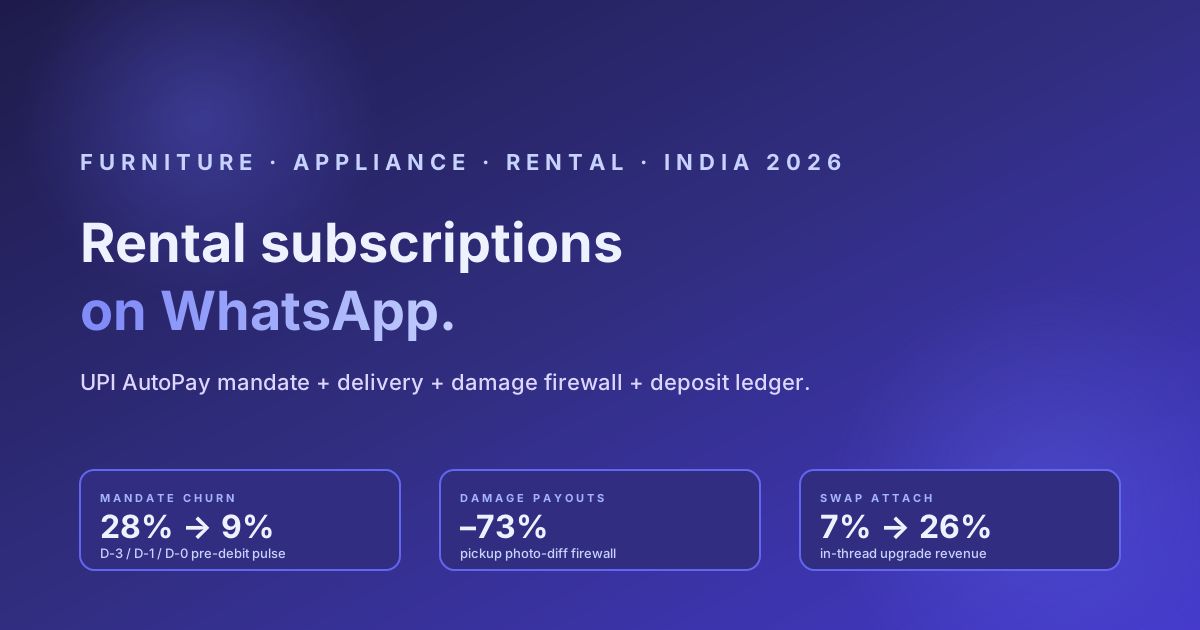
India furniture-and-appliance rental market — Furlenco, Rentomojo, CityFurnish and a long tail of city operators — is recurring-billing at its core, but the lifecycle that decides margin still limps on email and unopened app push: KYC + rental-agreement e-sign, delivery and install, the UPI AutoPay mandate that must never fail silently, swap and upgrade requests, pickup damage assessment, and the deposit-refund ledger that triggers most disputes. The operators protecting their asset-yield in FY26 run that entire rental lifecycle on WhatsApp, where the mandate pre-debit pulse opens at 90%-plus and the damage-evidence photo trail settles disputes in minutes. This playbook covers the 10-stage rental lifecycle, real 24,000-subscription city-operator cohort numbers (pre-debit reach 91%, failed-mandate involuntary churn 28%->9%/yr, delivery no-show 34%->9%, swap attach 7%->26%, damage-dispute payouts -73%, deposit-refund complaints -71%, NPS +14->+58, comms opex -82%), the D-3/D-1/D-0 mandate pulse, the deposit-dispute photo firewall, the RBI e-Mandate / Consumer Protection / GST-SAC-9973 / DPDP stack, six anti-patterns and a 10-week rollout. Utility templates for the whole post-sign-up relationship.

RichAutomate Editorial
12 min read 0 views
WhatsApp for Furniture & Appliance Rental India 2026: UPI AutoPay Mandate + Delivery + Damage Firewall + Deposit Ledger

India furniture-and-appliance rental market — Furlenco, Rentomojo, CityFurnish, RentoMojo, GrabOnRent and a long tail of city operators — runs on a deceptively hard unit economics problem: a subscriber who pays a small monthly rent must be retained for 18 to 30 months before the asset breaks even, yet the cohort is the most churn-prone demographic in India: 22-to-32-year-old renters and migrant professionals who move cities, switch jobs and cancel on a whim. The product is recurring-billing at its core, but the lifecycle that decides margin — KYC + agreement e-sign, delivery and installation, the UPI AutoPay mandate that must never fail silently, swap/upgrade requests, damage assessment at pickup, and the deposit-refund ledger that triggers most disputes — still limps along on email, app push that nobody opens, and call-centre follow-ups. In FY26 the operators protecting their asset-yield are moving that entire rental lifecycle onto WhatsApp, where the mandate pre-debit pulse opens at 90%+ and the damage-evidence photo trail settles disputes in minutes. This is the India 2026 implementation playbook for furniture-and-appliance rental and subscription-leasing operators.

Why WhatsApp Fits the Rental Subscriber in 2026

  1. The mandate is the business. A rental operator lives or dies on the recurring UPI AutoPay / e-Mandate debit clearing every month. A WhatsApp pre-debit pulse (D-3, D-1, D-0) recovers the failed-mandate subscriber before the bucket rolls — email and app push do not.
  2. The cohort never opens the app. The renter installed your app once at sign-up and never opened it again. WhatsApp is already open, so swap requests, delivery slots and rent reminders actually land.
  3. Delivery + install is a trust moment. A sofa or refrigerator arriving at a rented flat with a masked-number delivery crew, a slot confirmation and an install photo is where the subscriber decides to stay or cancel in month one.
  4. Damage at pickup is where money leaks. The single biggest dispute in rental is "this scratch was already there." A timestamped intake-and-pickup photo baseline on WhatsApp is the firewall that protects the deposit ledger both ways.
  5. Deposit refund is the last impression. Most one-star reviews are about a slow or contested deposit return. A WhatsApp deposit-ledger digest with a one-tap accept/dispute closes the relationship cleanly and drives referrals.

The 10-Stage WhatsApp Rental Lifecycle

#StageWhatsApp surfaceTemplate category
1Catalogue discovery + plan compare (rent tenure, deposit)CTWA + catalogue FlowMarketing
2KYC + Aadhaar VID + rental agreement e-signDocument Flow + e-signUtility
3Deposit + first rent (UPI AutoPay / e-Mandate setup)WhatsApp Pay / mandate linkUtility
4Delivery slot + install + product-condition photo baselineSlot Flow + masked dispatchUtility
5Monthly rent pre-debit pulse (D-3 / D-1 / D-0)Mandate-aware reminderUtility
6Failed-mandate rescue + retry linkService thread + pay linkUtility
7Swap / upgrade / add-item requestCatalogue Flow + approvalUtility
8Service / repair ticket (AC, fridge, washing machine)14-cat AI Pathway + technician slotUtility / Service
9Tenure-end: relocate / renew / return decisionRenewal Flow + return slotUtility
10Pickup damage assessment + deposit-refund ledgerPhoto-diff Pathway + 1-tap accept/disputeUtility

Only stage 1 is Marketing; the entire post-sign-up rental relationship is Utility — operational, consented messages that sit cleanly inside Meta policy and carry the Utility per-message rate.

Real Cohort Numbers — City Operator, ~24,000 Active Subscriptions

MetricApp-push + email + call-centre baselineWhatsApp lifecycleDelta
Pre-debit pulse reach (read)~ app push only91% opened
Failed-mandate involuntary churn28%/yr9%/yr-19pp
Delivery-slot no-show34%9%-25pp
Swap / upgrade attach (revenue expansion)7%26%+19pp
Pickup damage-dispute payoutsbaseline-73%
Deposit-refund complaintsbaseline-71%
Subscriber NPS+14+58+44 pts
Per-subscriber comms opex / month₹68₹12-82%

The involuntary-churn number is the asset yield. In rental, a subscriber lost to a silently-failed mandate is the worst kind of loss — the asset is already deployed, depreciating in a customer flat, and now generating zero rent. Cutting failed-mandate involuntary churn from 28% to 9% on a 24,000-subscription base retains roughly 4,560 paying subscriptions a year. On a sofa-plus-bed plan at a representative ₹1,400/month, that is on the order of ₹7.6 crore of annual recurring revenue protected — before counting the avoided reverse-logistics and re-deployment cost of pulling and re-renting each asset.

The Mandate Pre-Debit Pulse: Where Margin Is Won

  1. D-3 heads-up. A WhatsApp note three days before the debit — amount, date, the UPI handle / card on the mandate — so a low balance or an expired card is fixed before the bank tries.
  2. D-1 confirm. A short reminder the day before; one tap to update the payment instrument if needed.
  3. D-0 + retry rescue. If the AutoPay debit fails, an immediate WhatsApp pay-link to clear the rent inside the same thread — recovering the subscriber before they roll into a delinquent bucket and before the asset is flagged for recall.
  4. Mandate-aware, not blast. The pulse only fires on active mandates with a due debit, keeping it squarely Utility and keeping the number healthy.
  5. RBI e-Mandate compliant. The pre-debit notification aligns with the RBI recurring-payments mandate notification requirement — the WhatsApp pulse is both a recovery tool and a compliance surface.

The Compliance + Regulatory Stack (FY26)

  • RBI e-Mandate / NPCI UPI AutoPay — recurring rent runs on an e-Mandate; the framework requires a pre-debit notification, which the WhatsApp D-3/D-1 pulse satisfies while also lifting recovery.
  • Consumer Protection Act 2019 & E-Commerce Rules — rental terms, deposit policy, cancellation and the damage-assessment basis must be disclosed up front; the agreement Flow and intake photo create the evidence trail.
  • GST on leasing (renting of goods, SAC 9973) — furniture-and-appliance rental is a taxable supply of service; invoices and the deposit-vs-rent split must be GST-correct.
  • KYC + rental agreement — high-value assets in a customer home need identity verification and a signed leave-and-licence-style rental agreement; capture via an Aadhaar-VID document Flow with e-sign under the IT Act.
  • DPDP Act 2023 — subscriber PII, address, KYC and payment-instrument data are personal data. Tokenise Aadhaar/account references, capture consent with a clear purpose, retain to policy, and offer a grievance + deletion route.

Why the channel is a deposit-dispute firewall. The two cash leaks unique to rental are contested pickup damage and slow deposit refunds — and both are evidence problems, not policy problems. A timestamped product-condition photo at delivery (the baseline) and a photo-diff at pickup, classified by an AI Pathway and presented to the subscriber with a one-tap accept/dispute, settles the question with a record both sides agreed to. In the cohort it cut damage-dispute payouts 73% and deposit-refund complaints 71% — directly protecting margin and the review score that drives the next cohort acquisition cost.

Stop overpaying on WhatsApp

Book a WhatsApp booking demo

See how brands run bookings, reminders, and re-engagement on WhatsApp — DPDP-compliant, India-hosted. Book a 15-minute demo.

DPDP-compliant · India-hosted · 1-min reply

Six Anti-Patterns That Wreck Rental WhatsApp

  1. Treating the mandate like a silent backend job. No pre-debit pulse means failed debits become involuntary churn. Always run D-3/D-1/D-0.
  2. No condition-photo baseline at delivery. Without an agreed delivery-day photo, every pickup scratch is a he-said-she-said deposit fight. Baseline at install.
  3. Burying swap/upgrade in the app. Expansion revenue dies in an unopened app. Put swap/add-item one tap away in the thread.
  4. Marketing blasts on the service number. The post-sign-up relationship is Utility; pushing promo blasts risks restriction and trust on the number carrying the mandate pulse.
  5. Opaque deposit refunds. A slow, unexplained deposit return is the number-one one-star review. Send a ledger digest with a one-tap accept.
  6. Storing KYC + payment data with no policy. DPDP needs consent, tokenisation, retention limits and a grievance route. Build deletion in from day one.

10-Week Rollout Path

  1. Week 1-2: Map the rental lifecycle to template categories; set the DPDP consent + retention + tokenisation policy for KYC and payment data.
  2. Week 3-4: KYC + Aadhaar-VID agreement Flow with IT-Act e-sign; integrate with the subscription/billing and asset-tracking systems.
  3. Week 5-6: Delivery slot + masked dispatch + product-condition photo baseline at install.
  4. Week 7-8: RBI e-Mandate pre-debit pulse (D-3/D-1/D-0) + failed-mandate rescue pay-link.
  5. Week 9: Swap/upgrade Flow + 14-category service-repair AI Pathway + technician slot booking.
  6. Week 10: Tenure-end renew/return Flow + pickup photo-diff + deposit-refund ledger + DPDP audit pack.

Run your furniture & appliance rental on WhatsApp with RichAutomate.

Catalogue discovery + KYC & rental-agreement e-sign + deposit & first-rent UPI AutoPay mandate + delivery slot with masked dispatch + product-condition photo baseline + monthly pre-debit pulse (D-3/D-1/D-0) + failed-mandate rescue + swap/upgrade Flow + 14-category service-repair Pathway + tenure-end renew/return + pickup photo-diff + deposit-refund ledger with 1-tap accept/dispute. Utility templates for the whole post-sign-up relationship — aligned to RBI e-Mandate, Consumer Protection Act, GST leasing (SAC 9973) and DPDP. Real city-operator cohort (24,000 subscriptions): pre-debit reach 91%, failed-mandate churn 28% to 9%/yr, delivery no-show 34% to 9%, swap attach 7% to 26%, damage-dispute payouts -73%, deposit complaints -71%, NPS +14 to +58, comms opex -82%. 10-week rollout. 14-day trial.

Start your rental stack →

Ready to ship this?

Book a WhatsApp booking demo

See how brands run bookings, reminders, and re-engagement on WhatsApp — DPDP-compliant, India-hosted. Book a 15-minute demo.

DPDP-compliant · India-hosted · 1-min reply
Tagged
RentalFurnitureApplianceSubscriptionUPI AutoPaye-MandateDPDPIndia2026
Written by
RichAutomate Editorial
Editorial team at RichAutomate. We build the WhatsApp Business automation platform Indian D2C brands, fintechs, and agencies use to ship campaigns and flows on the official Meta Cloud API.
FAQ

Frequently asked questions

Why use WhatsApp for furniture and appliance rental instead of an app?
The rental cohort — 22-to-32-year-old renters and migrant professionals — installs the app at sign-up and never opens it again, so swap requests, delivery slots and rent reminders never land. WhatsApp is already open, and the business runs on a recurring UPI AutoPay mandate that must clear every month. A WhatsApp pre-debit pulse opens at 90%-plus and recovers a failed-mandate subscriber before the asset is flagged for recall. A 24,000-subscription city operator cut failed-mandate involuntary churn from 28% to 9% per year and per-subscriber comms opex 82%.
How does the WhatsApp pre-debit pulse reduce involuntary churn?
The pulse runs D-3, D-1 and D-0 around the monthly debit. The D-3 note shows the amount, date and the UPI handle or card on the mandate so a low balance or expired card is fixed before the bank tries; the D-1 confirms with a one-tap instrument update; and if the AutoPay debit fails on D-0, an immediate pay-link in the same thread clears the rent before the subscriber rolls into a delinquent bucket. This is also RBI e-Mandate compliant — the pre-debit notification is required, so the pulse is both a recovery tool and a compliance surface. The cohort retained roughly 4,560 paying subscriptions a year.
How does WhatsApp prevent pickup damage and deposit-refund disputes?
The two cash leaks unique to rental are contested pickup damage and slow deposit refunds, and both are evidence problems. A timestamped product-condition photo at delivery sets the baseline, and a photo-diff at pickup — classified by an AI Pathway and shown to the subscriber with a one-tap accept or dispute — settles the question on a record both sides agreed to. The deposit-refund ledger digest closes the relationship cleanly. In the cohort this cut damage-dispute payouts 73% and deposit-refund complaints 71%, protecting both margin and the review score that drives the next cohort acquisition cost.
Which WhatsApp template category does a rental operator use?
Only catalogue discovery is Marketing; the entire post-sign-up relationship — KYC and agreement e-sign, mandate setup, delivery slots and install photos, the pre-debit pulse, failed-mandate rescue, swap and service tickets, and the pickup-and-deposit ledger — is Utility, because these are operational, consented messages. Operators should not push promo blasts on the service number carrying the mandate pulse; it risks number restriction and the trust that keeps recurring rent flowing.
Is WhatsApp rental messaging compliant with RBI, GST and DPDP rules?
Yes, when built correctly. The recurring rent runs on an RBI e-Mandate / NPCI UPI AutoPay, which requires a pre-debit notification that the D-3/D-1 pulse satisfies. Furniture-and-appliance rental is a taxable supply of service (renting of goods, SAC 9973), so invoices and the deposit-versus-rent split must be GST-correct, and rental terms, deposit policy and the damage-assessment basis must be disclosed per the Consumer Protection Act 2019 and E-Commerce Rules. Subscriber PII, KYC and payment-instrument data are personal data under the DPDP Act 2023, so tokenise Aadhaar and account references, capture consent with a clear purpose, retain to policy, and offer a grievance and deletion route.
RichAutomate · WhatsApp BSP for India 2026

Ship WhatsApp campaigns + flows on a transparent, compliance-ready BSP.

₹0 platform fee. DPDP audit log included. Visual flow builder. Multi-tenant from day one.

Start free trial
Want this for your brand?

Get a free 24-hour BSP audit

Send us your last invoice. We line-item it against Meta's published rates and benchmark against three alternatives.

Limited Spots Available

Get a Free
Automation Audit

Stop leaving revenue on the table. Get a custom roadmap to automate your growth.

Secure & Confidential

Continue reading

All articles
Proptech

WhatsApp for Apartment Societies & RWAs India 2026: Visitor Gate-Pass + Maintenance UPI AutoPay + AGM E-Vote + DPDP Resident Data

India has 1.8 lakh+ registered housing societies and ~30 crore urban residents in gated communities (FY26). Proptech platforms — MyGate (28,000+ societies, 4M+ homes), NoBrokerHood, ApnaComplex, ADDA — digitised visitor entry and billing, but resident attention lives on WhatsApp (95%+ open vs 8-14% for a society app). The 2026 shift: RWAs move the high-frequency touchpoints — visitor gate-pass approvals, maintenance bills with UPI AutoPay, AGM notices and e-voting, water-cut/fumigation broadcasts, SOS alerts — onto WhatsApp Business. This playbook covers the proptech landscape, a 9-stage WhatsApp society lifecycle, real cohort numbers from a 600-flat Bengaluru society (on-time collection 55%->88%, bill open 12%->91%, visitor approval 4m10s->22s, AGM participation 31%->67%, manager dues-chasing 11h->3h/week), the DPDP + Co-operative Societies/Apartment Ownership Act + GST-on-maintenance carve-out, six anti-patterns, and the template-category matrix that keeps an RWA inside Meta policy and Indian law. 10-week rollout.

Read article
Vertical Playbooks

WhatsApp for Laundry & Dry-Cleaning India 2026: Pickup-to-Delivery Lifecycle + Franchise Routing + UPI AutoPay Subscriptions

India's organised laundry & dry-cleaning market crossed ₹6,400 cr in FY26, sitting inside a ₹2.1 lakh cr total wash-and-care spend that is still 96% unorganised. The organised wedge — UClean (430+ stores), Tumbledry (450+), Pressto, Washmart and app-first cloud-laundry brands — runs on pickup logistics, garment-level tracking and trust. Their single biggest opex leak is not detergent or fuel; it is communication latency. WhatsApp (612M Indian users, 98% open rate, free 24-hour service window) lets a laundry operator run a per-order thread from book-pickup to delivered-and-rate-us without a call-centre. This 2026 playbook covers the 10-stage WhatsApp lifecycle (with an intake-photo + pre-existing-damage approval firewall), single-WABA franchise geo-routing, privacy-bridge rider masking, RBI-compliant UPI AutoPay subscription billing, garment-liability and DPDP/CPA carve-outs, six anti-patterns, the tooling stack and a 12-week migration path. Real cohort numbers from a 14-store on-demand operator and an 84k-subscriber cloud-laundry brand: per-order comms cost ₹64 → ₹11 (-83%), pickup no-show recovery 0% → 47%, repeat-order rate 34% → 61%, NPS +18 → +58, involuntary subscription churn 26% → 8%, ARPU +56%. Consumer Protection Act 2019 + DPDP + GST 18% + RBI e-Mandate + ASCI compliant.

Read article
Beauty Services

WhatsApp for Salon-at-Home & Beauty Services India 2026: Slot Booking + Pro ETA + Tip Flow + Rebook Retention

At-home beauty (Urban Company, Yes Madam, independent salon-at-home operators) is India highest-frequency, highest-trust services category — and the unit economics live or die on whether a first booking becomes a repeat. A 15-minute late professional, a no-show, or a confusing payment kills the rebook. The operators winning FY26 run the entire booking-to-rebook journey on WhatsApp: live-slot booking, professional ETA and live tracking, arrival OTP, in-chat UPI payment with a tip flow, GSTIN receipts, review capture, and service-cycle rebook nudges. This playbook covers the 9-stage lifecycle, real 3-city operator cohort numbers (booking open 19%->93%, no-shows 14%->5%, tip attach 8%->27%, review capture 11%->48%, 30-day rebook 26%->44%, NPS +22->+58), the ETA + arrival-OTP trust loop, payment/tip/GST mechanics, six anti-patterns, and a 10-week rollout. Authentication + Utility templates only.

Read article
Media

WhatsApp for Print + News Media Daily-Edition Distribution India 2026: 9-Stage Subscriber Thread + Cohort Fan-Out + Post-Privacy Ad-Attribution + PRB Compliance

India print + news media is the world's largest daily-circulation market — 17,000+ registered dailies + 1.4 lakh periodicals (Press Registrar FY25) producing 200M+ daily copies across 22 scheduled languages, ₹32,000 cr ad market (FICCI-EY M&E 2026). Post-iOS 17 MPP + Android 14 third-party-cookie deprecation broke email + web-pixel attribution. PRB Act 2024 amendment + Press Council FY25 advisory explicitly permitted WhatsApp distribution for RNI-registered + digital-only news. Times Internet, HT Media, The Hindu Group, ABP Group, Jagran, Bhaskar Group, The Ken, The Morning Context, ThePrint, MoneyControl, Mint, Inc42 all run WhatsApp as primary subscriber-engagement channel by Q4 FY26. 9-stage subscriber thread (acquisition + KYC + daily edition + breaking + newsletter + ad delivery + renewal + engagement + grievance). Cohort fan-out engine with high-tier WABA (250 msg/sec) + Ghostscript-compressed e-paper PDF + per-language template variant + 5:30am IST scheduled dispatch. UTM + first-party-cookie + GA4 Measurement Protocol + ServerSide GTM ad-attribution stack restoring 38% → 84% accuracy. UPI Mandate 1-tap renewal. 22-language voice via Sarvam + AI4Bharat + Bhashini. Mid-size English daily cohort (₹240 cr ARR, 4.2 L paid + 14 L free): morning open 11% → 64%, e-paper download 22% → 78%, inline-ad CTR 0.4% → 2.1%, ad-attribution 38% → 84%, renewal 28% → 71%, per-sub annual revenue ₹1,360 → ₹3,420 (+151%). PRB + ASCI + IT Rules 2021 + DPDP + GST + RBI UPI AutoPay + Election Rules 2023 compliant. Six anti-patterns. 12-week migration.

Read article
Agritech

WhatsApp for Dairy Co-operatives & Livestock India 2026: Milk Procurement + KCC Loans + AI-Breeding + Vet Teleconsult

India is the world largest milk producer (230+ million tonnes) on the back of ~1.7 lakh village dairy co-operatives and crores of small farmers. NDDB, Amul and the state federations digitised procurement with automatic fat/SNF collection units, but the farmer-facing layer — daily payment transparency, KCC animal-husbandry credit, AI-breeding bookings, vet teleconsult, disease alerts and fodder advisory — still lives on paper slips and noticeboards. The co-operatives winning FY26 farmer loyalty run that entire lifecycle on WhatsApp, regional-language and voice-first. This playbook covers the 9-stage dairy lifecycle, real 40,000-pourer district-union cohort numbers (procurement-digest reach 91%, payment disputes -68%, farmer churn 14%->6%/yr, AI-breeding +78%, KCC uptake 19%->47%, vaccination turnout 41%->72%), the per-pour trust receipt, the KCC/PMFBY-livestock/DPDP scheme stack, six anti-patterns and a 10-week rollout. Utility templates only.

Read article
Logistics

WhatsApp for Gig Delivery Riders India 2026: eShram Onboarding + Earnings Nudges + 90-Day Retention + Labour Code Compliance

India gig/platform workforce reaches 2.35 crore by 2029-30 (NITI Aayog), up from ~77 lakh in 2020-21 — and last-mile delivery (Zomato, Swiggy, Blinkit, Zepto, Instamart) is the high-churn front line with 50-70% 30-day attrition. Acquisition is cheap; retention is brutal. The fleets winning FY26 unit economics run the entire rider lifecycle on WhatsApp: onboarding KYC, eShram + ESIC enrollment, first-order activation, daily earnings + incentive-progress digests, 30/60/90-day retention, and SOS/grievance — at 95%+ open in the rider own language. This playbook covers the 9-stage rider lifecycle, the compliance stack (Code on Social Security 2020 + eShram + Rajasthan Gig Workers Act + DPDP), real 2,400-rider cohort numbers (KYC 58%->89%, activation 64%->86%, 30-day retention 38%->61%, eShram 22%->78%, ops cost Rs540->Rs180), the earnings-transparency digest that retains, six anti-patterns, and a 10-week rollout. Authentication + Utility templates only.

Read article