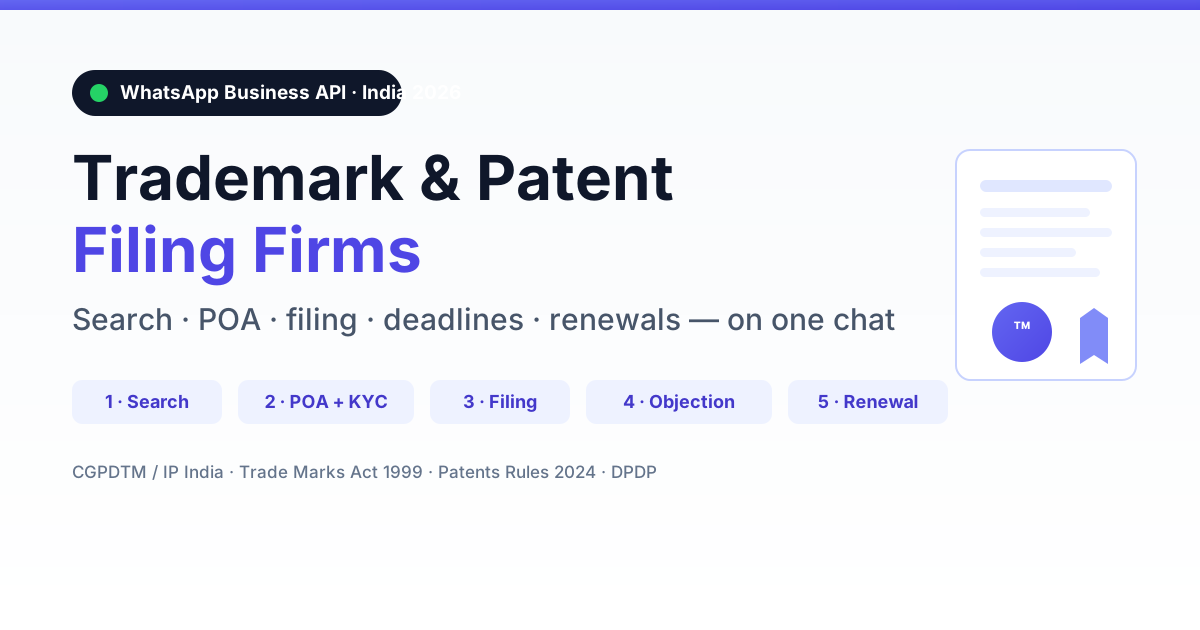
A trademark and patent filing firm — the IP attorney or registered agent who searches a brand, files it at the Trade Marks Registry or Patent Office, argues the examination report and then keeps the mark alive for a decade — runs its whole client relationship on the official WhatsApp Business API: a founder asks "is my brand name free?" in a chat and gets a class recommendation and a fee quote, uploads the signed Power of Attorney and specimen through a Flow, receives the application number and filing receipt the moment it is filed, gets a reminder before the 30-day examination-reply deadline that decides whether the application lives or is abandoned, and is pulled back years later for the 10-year renewal before the mark lapses. That single lifecycle turns a deadline-driven, document-heavy practice — where a missed examination reply kills an application and a renewal reminder never reaches the client — into a tracked, per-matter operation on the one app every client already opens. Figures here are directional; verify current CGPDTM / IP India rules, the Trade Marks Act 1999, Patents Act 1970, the Patents (Amendment) Rules 2024 timelines, agent-registration requirements, Bar Council solicitation rules where an advocate runs the practice, and DPDP specifics with the relevant authorities.
Why an IP filing firm is a natural WhatsApp business
India has become one of the busiest IP jurisdictions in the world — trademark applications run into the several lakhs a year and patent filings have crossed into the high tens of thousands with resident filings surging, while the CGPDTM has pushed examination and grant timelines sharply down through end-to-end e-filing (verify current volumes and pendency with the latest IP India Annual Report before quoting them). Thousands of registered trademark and patent agents and IP law firms compete for that work, and their economics are almost pure deadline-and-renewal recurring revenue: a registered trademark is a ten-year asset that renews for as long as the brand trades, and a granted patent carries an annuity every single year, so the whole game is (a) converting a "check my brand name" enquiry into a filed, prosecuted, registered mark fast enough to win the client, and (b) never missing the statutory deadline that would abandon the application or lapse the registration. The money and the malpractice risk leak in three places — an enquiry dies in a queue of unanswered "is my name available" messages, a document or Power of Attorney never arrives so the filing stalls, and a deadline slips — the 30-day examination-report reply, the opposition window, the annuity, the renewal — which is the single most damaging thing that can happen in this practice. WhatsApp fixes all three because it is the channel the client actually opens, and because a structured per-matter thread carries the search quote, the POA upload, the filing receipt and the deadline reminder that a shared inbox and a paper file cannot. The same document-collection-and-deadline discipline that our WhatsApp playbook for Company Secretary and ROC-compliance firms brings to statutory filings applies directly to IP — only here the examination-reply clock and the renewal date, not the MCA due date, are the recurring unit.
The 5-stage IP filing lifecycle on WhatsApp
Map every stage of the trademark or patent relationship to a WhatsApp touchpoint and both the conversion funnel and the deadline calendar stop leaking:
- 1. Enquiry + trademark/patent search + quote: a Click-to-WhatsApp ad, a "check your brand name free" button on the site, or a founder's referral brings the client in, and the first exchange captures the mark or invention, runs an availability / knock-out search across the relevant classes, and returns a class recommendation with the government fee and the professional fee in one message. A client learns in a single thread whether the name is likely clear and what it costs, instead of waiting days for a quote email.
- 2. Engagement + POA + document collection: the client uses a WhatsApp Flow to submit applicant details (individual, startup or company), the class list, the logo or wordmark specimen, the date of first use with a user affidavit, and the signed Power of Attorney — TM-48 for a trademark, Form 26 for a patent — plus a Udyam or DPIIT-recognition certificate where a small-entity or startup fee concession applies. A structured, in-chat intake beats chasing attachments over email and timestamps exactly what was authorised, which matters if the filing is ever disputed.
- 3. Filing + application number + publication tracking: the moment the firm files on the IP India portal, the application number, the filing receipt and the note that the ™ mark is now usable go back to the client's thread, followed by advertisement in the Trade Marks Journal or patent publication status. The client sees proof of filing instantly instead of asking "has it been filed yet?".
- 4. Prosecution — examination report, objection, hearing + opposition reminders: this is the deadline-critical core. An examination report reply is due within a tight statutory window (30 days for a trademark examination report; the patent first-examination-report reply window and request-for-examination timing were tightened under the Patents (Amendment) Rules 2024 — verify the current period), a show-cause hearing carries a fixed date, and an opposition or counterstatement runs its own four-month-style clock from advertisement. A utility reminder fired well before each deadline, with the drafted reply attached for client sign-off, is the difference between a registered mark and an abandoned application. A missed reply here is the classic malpractice exposure this whole system exists to prevent.
- 5. Registration certificate + renewal / annuity recurring reminders: the registration certificate or grant letter is delivered in-chat, and then the recurring engine takes over — a trademark renewal reminder fired before the 10-year deadline (and again inside the six-month grace window), a patent annuity reminder every year, a Form 27 working-statement nudge each financial year, and consented upsell for additional classes, international Madrid Protocol or PCT filings, a brand-watch service, or a portfolio review. Reorder-style recurring reminders, but for statutory IP deadlines instead of stock.
Many IP filing firms sit inside or alongside a broader professional practice, so the same client often needs adjacent work — the incorporation and secretarial side is mapped in our WhatsApp playbook for chartered accountant firms, the litigation and advisory side in our WhatsApp playbook for law firms and advocate practices, and the earliest-stage clients who most need to protect a fresh brand are exactly the founders in our best WhatsApp API for startups guide. The IP thread slots neatly beside all three.
The regulatory spine: what shapes your filing, deadline and fee
IP practice is tightly rule-bound, and several regimes shape the search, the filing, the deadline calendar and the fee. Build them into your templates from day one and verify the current position with the relevant authority:
- CGPDTM & the IP India portal: the Office of the Controller General of Patents, Designs & Trade Marks, under DPIIT, administers trademarks, patents, designs and GIs through the Trade Marks Registry (Mumbai, Delhi, Kolkata, Chennai, Ahmedabad) and the Patent Office, with comprehensive online e-filing. Your application-number updates, journal-advertisement tracking and status pushes should map to the portal's stages — confirm the current e-filing workflow rather than assuming.
- Trade Marks Act 1999 & Rules 2017: classification (the Nice classes), the TM-A application, the TM-48 authorisation of agent, examination on absolute and relative grounds, advertisement in the Trade Marks Journal, the four-month opposition window, registration, and renewal every ten years with a grace period and restoration. The examination-reply deadline (commonly 30 days) is the one that abandons applications — verify the current period and any extension mechanism.
- Patents Act 1970, Rules 2003 & the 2024 amendment: Form 1 application, Form 2 specification, the Form 3 statement and undertaking, the Form 18 request for examination, and Form 26 Power of Attorney, followed by the First Examination Report, opposition and grant. The Patents (Amendment) Rules 2024 changed several timelines — including the request-for-examination window, the FER-reply period, and the Form 27 working-statement cadence — and added a certificate of inventorship; verify the current forms, fees and deadlines before diarising them.
- Agent registration & who can file: a patent agent must clear the Patent Agent Examination and register with the Patent Office under the Act to prosecute patents; trademark work is handled by advocates and registered agents. Confirm your agents' registration status is current — it is the basis on which you are authorised to appear.
- Startup, small-entity & expedited concessions: recognised startups, small entities and certain applicants get substantial fee concessions (including a large patent-fee rebate) and expedited-examination routes under Startup India and the rules. Collect the Udyam or DPIIT-recognition certificate up front through the Flow so the concession is claimed correctly — verify current eligibility and rebate levels.
- Solicitation limits where an advocate runs the firm: if the practice is run by advocates, the Bar Council of India rules restrict advertising and direct solicitation, so a WhatsApp marketing broadcast is a compliance question, not a free-for-all. Registered trademark/patent agents who are not advocates have more latitude, but no firm should ever promise a guaranteed registration — the outcome is at the Registrar's or Controller's discretion, and a "guaranteed approval" claim is both misleading and against the spirit of the rules. Keep utility deadline reminders (fine for existing clients) separate from marketing, and verify the current solicitation position for your constitution.
Handling client data the DPDP way
IP intake pulls in exactly the data the Digital Personal Data Protection Act, 2023 treats as personal — applicant name, PAN or Aadhaar, incorporation and address proof, bank or UPI details, and, most sensitively, the unpublished mark or the invention disclosure itself, which is a trade secret whose leak before filing can destroy novelty and priority. A few disciplines keep an IP firm on the right side (verify the current DPDP Rules and their commencement as they roll out through 2026):
Book a WhatsApp booking demo
See how brands run bookings, reminders, and re-engagement on WhatsApp — DPDP-compliant, India-hosted. Book a 15-minute demo.
- Data minimisation & pre-filing confidentiality: collect only what the search, filing and fee-concession claim need — identity and entity proof for the applicant, the specimen or specification for the filing, the startup certificate for the rebate — and treat every pre-filing invention disclosure and unfiled mark as confidential, stored against the matter, never forwarded to a shared support inbox. In an advocate-run firm this also overlaps with attorney-client confidentiality.
- Per-matter, role-based access: a paralegal or filing clerk should see only the matters assigned to them, not every client's invention disclosures and portfolio. Use an API stack with role-based access, not a personal WhatsApp on a shared office phone where anyone can scroll every client's confidential filing.
- Consent, retention & re-contact: renewal, annuity and deadline reminders to an existing client rest on the retainer; a brand-watch offer or a new-service broadcast needs clear opt-in and an easy opt-out. Keep statutory deadline reminders separate from marketing, retain KYC and disclosures only as long as the matter and the law require, and honour data-principal access and erasure requests.
The automation tech stack
Three building blocks on the official API run the whole client side of an IP filing practice:
Use the customer LTV calculator to work out how much a repeat customer justifies spending to keep.
- WhatsApp Flows for search intake & POA collection: a Flow captures the search request, the applicant and class details, the specimen or specification, the signed TM-48 / Form 26 Power of Attorney and the startup or small-entity certificate in-chat, and takes the government-plus-professional fee via a payment link — no email attachment chase, no office visit.
- Utility templates for filings, deadlines & renewals: filing receipts, application-number updates, examination-report and hearing-date reminders, opposition-window alerts, and renewal or annuity due reminders are transactional and sit in the cheaper utility category. Keep brand-protection awareness and watch-service offers in the marketing category, which needs prior opt-in and, for advocate-run firms, a solicitation check.
- Two-way replies + attorney escalation: a client's confirmation of a specimen or a sign-off on a drafted examination reply flows back into the matter thread, while any legal-strategy question — how to answer an objection, whether to oppose a conflicting mark — routes to the attorney, never a canned bot answer. Deadline-critical items are flagged for a human, because in this practice a wrong automated reply on a statutory deadline is the failure mode you are automating to avoid.
The same intake, filing-status and deadline-reminder pattern powers any deadline-driven professional practice — the per-conversation economics of running it are broken down in our WhatsApp Business API pricing breakdown.
What a WhatsApp setup costs an IP filing firm on RichAutomate
RichAutomate runs on the official Meta WhatsApp Business API with ₹0 platform fee, ₹0 setup and ₹0 monthly — you pay only for messages. Two models:
- Client Pay — ₹0.10 per message plus Meta's conversation charges billed to you directly at cost by Meta.
- SaaS Pay — ₹1.50 marketing / ₹0.50 utility per message, all-inclusive on one INR GST invoice, tiering down toward ₹0.50 at volume.
Because most IP-firm traffic — filing receipts, application-number updates, examination and hearing reminders, renewal and annuity nudges — is utility, the running cost stays low even for a firm managing thousands of live trademark and patent matters. Going live on the official API needs a verified business, and in India GST registration is effectively required to move a WhatsApp Business Account to live status, so treat it as necessary, not optional. See the full WhatsApp Business API pricing breakdown for the per-conversation maths. A 14-day free trial with 100 free credits lets a firm pilot a brand-search intake Flow and a renewal-reminder campaign before committing. Pricing shown is RichAutomate's own; verify any competitor's current rates directly, and no platform should promise a ban-proof account for unsolicited or bulk sends — nor should any IP firm promise a guaranteed registration.
Run your IP filing practice on WhatsApp
From "is my brand name free?" enquiries and in-chat trademark search quotes, to POA and document collection with a fee-payment link, to application-number and Journal-advertisement updates, to examination-reply, hearing and opposition-deadline reminders, to registration certificates and recurring 10-year renewal and annuity nudges — RichAutomate runs it all on the official Meta WhatsApp Business API at ₹0 setup, ₹0 monthly, ₹0 platform fee. Client Pay is ₹0.10/message plus Meta's rates billed direct at cost; SaaS Pay is ₹1.50 marketing / ₹0.50 utility all-inclusive. Start with a 14-day free trial and 100 free credits, or book a 30-minute walkthrough. This is general information, not legal advice; verify current CGPDTM / IP India, Trade Marks Act, Patents Act and 2024-Rules, agent-registration, Bar Council solicitation and DPDP specifics with the relevant authorities.
Start your 14-day free trial → · Book a 30-min walkthrough · WhatsApp us on 91 81603 11319