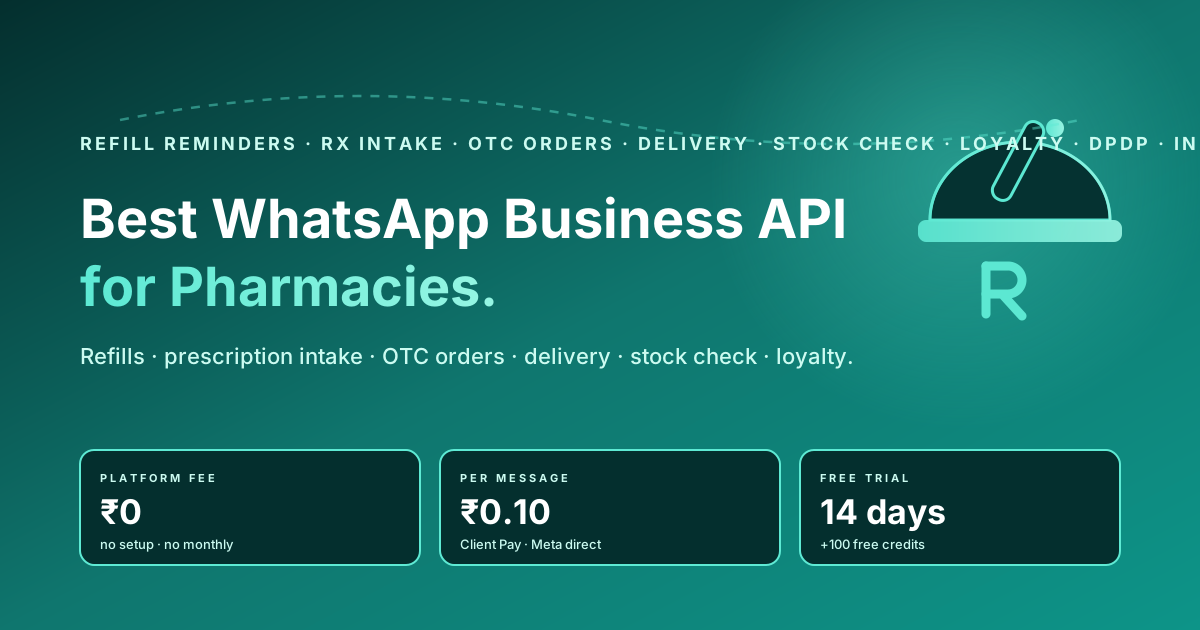
The short answer. A retail pharmacy, chemist shop or medical-store chain does not need a generic chat tool — it needs WhatsApp wired into the moments that decide whether a customer refills on time, sends a prescription instead of walking in, orders an OTC item, accepts a home delivery, and comes back next month: capturing a prescription photo and reading the order off it, confirming what is in stock before the customer makes a trip, taking an OTC or refill order in chat, scheduling a delivery and confirming the rider, sending a refill reminder before the strip runs out, collecting payment, and running a simple loyalty nudge. The levers that decide the right provider are platform fee, a structured prescription-intake and order flow, stock and availability check, refill-reminder scheduling, a delivery and payment path, a shared counter inbox, multi-language support, and predictable per-message cost. RichAutomate fits the pharmacy-counter shape: ₹0 platform fee, ₹0 setup, ₹0 monthly, a flat per-message line, no-code and native WhatsApp Flows for prescription intake and ordering, a multi-number shared inbox, and multi-language templates. Be honest, though — a large pharmacy chain that needs deep two-way integration with its billing, POS and inventory system may want a platform built around that, and a single neighbourhood chemist may only need a shared inbox. And nothing here is clinical, regulatory or data-protection advice: a Schedule-H or Schedule-H1 medicine still needs a valid prescription and a registered pharmacist’s verification, and you should confirm every Drugs and Cosmetics Act, pharmacy-licensing and DPDP point with your own compliance, legal and pharmacist team.
This is a practical, honest guide to choosing a WhatsApp Business API provider for an Indian pharmacy business in 2026 — a single retail chemist, a neighbourhood medical store, a multi-outlet pharmacy chain, or an online pharmacy with home delivery. We cover what pharmacy teams actually need from WhatsApp across the refill-and-order lifecycle, the criteria that matter for refill conversion, on-shelf availability and delivery reliability, which provider shape fits which kind of store, an illustrative cost model, a Schedule-H, prescription-verification and DPDP health-data note, and a one-week rollout plan. Treat every competitor figure as something to verify on their site, every rupee number here as illustrative, and every clinical, regulatory and pharmacist-verification point as something to confirm with your own compliance, legal and pharmacist team.
What a pharmacy actually needs from WhatsApp
A pharmacy lives on repeat custom and thin margins, and almost every order decision happens on a phone the customer already has open. The chronic patient on blood-pressure, diabetes or thyroid medicine refills the same items every month; the family that needs a cough syrup at 9pm; the elderly customer who would rather send a photo of a prescription than walk to the counter and find the strip out of stock. WhatsApp carries all of it because the customer replies faster than to an unknown call and far faster than to an email they will never open.
Concretely, a working pharmacy WhatsApp setup does seven jobs:
- Prescription-photo intake. The customer sends a photo of a doctor’s prescription; a structured flow captures the patient name, the items, quantity and delivery or pickup choice so the counter can read the order off it — with a pharmacist verifying anything that needs a prescription before it is dispensed.
- Stock and availability check. Before the customer makes a trip, they ask “do you have Telma 40” and get an answer, so a wasted trip becomes a confirmed sale or a clean “we will arrange it by evening”.
- OTC and refill ordering. A simple in-chat flow takes an over-the-counter order or a repeat refill, captures quantity and address, and routes it to the counter.
- Refill reminders. A scheduled, opted-in reminder before a chronic-medicine strip runs out is the single highest-value message a pharmacy can send — it turns a lapsed refill into an on-time one, which is where a chemist’s repeat revenue quietly lives.
- Delivery and rider confirmation. A confirmation when the order is ready, a delivery slot and the rider’s ETA cut the “where is my order” calls that flood the counter.
- Payment and loyalty. A payment link collects dues without cash-on-delivery friction, and a clean opted-in loyalty or monthly-saver nudge lifts repeat orders.
- Shared counter inbox. The counter staff, the delivery coordinator and the owner work the same WhatsApp number side by side instead of one phone passing between hands.
The criteria that decide the right provider
Strip away the marketing and a pharmacy is choosing on eight things:
- Platform fee. Does the provider charge a fixed monthly or setup fee on top of message cost? For a single store or a small chain, a fixed fee turns WhatsApp into rent you pay whether or not a quiet week sends any messages.
- Prescription-intake and order flow. Can you capture a prescription photo plus the structured fields — items, quantity, delivery choice, address — inside WhatsApp with a native Flow, instead of a messy back-and-forth?
- Stock and availability check. Can a customer ask about an item and get a fast, templated answer without tying up the counter?
- Refill-reminder scheduling. Can you schedule opted-in refill reminders against a chronic-medicine cycle, the highest-ROI message a pharmacy sends?
- Delivery and payment path. Order-ready and rider-ETA notifications plus a payment link, so an order completes without phone tag.
- Shared, multi-number inbox. Several staff on one number, with assignment, so nothing is missed at the counter.
- Multi-language support. Templates in the languages your customers actually read.
- Predictable per-message cost. A clear utility-versus-marketing split so you can model the channel against your order volume.
Which provider shape fits which kind of pharmacy
There is no single “best” — there is a best fit for your size and how you dispense:
Plug your own numbers into the WhatsApp ROI calculator to see the payback period at your volume.
- Single neighbourhood chemist. You mostly need a shared inbox, prescription-photo intake and refill reminders. A zero-platform-fee provider keeps cost tied to the few hundred messages you actually send, and you avoid paying a monthly licence to a vendor built for chains. RichAutomate fits cleanly here.
- Multi-outlet pharmacy chain. You want one WhatsApp presence across outlets, a shared inbox with assignment, refill-reminder campaigns and reporting — while still keeping per-message cost honest. RichAutomate fits, with the caveat below on deep POS integration.
- Online pharmacy with home delivery. Prescription intake, order-status and rider notifications and payment links are the spine of your operation; the native Flows and utility templates carry them. As volume scales, model your per-message cost carefully.
- Large chain with a deep POS, billing and inventory stack. If you need real-time two-way sync — live stock pulled from inventory into the chat, orders pushed straight into billing, loyalty points reconciled against your POS — you may prefer an enterprise platform built around that integration, or a custom build on the API. Be honest with yourself about whether you need that today or are buying complexity you will not use.
Why RichAutomate fits the pharmacy-counter shape
RichAutomate is built for the order-driven, refill-heavy, consent-sensitive reality of a pharmacy rather than a generic chat use case:
Get a 1-minute BSP audit on WhatsApp
Drop your WhatsApp number — we line-item your current invoice against Meta India rates in under 60 seconds. India-hosted, DPDP-compliant.
- ₹0 platform fee, ₹0 setup, ₹0 monthly. You pay per message, so a quiet week costs less and a festival or flu-season surge costs more in proportion to what you actually send — the channel never runs as fixed rent.
- Native WhatsApp Flows and no-code builder for prescription-photo intake, OTC and refill ordering, and stock-check requests, so the customer completes the order inside WhatsApp.
- Scheduled refill reminders against an opted-in chronic-medicine cycle, plus order-ready and rider-ETA utility notifications.
- Payment-link and loyalty flows to collect dues and lift repeat orders without cash friction.
- Multi-number shared inbox so counter staff, delivery coordinator and owner work side by side.
- Multi-language templates and built-in consent and opt-out handling.
- Runs on the official Meta WhatsApp Cloud API.
A lighter inbox tool may suffice for a single chemist who only fields a handful of messages a day, and a large chain that needs deep POS, billing and inventory integration may prefer an enterprise platform — that is an honest call, not a knock on either.
An illustrative cost model
With RichAutomate there is no platform fee, no setup fee and no monthly fee, so you only pay for messages. There are two billing shapes:
- Client Pay. Meta bills you direct for conversations on your own number, and RichAutomate adds a flat ₹0.10 per message platform charge — you keep full Meta-direct billing visibility for your accounts.
- SaaS Pay (all-in). ₹1.20 per marketing conversation and ₹0.30 per utility or authentication conversation, GST-inclusive, on one simple bill.
Most pharmacy messages — refill reminders, order confirmations, ready-for-pickup and rider-ETA notifications, payment prompts and prescription-intake acknowledgements — fall into the cheaper utility tier, while monthly-saver promotions, new-product launches and seasonal health-camp pushes are marketing. The advantage of a zero platform fee for a pharmacy is that channel cost tracks order and refill volume: a slow week costs less and a flu-season surge costs more in proportion to what you send. Model your own numbers with the WABA cost calculator, read the full Client Pay versus SaaS Pay billing breakdown, and verify Meta conversation pricing as of 2026. Every rupee figure here is illustrative.
A Schedule-H, prescription-verification and DPDP note
Two cautions matter more for a pharmacy than for most businesses, and neither is something a software platform can do for you.
First, prescription medicines stay regulated. Schedule-H and Schedule-H1 drugs require a valid prescription and a registered pharmacist’s verification before dispensing, and WhatsApp does not change that. A photo of a prescription is an intake convenience, not a substitute for pharmacist judgement — the order should be verified by your registered pharmacist, and anything that needs a prescription should not be dispensed without one. The Drugs and Cosmetics Act, your pharmacy licence, and any e-pharmacy rules that apply to you govern what you can sell and how; a WhatsApp message never overrides them.
Second, treat customer health data as sensitive. Prescriptions, medicine lists, addresses and any condition a customer reveals are personal — and sensitive — data under the DPDP framework. Collect only what a refill, order, delivery or reminder needs; restrict who at the counter can see prescription images; capture opt-in at the point of order; and honour opt-out immediately. Do not blast refill or promotional messages to people who never agreed to receive them.
None of this is clinical, regulatory or data-protection advice. Confirm every Drugs and Cosmetics Act, pharmacy-licensing, e-pharmacy and DPDP obligation with your own compliance, legal and pharmacist team. And never promise a customer — or accept a vendor’s promise — that a WhatsApp number cannot be restricted; no provider can guarantee that, and the responsibility for clean, consented messaging stays with the pharmacy.
A one-week rollout plan
- Day 1–2. Connect your business number to the official WhatsApp Cloud API, set up the shared inbox, and add counter staff with roles so prescription images are seen only by those who need them.
- Day 2–3. Build the prescription-intake Flow (patient name, items, quantity, delivery or pickup, address) and a stock-check request, and draft utility templates for order-confirmed, ready-for-pickup and rider-ETA.
- Day 3–4. Set up the refill-reminder schedule for chronic-medicine customers who have opted in, and wire a payment link into the order flow.
- Day 4–5. Add multi-language templates for the languages your customers read, and a clean opt-out path on every promotional message.
- Day 5–7. Pilot with a small set of regular customers, confirm pharmacist verification is in the loop for prescription items, and review the first few days of order and refill conversions before scaling.
Related reading
If your business overlaps with healthcare delivery, these adjacent guides help you scope the right setup:
- Best WhatsApp Business API for hospitals and clinics in India 2026
- Best WhatsApp Business API for diagnostic labs in India 2026
- RichAutomate pricing — the full ₹0-platform-fee breakdown
The bottom line
For a single chemist, a neighbourhood medical store, a multi-outlet pharmacy chain or an online pharmacy in India, the best WhatsApp Business API provider is the one that fits the refill-and-order shape of your business without charging you rent for a quiet week. RichAutomate’s ₹0 platform fee, native prescription-intake and ordering Flows, scheduled refill reminders, shared counter inbox and flat per-message cost line up cleanly with how a pharmacy actually runs — with the honest caveat that a single chemist may need only a shared inbox and a large chain with a deep POS stack may want an enterprise-integrated platform. Start with the high-value moments — prescription intake, refill reminders and order-ready notifications — keep a registered pharmacist verifying everything that needs a prescription, capture opt-in cleanly, and let the channel scale with your order volume. Talk to us on WhatsApp at 918160311319 or book a walkthrough at calendly.com/inrichdaddy/30min.
Start your WhatsApp automation free
₹0 platform, setup & monthly — pay only per message. 14-day free trial + 100 credits. Get your free WhatsApp Business API setup in 24–48 hrs.
Chat with us on WhatsApp → Book a 30-min demo