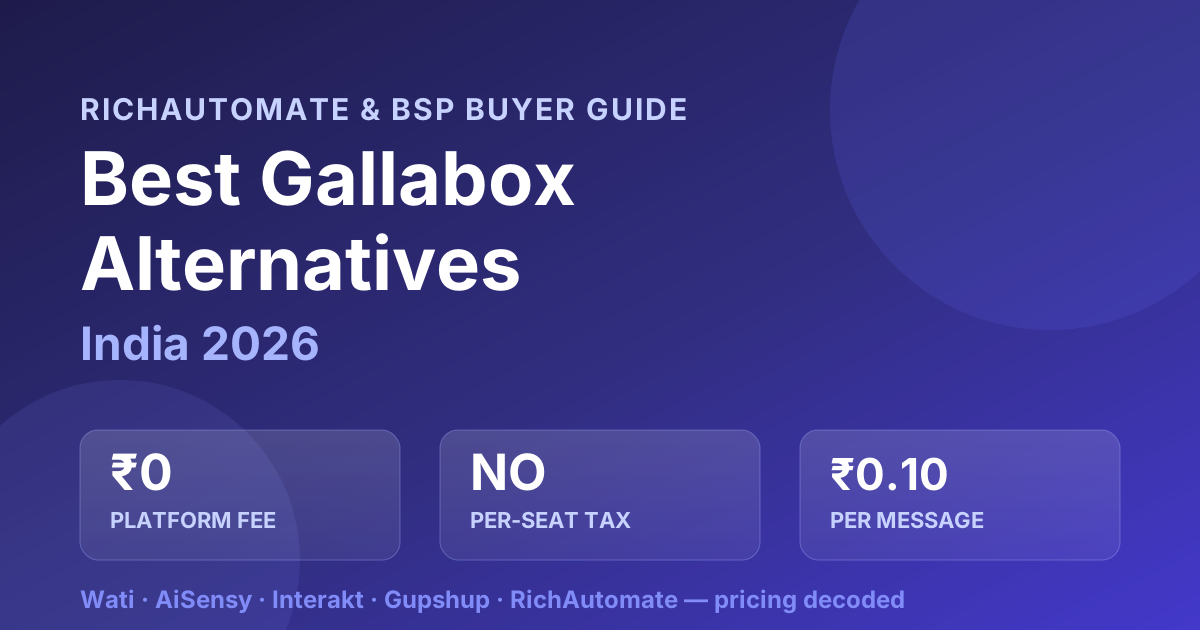
Gallabox is a capable WhatsApp Business API platform — a shared team inbox, a no-code bot builder, broadcast campaigns and a handful of CRM integrations — and for plenty of small Indian teams it does the job. But "capable" and "right for you in 2026" are not the same thing. Teams outgrow it for predictable reasons: a per-user seat model that punishes you for adding agents (a widely reported six-user cap on lower tiers is a common trigger — verify on the Gallabox site as of 2026), a monthly platform fee stacked on top of Meta's own conversation charges, and pricing that climbs faster than headcount. If you are shopping for a Gallabox alternative, the real question is not "which tool has the most features" — it is "which pricing model stops taxing my growth." This guide ranks the alternatives that matter for an Indian buyer, with an honest pros-and-cons read on each, a real INR pricing table (every competitor figure hedged "verify on the vendor site as of 2026"), and a clear view of where a ₹0-platform-fee model like RichAutomate changes the maths. If you want the underlying cost breakdown of Gallabox itself first, read our Gallabox pricing decoded guide — this piece picks up where that one ends.
Why teams look for a Gallabox alternative in 2026
People rarely leave a working tool on a whim. The switches we see cluster around three friction points, and naming them tells you what to look for in a replacement:
- The per-seat tax. Most mid-market WhatsApp platforms — Gallabox included — charge per agent seat. Add a support hire and your bill jumps before that person has sent a single message. A reported six-user cap on entry tiers forces an upgrade exactly when a small team is finding its feet. Verify the current seat limits and per-user pricing on the Gallabox site as of 2026.
- The double charge. You pay a monthly platform/subscription fee to the BSP and you pay Meta's conversation charges. The platform fee is pure overhead — it buys you software access, not messages. When that fee is large relative to your actual messaging, you are subsidising the vendor, not your customers.
- Pricing that scales the wrong way. As contacts, messages and agents grow, tiered plans push you up brackets you did not choose. The cost curve bends away from you exactly as volume — the thing you wanted — arrives.
So the alternatives below are judged on more than feature lists. The decisive axis is the pricing model: per-seat-plus-platform-fee versus per-message-with-zero-platform-fee. That single choice often outweighs every feature checkbox over a 12-month horizon.
The framing that matters: every WhatsApp platform sits on top of the same Meta Cloud API and the same Meta conversation pricing. No BSP can make Meta's per-conversation charges disappear. What differs is the markup — the platform fee and the per-message margin the vendor adds on top. When you compare alternatives, mentally separate "what Meta charges" (fixed, same for everyone) from "what the platform charges me to sit in the middle" (wildly variable). That second number is where you save.
The top Gallabox alternatives for Indian teams, ranked
Here is the shortlist, ordered by how well each fits a growth-stage Indian business that is fed up with seat taxes and platform fees. Every alternative is a real, established WhatsApp Business API platform; the fit notes are honest, including where each one is the wrong choice.
1. RichAutomate — the ₹0-platform-fee standout
RichAutomate is built around the opposite pricing philosophy to seat-based incumbents: ₹0 platform fee, ₹0 setup, ₹0 monthly, with two transparent ways to pay for usage. On Client Pay you pay ₹0.10 per message and Meta's conversation charges are billed to you directly by Meta at Meta's own rates — no markup sitting in between. On SaaS Pay it is all-in: ₹1.20 per marketing conversation and ₹0.30 per utility conversation, with nothing else to add. There is a 14-day free trial with 100 credits to run a real flow before you commit. Crucially, there is no per-seat tax and no six-user wall — you add agents without your bill jumping. On capability it covers the same ground buyers expect: shared team inbox, no-code visual flow builder, broadcast campaigns, multi-tenant structure, native CRM integration (including a stage-gated WhatsApp-to-Zoho sync) and WhatsApp Flows support.
Pros: no platform fee and no setup fee, so the cost curve stays flat as you scale; no per-seat charge; transparent two-mode pricing; Meta charges pass through at cost on Client Pay; 14-day trial with credits.
Cons: a newer brand than the largest incumbents, so it carries less name recognition in procurement decks; very large enterprises with bespoke CPaaS-style SLA demands should still run their own diligence.
Best for: growth-stage D2C, SMB and agency teams that add agents and message volume and refuse to be taxed for it.
2. Wati — the popular SMB inbox
Wati is one of the best-known WhatsApp inboxes for small and mid-size teams, with a clean shared inbox, a no-code bot builder and a broad app ecosystem. It is genuinely easy to start with. The trade-off is the model: it is subscription-plus-seat, so the monthly fee and per-agent costs are the thing to model carefully as your team grows. Verify Wati's current plan pricing and seat limits on the Wati site as of 2026. Our Wati vs RichAutomate pricing decoded breakdown walks the numbers.
Pros: mature product, large integration marketplace, easy onboarding, strong brand trust.
Cons: subscription + per-seat model adds platform overhead; costs climb with agents and contacts.
Best for: small teams that value a polished, well-known product and can absorb the seat-based pricing.
3. AiSensy — the broadcast-first option
AiSensy leans into marketing and broadcast use cases and is popular with Indian SMBs running campaign-heavy WhatsApp. It offers a tiered monthly plan structure and add-ons. As with the others, separate the platform/subscription fee from Meta's conversation charges when you compare — and watch how features you actually need are split across tiers. Verify AiSensy's current tier pricing and what each tier includes on the AiSensy site as of 2026. See the side-by-side in our AiSensy vs RichAutomate pricing decoded piece.
Pros: strong broadcast/campaign focus, familiar to Indian marketers, tiered entry points.
Cons: monthly platform fee on top of Meta charges; useful features can sit behind higher tiers.
Best for: marketing-led teams whose primary job-to-be-done is outbound campaigns.
4. Interakt — the commerce-leaning pick
Interakt (from the Haptik/Jio stable) targets small businesses and D2C commerce, with catalogue and order-notification tooling that suits sellers. It uses a subscription model, often billed annually, plus conversation costs. The commerce features are the draw; the platform fee and the annual-commitment shape are the things to model against your real volume. Verify Interakt's current plan pricing and billing terms on the Interakt site as of 2026. The full comparison is in our Interakt vs RichAutomate pricing decoded guide.
Pros: commerce/catalogue tooling, D2C-friendly, backed by a large group.
Cons: subscription/annual-commitment model; platform fee on top of Meta; tier limits to watch.
Best for: small D2C/commerce sellers who want catalogue and order flows out of the box.
Get a 1-minute BSP audit on WhatsApp
Drop your WhatsApp number — we line-item your current invoice against Meta India rates in under 60 seconds. India-hosted, DPDP-compliant.
5. Gupshup — the volume/enterprise CPaaS
Gupshup is an established CPaaS player that scales to very high message volumes and serves enterprise needs, including multi-channel beyond WhatsApp. That heft is the point — and also the trade-off. The pricing and packaging are oriented to scale and can carry platform/minimum-commit elements that are heavy for a small team. Verify Gupshup's current pricing, minimums and packaging on the Gupshup site as of 2026.
Pros: proven at scale, multi-channel, enterprise-grade reliability.
Cons: packaging and minimums can be heavy for SMBs; more platform than a lean team needs.
Best for: high-volume senders and enterprises with multi-channel CPaaS requirements.
Gallabox alternatives — pricing model at a glance
This is the table that decides most switches. It compares the shape of each model, not a single headline number, because the shape is what determines your bill at scale. Every competitor figure is illustrative and must be verified on the vendor's own site as of 2026 — vendors change plans frequently.
| Platform | Platform / monthly fee | Per-seat charge | How usage is billed | Free trial |
|---|---|---|---|---|
| RichAutomate | ₹0 platform / ₹0 setup / ₹0 monthly | None | Client Pay ₹0.10/msg + Meta billed direct; or SaaS Pay ₹1.20 marketing / ₹0.30 utility | 14-day free trial + 100 credits |
| Gallabox | Monthly subscription (verify) | Per-seat; reported ~6-user cap on entry tiers (verify) | Subscription + Meta conversation charges | Verify on vendor site |
| Wati | Monthly subscription (verify) | Per-seat (verify) | Subscription + Meta conversation charges | Verify on vendor site |
| AiSensy | Tiered monthly (verify) | Tier/seat dependent (verify) | Subscription/tier + Meta conversation charges | Verify on vendor site |
| Interakt | Subscription, often annual (verify) | Plan dependent (verify) | Subscription + Meta conversation charges | Verify on vendor site |
| Gupshup | Platform/commit elements (verify) | Plan dependent (verify) | Volume-oriented + Meta charges | Verify on vendor site |
Read the table by column, not by row. The "platform / monthly fee" and "per-seat charge" columns are where alternatives diverge most — and where a ₹0-platform-fee, no-seat-charge model breaks from the pack. The usage column is broadly similar everywhere because Meta's conversation charges underlie all of them; what differs is whether a markup is layered on top. Treat every cell marked "verify" as a prompt to check the live figure on that vendor's site as of 2026.
The six-user cap and the per-seat trap
The single most common reason a small team starts shopping for a Gallabox alternative is the seat wall. A reported cap of around six users on entry tiers (verify on the Gallabox site as of 2026) means your seventh hire forces a plan upgrade — you pay more for the privilege of growing your team, before that agent has handled a single chat. Generalise the lesson: any platform that charges per seat aligns its revenue with your headcount, not with the value you get. The more your support and sales teams grow, the more the meter runs, regardless of message volume. A per-message model with no seat charge inverts that incentive — you pay for messages sent, and adding agents is free. For a team that expects to hire, this is not a rounding error; over a year it is often the largest line in the comparison. Model your real 12-month headcount against each platform's seat pricing before you sign anything.
How to choose the right alternative — a quick decision frame
Skip the feature-checklist paralysis. For most Indian buyers, four questions settle it:
- Will your team grow? If yes, weight the per-seat charge heavily — it compounds. A no-seat model wins on a hiring trajectory.
- What is your message mix? Mostly utility (alerts, OTPs, order updates)? A platform where utility is cheap and Meta charges pass through cleanly is ideal. Mostly marketing broadcasts? Compare the all-in marketing rate carefully.
- Do you want Meta charges at cost or marked up? A pass-through model (Meta billed directly to you) removes the middle margin; a bundled model hides it. Decide which you trust.
- Can you trial it on a real flow? A free trial with credits lets you measure your actual cost before committing — far more reliable than a pricing-page estimate.
If you want help sizing the numbers, our best WhatsApp Business API providers in India roundup widens the field, and the WABA cost calculator turns your real volume and headcount into a monthly figure you can compare apples-to-apples across any of the alternatives above.
The honest bottom line: Gallabox is a fine product, and the "best" alternative depends on your shape — broadcast-heavy teams, commerce sellers and enterprises each have a natural fit above. But if the reason you are shopping is the seat tax and the platform fee, the model that solves it directly is the ₹0-platform-fee, no-per-seat one. That is the structural difference, not a feature gimmick — and it is the difference that keeps showing up as the biggest number in a 12-month cost comparison.
What it costs on RichAutomate
RichAutomate's pricing is deliberately flat so the cost curve does not bend against you as you grow: ₹0 platform fee, ₹0 setup, ₹0 monthly, and no per-seat charge — add as many agents as you need without the bill moving. On Client Pay, it is ₹0.10 per message and Meta's conversation charges are billed to you directly by Meta at Meta's rates, so there is no markup sitting in the middle. On SaaS Pay, it is all-in: ₹1.20 per marketing conversation and ₹0.30 per utility conversation, with nothing else to add — and since alerts, order updates and reminders are utility-category, the high-frequency traffic lands in the cheaper bucket. A 14-day free trial with 100 credits lets you wire one real flow end-to-end and measure your actual cost before you commit. See the full card at richautomate.in/pricing. Meta's conversation-category pricing changes over time, so verify current Meta rates as of 2026.
Related reading: see how Gallabox prices against Wati.
Switch off the seat tax — keep the WhatsApp power
If you are leaving Gallabox because the per-seat model and the platform fee tax your growth, the cleanest fix is a platform built the other way around: ₹0 platform fee, ₹0 setup, ₹0 monthly, no per-seat charge — Client Pay at ₹0.10 per message with Meta conversation charges billed direct by Meta, or SaaS Pay all-in at ₹1.20 marketing / ₹0.30 utility. Same WhatsApp Business API power — shared inbox, no-code flow builder, broadcasts, CRM sync, WhatsApp Flows — without the meter running on your headcount. Start the 14-day free trial with 100 credits, WhatsApp us at 917434901027, or book a 30-minute walkthrough at https://calendly.com/inrichdaddy/30min. (Every competitor figure here is illustrative — verify on the respective vendor's site as of 2026. No platform can guarantee message delivery, account approval or freedom from policy action; follow Meta's rules and verify current Meta conversation rates as of 2026.)
Start your 14-day free trial → · See full pricing · Run the WABA cost calculator