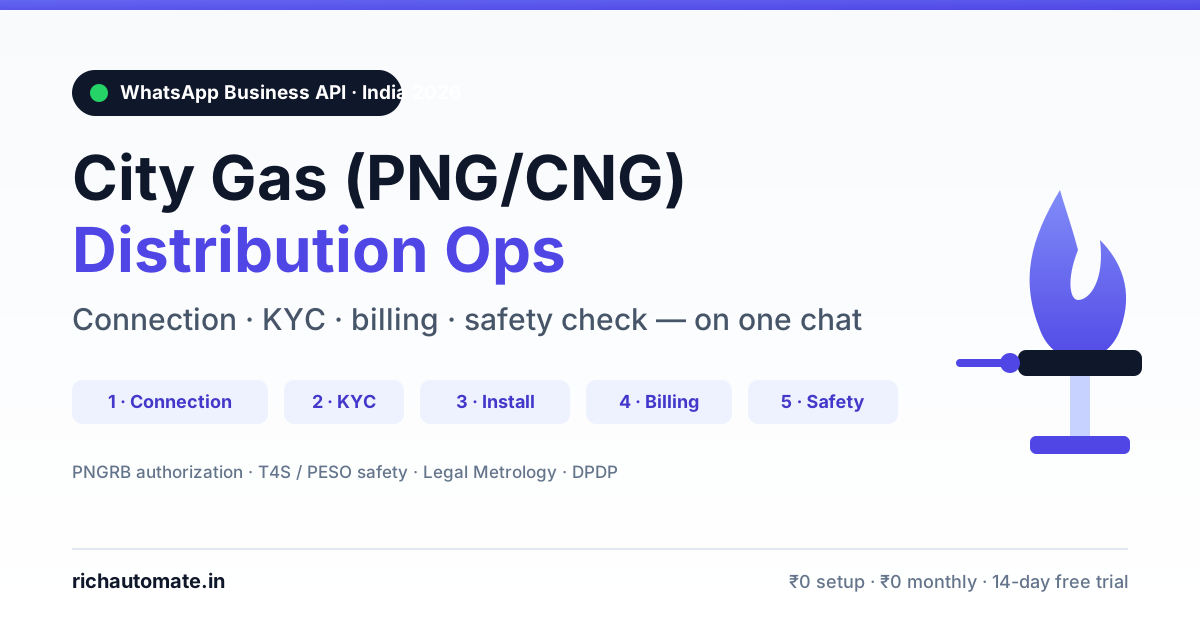
A city gas distribution (CGD) company — the entity that pipes PNG into homes, kitchens and factories and dispenses CNG at the pump — runs its entire consumer relationship on the official WhatsApp Business API: a household in a newly-authorised area applies for a PNG connection in a chat, uploads KYC and pays the registration charge without a single trip to the office, gets an installation-slot and safety-briefing confirmation, receives a monthly bill and payment reminder instead of a knock on the door, and is pulled back for the mandatory periodic safety inspection before it lapses. That single lifecycle turns a paperwork-heavy, footfall-dependent utility — where a connection application dies in a queue and a safety-inspection reminder never reaches the flat — into a tracked, self-service operation on the one app every consumer already opens. Figures here are directional; verify current PNGRB authorisation and service-obligation rules, CGD safety codes (T4S / OISD), PESO and CNG dispensing rules, Legal Metrology verification, the GST-versus-VAT position on natural gas, and DPDP specifics with the relevant authorities.
Why a city gas operator is a natural WhatsApp business
India's city gas grid has gone from a handful of metros to almost nationwide coverage after successive PNGRB bidding rounds, and each authorised geographical area now carries a mandate to sign up domestic PNG households, wire up commercial and industrial customers, and build out CNG stations for the vehicle market (the domestic-PNG and CNG consumer base runs into the crores and keeps climbing as authorised areas convert — verify current sizing with a PNGRB or operator source before quoting it). A CGD operator's economics are almost pure recurring utility revenue: once a home's meter is live, it pays every billing cycle for years, so the whole game is (a) converting authorised households into live connections fast enough to meet the minimum-work-programme target, and (b) keeping billing, payment and safety compliance frictionless so nobody churns back to LPG cylinders. The money and risk leak in three places — a connection application stalls in a queue of half-filled forms and missing documents, bills and payment reminders never land so the collection cycle drags, and the mandatory periodic safety inspection of a domestic PNG installation gets missed, which is both a compliance and a public-safety exposure. WhatsApp fixes all three because it is the channel the consumer actually opens, and because a structured thread carries the application, the KYC upload, the bill, the payment link and the safety-check reminder that a call centre and a paper file cannot. The same connection-plus-billing discipline that our WhatsApp playbook for industrial and medical gas / LPG cylinder distributors brings to cylinder supply applies directly to piped gas — only here the meter, not the cylinder, is the recurring unit.
The 5-stage CGD lifecycle on WhatsApp
Map every stage of the piped-gas and CNG relationship to a WhatsApp touchpoint and both the conversion funnel and the safety cycle stop leaking:
- 1. New PNG connection enquiry + coverage check: a Click-to-WhatsApp ad in a freshly-charged locality, a QR sticker on the bill or the society notice board, or a saved-contact opt-in brings the household in, and the first exchange checks whether the flat's area is under the operator's authorised network and gas-charged. A consumer learns in one message whether PNG is available at the address, instead of filling a form for a locality that is still two phases away.
- 2. KYC + document collection + registration charge: the household uses a WhatsApp Flow to submit the connection application — name, address proof, ID, ownership or NOC, and contact — and pays the one-time registration / security-deposit charge through a payment link in the same thread. A structured, in-chat KYC beats a queue at the office and timestamps exactly what was submitted, which matters when a connection is disputed or audited later.
- 3. Installation scheduling + commissioning + safety briefing: "survey scheduled", "GI/PE line laid", "meter installed", "appliance connected" statuses flow back to the consumer's thread, the technician slot is confirmed in chat, and the mandatory safety briefing and meter photo are logged. The consumer knows exactly when someone is coming, and the operator has a dated commissioning record against the connection.
- 4. Monthly bill + meter reading + payment reminder: this is the recurring engine. The bill, an optional consumer self-meter-reading Flow, a "₹X due — pay by [date]" utility reminder, a one-tap payment link, and the receipt all reconcile in one thread. A piped-gas bill notification that opens within the hour is the difference between a dragging collection cycle and one that clears on time — and auto-pay enrolment can be offered right in the chat.
- 5. Mandatory safety inspection + leak-emergency triage + CNG loyalty: a domestic PNG installation needs a periodic safety inspection, and a utility reminder fired before it lapses protects both compliance and the consumer — "your installation is due for its safety check this month, book a slot here". A leak or smell-of-gas message must escalate instantly to a human emergency line, never sit in a bot queue. On the vehicle side, CNG customers can be run on a prepaid-wallet or loyalty thread with balance and offer nudges, and PNG conversion campaigns can target commercial and industrial prospects. Reorder-style recurring reminders, but for compliance and top-ups.
Much of a CGD operator's domestic base sits inside apartment complexes, where the piped-gas riser and the society are one relationship — the collection and notice discipline for that is mapped in our WhatsApp playbook for apartment societies and RWAs — while the commercial and industrial PNG customers who run boilers, canteens and process heat are managed like any high-value B2B account, close to the workflow in our facility-management and building-services playbook. And because CGD is part of the same clean-energy transition as electric mobility, the CNG-station side shares its consumer-messaging DNA with the charge-point workflow in our EV charging-station network playbook.
The regulatory spine: what shapes your connection, meter and invoice
City gas is a regulated utility, and several regimes shape the connection, the meter, the safety file and the invoice. Build them into your templates from day one and verify the current position with the relevant authority:
- PNGRB authorisation & service obligations: the Petroleum and Natural Gas Regulatory Board authorises a CGD entity for a defined geographical area, grants time-bound infrastructure and marketing exclusivity, and sets a minimum-work-programme covering domestic PNG connections, CNG stations and steel/pipeline. Service, connection and quality-of-service obligations flow from that authorisation. Verify your current authorisation terms and the applicable CGD regulations rather than assuming.
- Safety codes — T4S, OISD and periodic inspection: CGD networks are built and operated to PNGRB technical standards including safety (commonly referred to as T4S) and OISD standards, and domestic PNG installations are subject to periodic mandatory safety inspection. Your commissioning record, the safety briefing and the inspection-reminder cadence should map to the current codes; verify the applicable standards and inspection intervals with the authority.
- PESO & CNG dispensing rules: CNG stations, cascades and the dispensing equipment fall under the Petroleum and Explosives Safety Organisation and the applicable gas-cylinder / static-and-mobile-pressure-vessel rules and the Explosives Act. Station approvals, cascade certification and dispenser safety are regulated separately from the piped-gas network — confirm the current PESO requirements for any CNG facility you operate.
- Legal Metrology — meters & dispensers: CNG is sold by weight, so dispensers are measuring instruments that require verification and stamping under Legal Metrology, and domestic PNG meters must meter accurately. A billing dispute usually starts here, so keep verification records current and consistent with what you invoice.
- GST vs VAT on natural gas — the invoice quirk: this is the number that most often confuses a piped-gas invoice. Natural gas has historically sat outside GST — the gas itself carries state VAT and central excise rather than GST, while related services can attract GST — so a CGD invoice does not look like a normal GST invoice. There is a long-running policy debate about bringing natural gas under GST; confirm the current tax treatment and your exact invoice format with a qualified tax professional rather than assuming one GST rate covers the bill.
- Consumer grievance redressal: PNGRB frameworks expect a CGD entity to run a consumer-grievance and quality-of-service mechanism. A WhatsApp thread that logs, tracks and closes a complaint with a timestamped trail is an asset here, not just a convenience — verify the current grievance-handling obligations.
Handling consumer data the DPDP way
Connection, billing and safety flows pull in exactly the data the Digital Personal Data Protection Act, 2023 treats as personal — consumer name, address, ID and ownership proof, meter number, consumption history and bank or UPI details for auto-pay. A few disciplines keep a CGD operator on the right side (verify the current DPDP Rules and their commencement as they roll out through 2026):
Get a 1-minute BSP audit on WhatsApp
Drop your WhatsApp number — we line-item your current invoice against Meta India rates in under 60 seconds. India-hosted, DPDP-compliant.
To see what non-compliance would actually cost, the DPDP penalty calculator sizes the exposure against your contact volume.
- Data minimisation & opt-in: collect only what the connection, billing and safety cycle need — identity and address proof for the connection, meter and consumption for the bill, contact for reminders — and take clear opt-in before adding a consumer to any new-connection-drive or CNG-offer broadcast. KYC images and bank details are sensitive; store them against the account, not in a shared support inbox.
- Staff-side access limits: a field technician or a call-centre agent should see only the connection or ticket in hand, not every consumer's KYC and consumption history. Use an API stack with role-based access, not a personal WhatsApp on a shared office phone where anyone can scroll every household's documents.
- Consent, retention & re-contact: billing, payment and safety-inspection reminders to an existing consumer need a lawful basis and an easy opt-out; keep utility bill and safety-due reminders separate from marketing offers, retain KYC only as long as required, and honour data-principal access and erasure requests.
The automation tech stack
Three building blocks on the official API run the whole consumer side of a CGD operation:
- WhatsApp Flows for connection & KYC: a Flow captures the connection application and KYC upload (ID, address proof, ownership/NOC) in-chat and takes the registration charge via a payment link — no app install, no office queue — and a coverage-check step tells the consumer up front whether the address is on the charged network.
- Utility templates for bills, payments & safety reminders: bill notifications, payment nudges, receipts, installation-status updates and mandatory-safety-inspection reminders are transactional and sit in the cheaper utility category. Keep new-connection drives and CNG promotions in the marketing category, which needs prior opt-in.
- Two-way self-reading + emergency escalation: a consumer self-meter-reading Flow and payment confirmations flow back into the thread, and — critically — any leak, smell-of-gas or safety message must trigger an instant human-escalation path to the emergency control room, never a canned bot reply. Life-safety routing is a design requirement, not a feature.
The same connection-application, meter-billing and safety-reminder pattern powers any regulated utility that meters a home — the building-services and common-utility side of that is covered in our WhatsApp Business API pricing breakdown for the per-conversation maths.
What a WhatsApp setup costs a CGD operator on RichAutomate
RichAutomate runs on the official Meta WhatsApp Business API with ₹0 platform fee, ₹0 setup and ₹0 monthly — you pay only for messages. Two models:
- Client Pay — ₹0.10 per message plus Meta's conversation charges billed to you directly at cost by Meta.
- SaaS Pay — ₹1.50 marketing / ₹0.50 utility per message, all-inclusive on one INR GST invoice, tiering down toward ₹0.50 at volume.
Because most CGD traffic — bill notifications, payment reminders, receipts, installation-status updates and safety-inspection nudges — is utility, the running cost stays low even for an operator serving lakhs of PNG households and a CNG customer base. Going live on the official API needs a verified business, and in India GST registration is effectively required to move a WhatsApp Business Account to live status, so treat it as necessary, not optional (this is separate from the GST-versus-VAT question on the gas itself). See the full WhatsApp Business API pricing breakdown for the per-conversation maths. A 14-day free trial with 100 free credits lets an operator pilot a new-connection drive and a safety-inspection-reminder campaign before committing. Pricing shown is RichAutomate's own; verify any competitor's current rates directly, and no platform should promise a ban-proof account for unsolicited or bulk sends.
Run your city gas operation on WhatsApp
From new-connection enquiries and in-chat KYC with a registration-charge payment link, to installation-status updates and safety briefings, to monthly bills with self-meter-reading and one-tap payment, to mandatory safety-inspection reminders and CNG loyalty — RichAutomate runs it all on the official Meta WhatsApp Business API at ₹0 setup, ₹0 monthly, ₹0 platform fee. Client Pay is ₹0.10/message plus Meta's rates billed direct at cost; SaaS Pay is ₹1.50 marketing / ₹0.50 utility all-inclusive. Start with a 14-day free trial and 100 free credits, or book a 30-minute walkthrough. This is general information; verify current PNGRB, CGD safety (T4S/OISD), PESO, Legal Metrology, GST/VAT and DPDP specifics with the relevant authorities.
Start your 14-day free trial → · Book a 30-min walkthrough · WhatsApp us on 91 81603 11319