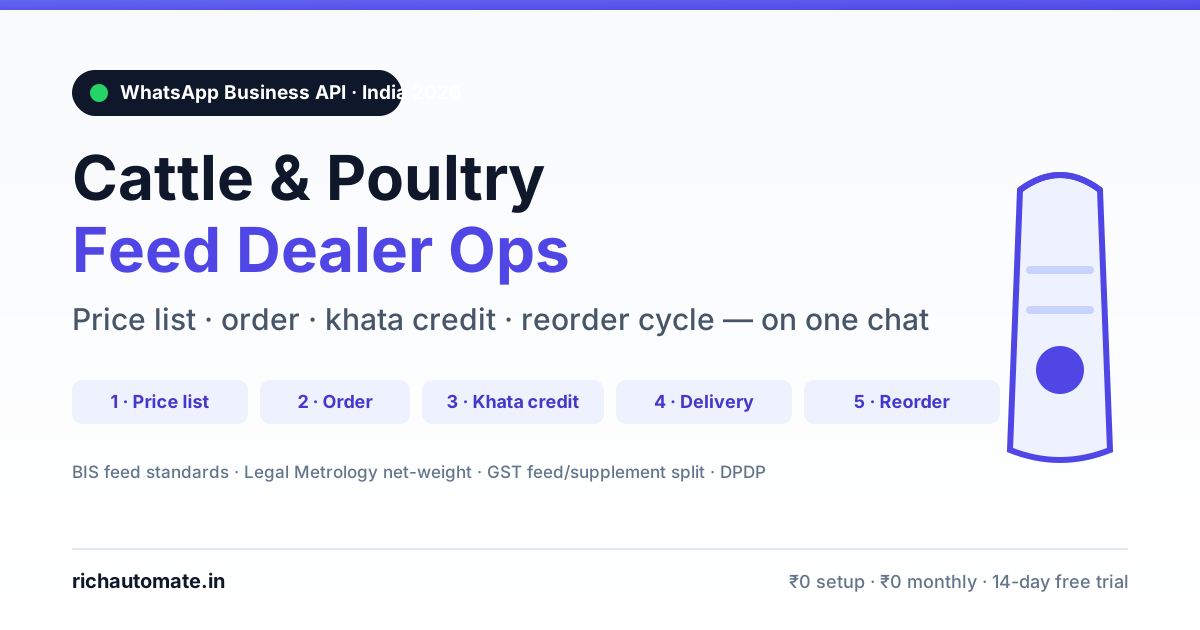
A cattle and poultry feed dealer in India runs the whole depot on the official WhatsApp Business API: a farmer sees the week's compound-feed and mineral-mixture price list on WhatsApp, places a bag order in the same chat, gets a khata (running-credit) balance and payment reminder instead of a shouting match at the counter, receives a delivery confirmation, and is pulled back on the exact feed-reorder cycle — 30 bags of layer mash roughly every N days for a poultry farm, a monthly mineral-mixture top-up for a dairy herd. That single lifecycle turns a cash-and-verbal-order business, where every farmer's balance and reorder date lives in a paper bahi-khata, into a tracked, recurring-revenue engine on the one app every farmer already opens. Figures here are directional; verify current market data, BIS feed standards, state feed-quality and medicated-feed rules, Legal Metrology packaging norms, GST classification and DPDP specifics with the relevant authorities.
Why a feed dealer is a natural WhatsApp business
India runs the world's largest livestock economy and one of its biggest poultry sectors, and every one of those animals eats a bagged, branded, repeat-purchase product — compound cattle feed, layer and broiler mash, mineral mixture, bypass fat, feed supplements — moving through a long chain of taluka-town feed depots and sub-dealers (the organised compound-feed slice alone is a directionally multi-thousand-crore, steadily formalising market — verify current sizing with an industry source before quoting it). A feed dealer's economics are almost pure recurring revenue: an animal eats every single day, so the customer who bought 20 bags this fortnight will need 20 more, and the whole game is making sure that reorder comes to you and not the dealer one street over. The money leaks in three places — a farmer forgets to reorder and runs out (or buys elsewhere in a hurry), khata credit balances blur until nobody agrees what is owed, and price and stock changes never reach the farmer who would have bought if he'd known the new-batch rate. WhatsApp fixes all three because it is the channel the farmer actually opens, and because a structured thread carries the price list, the order, the running balance and the reorder nudge that a phone call and a paper ledger cannot. The same recurring-order discipline that our WhatsApp playbook for agri-input dealers selling seeds and fertiliser brings to crop inputs applies directly to feed — only here the cycle repeats every fortnight, not once a season.
The 5-stage feed-dealer lifecycle on WhatsApp
Map every stage of the depot to a WhatsApp touchpoint and the reorder funnel stops leaking:
- 1. Catalogue + weekly price-list broadcast: a Click-to-WhatsApp ad, a QR sticker on the shop shutter, or a saved-contact opt-in adds the farmer to a consented broadcast list, and each new batch's rate card — compound feed, layer/broiler mash, mineral mixture, supplements, with per-bag price and pack size — goes out as a marketing-category message. The farmer sees the current rate the moment stock lands, instead of finding out only when he walks in.
- 2. Order + khata / credit capture: the farmer replies or uses a WhatsApp Flow to place a bag order — product, quantity, delivery or pickup — and the dealer logs it against that farmer's running khata. A structured order beats a half-heard phone number and a scribbled chit, and it timestamps exactly what was ordered when a dispute comes up later.
- 3. Balance + payment-reminder thread: the single biggest source of friction at a feed counter is credit, so a running-balance message and a gentle "₹X due against last 3 orders" utility reminder — sent privately, not shouted across the shop — keep the khata clean and the cash cycle moving without souring the relationship.
- 4. Dispatch + delivery / pickup confirmation: "order packed", "out for delivery", "ready for pickup" statuses flow back to the farmer's thread, and the delivery note plus GST invoice land in the same chat — proof of what was supplied at what rate, reconciled in one place instead of a stack of duplicate books.
- 5. Reorder-cycle reminder + supplement upsell: this is the recurring-revenue engine. Because a herd or flock of a known size eats a predictable amount, the dealer can fire a utility reminder timed to the reorder cycle — "your layer mash is due this week" — before the farmer runs out, and attach a seasonal or productivity upsell (mineral mixture before calving, a summer supplement, a coccidiostat pre-mix ahead of a hot-weather flock). Reorder timing plus upsell turn a walk-in trade into an annuity.
The feed a dealer sells is manufactured upstream — the plant side of that supply runs its own lifecycle in our WhatsApp playbook for veterinary-pharma and feed-mill operations — and downstream the biggest buyers are broiler and layer growers under contract, whose feed-and-lifting relationship we map in the poultry contract-farming playbook, and dairy farmers whose milk economics we cover in the livestock and dairy farmer-payout playbook.
The WhatsApp pricing calculator by country is the fastest check on what each destination market actually costs.
The regulatory spine: what shapes your price list and invoice
A feed depot is lightly regulated compared with a fertiliser or drug dealer, but a few regimes shape the price list, the pack and the invoice. Build them into your templates from day one and verify the current position with the relevant authority:
- BIS / IS feed-quality standards: compound cattle feed, poultry feed and mineral mixtures carry Bureau of Indian Standards specifications (for protein, energy, moisture and quality parameters). Quote and stock feed made to the applicable IS standard and reference it where relevant; verify the current standards and any mandatory-certification scope for the products you carry.
- State feed-quality and licensing rules vary: feed is largely governed by state animal-husbandry and quality-control frameworks rather than one national feed law, and some states run feed-quality checks or dealer registration. Verify whether your state requires any feed-dealer registration or quality compliance rather than assuming one national rule.
- Medicated feed / feed additives: feed supplements and pre-mixes that contain antibiotics, hormones or veterinary-drug ingredients cross into Drugs and Cosmetics Act / CDSCO territory and antimicrobial-use controls, and cannot be sold as if they were plain feed. Keep medicated additives clearly separated in your catalogue and confirm the current dispensing and prescription rules with a qualified professional.
- Legal Metrology packaged-commodity rules: every bag is a pre-packaged commodity, so declared net weight, manufacturer details and other mandatory declarations must be correct on the pack and consistent with what you invoice. Verify the current Legal Metrology (Packaged Commodities) requirements for feed bags.
- GST — feed vs supplement split: this is the number that most often trips a feed invoice. Plain cattle, poultry and aquatic feed (husk, oil-cake, compound feed under the feed HSN) has historically been treated as exempt, while many mineral mixtures, feed supplements and additives are taxable at a different rate. Show the split clearly on the invoice and get your exact classification and rates confirmed by a qualified tax professional — do not assume every bag on the shelf carries the same GST treatment.
- Trade licence & storage: a local trade licence and safe, dry, pest-free storage may be required, and feed storage sits near food-chain safety. Verify local-body requirements for your depot.
Handling farmer data the DPDP way
Order, khata and broadcast flows pull in exactly the data the Digital Personal Data Protection Act, 2023 treats as personal — farmer name, phone, village address, herd or flock size and a running credit history. A few disciplines keep a feed dealer on the right side (verify the current DPDP Rules and their commencement as they roll out through 2026):
Get a 1-minute BSP audit on WhatsApp
Drop your WhatsApp number — we line-item your current invoice against Meta India rates in under 60 seconds. India-hosted, DPDP-compliant.
- Data minimisation & opt-in: collect only what the order and delivery need — name, phone, delivery point, animal type and rough herd size for reorder timing — and take clear opt-in before adding a farmer to any price-list or offer broadcast. A farmer's credit balance is sensitive; store it against the account, not in a shared group.
- Staff-side access limits: a counter hand or delivery boy should see only the order in hand, not every farmer's balance and buying history. Use an API stack with role-based access, not a personal WhatsApp on a shared shop phone where anyone can scroll every customer's khata.
- Consent for reorder re-contact: reorder and payment reminders to an existing customer need a lawful basis and an easy opt-out; keep utility service-due and balance reminders separate from marketing offers, and honour data-principal access and erasure requests.
The automation tech stack
Three building blocks on the official API run the whole depot:
- WhatsApp Flows for orders & price list: a Flow captures a structured bag order (product, quantity, delivery/pickup) in-chat, and a catalogue or rate-card message presents the current batch prices for one-tap enquiry — no app install, no web redirect for a low-literacy rural buyer.
- Utility templates for balance & reorder reminders: order confirmations, khata-balance and payment nudges, delivery notes and reorder-due reminders are transactional and sit in the cheaper utility category. Keep new-batch price broadcasts and supplement-offer promos in the marketing category, which needs prior opt-in.
- Two-way status + voice-note friendly threads: "order packed", "out for delivery" and "payment received" statuses flow back to the farmer's thread, and because many farmers prefer voice over typing, a WhatsApp workflow that accepts voice notes and replies in the local language beats any app the farmer will never install.
The same catalogue, running-balance and reorder-reminder pattern powers any counter that sells a repeat-purchase rural product — see how a parallel dealer runs it in our WhatsApp playbook for tractor and farm-equipment dealerships.
What a WhatsApp setup costs a feed dealer on RichAutomate
RichAutomate runs on the official Meta WhatsApp Business API with ₹0 platform fee, ₹0 setup and ₹0 monthly — you pay only for messages. Two models:
- Client Pay — ₹0.10 per message plus Meta's conversation charges billed to you directly at cost by Meta.
- SaaS Pay — ₹1.50 marketing / ₹0.50 utility per message, all-inclusive on one INR GST invoice, tiering down toward ₹0.50 at volume.
Because most depot traffic — order confirmations, khata-balance nudges, delivery notes and reorder reminders — is utility, the running cost stays low even for a dealer serving hundreds of farmers on a fortnightly cycle. Going live on the official API needs a verified business, and in India GST is effectively required to move a WhatsApp Business Account to live status, so treat it as necessary, not optional. See the full WhatsApp Business API pricing breakdown for the per-conversation maths. A 14-day free trial with 100 free credits lets a feed dealer pilot a price-list broadcast and a reorder-reminder campaign before committing. Pricing shown is RichAutomate's own; verify any competitor's current rates directly, and no platform should promise a ban-proof account for unsolicited or bulk sends.
Run your feed depot on WhatsApp
From weekly price-list broadcasts and one-tap bag orders, to clean khata-balance and payment reminders, to delivery confirmation with a GST invoice, to reorder-cycle nudges and mineral-mixture upsells — RichAutomate runs it all on the official Meta WhatsApp Business API at ₹0 setup, ₹0 monthly, ₹0 platform fee. Client Pay is ₹0.10/message plus Meta's rates billed direct at cost; SaaS Pay is ₹1.50 marketing / ₹0.50 utility all-inclusive. Start with a 14-day free trial and 100 free credits, or book a 30-minute walkthrough. This is general information; verify current BIS feed, state feed-quality, medicated-feed, Legal Metrology, GST and DPDP specifics with the relevant authorities.
Start your 14-day free trial → · Book a 30-min walkthrough · WhatsApp us on 91 81603 11319